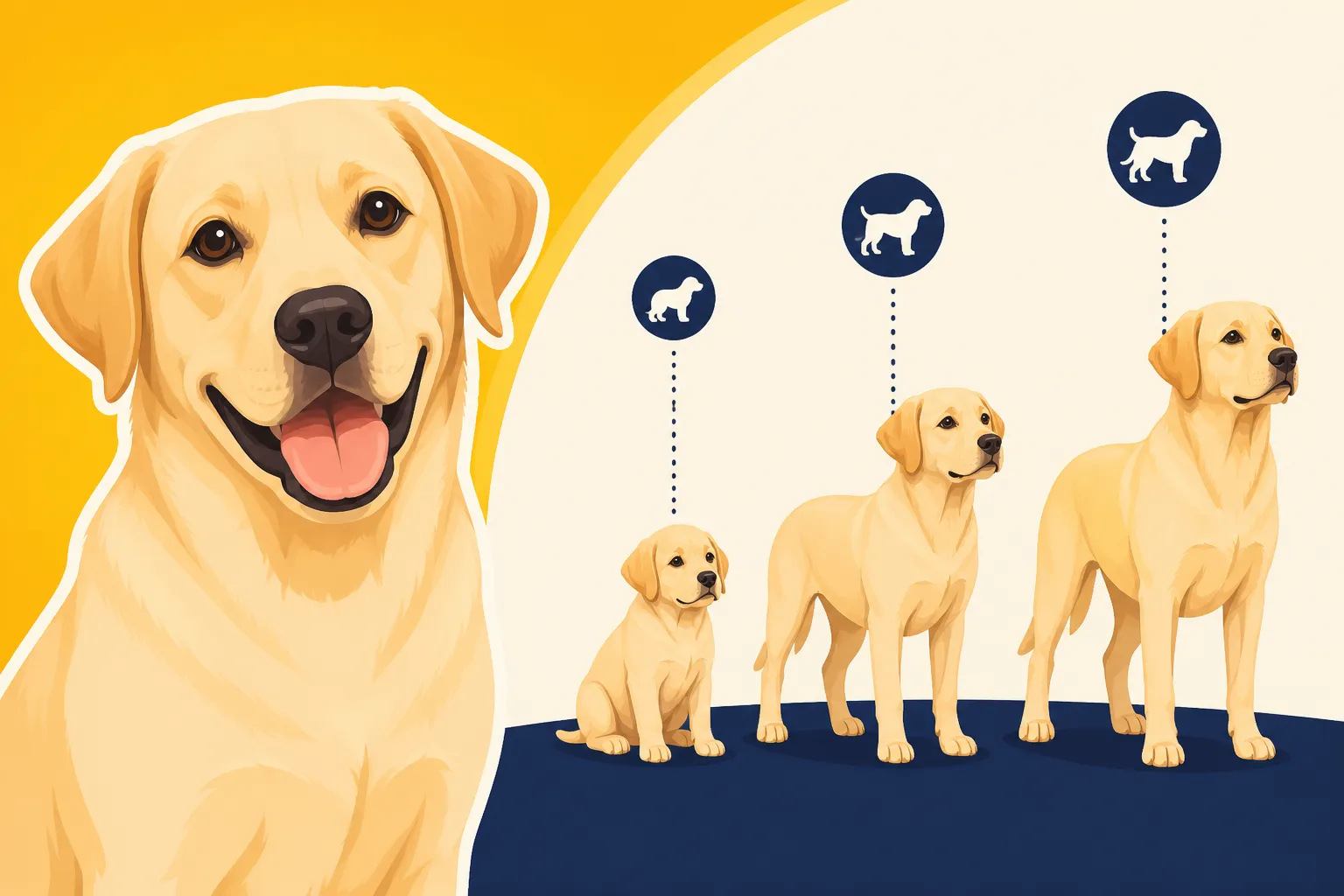
Labrador Size and Adult Proportions
It's incredibly common for Labrador owners to constantly eyeball their growing pup, wondering if they're hitting all the right milestones. One moment you're cradling a tiny, squishy puppy, and the next, they've shot up like a weed, leaving you to marvel at their expanding paws and rapidly developing frame. This journey can bring a mix of excitement and a touch of anxiety, especially when you see conflicting information or compare your dog to others. This guide is designed to demystify Labrador size and adult proportions, offering you a realistic, in-depth look at what to expect as your beloved companion grows from a playful pup into a magnificent adult.
Understanding the Labrador Retriever's Growth Journey
Bringing home a Labrador puppy is like welcoming a tiny, fuzzy sponge into your life – they soak up everything, especially food and sleep, and seem to double in size weekly! It's a fascinating and sometimes bewildering process, marked by explosive growth spurts and gradual filling out. Understanding this journey can help you set realistic expectations and ensure your pup is developing healthily.
From Wobbly Puppy to Sturdy Companion
Think back to those first few weeks. Your Labrador puppy, perhaps just eight weeks old, was a small, clumsy creature with oversized paws and a penchant for napping in awkward positions. They weighed just a handful of pounds, maybe 10 or 15 at most, and seemed almost fragile. Fast forward a few months, and that same puppy is now a lanky, energetic adolescent, resembling a miniature horse with endless enthusiasm. This rapid growth phase is characteristic of large breeds like Labradors. In their first six months, they can put on a significant amount of weight and height, sometimes growing an inch or more in a week! It’s during this time that their bones are elongating quickly, and their joints are still developing.
The transition from puppy to adult isn't a straight line; it's a dynamic period with many phases. Initially, it's all about bone growth and height, giving them that gangly, awkward teenager look. Then, typically between six months and a year, while they might not gain as much height, they start to "fill out." Their chest broadens, muscles develop, and they begin to lose some of that puppy fat, replacing it with a more athletic and sturdy adult physique. This filling out process can continue well past their first birthday, with some Labradors not reaching their full muscular maturity until they are two or even three years old. It's a marathon, not a sprint, and patience is definitely a virtue when watching them transform. It's truly amazing to witness, but it also brings responsibilities, particularly regarding nutrition and exercise to support healthy development. You can learn more about this crucial period in Labrador Puppy Health in the First Year.
Factors Influencing a Labrador's Final Size
While genetics play a huge role in determining your Labrador's ultimate size, several other factors can subtly influence how big they get. Think of genetics as the blueprint, but nutrition, exercise, and even the line they come from can affect the final construction. For instance, a Labrador puppy from parents who are both on the smaller side of the breed standard is unlikely to grow into a giant, regardless of how much you feed them. Conversely, a puppy from a line known for larger dogs will likely be substantial, provided they receive proper care.
Diet, especially during the crucial puppy growth phase, is incredibly important. Feeding a high-quality, large-breed specific puppy food ensures they get the right balance of nutrients and, crucially, controlled calcium and phosphorus levels. Overfeeding or feeding an inappropriate diet can lead to overly rapid growth, which puts undue stress on developing joints and can contribute to orthopedic issues later in life, like hip or elbow dysplasia. Exercise also plays a part; appropriate, moderate exercise helps build muscle and strengthen bones, whereas excessive, high-impact activities on growing joints can be detrimental. Spaying or neutering too early can also have an impact on a Labrador's final size and bone development. Some studies suggest that altering a dog before their growth plates have closed can lead to them growing taller and lankier than they otherwise would, as the hormones responsible for signaling growth plate closure are removed prematurely. This is why many vets and breeders now recommend waiting until a Labrador is fully mature, typically between 12-18 months, before considering these procedures.
The AKC Standard and What It Means for Labrador Size
When you look at a Labrador, you're seeing centuries of careful breeding for a specific purpose and appearance. The breed standard, set by organizations like the American Kennel Club (AKC), outlines the ideal characteristics of a Labrador Retriever, including their size and proportions. This standard serves as a guideline for breeders and judges, aiming to maintain the breed's integrity and functionality. It's a fascinating document that describes everything from their head shape to their tail set, all designed for a dog that can retrieve ducks in icy waters all day long.
Ideal Height and Weight for Male Labradors
According to the AKC breed standard, an adult male Labrador Retriever should ideally stand between 22.5 and 24.5 inches tall at the shoulder (withers). This measurement is taken from the ground to the highest point of their shoulder blade, not their head. In terms of weight, the standard suggests males should weigh between 65 and 80 pounds. Now, it’s important to remember these are ideals. Not every perfectly healthy, well-proportioned male Labrador will fall exactly within these ranges. Some might be a little taller, some a little shorter, and weights can fluctuate slightly based on muscle mass and individual metabolism. For example, a very athletic, lean male who is regularly exercising might be on the lower end of the weight spectrum for his height, while a more solidly built male might be on the higher end.
These numbers give us a benchmark. When you're considering a puppy, looking at the parents' size within these guidelines can offer a good indication of your future dog's potential adult stature. A responsible breeder will be able to discuss how their dogs align with the standard. It's not about achieving an exact number, but rather about a balanced, proportionate dog that can perform its duties with ease.
Ideal Height and Weight for Female Labradors
Female Labradors, as in many dog breeds, tend to be slightly smaller and lighter than their male counterparts. The AKC standard for an adult female Labrador Retriever specifies an ideal height of 21.5 to 23.5 inches at the shoulder. Their ideal weight range is typically between 55 and 70 pounds. Again, these are guidelines for healthy, well-structured individuals. A female Labrador with a leaner, athletic build might sit comfortably at the lower end of the weight scale, while a female with a more substantial bone structure could be at the upper end.
It's not uncommon to see variations. My friend's yellow female, Stella, is a robust 68 pounds and 23 inches tall, perfectly within the standard, but she carries herself with a quiet strength that makes her seem larger. On the other hand, my neighbor's black female, Luna, is a lithe 58 pounds and 22 inches, an absolute rocket when she's retrieving. Both are excellent examples of the breed, demonstrating that there's a healthy spectrum within these guidelines. What’s most important is that the dog is well-proportioned for its individual frame, healthy, and capable of living an active life. To dive deeper into the official characteristics, read The AKC Labrador Retriever Breed Standard.
Why the Standard Matters (and When It Doesn't)
The breed standard is a critical tool for preserving the Labrador Retriever's characteristics, temperament, and working abilities. For breeders, it provides a roadmap for selecting breeding pairs, aiming to produce offspring that embody the ideal traits of the breed. For those involved in conformation shows, it's the rulebook against which dogs are judged. It ensures that, across generations, Labradors continue to look, move, and behave in a way that is true to their heritage. A dog bred to standard is typically one that is sound in structure, meaning it's less prone to certain physical ailments due to poor conformation.
However, for the average pet owner, while it's good to be aware of the standard, obsessing over exact measurements isn't necessary. If your beloved Labrador falls a little outside the prescribed height or weight range but is otherwise healthy, happy, and well-proportioned, there's absolutely no cause for concern. Many wonderful companion Labradors exist outside the "show ring ideal" but make fantastic family members. What matters more than hitting an exact number is your dog's overall health, energy level, and quality of life. An excellent example of when the standard matters less is if you've adopted a rescue Labrador. You might not know their exact lineage, and they might be a mix of different lines or even a Labrador mix. Their love and loyalty won't be measured in inches or pounds, but in the joy they bring to your home.
English vs. American Labradors: Subtle Differences in Build
You might have heard people talk about "English Labs" and "American Labs" and wondered what the difference is. While they are both Labrador Retrievers under the same AKC standard, these terms generally refer to different lines within the breed, developed for different purposes, and often exhibit subtle but noticeable differences in their physical build and temperament. It's not about two separate breeds, but rather two distinct "looks" or styles that have emerged from breeders focusing on different traits.
The Sturdy Frame of the English Labrador
Often referred to as "show Labradors" or "bench Labradors," English Labradors typically embody a more traditional, stocky build. They tend to be:
- Heavier-boned: You'll notice their thicker legs and more substantial overall frame.
- Broader in the head: They usually have a wider skull and a more pronounced stop (the indentation where the muzzle meets the forehead), giving them a very classic, kind "blocky" head look.
- Thicker necks: Their necks are often shorter and more powerful, blending smoothly into a well-sprung rib cage.
- Shorter in leg and body: English Labs often appear more compact and "cobby" than their American counterparts. This contributes to their sturdy, square appearance.
- Calmer demeanor: While still possessing the classic Labrador desire to retrieve, English lines are often bred with an emphasis on a calmer, more laid-back temperament, making them popular choices for family pets and therapy work.
When you see an English Labrador, they often exude an air of quiet dignity and strength. They might not be as overtly high-energy as some American lines, making them seem larger and more imposing, even if their actual height is within the standard. My friend's English Lab, Gus, is a prime example. He's a solid 80 pounds, with a massive head and a barrel chest that makes him look like a true powerhouse, even when he's just napping on the rug. Their sturdy build can be a real advantage in colder climates or for those looking for a truly "classic" Labrador appearance.
The Athletic Build of the American Labrador
Conversely, American Labradors, often called "field Labradors" or "working Labradors," are typically bred for performance in hunting tests, field trials, and other active dog sports. Their build reflects this purpose:
- Lighter-boned: They tend to have a more refined bone structure, giving them a more agile appearance.
- Narrower in the head: Their heads are often less blocky, with a more streamlined muzzle and less pronounced stop.
- Longer legs and bodies: American Labs generally have a lankier, more athletic physique, built for speed and endurance rather than brute strength. They often appear to have a more "fine-boned" look.
- More energetic: These lines are selected for high drive, intense focus, and boundless energy, essential traits for successful working dogs.
An American Labrador will often look like they're ready to run a marathon or retrieve a bird from across a vast field at a moment's notice. While they are still Labradors through and through, their energy levels can be significantly higher, and their appearance is more geared towards function over the more "bench-style" aesthetic. I remember a field trial I attended where the American Labs moved like lightning, covering ground effortlessly. Their leaner build certainly helps with that! You can explore these differences more in English and American Labrador Types.
How These Differences Impact Perceived Size
The subtle differences in build between English and American Labradors can significantly impact how large they appear to be, even if their actual height and weight fall within the same general range. An English Labrador, with its broader head, thicker bone, and more compact body, often gives the impression of being larger and more substantial. They look like big, cuddly teddy bears. This is why some owners are drawn to them for their "gentle giant" appeal.
An American Labrador, on the other hand, with its longer legs, leaner body, and narrower head, might appear less massive, even if they stand just as tall. Their athletic, almost gangly look can make them seem more agile and less bulky. This doesn't mean one is inherently "better" or "worse," just different. It’s all about what you're looking for in a canine companion and which physical and temperamental traits best suit your lifestyle. If you're looking for a dog to join you on long runs or participate in active dog sports, a field-line Labrador's build might be more suitable. If you prefer a calmer, more robust companion for cozy evenings and gentle walks, an English-line Labrador might be a better fit. These distinctions highlight the wonderful diversity within the Labrador breed itself.
When Does a Labrador Reach Full Size? Unpacking Growth Timelines
The growth journey of a Labrador Retriever is a marathon, not a sprint, extending well beyond their first birthday. While puppies seem to sprout overnight, achieving their full adult size is a multi-stage process involving both rapid height gain and a slower, more deliberate "filling out" phase. Understanding this timeline is crucial for proper care, especially when it comes to nutrition and exercise.
Initial Rapid Growth in Labrador Puppies
The first six to eight months of a Labrador puppy's life are characterized by explosive growth. This is when they gain the most height and a significant portion of their adult weight. Imagine watching a plant shoot up towards the sun; that's what it's like with a Lab puppy! During this period, their bones are lengthening quickly, and their joints are developing at an incredible pace. It's common for a Labrador puppy to double or even triple its birth weight in just a few short months. For instance, an 8-week-old puppy weighing around 12-15 pounds might easily hit 40-50 pounds by the time they are 5-6 months old.
This rapid growth demands careful attention to their diet. Overfeeding or providing a diet with an incorrect calcium-to-phosphorus ratio can cause them to grow too fast, which is actually detrimental to their long-term joint health. It puts excessive stress on their still-forming skeletal structure, potentially exacerbating issues like hip and elbow dysplasia. Think of it like a skyscraper being built too quickly – the foundation might not be able to support the rapid addition of floors. Keeping them lean during this period is far more beneficial than pushing for maximum size. Your vet can guide you on appropriate feeding amounts and monitor their growth trajectory to ensure it's healthy and steady, not excessively fast.
Filling Out and Maturation Beyond Height
While most Labradors will reach their adult height by around 9 to 12 months of age, they are far from fully mature at that point. After their first birthday, the focus of their growth shifts from gaining height to "filling out." This means their chest will deepen and broaden, their musculature will develop and strengthen, and they'll lose that gangly, adolescent look, maturing into the sturdy, powerful dogs we recognize. This process can continue until they are two, sometimes even three, years old.
During this filling-out phase, their weight might still increase, but it should be a steady gain of muscle and substance, not fat. It's during this time that their adult proportions really solidify. For example, my Labrador, Charlie, reached his full height by about 11 months, but it wasn't until he was almost two years old that his chest really dropped, and he developed that deep, powerful look of a mature Labrador. He still gained a few pounds over that year, but it was all muscle, not flab. This slower maturation period is why it’s also important to continue feeding a high-quality adult dog food appropriate for large breeds, even if they aren't gaining much height anymore. Patience is key when you're waiting for your Lab to fully develop into the magnificent adult they're destined to be. For more insights into this, check out When a Labrador Reaches Full Height.
Growth Plate Closure and Joint Health Considerations
One of the most critical aspects of a Labrador's growth timeline is the closure of their growth plates. These are areas of cartilage at the ends of long bones in puppies and young dogs, which allow the bones to grow longer. They gradually harden and close, becoming solid bone, typically by 12 to 18 months of age in Labradors, though it can vary slightly between individuals. Once the growth plates are closed, the long bones can no longer grow in length.
The importance of growth plate closure cannot be overstated, especially concerning joint health. Before these plates close, they are vulnerable to injury. High-impact activities, excessive jumping, or forced strenuous exercise can damage open growth plates, potentially leading to abnormal bone development and increasing the risk of conditions like Labrador Hip and Elbow Dysplasia or other orthopedic issues. This is why veterinarians and experienced breeders strongly advise against intense activities like long-distance running, extensive agility training, or excessive stair climbing for young Labrador puppies. Instead, focus on moderate, controlled exercise like leashed walks, gentle play, and swimming (which is great for joints) until your vet confirms that your Labrador's growth plates have closed. This careful approach in their formative years is a gift that will serve them well into their senior years.
Beyond the Scale: Assessing Your Labrador's Body Condition
While knowing the ideal height and weight ranges for Labradors is helpful, relying solely on the numbers on a scale can be misleading. Just like humans, dogs come in different builds and frames. What's "ideal" for one Labrador might be too heavy or too thin for another. This is where understanding your Labrador's body condition score (BCS) becomes incredibly important. It's a visual and tactile assessment that gives you a much better picture of their health than a number on a scale ever could.
Understanding Body Condition Score (BCS)
The Body Condition Score (BCS) system is a tool used by veterinarians and pet owners worldwide to assess a dog's fat reserves. It typically uses a scale of 1 to 9 (with 1 being emaciated and 9 being severely obese) or sometimes a 1 to 5 scale (where 1 is emaciated and 5 is obese). The ideal score for most dogs, including Labradors, is generally around a 4 or 5 on a 9-point scale, or a 3 on a 5-point scale. This means they are lean and healthy, not too thin and certainly not overweight.
Learning to assess your Labrador's BCS is a skill every owner should master. It involves looking at your dog's silhouette from above and from the side, and feeling their ribs, spine, and hip bones. It's a hands-on way to gauge their physical well-being. A Labrador at an ideal body condition will have a tucked-up waist, visible but not prominent, and you should be able to easily feel their ribs without pressing hard, almost like feeling the knuckles on your hand. If their ribs are difficult to feel, they might be carrying too much weight. This visual and tactile method provides a much more nuanced assessment than just saying, "My dog weighs X pounds." You can find detailed charts and explanations for Checking a Labrador's Body Condition Score.
Why Ribs and Waistline Matter More Than Numbers
The reason why feeling your Labrador's ribs and observing their waistline is more important than their weight in pounds stems from the natural variation in bone structure and muscle mass. Imagine two male Labradors, both 23 inches tall. One might be a more substantial English line dog with heavy bone, weighing 78 pounds, while the other is a lean American field line dog, weighing 70 pounds. Both could be at a perfectly healthy body condition, even with a 8-pound difference, because their individual frames carry that weight differently.
When you run your hands along your Labrador's sides, you should be able to feel their ribs with minimal pressure, almost like feeling wet pebbles under a thin towel. You shouldn't see them prominently, but you should definitely be able to locate them easily. From above, your Labrador should have a distinct waist, an hourglass shape (for females) or a slightly less dramatic tuck (for males) visible just behind their rib cage before their hips. If you look down and see a straight line from their ribs to their tail, or worse, their sides bulge out, it's a clear sign they're carrying too much weight. From the side, their abdomen should tuck up slightly from their chest to their hind legs. If it sags or hangs low, that's another indicator of excess weight. Regularly performing these checks helps you stay proactive about your Labrador's health.
The Dangers of an Overweight Labrador
It's a tough truth, but one we must face: Labradors are notoriously prone to weight gain, and an overweight Labrador faces significant health risks. Their endearing, food-obsessed nature, combined with a genetic predisposition (many Labradors carry a gene that makes them feel constantly hungry, which you can learn about in The POMC Gene and Labrador Appetite), means owners must be extra vigilant. An overweight or obese Labrador is at a much higher risk for a whole host of serious health problems, significantly impacting their quality of life and potentially shortening their lifespan.
The dangers include:
- Joint problems: Extra weight puts immense stress on their joints, accelerating the onset and worsening the severity of arthritis, hip dysplasia, elbow dysplasia, and cruciate ligament tears. Imagine carrying a heavy backpack all day, every day – that's what it's like for an overweight dog.
- Diabetes: Obesity is a major risk factor for developing canine diabetes.
- Heart and respiratory issues: Carrying excess weight makes the heart work harder and can exacerbate breathing difficulties, especially in warmer weather.
- Reduced stamina and mobility: An overweight dog will struggle to exercise, play, and enjoy activities they once loved, leading to a vicious cycle of inactivity and further weight gain.
- Increased surgical risks: Anesthesia is riskier for obese dogs, and their recovery from surgery can be more complicated.
- Certain cancers: Some studies suggest a link between obesity and an increased risk of certain types of cancer.
It's heartbreaking to see a Labrador struggling with their weight because it robs them of their natural joy and vitality. Keeping your Labrador at a healthy, lean body condition is one of the most loving and impactful things you can do for their long-term well-being. Even a few extra pounds can make a big difference to a dog who only weighs 60-80 pounds in total. Labrador Obesity and the Years It Costs further highlights these critical concerns.
Practical Implications of Labrador Size for Owners
Owning a Labrador, regardless of whether they lean towards the English or American build, means committing to a fairly substantial canine companion. Their size has a ripple effect on many aspects of daily life, from the items you need to buy to the way you structure your home and daily routine. Thinking about these practical implications upfront can save you a lot of headaches (and expense!) down the road.
Choosing the Right Gear and Supplies
A large, powerful dog like a Labrador needs gear that can stand up to their strength and size. This isn't just about comfort; it's about safety for both you and your dog.
- Crates: Forget those tiny carriers! A Labrador needs a substantial crate. For an adult, you're typically looking at a 42-inch crate to ensure they can stand up, turn around, and lie down comfortably. A crate that's too small is not only uncomfortable but can also hinder proper crate training. As a puppy, you might start with a smaller one with a divider, but you'll quickly need to size up.
- Beds: A Labrador will outgrow several beds during puppyhood, and as adults, they need durable, supportive options. Orthopedic beds are a fantastic investment, especially as they age, helping to support their joints and provide comfort. Cheap, flimsy beds will be shredded or flattened in no time. For good quality options, you might look at brands available on Chewy, which often have a wide selection of heavy-duty beds designed for larger breeds.
- Collars and Harnesses: A thin collar or flimsy harness just won't cut it. You need strong, wide collars that won't dig into their neck and harnesses designed to distribute pressure effectively, especially if your Lab is a puller. Front-clip harnesses can be a godsend for managing a strong Labrador on a leash.
- Leashes: Opt for sturdy, durable leashes – at least 6 feet long, made of strong nylon or leather. Retractable leashes are generally not recommended for large, powerful dogs, as they offer less control and can be dangerous.
- Food Bowls: While a regular bowl might suffice, consider slow-feeder bowls for a Labrador, as they are often prone to gulping their food, which can increase the risk of bloat. Elevated bowls are a matter of debate; some owners find them helpful, but research on their impact on bloat risk is mixed.
- Toys: Durability is key! Labradors have powerful jaws and love to chew. Invest in sturdy chew toys that can withstand their enthusiasm, otherwise, you'll be replacing them constantly. Ropes, Kongs, and Nylabones are often popular choices.
Thinking ahead about the size and strength of your Labrador will guide your purchasing decisions towards items that are both safe and cost-effective in the long run. You'll find more details on gear in Crate and Bed Sizing Costs for a Labrador.
Space Requirements and Living Arrangements
The size of your Labrador also dictates the space they'll need, both indoors and out. While Labradors are incredibly adaptable and can even thrive in apartments if their exercise needs are met, a larger home and yard are certainly a bonus.
- Indoor Space: A large dog needs room to stretch out, turn around, and move without constantly bumping into furniture or people. If you live in a smaller home, you'll need to be mindful of clutter and ensure they have a dedicated "spot" where they can relax comfortably without feeling cramped. Their crate or bed should be in a quiet corner where they won't be constantly disturbed.
- Outdoor Space/Yard: While a large yard isn't a substitute for walks and interaction, it provides a valuable outlet for your Labrador's energy. A well-fenced yard (typically at least 5-6 feet high for a Labrador who might be tempted to jump) allows them to play, sniff, and burn off some steam safely. Without a secure yard, your commitment to daily walks, park visits, and other outdoor adventures becomes even more crucial.
- Car Space: Don't forget about your vehicle! A full-grown Labrador takes up a lot of space in a car. You'll need adequate room in the back seat or cargo area, along with appropriate safety restraints like a crash-tested harness or a secure crate, especially if you travel frequently. A large Lab can easily overpower you if unrestrained in an emergency stop.
Essentially, a large dog means you need to think big – big enough beds, big enough living spaces, and big enough commitment to provide them with the room they need to thrive comfortably.
Exercise Needs for Different Builds
A Labrador's size and build directly influence the type and amount of exercise they need. While all Labradors require substantial daily physical activity, there are nuances between the more energetic American field lines and the calmer English show lines.
- General Needs: Regardless of line, adult Labradors need at least 60-90 minutes of vigorous exercise daily. This isn't just a leisurely stroll around the block; it includes activities that get their heart rate up, like brisk walks, running, fetching, or swimming. Their powerful bodies and energetic temperaments demand this outlet. Without it, they can become bored, destructive, and prone to weight gain.
- Field Lines (American): These Labradors are typically high-drive and can often handle, and indeed need, more intense and prolonged exercise. They might enjoy activities like:
- Long-distance retrieving: Endless games of fetch or working with bumper launchers.
- Running: With their owner (once fully grown and cleared by a vet).
- Hiking: Extended treks through varied terrain.
- Dog sports: Agility, flyball, dock diving, or competitive obedience, all of which challenge them physically and mentally.
- Show Lines (English): While still active, English Labradors often have a slightly lower energy threshold than field lines. They will still enjoy and benefit from the activities listed above, but they might be satisfied with slightly less intensity or duration. They might prefer:
- Moderate fetching: A good 30-minute session rather than an hour.
- Brisk walks: Longer, more deliberate walks around the neighborhood or local park.
- Swimming: A favorite activity for most Labs, excellent for joint health.
- Mental stimulation: Puzzle toys and training sessions are just as important to tire them out mentally.
It's critical to remember that Exercise Limits for a Labrador Puppy are very different from an adult. Over-exercising a growing puppy can cause irreversible damage to their developing joints. Always tailor exercise to your Labrador's age, physical condition, and individual energy level. A great way to ensure they are getting enough exercise and staying healthy is through a balanced approach that combines physical exertion with mental enrichment.
Addressing Common Concerns About Labrador Size
Even with all the information in the world, it's completely normal to have questions and concerns about your Labrador's size. Are they too big? Too small? Are they growing too fast? These worries are a natural part of being a dedicated pet parent, especially when dealing with a breed known for its substantial size and varied builds.
My Labrador is Too Small/Large: Is This Normal?
It's a common worry among Labrador owners: "My puppy seems tiny compared to his littermates," or "My adult Lab is a giant, way bigger than the standard!" First, take a deep breath. A certain degree of variation is completely normal within the breed.
- Smaller Than Expected: If your Labrador seems smaller than the standard, consider their lineage. Were their parents on the smaller side? Is your dog an American field line Labrador, which tends to be lighter-boned and more streamlined? As long as your dog is healthy, energetic, and your vet isn't concerned about malnourishment or underlying health issues, being a bit under the standard weight or height is rarely a problem. Some Labradors, particularly females from very active lines, can be quite petite but perfectly healthy and capable. My friend has a female field Lab, Skye, who is only 52 pounds and perfectly proportioned for her build; she's a fantastic working dog and couldn't be healthier.
- Larger Than Expected: Conversely, if your Labrador is a bit of a giant, exceeding the standard, again, consider their background. English lines often appear more massive due to their bone structure. Overfeeding during puppyhood can also contribute to excessive size, especially weight. However, some Labradors simply have genetics that push them slightly beyond the typical range. If your Labrador is healthy, moves well, and maintains a lean body condition despite their larger frame, then it's likely just their natural build. The concern primarily arises if their large size is due to obesity, which, as we discussed, is detrimental to their health. Always discuss any significant size concerns with your vet to rule out medical conditions.
Managing Rapid Growth and Joint Stress
The period of rapid growth in Labrador puppies, typically up to 12-18 months, is also the most vulnerable for their developing joints. As responsible owners, our goal is to support healthy, steady growth, not to accelerate it.
- Controlled Nutrition: This is paramount. Feed a high-quality, large-breed puppy formula that is specifically designed for slow, steady growth. These foods typically have a slightly lower calorie density and carefully controlled calcium and phosphorus levels compared to regular puppy foods, preventing overly rapid weight gain. Avoid "free-feeding" with a Labrador, as their endless appetite means they'll likely overeat. Measure out their meals carefully. Chewy offers a good selection of large-breed puppy foods from reputable brands.
- Appropriate Exercise: While exercise is essential, forced or high-impact exercise is a big no-no for growing puppies. Avoid activities like:
- Long-distance running or jogging on hard surfaces.
- Excessive jumping (e.g., in agility or repetitive frisbee catching).
- Lots of stairs.
- Prolonged, intense play with much larger, rougher dogs.
Instead, focus on short, frequent, controlled activities like leashed walks, gentle play sessions on soft surfaces, and swimming (an excellent low-impact exercise). Let your puppy set the pace during play.
- Maintaining a Lean Body Condition: Keep your puppy lean! You should be able to easily feel their ribs. Being even slightly overweight as a puppy significantly increases the risk of developing orthopedic issues like hip and elbow dysplasia. It’s hard to resist those pleading eyes at the dinner table, but tough love in this area is truly an act of kindness.
- Avoiding Early Spay/Neuter: As mentioned earlier, many veterinarians now recommend waiting until a large breed dog's growth plates have closed (typically 12-18 months) before spaying or neutering. Removing sex hormones too early can impact bone development and potentially increase the risk of certain joint problems. Discuss this timing with your vet.
By being mindful of these factors, you can give your Labrador the best possible start for a long, healthy life free from unnecessary joint stress.
When to Consult Your Veterinarian About Growth
While some variation in size is normal, there are definitely times when a call or visit to your veterinarian is warranted regarding your Labrador's growth and proportions. Don't hesitate to reach out if you notice any of these red flags:
- Limping or Lameness: Any persistent or recurring limping, stiffness, or reluctance to move, especially in a growing puppy or young adult, should be immediately investigated. This could indicate an orthopedic issue like hip or elbow dysplasia, panosteitis (growing pains), or an injury. Early diagnosis and intervention are critical for a good prognosis.
- Unusual Gait: If your Labrador seems to move awkwardly, bunny-hops, has a strange head bob, or shows any signs of pain when walking, running, or playing, get them checked out.
- Failure to Thrive: If your puppy is significantly smaller than expected for their age and lineage, seems lethargic, has a dull coat, or isn't gaining weight steadily despite eating well, there might be an underlying health issue or nutritional deficiency.
- Sudden or Rapid Weight Loss/Gain: While minor fluctuations are normal, a sudden, unexplained drop in weight or a rapid, uncontrolled gain (especially not due to overfeeding) could signal a medical problem.
- Concerns about Body Condition Score: If you consistently find that your Labrador is either too thin (ribs, spine, hip bones prominently visible with no fat covering) or overweight (unable to feel ribs, no waist, sagging belly) despite your best efforts with diet and exercise, your vet can help. They can assess for medical conditions, adjust diet recommendations, or help you develop an exercise plan.
- Signs of Pain: Labradors are incredibly stoic, so any vocalization, flinching, guarding of a limb, or change in behavior (e.g., reluctance to play, increased irritability) can be a sign of pain and warrants a vet visit. This is covered in more detail in Reading Pain in a Stoic Labrador.
Your veterinarian is your best resource for monitoring your Labrador's growth and ensuring they are developing into a healthy, well-proportioned adult. Regular check-ups are essential, and always trust your gut feeling if you think something isn't quite right.
| Labrador Growth & Size Quick Reference | English (Show) Line | American (Field) Line |
|---|---|---|
| Typical Build | Stockier, heavier bone, broad head, compact body | Lighter bone, narrower head, more athletic, lankier body |
| Adult Male Height (AKC Ideal) | 22.5 – 24.5 inches at shoulder (tends to be mid-to-lower) | 22.5 – 24.5 inches at shoulder (tends to be mid-to-higher) |
| Adult Male Weight (AKC Ideal) | 65 – 80 lbs (tends to be mid-to-higher) | 65 – 80 lbs (tends to be mid-to-lower) |
| Adult Female Height (AKC Ideal) | 21.5 – 23.5 inches at shoulder (tends to be mid-to-lower) | 21.5 – 23.5 inches at shoulder (tends to be mid-to-higher) |
| Adult Female Weight (AKC Ideal) | 55 – 70 lbs (tends to be mid-to-higher) | 55 – 70 lbs (tends to be mid-to-lower) |
| Height Reached By | ~9-12 months | ~9-12 months |
| Full Maturity (Filling Out) | ~18-24+ months | ~18-24+ months |
| Growth Plate Closure | ~12-18 months (varies) | ~12-18 months (varies) |
| Energy Level (Generally) | Moderate-High | High-Very High |
Disclaimer
This article is for general informational purposes only and does not constitute professional advice. Laws, prices and regulations vary by location and change over time. Consult a qualified professional for guidance on your specific situation.