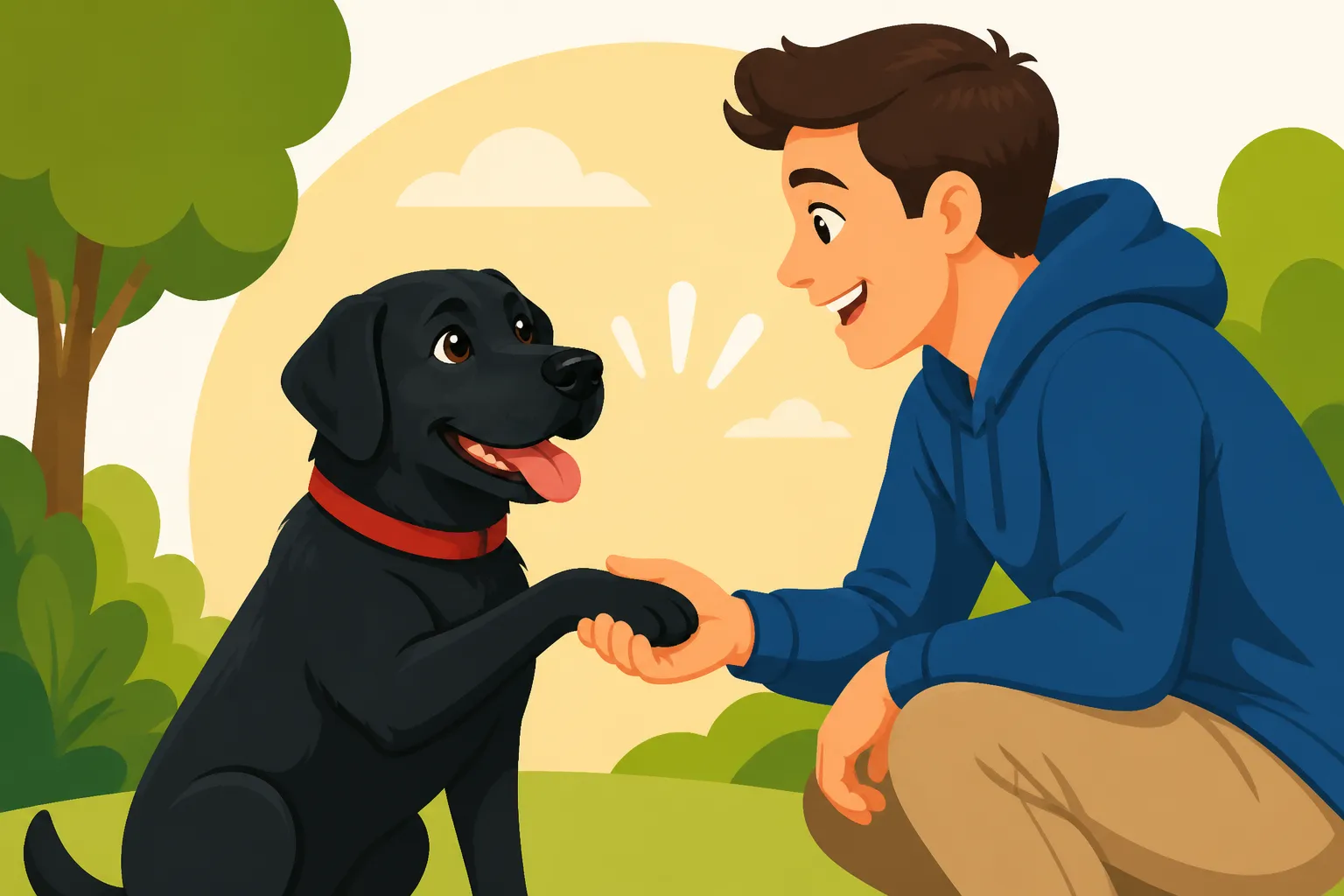
Labradors With Strangers
It's a common scenario: you envision your Labrador as the epitome of the friendly, outgoing family dog, wagging its tail happily at every new face. And often, that's exactly what you get! But sometimes, that "friendly" can become a bit much, morphing into an overzealous jump or an incessant bark that leaves you red-faced. On the flip side, some Labrador owners are surprised to find their typically buoyant companion can be surprisingly reserved, or even anxious, around new people, making social outings a source of stress rather than joy. This guide dives deep into understanding why Labradors behave the way they do with strangers, offering practical advice to navigate these interactions smoothly, ensuring both your dog and your guests feel comfortable and safe.
The Labrador's Natural Inclination Towards Strangers
Labrador Retrievers are renowned worldwide for their friendly, good-natured disposition. This isn't just a happy accident; it's a deeply ingrained trait that has been fostered through generations of breeding for their role as companions and working dogs. Their history involves retrieving game and being around diverse groups of people, including hunters and their families, leading to a natural openness.
The Breed Standard and Temperament
If you look at the official breed standard for Labrador Retrievers, traits like "kind," "outgoing," and "eager to please" are consistently highlighted. These aren't just pretty words; they describe the very essence of what makes a Labrador a Labrador. They were bred to be adaptable, to work alongside humans without aggression or undue timidity, and to be generally cooperative. This inherent nature means that most Labradors are predisposed to be quite accepting, if not outright enthusiastic, about meeting new people. They often see a new face not as a threat, but as a potential source of attention, pets, or even a dropped snack. This natural inclination is a wonderful foundation, but it also means we, as owners, need to guide that enthusiasm carefully. It's a fine line between a welcoming wag and a full-body tackle! For a deeper understanding of their core characteristics, check out Labrador Temperament and Personality.
Why Some Labradors are Overly Enthusiastic
Ah, the "velcro dog" syndrome, often compounded by extreme excitement when a new human enters the scene! Many Labradors simply have an abundance of joy and energy, and they just can't contain themselves when they see a new person. For them, a stranger often represents a novel experience, a potential playmate, or simply someone who might offer a scratch behind the ears. This over-enthusiasm can manifest as jumping, nudging, licking, or even a frantic happy dance that might seem cute to some but intimidating to others, especially children or those who aren't comfortable with large dogs. It’s important to remember that this behavior usually stems from a place of pure, unadulterated happiness and a desire for connection, not malice. They're just not quite sure how to express it in a way that respects personal space.
The Role of Socialization
Early and ongoing socialization is absolutely critical in shaping how your Labrador interacts with strangers throughout their life. A puppy's "socialization window" is a crucial period where positive exposure to a wide variety of sights, sounds, people, and experiences helps them develop into well-adjusted adults. If a Labrador puppy is well-socialized, meaning they’ve had numerous positive, controlled interactions with different types of people – men, women, children, people with hats, people with umbrellas, people on bikes – they are much more likely to develop into confident and polite adults.
Conversely, a lack of proper socialization can lead to issues. A Labrador that hasn't met many people might become shy or fearful, while one that's only ever been allowed to jump on family members might assume that's the appropriate greeting for everyone. It’s not just about meeting people, but about having positive experiences where they learn to calmly accept or politely greet without overwhelming the person. This lays the groundwork for all future interactions and helps prevent common issues like excessive jumping or barking. If you're bringing home a puppy, dedicate time to Socializing a Labrador Puppy to set them up for success.
Common Labrador Behaviors Around Unknown People
Labradors, like people, are individuals, and their reactions to strangers can vary. However, there are some common behaviors that owners frequently encounter, ranging from the endearing to the downright exasperating.
The "Jumping Bean" Greeting
This is perhaps the most iconic and often frustrating behavior for Labrador owners. Your dog sees a new person, their tail starts thumping, and before you know it, they're launching themselves skyward, front paws often making contact with the unsuspecting visitor's chest. This isn't an act of aggression; it's usually an overt display of excitement and an attempt to get closer, to sniff, to lick, and most importantly, to garner attention. Your Labrador is essentially saying, "Hello! You're new! Please pet me!" at full throttle.
The problem, of course, is that a 60-80 pound dog launching itself can knock someone over, scratch them, or simply make them feel very uncomfortable. This behavior is often inadvertently reinforced when owners or guests give attention (even negative attention like pushing them off) while the dog is jumping. The Labrador learns that jumping gets a reaction, and any reaction is better than none. Learning effective strategies to curb this habit is essential for harmonious interactions, both inside and outside the home. We explore this in more detail in Stopping a Labrador From Jumping Up.
Barking at the Door or Window
Many Labradors adopt the role of "neighborhood watch dog" with gusto, often to the annoyance of their owners and neighbors. This barking can be triggered by someone simply walking past the window, the mail carrier approaching the front door, or a visitor ringing the doorbell. It can be a multi-faceted behavior: sometimes it's territorial, a warning to "stay away from my house." Other times, it's pure excitement, particularly if they associate visitors with positive things like attention or treats. It can also be anxiety-driven, a response to an unknown or perceived threat.
Understanding the specific triggers and the underlying emotion behind the bark is key to managing it. Is your Labrador barking at every leaf that blows by, or only when a person enters your property line? Do they bark and then cower, or bark and then happily greet? The answers will help tailor your approach to training. This behavior can be quite disruptive, especially if you live in close quarters, and addressing Labrador Barking Triggers is a common concern for many owners.
The Shy or Reserved Labrador
While less common than the overly exuberant Labrador, some Labs can be surprisingly shy or reserved around strangers. This might manifest as backing away, hiding behind your legs, avoiding eye contact, or even a low growl if approached too quickly. It's easy to assume all Labradors are naturally social butterflies, but genetics and early experiences play a huge role. A Labrador from a shy parent, or one that had limited positive exposure during its critical socialization period, might develop this cautious temperament.
For these dogs, forced interactions can be detrimental, deepening their fear. Instead, patience, gentle encouragement, and positive reinforcement are crucial. The goal isn't to force them to be outgoing, but to help them feel safe and comfortable in the presence of new people. This might mean allowing them to observe from a distance, rewarding calm behavior, and letting them approach on their own terms. This can be a challenging behavior to manage, and understanding Fearful Behavior in a Labrador can provide valuable insights.
Understanding the Roots of Specific Behaviors
Peeling back the layers of your Labrador's behavior around strangers often reveals a mix of genetics, learned experiences, and even simple miscommunication. It's rarely just one thing, which is why a nuanced approach to understanding and managing these interactions is so important.
Genetic Predisposition vs. Environmental Factors
The classic Labrador temperament, as mentioned, is predisposed to friendliness. This genetic blueprint means that, generally speaking, Labradors are born with a higher likelihood of being outgoing and less prone to aggression or extreme shyness compared to some other breeds. However, genetics are not destiny. Environmental factors, especially during puppyhood and adolescence, can significantly shape how those predispositions develop. For instance, a genetically friendly Labrador who experiences negative encounters with strangers early on might become fearful. Conversely, a Labrador with a more reserved genetic lean might still become a well-adjusted, politely social dog if given extensive, positive socialization experiences.
It's a delicate dance between nature and nurture. A reputable breeder screens for temperament in their breeding dogs, trying to produce puppies with the best possible genetic starting point for good temperament. But once that puppy comes home, it's up to the owner to provide the environment, training, and experiences that allow that inherent good nature to flourish and develop into polite, confident interactions with the wider world.
Interpreting Body Language
Our Labradors are constantly communicating with us, and with strangers, through their body language. Learning to "read" these subtle (and sometimes not-so-subtle) cues is paramount to understanding how your dog is truly feeling about an interaction. A loose, wagging tail, relaxed ears, and soft eyes usually indicate a friendly, open disposition. A relaxed mouth or even a "grinning" expression can also be signs of happiness.
However, pay close attention to more subtle signals. A tail tucked between the legs, flattened ears, yawning, lip licking, averting gaze, or a stiff posture can all be signs of anxiety or discomfort, even if the dog isn't actively growling or snarling. A rapid, low wag can also sometimes be a sign of internal conflict or nervousness, not just happiness. If your Labrador's hackles are raised, or they are stiff and staring, these are clear indicators of arousal that could escalate. Misinterpreting these signals can lead to uncomfortable or even unsafe situations, for both your dog and the stranger. Being able to correctly interpret their cues allows you to intervene, redirect, or remove your dog from a situation before it becomes problematic. Learning to spot these "quiet signs" of discomfort in a dog can be invaluable for owners.
The Impact of Past Experiences
Just like humans, dogs are shaped by their experiences. This is particularly true for rescue Labradors, or those adopted as adults, whose pasts might be unknown. A dog that was previously neglected or abused might view strangers with suspicion or fear, even if they have the genetic predisposition for friendliness. A dog that was consistently allowed to jump on people might continue that behavior because it was never taught otherwise.
Every interaction, positive or negative, contributes to your Labrador's mental database about strangers. A single frightening experience can undo weeks of positive training, making a dog wary. On the other hand, consistently positive encounters, where strangers are gentle, respectful, and maybe even offer a delicious treat, can build immense confidence. This is why it's so important to supervise interactions, especially with children or unfamiliar guests, and to advocate for your dog if a stranger is being too pushy or ignoring your dog's signals. Always strive to make encounters with new people a positive and rewarding experience for your Labrador. For those bringing home a dog with an unknown past, Retraining a Rescued Adult Labrador provides helpful guidance.
Strategies for Managing Overly Friendly Labradors
While an overly friendly Labrador might seem like a "good problem to have," it can still be problematic for visitors, elderly family members, or those who aren't dog-savvy. Thankfully, there are many effective strategies to teach your Labrador to greet people politely and calmly.
Training for Polite Greetings
The golden rule for polite greetings is "four on the floor." This means all four of your Labrador's paws must remain on the ground when greeting someone. Start by teaching your Labrador a "sit" or "stay" command reliably in low-distraction environments. Once they've mastered this, you can introduce a stranger (a friend or family member willing to help) in a controlled setting. Have the stranger approach, and as soon as your Labrador starts to get excited, ask for a sit. If they sit, even for a second, the stranger can offer a calm pet or a treat (ideally from you, or with your permission). If they jump, the stranger immediately turns their back and ignores the dog. No eye contact, no speaking, no petting.
Repeat this process, making sure to reward calm, polite behavior profusely with praise and high-value treats. Your Labrador will quickly learn that the only way to get the desired attention from a new person is to keep all four paws on the ground. This requires consistency from everyone who interacts with your dog. You might even keep a small bag of special treats, perhaps from Chewy, by the door to make sure guests have appropriate rewards to offer for polite greetings.
Managing Excitement
Labradors can get really excited, and sometimes that excitement can be difficult to manage. For dogs that simply can't calm down when a new person arrives, managing their environment is key. Consider using a baby gate or keeping your Labrador on a leash when guests first arrive. This allows them to observe from a slight distance without being able to jump or overwhelm the visitor. Once they show signs of calm (a moment of quiet, a relaxed posture), you can gradually allow closer interaction.
Another technique is to provide a "job" during greetings. Have your Labrador retrieve a toy or go to their bed ("place" command) when someone comes to the door. This redirects their energy into an acceptable behavior. Engaging them in a short training session with familiar commands before a guest arrives can also help drain some of that initial burst of energy and focus their attention on you. Consistency is crucial, as is patience. When a Labrador Actually Calms Down often depends on consistent training through their adolescent phases.
Tools and Aids for Public Outings
When you're out and about, controlling an excited Labrador can be a challenge. Investing in the right tools can make a significant difference. A sturdy, comfortable leash is non-negotiable, and it should be appropriate for your Labrador's size and strength. For dogs that pull excessively or lunge at people in excitement, a front-clip harness or a head halter can be incredibly effective. These tools give you more control without causing pain or discomfort to your dog, redirecting their forward momentum.
For example, a front-clip harness, easily found on platforms like Chewy, discourages pulling because when your dog pulls, the leash attachment on their chest turns them to the side, making it harder for them to pull forward with full force. Similarly, a head halter gives you control over their head, making it easier to guide their gaze away from distractions and keep them focused on you. Remember, these are training aids, not magic bullets. They work best in conjunction with consistent positive reinforcement training to teach your Labrador appropriate leash manners and polite behavior in public. For more on this, check out Loose Leash Walking With a Labrador.
Helping a Shy or Fearful Labrador with Strangers
While an overzeenthusiastic Labrador can be a handful, a shy or fearful one can be heartbreaking to witness and challenging to help. The key is never to force interactions and always to prioritize your dog's sense of safety and comfort.
Gradual Introduction and Positive Reinforcement
For a fearful Labrador, the goal is to change their emotional association with strangers from negative (fear, anxiety) to positive (safety, treats, good things). This is achieved through careful, gradual introductions. Start with your Labrador observing a stranger from a distance where they are calm and comfortable – this might be across a park or in a different room of your house. Slowly, over many sessions, reduce the distance, always ensuring your dog remains below their fear threshold.
At each step, pair the presence of the stranger with something highly positive, like their favorite high-value treats or a beloved toy. A fantastic option for this would be some delicious, motivating treats from Chewy that your Labrador absolutely adores. As soon as the stranger appears, treats start flowing. As soon as the stranger leaves, the treats stop. This helps your dog build a positive association: "Stranger means good things happen!" Encourage the stranger to ignore your dog initially, allowing your Labrador to approach on their own terms. If your dog does approach, a gentle, quiet interaction with more treats is a huge win. Read Building Confidence in a Timid Labrador for more in-depth strategies.
Creating a Safe Space
Every fearful Labrador needs a designated safe space where they can retreat and feel secure when strangers are present. This might be their crate in a quiet room, a dog bed under a table, or even just a corner of the living room that is clearly "theirs." The important thing is that this space is respected by everyone and becomes a sanctuary. Teach your Labrador to go to their safe space on command, and ensure that no one disturbs them when they are there.
When guests visit, your Labrador should have the option to stay in their safe space. You can even give them a long-lasting chew or a puzzle toy to occupy them while your guests are around, reinforcing the idea that guests mean good things, even if those good things are enjoyed from a distance. Giving your dog control over their interactions and a place to decompress is vital for reducing stress and building trust.
When to Seek Professional Help
If your Labrador's fear or shyness is severe, impacting their quality of life, or showing signs of aggression (like growling or snapping), it's absolutely crucial to seek professional help. This isn't a sign of failure on your part; it's a responsible step towards helping your dog. A certified professional dog trainer or a veterinary behaviorist has the expertise to assess your dog's specific situation, identify the root causes of their fear, and develop a tailored behavior modification plan.
They can help you understand subtle body language cues, teach you advanced training techniques, and, if necessary, discuss medication that might help reduce anxiety enough for behavior modification to be effective. Early intervention is always best, so don't hesitate to reach out if you're struggling. A professional can provide invaluable guidance and support, ensuring both your Labrador's well-being and the safety of those around them. Consider resources like Choosing a Trainer for a Labrador to find the right professional for your dog's needs.
Ensuring Safety and Comfort for Everyone
Ultimately, the goal of managing your Labrador's interactions with strangers is to create a positive, safe, and comfortable environment for everyone involved – your dog, your family, and your guests. This requires clear communication, consistent training, and sometimes, advocating for your dog's needs.
Teaching Children How to Interact
One of the most important aspects of managing Labrador-stranger interactions, especially with children, is teaching kids how to behave around dogs. Children, with their sudden movements and high-pitched voices, can inadvertently startle or overwhelm even the friendliest Labrador. They might not understand a dog's personal space or how to read subtle warning signs. It's vital to teach children to approach dogs calmly, always ask permission from the owner before petting, and to pet gently rather than grabbing or pulling.
Supervision is non-negotiable. Never leave young children unsupervised with any dog, regardless of how trustworthy they seem. Teach children the "tree" position (standing still and quiet like a tree) if a dog is too boisterous, or the "rock" position (curling up and staying still) if a dog becomes overly excited or fearful. Educating both your Labrador and the children on appropriate boundaries creates a harmonious household. For specific advice on introducing new family members, refer to Introducing a Labrador to Children.
Advocating for Your Dog
As your Labrador's owner, you are their primary advocate. This means politely but firmly setting boundaries with well-meaning but sometimes insensitive strangers. If your Labrador is prone to jumping, don't be afraid to tell an approaching person, "Please ignore him until all four paws are on the ground!" or "He's still learning, please don't encourage the jumping." If you have a shy Labrador, it’s perfectly acceptable to say, "She's a bit nervous around new people, please give her space" or "Let her come to you if she's ready."
You don't owe anyone an explanation or an unwanted interaction. Your dog's comfort and safety come first. This might mean shortening a walk if there are too many overwhelming stimuli, or asking a guest to give your dog space. It also means educating guests about your dog's specific needs and quirks, empowering them to interact appropriately. Don't be shy about standing up for your furry friend.
Consistent Training and Reinforcement
No matter what behaviors your Labrador exhibits around strangers, consistency is the bedrock of successful training. A single inconsistent interaction can undermine weeks of hard work. Everyone in the household, and frequent visitors, should be aware of the rules and apply them uniformly. If one person allows jumping and another corrects it, your Labrador will become confused and progress will be slow.
Ongoing reinforcement is also critical. Training isn't a one-and-done event; it's a lifelong process, especially with a breed as intelligent and food-motivated as a Labrador. Continue to practice polite greetings, reward calm behavior, and manage exciting situations, even after your Labrador seems to have mastered the basics. Life throws curveballs, and occasional refreshers ensure your Labrador remains the well-mannered, confident companion you know and love. Keep a steady supply of Treats That Motivate a Food-Driven Labrador on hand to make training sessions engaging and rewarding.
| Behavior with Strangers | Common Underlying Reasons | Management Strategies |
|---|---|---|
| Jumping Up | Excitement, attention-seeking, lack of learned manners, previous reinforcement. | "Four on the floor" training, turn back/ignore jumping, reward calm sitting. |
| Excessive Barking | Excitement, territoriality, anxiety, boredom, attention-seeking. | Identify triggers, redirect attention, desensitize to triggers, "quiet" command, create distraction. |
| Shyness/Fear | Lack of socialization, negative past experiences, genetic predisposition, feeling overwhelmed. | Gradual introductions, positive reinforcement (treats!), create safe retreat space, avoid forced interactions. |
| Nipping/Mouthing | Puppy behavior, over-excitement, play behavior, lack of bite inhibition training. | Redirect to appropriate chew toys, "freeze" or stop interaction, teach "leave it." |
| Pulling on Leash | Excitement to get to stranger, strong retrieving drive, lack of leash manners. | Front-clip harness, head halter, "heel" training, reward loose leash walking. |
Disclaimer
This article is for general informational purposes only and does not constitute professional advice. Laws, prices and regulations vary by location and change over time. Consult a qualified professional for guidance on your specific situation.