Why Labradors Are Not From Labrador
It’s a common moment for new Labrador owners, or even seasoned enthusiasts, to pause and scratch their heads: "Wait, the Labrador Retriever isn't actually from Labrador, Canada?" You're not alone in that thought! This wonderful breed's name can be quite misleading, causing confusion about its true origins and rich history. This guide is here to clear up that mystery, taking you on a journey to the real birthplace of our beloved Labradors and explaining how they came to be one of the most popular dogs in the world.
The True Origins: Newfoundland's St. John's Water Dog
To understand why our Labs aren't from Labrador, we first need to travel across the North Atlantic to the rugged shores of Newfoundland, a large Canadian island province. This windswept, watery landscape is the undisputed ancestral home of the Labrador Retriever, where their progenitors, known as the St. John's Water Dog, were indispensable companions to local fishermen. These dogs weren't just pets; they were integral members of the fishing crews, working tirelessly in some of the harshest conditions imaginable. It's a testament to their resilience and biddable nature that they thrived in such an environment.
The Fisherman's Best Friend
Imagine a fisherman on the cold, often treacherous waters off Newfoundland in the 17th or 18th century. Their livelihood depended on retrieving fish that had slipped nets, hauling in lines, and even bringing ropes from boat to shore. This was the demanding role of the St. John's Water Dog. They were bred for endurance and a deep love for the water, possessing an incredibly thick, water-resistant coat that protected them from the icy temperatures. Their intelligence and willingness to work alongside humans made them truly exceptional partners. You can still see echoes of this heritage in today's Labradors, particularly their strong retrieving drive and their passion for swimming. The history of this breed is intrinsically tied to the working lives of these hardy fishermen, a connection often overlooked by casual observers. We delve deeper into their initial working lives in Where the First Labrador Ancestors Worked.
Traits That Made Them Perfect
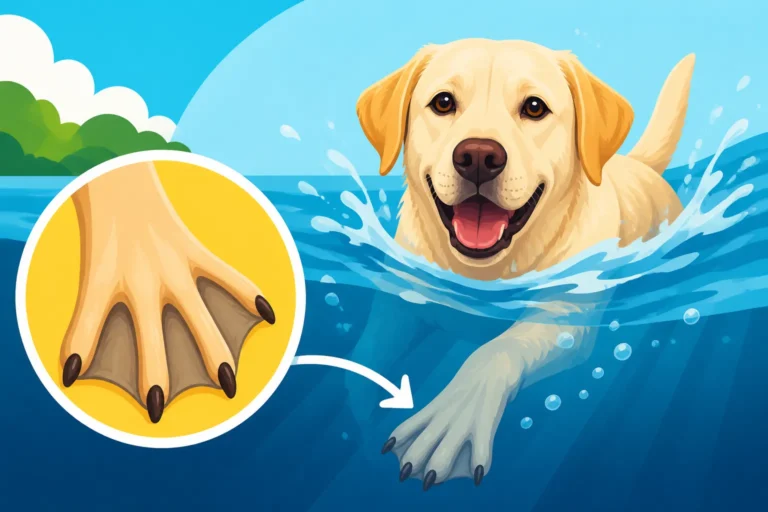
The St. John's Water Dog possessed specific physical and temperamental traits that were perfectly adapted to their environment and tasks. They had strong, athletic bodies, a distinctive "otter" tail that acted as a rudder in the water, and partially webbed feet, all features that aided their swimming prowess. Their short, dense double coat, much like the Labs we know today, repelled water and provided insulation against the bitter cold. Beyond the physical, their temperament was key: they were intelligent, eager to please, and had an incredible "soft mouth," meaning they could carry objects—like a fish or a bird—without damaging it. This gentle grip is a hallmark of the breed, allowing them to retrieve delicate items without leaving a mark. These dogs weren't just strong; they were incredibly precise and trainable, qualities that drew the attention of visitors from across the pond. To learn more about their unique appearance, check out What the St. John's Water Dog Looked Like.
How They Crossed the Atlantic to England
The story of how these remarkable dogs left Newfoundland for England is fascinating, involving trade routes and the keen eyes of British aristocrats who recognized their unique potential. Newfoundland was a British colony, and ships regularly sailed between the island and ports in England. These trading vessels weren't just carrying cod; sometimes, they carried the working dogs that had so impressed the sailors and merchants. It was on these ships that the St. John's Water Dogs made their journey, destined to become the foundation of the Labrador Retriever breed as we know it today.
The British Aristocracy's Interest
Once these dogs arrived on British shores, particularly in the bustling port towns, they quickly caught the attention of the sporting gentry. These were gentlemen who enjoyed hunting and shooting game birds, and they immediately saw the value in a dog that could retrieve waterfowl from cold water with such efficiency and a gentle mouth. Unlike the setters and pointers, these Newfoundland dogs excelled at retrieving from water and dense cover. They were reliable, stoic, and possessed an innate desire to bring back whatever was asked of them. This was a critical turning point for the breed, moving them from the fishing boats to the sprawling estates of the aristocracy, where their retrieving instincts could truly shine in a new context. Many of these early enthusiasts were pivotal in the breed's development, as explored in Which British Estates Built the Breed.
Refining the Breed in Dorset
One of the most influential figures in the early development of the Labrador Retriever in England was the Second Earl of Malmesbury. He was among the first to import these "St. John's dogs" to his estate in Dorset, England, around the early 1800s. He and other breeders, like the Duke of Buccleuch, meticulously bred these dogs, focusing on enhancing their natural retrieving abilities and refining their physical characteristics. They were particularly keen on maintaining the short, dense, water-repellent coat and the biddable temperament. This period was crucial; it was here, in the gentle rolling hills and abundant game-filled waters of England, that the St. John's Water Dog began its transformation into the distinct breed we now call the Labrador Retriever. This careful selection and breeding played a significant role in establishing the breed's consistent qualities, a story further detailed in The Earl of Malmesbury and Early Labradors and How Labradors Reached Poole in Dorset.
The Naming Mystery: A Question of Geography, Not Birthplace
So, if the Labrador isn't from the Labrador Peninsula, why on earth is it called a Labrador? This is where the story gets a bit more tangled and relies on some geographical confusion and perhaps a touch of historical oversight. The "Labrador" in their name isn't referring to their place of origin, but rather to a broader region or possibly a port of call. It's a common misconception, and understanding the subtle distinctions of the past helps clear it up.
The Malmesbury Connection
It was actually the aforementioned Second Earl of Malmesbury who is credited with first referring to these dogs as "Labrador dogs." He wrote to the Fifth Duke of Buccleuch in 1835, describing them as such. It's thought that the name was simply a geographical marker to distinguish them from the larger, longer-coated Newfoundland dog, which was also being imported from the same general area of British North America. The Labrador Peninsula, though distinct from Newfoundland island, was part of the same vast colonial territory known as "British North America." For the British gentry, the distinction between the island and the nearby mainland peninsula might have been less important than simply naming the dogs after the broad region they came from, distinguishing them from other breeds that were also being imported. It was a practical, albeit geographically imprecise, naming convention that stuck.
The Land and the Sea
The term "Labrador" itself has deep roots in exploration. The Labrador Peninsula was named after the Portuguese explorer João Fernandes Lavrador in the late 15th century. "Lavrador" means "landholder" or "farmer" in Portuguese, but it's also associated with "laborer." The connection to the fishing grounds and the working nature of the dogs was strong, even if their specific origin was the island of Newfoundland. It's plausible that the name "Labrador dog" was a convenient shorthand that encompassed the qualities and general region of origin without needing to be hyper-specific about the island versus the peninsula. After all, both areas were known for their harsh environment and rich fishing industry, making the "Labrador" label a fitting descriptor for a dog designed to thrive there. You can learn more about their working history in The Labrador's Fishing and Retrieving Heritage.
Here's a quick look at the key geographical distinctions:
| Feature | Description | Connection to Labradors |
|---|---|---|
| Newfoundland | Large island province off the east coast of Canada. Historically a British colony. | True birthplace of the St. John's Water Dog, the Labrador's direct ancestor. |
| Labrador | Mainland region of Canada, connected to Quebec, adjacent to Newfoundland island. | The region the breed was named after, though not its specific origin point. |
| St. John's | Capital city of Newfoundland, a major port. | Home of the "St. John's Water Dog," the breed's original name. |
| Poole, Dorset | Port town in England where many St. John's Water Dogs were imported. | Initial hub for the breed's development and refinement in England. |
Establishing the Modern Labrador Retriever
From those early, industrious St. John's Water Dogs to the beloved family pets and working dogs of today, the journey has been long and carefully managed. The efforts of early British breeders solidified the breed's characteristics, leading to its formal recognition and a structured path for its future development. This transformation speaks volumes about the breed's inherent qualities and adaptability.
Formal Recognition and Breeding Standards
By the late 19th and early 20th centuries, the breed's popularity in England grew significantly. In 1903, the Labrador Retriever was officially recognized as a distinct breed by The Kennel Club in England, and a breed standard was established. This was a crucial step, as it provided guidelines for breeders to ensure consistency in temperament, health, and physical appearance. It meant that a dog born in one part of the country would share the essential traits of another Labrador, regardless of its specific lineage, as long as it adhered to the standard. This standardization helped the breed gain widespread acceptance and ensured its characteristics were preserved for generations. The journey to formal recognition is fascinating, and you can read more about it in When the Labrador Breed Was Formalized.
The Legacy Continues
Today, the Labrador Retriever continues to be one of the most popular dog breeds in many countries, and it's easy to see why. Their friendly disposition, intelligence, and eagerness to please make them excellent family companions, service dogs, and working partners. Whether they're retrieving ducks from icy waters, guiding the visually impaired, or simply curling up on the sofa next to their favorite human, Labs embody the spirit of their ancestors. Their historical connection to the working fishermen of Newfoundland, and their subsequent refinement in England, has shaped them into the versatile and devoted dogs we cherish. When you're looking for quality food or toys for your own Lab, reliable brands like Chewy understand the needs of active, intelligent dogs descended from such a rich working heritage, offering a wide array of products designed for their well-being. Keeping their coat healthy and shiny, like their water-repelling ancestors, means choosing the right grooming tools, which you can often find readily available on sites like Chewy. Their strong retrieving drive, a direct link to their past, is something many owners channel through games of fetch or even more formal gundog training, making use of their innate abilities. Even when ordering your Lab's favorite kibble from Chewy, it's worth remembering the long journey this incredible breed has taken.
Disclaimer
This article is for general informational purposes only and does not constitute professional advice. Laws, prices and regulations vary by location and change over time. Consult a qualified professional for guidance on your specific situation.