How Labradors Reached the United States
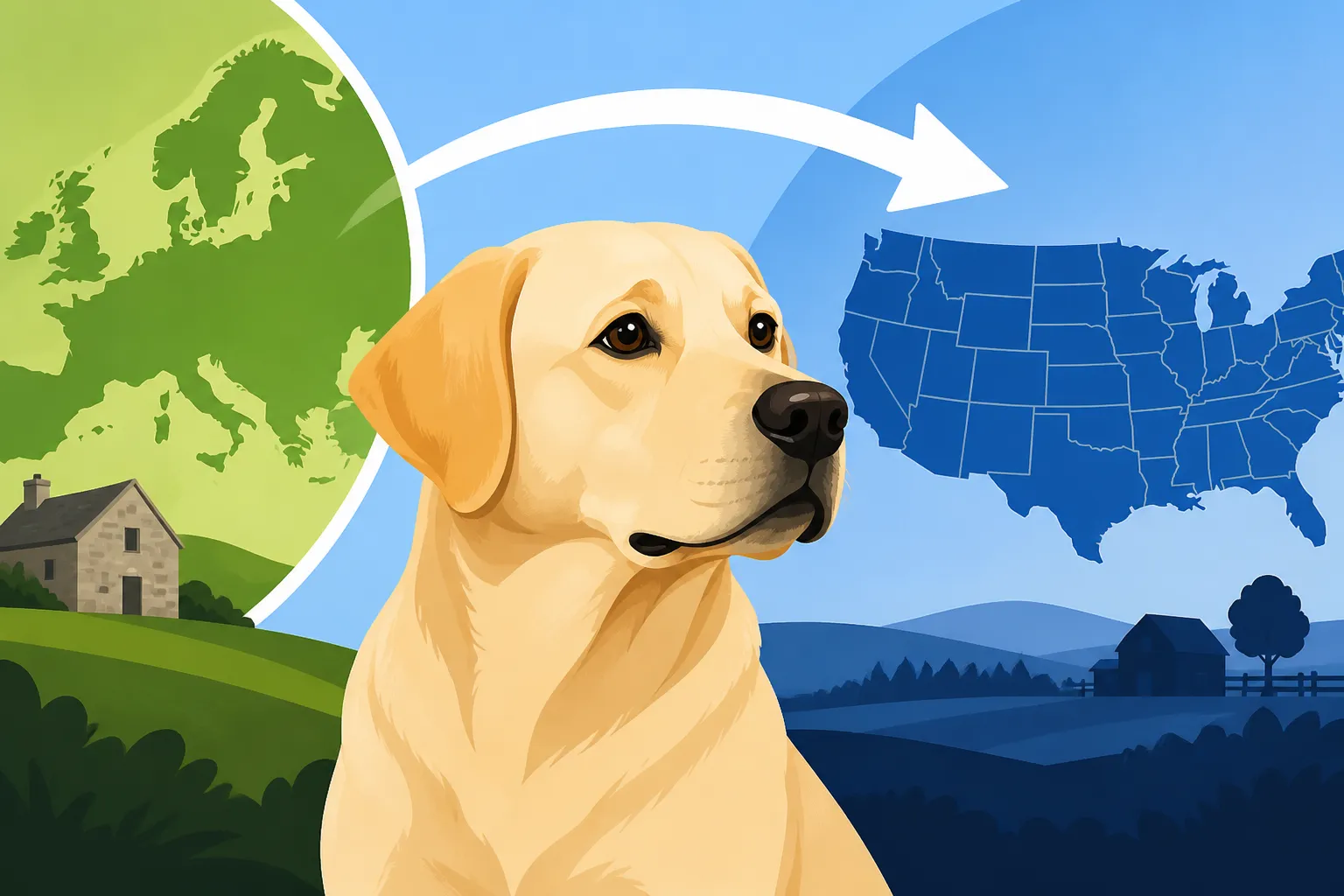
Many Labrador owners in the United States look at their beloved companions, curled up on the rug or bounding through a field, and might not realize the incredible journey their breed took to become such an iconic part of American life. It's easy to take their widespread presence for granted, but the story of how Labradors came to call the USA home is a fascinating tale of trans-Atlantic travel, dedicated breeders, and a breed's undeniable charm. This guide will take you through that captivating history, tracing their origins across the ocean to their eventual rise as America's favorite dog.
The Labrador's Origins Across the Atlantic
Before Labradors ever set paw on American soil, their story began far away, in the harsh, rugged coastal regions of Newfoundland and then in the refined kennels of England. Understanding this initial chapter is crucial, as it set the stage for the remarkable dogs that would eventually cross the Atlantic.
The St. John's Water Dog Foundation
Our story truly begins not with the Labrador Retriever as we know it today, but with its direct ancestor: the St. John's Water Dog. Imagine the icy waters and rocky shores of Newfoundland in the 18th and 19th centuries. Here, a robust, medium-sized dog with a thick, water-resistant coat and webbed feet worked tirelessly alongside local fishermen. These dogs weren't just pets; they were essential crew members, diving into frigid waters to retrieve lost fish, nets, and lines, and helping haul in catches. They were known for their incredible endurance, strong swimming ability, and an almost innate desire to retrieve. This foundation stock, a mix of various working dogs brought by European settlers, was the raw material from which the Labrador would eventually be refined. They weren't just resilient; they possessed an unparalleled willingness to please their human companions, a trait that would endure through generations. The St. John's Water Dog Behind the Labrador describes these working dogs in more detail.
Early British Patronage and Development
As British ships frequented the shores of Newfoundland for fishing, they noticed these remarkable working dogs. It wasn't long before some of these St. John's Water Dogs found their way onto these vessels, returning to England. Here, they caught the eye of the British aristocracy, particularly in areas like Dorset, known for its sporting estates. Nobles like the Earl of Malmesbury and the Duke of Buccleuch were instrumental in developing the breed we now recognize. They selectively bred these dogs, focusing on their retrieving instincts, biddable temperaments, and stamina for hunting game birds. The environment was different – from retrieving fish in the sea to retrieving pheasants and ducks on land – but the dogs' core attributes shone through. This period of focused breeding in Britain refined the St. John's Water Dog into the Labrador Retriever, giving them the distinct conformation and unwavering retrieving drive that would become their hallmark. It was in these British kennels that the breed's formal identity began to take shape. When the Labrador Breed Was Formalized delves into this period of definition.
The First Wave of Labradors Arrives in America
With the breed firmly established and gaining recognition in Britain, it was only a matter of time before these exceptional dogs caught the attention of enthusiasts across the pond. The journey to the United States was largely driven by a demand for superior sporting dogs.
Sporting Enthusiasts and Early Imports
The late 19th and early 20th centuries saw a burgeoning interest in organized field sports in the United States. Wealthy American sportsmen, often those with ties to British hunting traditions, were always on the lookout for the best possible hunting dogs. They heard tales, and perhaps saw first-hand during trips abroad, of the unparalleled retrieving abilities of the British-bred Labradors. These dogs were renowned for their "soft mouths," meaning they could carry game without damaging it, and their relentless drive to work. This made them ideal for hunting ducks, geese, and upland birds in the diverse American landscapes. The first Labradors to arrive in the US weren't usually brought as family pets, but as highly prized working animals, imported specifically to enhance hunting kennels and participate in field trials. They were seen as serious tools for serious hunters, capable of handling tough terrain and cold waters, making them perfectly suited for the challenging demands of American waterfowl hunting.
Key Individuals and Early Kennels
The initial establishment of Labradors in the United States owes a great deal to a few pioneering individuals and kennels. One of the earliest and most influential figures was Lorna Countess Howe of the famous Banchory Kennels in Scotland, who bred and exported some foundational Labradors to the US. Another pivotal character was Charles Cushman, who founded the Wingan Kennels in Long Island, New York, in the 1920s. Cushman imported several Banchory Labradors and was a passionate advocate for the breed. His dedication helped introduce the Labrador to a wider American audience, particularly within the hunting community. Other early kennels, often formed by affluent individuals with a deep appreciation for gundogs, also began importing and breeding Labradors, laying the groundwork for the breed's future success. These early adopters recognized the breed's potential beyond simply a novel import, seeing them as the future of American retrieving sports. Many of the Labradors imported during this period were of the "English" or "show" type, characterized by a more robust build and a calmer demeanor than some of the later field lines. English and American Labrador Types explores these distinctions.
Establishing the Breed in the American Kennel Club
For any breed to truly flourish and become widely recognized in the United States, formal acknowledgment by the American Kennel Club (AKC) is a crucial step. This process not only validated the breed's existence but also set the standards for its future development.
The Path to AKC Recognition
The initial imports of Labradors were undoubtedly impressive to those in the sporting world, but formal recognition was needed to cement their place. The AKC first recognized the Labrador Retriever as a distinct breed in 1917. This was a significant milestone, opening the door for Labradors to be officially registered, participate in conformation shows, and gain broader public awareness. Before this, they might have been lumped in with other retriever types or simply considered "hunting dogs." The recognition was a testament to the growing interest and the efforts of early breeders and enthusiasts who championed the breed's unique qualities. It meant that a standardized set of characteristics, temperament, and appearance could be upheld, ensuring the integrity of the breed as it grew in popularity. This official stamp of approval was critical for moving beyond niche sporting circles into the mainstream American dog-owning consciousness.
Crafting the American Breed Standard
With AKC recognition came the establishment of a breed standard, a detailed description of the ideal Labrador Retriever. This document outlines everything from ideal height and weight to coat texture, eye color, and temperament. For American breeders, this standard became the blueprint for responsible breeding, guiding their choices to preserve the traits that made Labradors so special. While heavily influenced by the British standard, the American interpretation sometimes emphasized slightly different nuances, often favoring a more athletic build suited for extensive field work, though still appreciating the classic, blocky appearance. This standard ensured consistency, allowing newcomers to the breed to understand what a "true" Labrador should look and act like. It also served as a guide for judges in conformation shows, ensuring that dogs were evaluated against a uniform ideal. Understanding The AKC Labrador Retriever Breed Standard helps explain the physical and temperamental goals for the breed.
The Labrador's Rise to Popularity in the US
The Labrador's initial foothold in the US was within the hunting community, but their inherent qualities soon transcended this specialized role, leading to an unprecedented surge in popularity that made them a household name.
Adapting to American Lifestyles and Needs
What made the Labrador truly resonate with American families was their incredible versatility and adaptable nature. While they excelled in the field, their intelligence, eager-to-please attitude, and gentle demeanor made them perfect companions outside of hunting season. They proved themselves to be wonderful family dogs, patient with children, sociable with strangers, and generally robust and healthy. As suburban living expanded in post-war America, people sought dogs that could be both active outdoor companions and calm, loving members of the household. The Labrador fit this bill perfectly. Their moderate grooming needs and relatively easy trainability also made them appealing to owners who might not have extensive experience with dogs. Many American families found that a Labrador purchased through a reputable breeder, perhaps with some training supplies from a store like Chewy, quickly became an indispensable part of their daily lives.
From Working Dog to Family Companion
The transition from primarily a working gundog to a beloved family companion was a natural evolution for the Labrador. Their innate desire to retrieve and carry things around, a "soft mouth" trait passed down from their St. John's Water Dog ancestors, endeared them to owners. They were happy to retrieve balls in the backyard just as readily as a fallen duck. This adaptability saw them excel not just in hunting, but also in nascent fields like service dog work for the blind, search and rescue, and even early detection roles. Their steady temperament and keen intelligence were invaluable. This diverse capability, combined with their affectionate nature, solidified their place in American hearts. They became symbols of loyalty, joy, and the quintessential family pet, appearing in everything from movies to advertising campaigns, further cementing their iconic status. It’s hard to imagine American dog culture without the Labrador Retriever being a central figure.
Modern Labrador Presence and Legacy
Today, the Labrador Retriever stands as one of the most recognizable and beloved dog breeds in the United States, a testament to its enduring appeal and remarkable journey.
Continued Dominance in Popularity
For an astounding 31 consecutive years, from 1991 to 2022, the Labrador Retriever held the top spot as America's most popular dog breed, according to AKC registration statistics. While they've recently slipped from that number one position, they remain firmly entrenched as one of the most cherished breeds in the country. This sustained popularity is no accident; it speaks volumes about the breed's consistent qualities: their friendly temperament, intelligence, versatility, and adaptability to a wide range of living situations and family dynamics. Even with a slight dip in ranking, you can still find Labradors in nearly every American town and city, playing fetch in parks, greeting visitors, or assisting individuals as service animals. The Labrador's Thirty-One Years at Number One delves into this incredible streak of popularity.
The Enduring American Labrador
The American Labrador today is a vibrant and diverse group, encompassing everything from sleek, high-energy field lines still dominating hunt tests and working roles, to the more robust, calm-tempered show lines favored by many families. Regardless of their specific lineage, the core Labrador traits remain: loyalty, intelligence, a deep love for people, and that ever-present desire to retrieve. They represent an incredible success story of a breed imported for a specific purpose that blossomed into a national treasure. Owners continue to seek them out for their unwavering companionship and ability to seamlessly integrate into family life. Ensuring these dogs receive proper nutrition, whether through a specialized diet or high-quality kibble from a retailer like Chewy, is a constant consideration for their dedicated owners. From the first hardy St. John's Water Dogs to the countless Labradors gracing American homes today, their journey is a powerful reminder of the profound bond between humans and their canine companions.
Here’s a brief look at the Labrador's journey and key milestones:
| Period | Key Region/Event | Significance for Labradors |
|---|---|---|
| 18th-19th Century | Newfoundland | Ancestral St. John's Water Dog developing retrieving skills with fishermen. |
| Mid-19th Century | Britain (Dorset, Scotland) | Aristocracy refine breed for gundog work, establish "Labrador Retriever" identity. |
| Early 20th Century (1900s) | United States (Initial Imports) | American sportsmen import Labradors for hunting, establish early kennels. |
| 1917 | American Kennel Club | Official AKC recognition of the Labrador Retriever breed. |
| Mid-20th Century (1950s+) | United States (Widespread) | Breed gains popularity as family companion, service dog, and versatile pet. |
| 1991-2022 | United States (AKC Records) | Holds #1 spot for most popular breed for 31 consecutive years. |
This article is for general informational purposes only and does not constitute professional advice. Laws, prices and regulations vary by location and change over time. Consult a qualified professional for guidance on your specific situation.