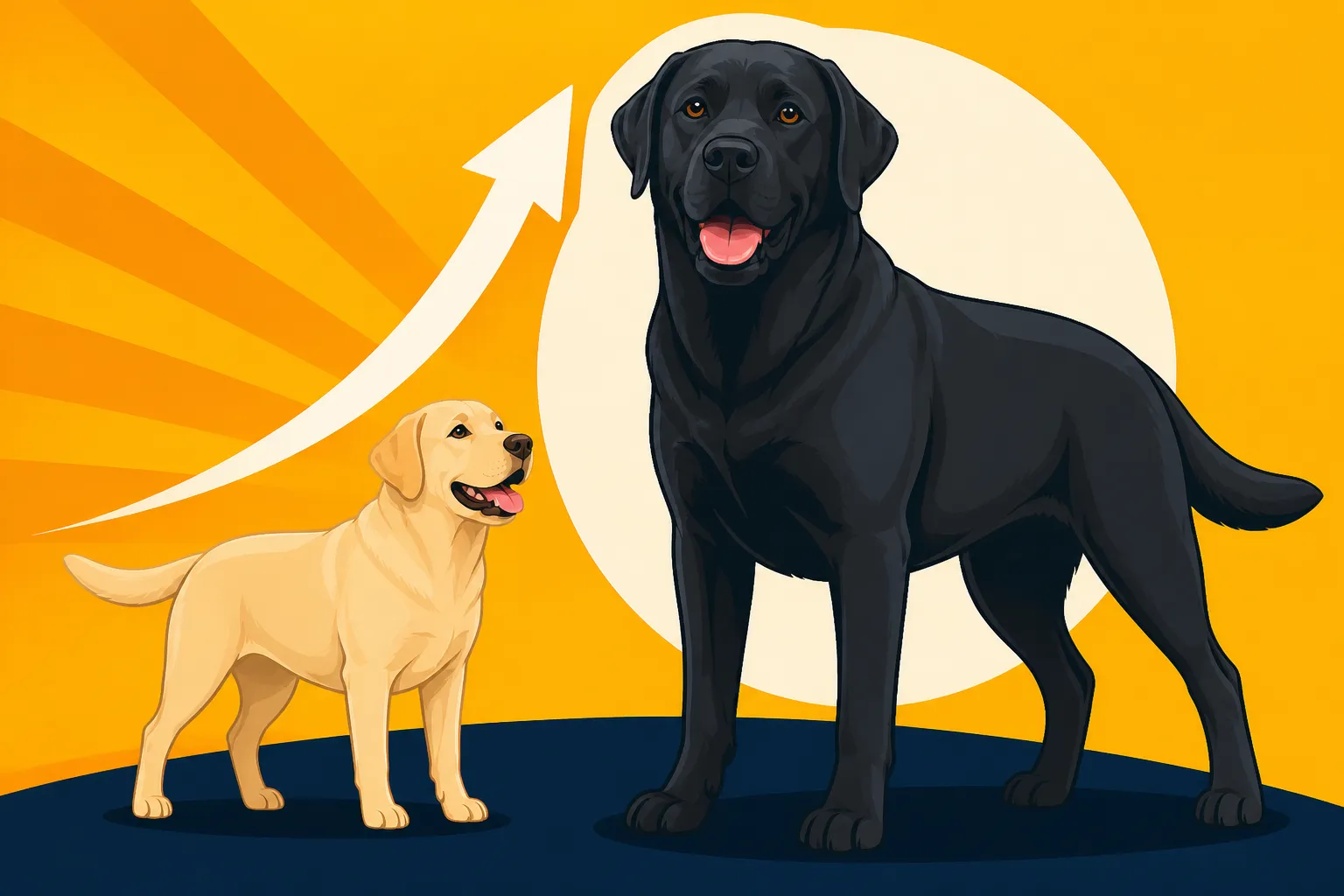
Labradors That Grow Well Over Standard
It’s a funny thing when you bring home a Labrador puppy, full of dreams about a medium-to-large-sized companion, only to watch them grow and grow… and then keep growing! Many Labrador owners find themselves with a dog that seems to tower over their friends' Labs, or just generally feels much bigger than the breed standard suggests. This guide is here to unravel why some Labradors grow well over the expected size, what this means for their health, and how to best care for your wonderfully oversized canine companion.
Understanding the Labrador Breed Standard for Size
When we talk about a Labrador Retriever, there's a certain image that comes to mind: sturdy, athletic, and substantial, but not necessarily giant. Yet, many of us end up with Labs that push the boundaries of what's considered "standard." It's important to understand what those standards actually are before we delve into why some dogs exceed them.
What the AKC and Kennel Club Standards Say
Both the American Kennel Club (AKC) and the Kennel Club (KC) in the UK have detailed breed standards that describe the ideal Labrador Retriever, including specific height and weight ranges. These standards are essentially blueprints for what a Labrador should look like and how they should be built, guiding breeders and judges. For males, the typical height range is often around 22.5 to 24.5 inches at the shoulder, with weights usually falling between 65 and 80 pounds. Females tend to be a bit smaller, generally 21.5 to 23.5 inches tall and weighing 55 to 70 pounds.
It's easy to look at those numbers and think, "My dog is way past that!" And you wouldn't be alone. These figures represent an ideal, a target for breeders aiming for conformity. They are not hard and fast rules that every single purebred Labrador must perfectly adhere to. Think of it like a guideline – most Labradors will fall within or very close to these ranges, but natural variation is always at play. It's not uncommon for a male Lab, especially one from certain working lines, to easily hit 90 pounds or stand a bit taller than the upper limit and still be a healthy, well-proportioned dog, if not technically "standard." We've actually explored the specifics of these proportions in more detail in Labrador Size and Adult Proportions.
Why Standards Exist
So, why bother with these standards at all if dogs can naturally be larger or smaller? The purpose of breed standards is multi-faceted. Firstly, they help preserve the unique characteristics and functionality of a breed. For Labradors, this means maintaining their strong retrieving drive, their distinctive "otter" tail, and their friendly, outgoing temperament, alongside a physical structure that supports their working ability. A dog that is too small might lack the power for retrieving heavy game, while one that is excessively large could struggle with agility or endurance.
Secondly, standards act as a health guideline. Maintaining a consistent size range can help prevent certain health issues associated with extreme sizes. For instance, excessively large dogs might be more prone to joint problems simply due to the increased stress on their skeletal system. Breeders who adhere to The AKC Labrador Retriever Breed Standard are striving to produce dogs that are not only beautiful but also structurally sound and capable of performing the tasks they were originally bred for. It's about maintaining the essence of the Labrador, rather than just imposing arbitrary rules.
Factors Contributing to a "Larger Than Standard" Labrador
So, you've got a Labrador that's busting through the typical size charts. You're not alone, and it's not always a cause for alarm. Several factors can contribute to a Labrador growing larger than the breed standard might suggest.
Genetic Variance and Lineage
Even within purebred lines, there's a natural spectrum of size. Just like in human families, you can have a tall uncle and a shorter cousin, even though they share a genetic pool. Labradors are no different. While breeders strive for consistency, genetic expression can be a bit unpredictable. Some lines naturally tend to produce larger-boned or taller dogs. This is particularly true when comparing different types of Labradors, such as those bred for field work versus those bred for the show ring.
Field line Labradors, often referred to as "American Labs" when comparing them to their more heavily-boned "English" counterparts, can sometimes be taller and more rangy, even if they aren't necessarily heavier in mass. Conversely, some show lines, while adhering to the standard's height, might carry more substance and bone, making them appear larger. It’s a fascinating aspect of canine genetics and breeding. If you're curious about the nuances, you might want to read more about English and American Labrador Types. It's not always about poor breeding; sometimes, it's just the natural variation within healthy, robust genetics, especially if your dog comes from a background where function, rather than strict cosmetic adherence to size, was prioritized.
Growth Beyond Expected Limits
Puppies grow at an astonishing rate, and sometimes they just keep going! While there are general growth curves, every puppy is an individual. Some might hit a growth spurt later than others, or simply have a genetic predisposition to a larger final frame. It's not necessarily an indication of an underlying problem; sometimes, they're just built bigger. This can be influenced by the size of their parents and grandparents – if your pup has a few big boys or girls in their ancestry, it’s not surprising they might follow suit.
It’s easy to fret, especially when you compare your pup to others in puppy class or at the dog park. But remember, a dog finishes growing in height around 12-18 months, though they can continue to fill out and gain muscle mass until they're two or even three years old. A growth spurt that puts them a bit taller or heavier than the standard at, say, 10 months, might just mean they’ll level out as they mature, or they might simply be a larger example of the breed. The key is to ensure their growth is steady and healthy, not overly rapid, which can put strain on developing joints.
Overfeeding and Obesity (The Critical Distinction)
This is perhaps the most crucial point for any owner of a large Labrador: distinguishing between a genuinely large dog and an overweight one. It's incredibly easy to overfeed a Labrador, especially given their notorious love for food. We've all been there, giving in to those soulful eyes. An overweight Labrador will exceed the breed standard, but this is a health concern, not just a size variation. Obesity is a serious issue that can drastically shorten a Labrador's lifespan and lead to a host of health problems, including increased risk of joint issues, diabetes, and heart disease. Why Labradors Gain Weight So Easily is a topic many of us can relate to!
An truly large Labrador, even if they are at the top end of or slightly over the standard weight, should still have a discernible waist when viewed from above, and you should be able to feel their ribs without pressing too hard. An obese Labrador, on the other hand, will often have no visible waist, a sagging belly, and you'll struggle to feel their ribs. It's vital to be honest with ourselves and our vets about our dog's body condition. If your Labrador is large and carries too much fat, that's a different situation than a large, lean, and muscular dog.
| Characteristic | "Larger Than Standard" (Healthy) | Overweight (Unhealthy) |
|---|---|---|
| Ribs | Easily felt with slight pressure | Hard to feel, covered by fat |
| Waistline | Visible tuck from above | Absent or very slight |
| Belly | Flat or slight tuck | Sagging or distended |
| Energy Level | Typically active and playful | May be lethargic, less active |
| Muscle Mass | Good, firm muscle tone | Often soft, less defined muscle |
| Joint Mobility | Generally good, fluid movement | May show stiffness or reluctance |
This table helps illustrate that size alone isn't the sole determinant of health. A huge part of responsible Labrador ownership is ensuring Keeping a Labrador at a Healthy Weight, regardless of whether they are on the smaller or larger side of the standard.
Health Implications and Management for a Larger Labrador
Having a larger-than-average Labrador can be wonderful, but it does come with specific considerations, especially regarding their long-term health and daily care. It’s all about proactive management to ensure they live a long, happy, and comfortable life.
Joint Health Concerns
Any large breed dog, including Labradors, carries a predisposition to certain orthopedic issues, and a larger frame can exacerbate these risks. Conditions like hip and elbow dysplasia, common in Labs, can become more problematic if there's more weight bearing down on already compromised joints. Even if your big Lab is at a healthy lean weight, the sheer size and leverage on their joints means they experience more wear and tear than a smaller dog. This isn't to say a large Lab will have these issues, but their risk factor might be elevated.
Regular veterinary check-ups are paramount, and your vet might recommend specific supplements or even early X-rays to monitor joint health, especially if you notice any changes in their gait or reluctance to jump. Understanding Labrador Hip and Elbow Dysplasia is crucial for all Labrador owners, but particularly for those with larger dogs. Additionally, larger, powerful dogs can be prone to injuries like Cruciate Ligament Tears in Labradors, which can be devastating. Managing their weight and providing appropriate exercise can go a long way in mitigating these risks.
Nutrition and Exercise Considerations
Feeding a larger Labrador correctly is an art form. It's not about feeding them more simply because they are bigger. It's about feeding them the right amount to maintain a lean, healthy body condition, preventing the accumulation of excess fat that burdens their larger frame. You'll need to pay close attention to the calorie content of their food and measure portions precisely. Free-feeding is almost always a recipe for an overweight Labrador, especially if they are already prone to being larger. Using a measuring cup and a kitchen scale to ensure accuracy can be a game-changer. For advice on this, check out Portion Control for a Food-Obsessed Labrador.
Exercise needs to be appropriate for their size and age. While Labradors are naturally energetic, especially when young, high-impact activities should be carefully managed, particularly during their growth phases. Over-exercising a growing large breed puppy can put undue stress on their developing joints and growth plates. Swimming is often an excellent low-impact exercise option that builds muscle without jarring impact. As they mature, ensure they get plenty of opportunities for walks, retrieves, and mental stimulation. Remember to read Exercise Limits for a Labrador Puppy to ensure you're not pushing them too hard too soon.
Practical Challenges of a Larger Dog
Beyond health, a larger Labrador simply takes up more space and requires larger versions of almost everything! Their crate needs to be substantial enough for them to stand, turn around, and lie down comfortably. Car travel requires more robust barriers or larger crates. A larger dog can easily overwhelm smaller children or elderly relatives with their enthusiasm, so good manners and training become even more vital. Things like sturdy leashes and harnesses are essential, as a pulling large Labrador can be quite a force to contend with.
Consider your living space, too. A sprawling giant might struggle in a tiny apartment, needing more frequent outings. Everything from their bed to their food bowls will likely be on the larger (and often more expensive) side. It's not a deal-breaker for owning a big Lab, but it's certainly something to factor into your daily routine and budget.
Embracing Your Big Labrador
It’s easy to get caught up in numbers and standards, but at the end of the day, your Labrador is a beloved family member. Embracing their unique size means shifting your focus from "too big" to "perfectly sized" for your family, while always prioritizing their health and well-being.
Focusing on Health, Not Just Size
The most important takeaway is that a healthy Labrador is one that is lean, well-muscled, and physically comfortable, regardless of whether they technically fit the precise height and weight ranges of a breed standard. A dog that is slightly taller or heavier but maintains a healthy body condition will almost always fare better than a "standard" sized dog carrying too much weight. Focus on regular veterinary care, a balanced diet, and appropriate exercise.
Instead of fixating on the scale, pay attention to their energy levels, their coat condition, how they move, and their overall demeanor. These are far better indicators of health than a measuring tape or a number on a weight chart. If your vet confirms your big Lab is healthy and structurally sound, then celebrate their magnificent size!
Responsible Ownership of a Large Breed
Owning a larger dog means that good training and socialization are non-negotiable. A rambunctious, untrained smaller dog can be a nuisance; a rambunctious, untrained large Labrador can be a hazard. It's essential to invest time and effort into their education from puppyhood. Socializing a Labrador Puppy early and often is key to ensuring they grow into a confident, well-adjusted adult who can navigate the world calmly, despite their imposing size.
Teaching polite greetings, a solid recall, and Leash Manners for a Powerful Labrador are paramount. A well-behaved large dog is a joy, capable of accompanying you on many adventures without causing concern. Remember that even if your Labrador is larger, their heart is still that of a gentle, eager-to-please Retriever. Provide them with ample love, consistent training, and all the mental and physical exercise they need, and your "over standard" Labrador will be an extraordinary companion for years to come.
Disclaimer
This article is for general informational purposes only and does not constitute professional advice. Laws, prices and regulations vary by location and change over time. Consult a qualified professional for guidance on your specific situation.