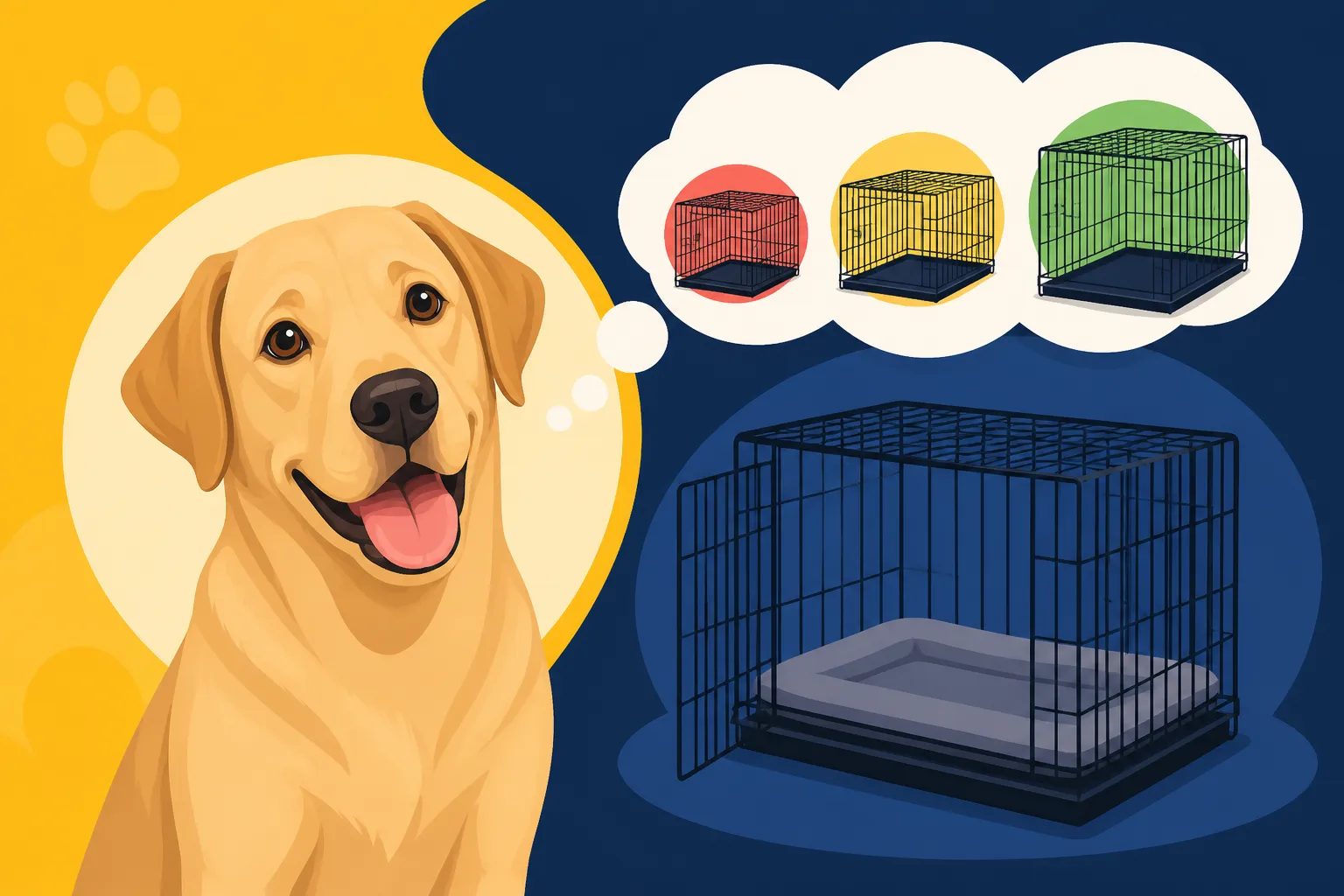
What Size Crate a Labrador Needs
Bringing a new Labrador into your home is an incredibly exciting time, but the sheer volume of choices for gear can quickly become overwhelming. One of the biggest head-scratchers for new owners is figuring out the perfect size crate – get it wrong, and you're either dealing with endless potty accidents or an uncomfortable, cramped pup. This guide is here to walk you through exactly what size crate your Labrador needs, from their tiny puppy days right through to their adult years, ensuring comfort, safety, and successful training.
Why Crate Size Matters So Much for Your Labrador
Choosing the right crate size for your Labrador isn't just about finding a box they fit into; it's a foundational element of successful crate training and fostering good habits. Many people underestimate the profound impact crate dimensions have on a dog's well-being and their ability to learn appropriate house manners.
Comfort, Safety, and Proper Development
Imagine being stuck in a space where you can barely stretch out, or conversely, one so vast you feel exposed and insecure. That's what it's like for a Labrador in an incorrectly sized crate. A crate that's too small is not only physically uncomfortable but can lead to joint stiffness, muscle cramps, and even create a negative association with the crate, making training much harder. It's not a place of refuge but a prison. On the flip side, a crate that's overly large might seem generous, but it undermines one of the primary benefits of crating: leveraging a dog's natural instinct to keep their sleeping area clean. In a giant crate, a puppy can simply choose one corner to relieve themselves and sleep comfortably in another, defeating the entire purpose of house training.
For a growing Labrador puppy, whose bones and joints are still developing, adequate space to stand, turn, and lie down without awkward contortions is crucial. This ensures they can rest comfortably in various positions, supporting healthy development. Remember, the crate should feel like a cozy den, a safe haven, not a restrictive box. When your puppy is little, it’s also a great time to implement other good habits, like managing their interactions with young children, as detailed in "Labrador Puppy Nipping at Small Children".
Potty Training Success Relies on the Right Fit
The golden rule of crate training is rooted in a dog's innate desire not to soil their sleeping area. This instinct is incredibly powerful and one of our best tools for successful house training. However, this instinct only works if the "sleeping area" is defined by the snug, appropriate size of the crate.
If a crate is too large, your clever Labrador puppy will quickly figure out they can designate one end as their bathroom and the other as their bed. This entirely bypasses the learning process of holding their bladder and bowels until they are let outside. You'll find yourself cleaning up accidents inside the crate, which is incredibly frustrating and teaches your puppy absolutely nothing about proper elimination habits. The crate becomes just another room where accidents happen, rather than a sacred, clean space. When considering their development and how long they can hold it, reading up on "How Long a Labrador Puppy Can Hold It" can provide valuable context for managing potty breaks alongside crate training.
Behavioral Implications and Crate Aversion
The wrong crate size can have significant behavioral repercussions. A dog forced into a cramped crate might develop anxiety, becoming distressed every time they're put inside. This isn't just uncomfortable; it can lead to excessive barking, destructive chewing of the crate itself, or even attempts to escape, potentially causing injury. This creates a deeply negative association, making future crate use for travel, vet visits, or recovery from surgery incredibly stressful for both you and your Labrador.
Conversely, a crate that's too big, while not causing physical discomfort, can fail to provide the secure, den-like feeling many dogs crave. Some dogs might feel less secure, more exposed, and thus more anxious in a vast space. The crate should be a place where they feel safe and contained, not overwhelmed. By getting the size right from the start, you set your Labrador up for positive experiences, helping them view their crate as a comforting retreat rather than a punishment or a confusing space.
Crate Dimensions for an Adult Labrador
Once your Labrador puppy grows into their magnificent adult self, they'll need a spacious, comfortable crate that accommodates their full size. Understanding what constitutes "just right" for an adult is key to providing a safe and happy den.
The "Stand, Turn, Lie Down" Rule
This is the quintessential rule for determining the correct crate size for any dog, and it applies perfectly to a full-grown Labrador. Your Labrador should be able to:
- Stand up straight: Without having to duck their head or hunch their back.
- Turn around comfortably: Without bumping into the sides or having to squeeze.
- Lie down in a natural position: Stretched out on their side or belly, without any limbs poking out or being crammed against the crate walls.
To measure this effectively, have your Labrador stand naturally. Measure their length from the tip of their nose to the base of their tail (don't include the tail itself). Then measure their height from the top of their head to the floor. Add about 2-4 inches to both measurements to ensure adequate clearance for standing and turning comfortably. Remember, a Labrador's adult proportions can vary slightly between males and females, and even between English and American lines, so always measure your individual dog. You can learn more about these variations in "Labrador Size and Adult Proportions".
Typical Measurements for Adult Labs
For most adult Labrador Retrievers, you'll be looking at large to extra-large crates. The most common sizes that fit the bill are:
- 42-inch Crate: (Approximately 42"L x 28"W x 30"H) This size is often suitable for many adult female Labradors and smaller males, especially those from the more compact English lines. It provides ample room for them to move without feeling cavernous.
- 48-inch Crate: (Approximately 48"L x 30"W x 33"H) This is typically the ideal size for larger male Labradors, particularly those from field lines known for being taller and more athletic. It ensures even the biggest Lab has plenty of space to stretch out and get comfortable.
It's important to remember that these are general guidelines. Always measure your specific dog. If your Labrador is particularly tall or long-bodied, err on the side of the larger size. For instance, a large male American field Labrador might find a 42-inch crate a bit snug, especially when trying to sprawl out for a deep nap. Stores like Chewy offer a wide range of crates with detailed dimensions, making it easier to compare and select the right one based on your measurements.
Considering Bedding and Accessories
When you're eyeing those crate dimensions, don't forget to factor in what goes inside the crate. A thick, comfortable dog bed or mat can take up precious inches. You want your Labrador to be able to lie on their bed and still meet the "stand, turn, lie down" criteria. Also, consider if you'll be attaching a water bowl or feeder to the crate bars. While these are usually compact, they still occupy a small amount of space, and your dog needs to be able to easily access them without hitting their head or body.
Choosing a crate that's slightly larger than the absolute minimum can provide that extra bit of cushioning for bedding and accessories, ensuring that their den remains a truly comfortable and welcoming space. This is especially true as Labradors age and may appreciate more space to shift positions comfortably due to conditions like Labrador Arthritis in Middle Age.
Crate Sizing for a Growing Labrador Puppy
One of the biggest challenges when crating a Labrador puppy is their incredible growth rate. They go from a tiny bundle of fluff to a substantial dog in what feels like mere months. Thankfully, there are smart solutions to ensure their crate grows with them, preventing both accidents and discomfort.
The Adjustable Crate Solution
For puppies, the absolute best investment is an adult-sized crate that comes with a divider panel. These crates are designed to be flexible, allowing you to adjust the internal living space as your puppy grows.
Here's how it works:
- Start Small: When your Labrador puppy first comes home at 8-10 weeks, you'll use the divider to make the crate just large enough for them to stand, turn around, and lie down comfortably, with no extra room to create a "bathroom corner." This section will feel quite snug, but not cramped. It leverages their natural instinct not to soil their den, making potty training much more effective.
- Gradual Expansion: As your puppy grows over the weeks and months, you simply move the divider to gradually increase the available space. This means you only need to buy one crate for their entire life, saving money and hassle in the long run. Many popular crate brands, easily found on sites like Chewy, come standard with these divider panels.
- Why it's crucial: This method prevents potty training setbacks. If you start with a crate that’s too large without a divider, you're practically inviting accidents. For more on successful house training, check out "Potty Training a Labrador With No Yard".
Gradually Increasing Space
Knowing when and how much to increase the crate space is a bit of an art, but there are clear signals:
- Watch their movements: When your puppy starts to look a bit cramped – having trouble turning around, or having to sleep curled up tightly when they'd prefer to stretch – it's time to move the divider.
- No accidents: A crucial sign that your current crate size is working is the absence of accidents inside the crate. If they're consistently holding it and waiting for outside potty breaks, you can generally offer a bit more space.
- Incremental changes: Don't go from a tiny section to the full adult size overnight. Move the divider in small increments, perhaps by a few inches at a time, and observe for a few days to ensure they continue to maintain their house training. This gradual approach reinforces good habits and prevents overwhelming your puppy with too much room too soon.
- Consider their age: A good rule of thumb is that a puppy can usually hold their bladder for about one hour per month of age, plus one. So a three-month-old puppy might handle four hours. Adjusting crate size as they physically grow and their bladder control improves goes hand-in-hand. You don't want to prematurely give a young puppy more space than their bladder can handle.
Avoiding Common Puppy Crate Mistakes
When dealing with a rapidly growing Labrador puppy, it's easy to make mistakes that can hinder crate training:
- Giving too much space too soon: As mentioned, this is the number one cause of crate accidents and undermines the entire potty training process. Resist the urge to give them the full adult crate "because they'll grow into it." They will, but not while they're learning bladder control.
- Crate as punishment: Never use the crate as a place of punishment. It should always be a positive, safe space. Forcing a puppy into a crate after an accident, for example, will only create negative associations and fear.
- Ignoring their needs: Even in a perfectly sized crate, puppies need frequent potty breaks, especially during their first few months. A crate is not a magical solution that allows you to leave a tiny puppy for eight hours straight. Over-crating can lead to stress, accidents, and a general dislike of the crate. It's a tool, not a neglect device. Ensure you have a realistic understanding of how long a young Labrador can genuinely stay crated.
- Not making it comfortable: Always provide a soft, comfortable bed or blanket. While the crate is for training, it should also be a cozy den. Just make sure the bedding isn't so plush it takes up too much of the carefully measured space. This might also be a good time to consider a pet insurance policy, like Healthy Paws, which can offer peace of mind for those unexpected vet visits that can arise during puppyhood, ensuring you can always provide the best care without financial stress.
Different Crate Types and Their Sizing Nuances
Beyond just the dimensions, the type of crate you choose can also subtly influence how your Labrador perceives their space and how you should think about sizing. Each type has its pros and cons, especially for a powerful, active breed like the Labrador.
Wire Crates vs. Plastic Crates
These are the two most common types, each with distinct features:
-
Wire Crates:
- Pros: Excellent ventilation, good visibility, often come with divider panels for puppies, fold flat for storage or travel, and are generally durable. The open design allows air to circulate freely, which can be a real plus for a double-coated breed like a Labrador, especially in warmer climates. They are readily available from major pet retailers and online stores like Chewy.
- Cons: Some dogs may feel less secure due to the open nature, and some can be noisy if the dog moves around a lot. For powerful chewers, some thinner wire crates might not hold up as well, though most reputable brands build them to last.
- Sizing Nuance: The open bars can sometimes make a crate feel larger than its measurements suggest, but the "stand, turn, lie down" rule still applies rigorously. Ensure the bar spacing is narrow enough that your Labrador can't get their head or paws stuck.
-
Plastic Crates (or "Vari-Kennel" style):
- Pros: Offer a more den-like, enclosed feel which many dogs find secure and comforting. They are often approved for airline travel (check specific airline requirements). The solid sides offer more privacy and can reduce visual stimulation, helping some anxious dogs settle better. They are also less likely to rattle.
- Cons: Limited visibility, less ventilation (though they have vent holes), can be bulkier and harder to store, and typically don't come with divider panels, making them less ideal for puppy potty training unless you buy a separate, internal barrier.
- Sizing Nuance: Because of the solid walls, a plastic crate can feel smaller inside than a wire crate of the exact same external dimensions. Always pay close attention to the internal measurements listed by the manufacturer and compare them against your Labrador's "stand, turn, lie down" measurements. If in doubt between two sizes, go for the larger one with a plastic crate, assuming it's for an adult.
Soft-Sided Crates for Travel and Temporary Use
Soft-sided crates are made from fabric over a lightweight frame.
- Pros: Very lightweight, portable, fold down compactly, and are comfortable for dogs. Great for short trips, car travel, or as a temporary "quiet space" at a dog event.
- Cons: Not suitable for unsupervised use with puppies (they'll chew right through them!), not good for house training (offer no containment for accidents), and generally not as durable as wire or plastic. They offer minimal security if your Labrador decides to push against the sides.
- Sizing Nuance: Soft-sided crates often feel more spacious due to the flexible walls, but they don't offer the same structural integrity. Size them generously for comfort, but understand their limitations. These are not a substitute for a primary training or containment crate for a Labrador, especially during their energetic puppy and adolescent phases.
Furniture-Style Crates
These are crates designed to look like a piece of furniture, often made of wood or decorative metal.
- Pros: Aesthetically pleasing, blends into home decor, and can serve a dual purpose as an end table or cabinet.
- Cons: Expensive, generally heavy and not portable, and often come in fixed sizes without dividers, making them less versatile for puppy training. They can also be challenging to clean if an accident occurs.
- Sizing Nuance: With furniture-style crates, you're usually locked into specific dimensions. It's critical to measure your adult Labrador meticulously before investing in one of these to ensure it perfectly matches the "stand, turn, lie down" rule. There's little room for error or adjustment. Because of their cost and fixed size, many owners opt for a more traditional crate first, especially for the puppy stage, then transition to a furniture crate for their fully grown, reliably house-trained adult Labrador.
To help visualize, here’s a quick overview:
| Crate Type | Best For | Key Sizing Consideration | Typical Adult Labrador Size Range |
|---|---|---|---|
| Wire Crate | Puppies (with divider), adult daily use, travel | Excellent ventilation, can add divider. | 42-inch to 48-inch |
| Plastic Crate | Den-like feel, airline travel (check rules) | More enclosed, measure internal space carefully. | 40-inch to 50-inch |
| Soft-Sided | Temporary use, car travel, mature dogs only | Lightweight, portable, but not for training/containment. | 36-inch to 42-inch (for adult comfort) |
| Furniture-Style | Aesthetic integration into home decor | Fixed sizes, measure precisely for adult Labs. | 42-inch to 48-inch |
The type of crate you choose should align with your lifestyle, your Labrador's personality, and their stage of development. For a lively Labrador, especially a puppy, durability and adjustability are often top priorities. While premium dog food like Ollie provides excellent nutrition, selecting the right physical environment, like an appropriately sized crate, is equally crucial for their overall well-being.
Disclaimer
This article is intended for informational purposes only and does not constitute professional veterinary advice. Always consult with a qualified veterinarian or professional dog trainer for personalized guidance regarding your Labrador's health, training, and specific needs.