Caring for a Senior Labrador
Senior Labrador care starting at age seven helps owners recognize stiffness, changing sleep patterns, and physical decline.
Know what to watch for.
Breed-specific conditions, screening and DNA tests, what surgery actually costs, and the daily habits that stretch a healthy lifespan.

Senior Labrador care starting at age seven helps owners recognize stiffness, changing sleep patterns, and physical decline.

Chocolate Labradors have a median lifespan of 10.7 years, lower than black and yellow dogs, per a Royal Veterinary College study.

Labrador health clearances and hip and elbow screening protect puppies from inherited conditions by testing parent dogs.
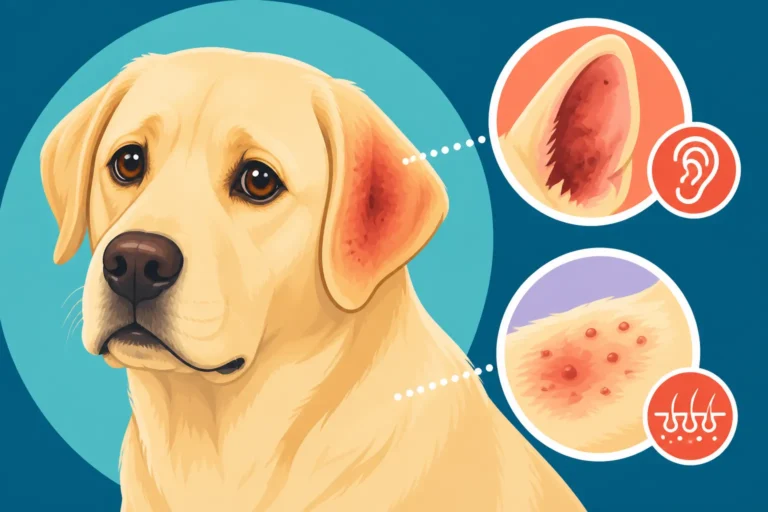
Labrador ear and skin disease causes constant scratching due to physical traits, coat moisture, and genetic allergies like atopic dermatitis.

Common Labrador eye conditions and progressive retinal atrophy symptoms are explained, including early warning signs and genetic risks.

Cancer in Labrador Retrievers explains common types, subtle signs, diagnosis methods, and treatments to help owners care for sick pets.

Labrador weight gain stems from a specific POMC gene deletion that mutes satiety signals and lowers metabolism in one fourth of dogs.
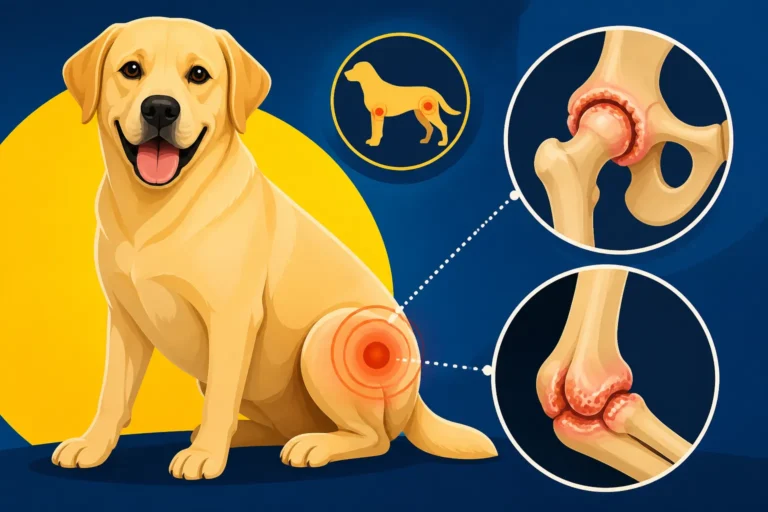
Labrador hip and elbow dysplasia causes joint laxity and osteoarthritis, triggered by a combination of genetics, rapid growth, and obesity.

Exercise-Induced Collapse in Labrador Retrievers is a genetic neuromuscular disorder caused by a DNM1 gene mutation affecting muscle function.

Labrador lifespan averages ten to twelve years, with veterinary data showing a median of twelve years influenced by genetics and coat color.