Health Clearances a Labrador Breeder Must Show
Bringing a new Labrador puppy into your home is an incredibly exciting time, full of dreams of adventures and slobbery kisses. But for many prospective owners, the process of finding a healthy puppy can feel like navigating a minefield. You want to do everything right, avoid heartache down the road, and ensure your furry friend has the best possible start. This comprehensive guide will walk you through the essential health clearances every reputable Labrador breeder must show you, explaining what they mean and why they're non-negotiable for a healthy companion.
Why Health Clearances Are Non-Negotiable for Labrador Breeders
It’s easy to fall in love with a cute puppy, but a responsible breeder understands that puppy cuteness is only part of the equation. Behind every litter should be a meticulous effort to ensure the health and well-being of those puppies, not just today, but for their entire lives. This dedication is primarily demonstrated through comprehensive health clearances on the parent dogs.
Beyond Good Intentions: The Role of Responsible Breeding
Even the most well-meaning individual can accidentally breed dogs that carry hidden genetic issues. Labradors, like all purebreds, are predisposed to certain inherited conditions, some of which can be devastating. Responsible breeding isn't about producing "perfect" dogs, because no such thing truly exists. Instead, it's about actively working to minimize the risk of passing on known hereditary diseases that could cause pain, suffering, and immense financial strain for the future owners. A breeder who truly cares for the breed and the puppies they bring into the world will invest time, effort, and money into health testing.
The emotional and financial toll that genetic conditions can take on a family is immense. Imagine falling deeply in love with your puppy, only to find out they suffer from a debilitating condition that could have been prevented with proper screening. Treatments for conditions like severe hip dysplasia or certain forms of cancer can run into the thousands, creating a stressful burden for families, even with comprehensive coverage from a provider like Healthy Paws. This isn't just about covering costs; it's about the heartbreak of seeing your beloved companion suffer needlessly. Good breeders act as stewards of the breed, carefully selecting breeding pairs to improve health outcomes for generations.
These clearances aren't just bureaucratic hurdles; they represent a tangible commitment to the breed's future and to each puppy's potential for a long, healthy life. Without them, you're essentially gambling with a puppy’s future, relying on luck rather than science and ethical practices. The difference between a reputable breeder and someone simply "making puppies" often comes down to this foundational commitment to health testing. Don't be swayed by charming stories or lower prices if the breeder can't back up their claims with verifiable health documentation.
Protecting Your Puppy's Future Health
The primary goal of health clearances is to provide a comprehensive snapshot of the parent dogs' genetic health. By understanding what potential inherited conditions the parents might carry, a breeder can make informed decisions to reduce the likelihood of passing these issues on to their offspring. This proactive approach significantly increases the chances that your puppy will live a long, vibrant life free from preventable hereditary diseases. It sets the stage for a healthier foundation.
For example, Labradors are famously prone to orthopedic issues. Without proper screening of the parents, you might unknowingly bring home a puppy with a high genetic predisposition to conditions that manifest as painful lameness or early arthritis. By ensuring parents have clear hip and elbow scores, the breeder is actively working to reduce the incidence of such debilitating problems in the litter. This critical step goes a long way in safeguarding your puppy's physical well-being and mobility as they grow. To learn more about common joint problems, read our in-depth article on Labrador Hip and Elbow Dysplasia.
Ultimately, obtaining a puppy from health-tested parents is about prevention, not just reactive treatment. A responsible breeder aims to prevent problems before they even have a chance to start, offering you greater peace of mind. While no breeder can guarantee 100% health for a living creature, ethical breeding practices drastically stack the odds in your favor, giving your puppy the best possible start and protecting you from foreseeable medical challenges and unexpected financial burdens later on.
Understanding Orthopedic Clearances: Hips and Elbows
Orthopedic health is paramount for an active breed like the Labrador Retriever. These large, athletic dogs are unfortunately predisposed to certain structural issues, making screening for hip and elbow dysplasia absolutely critical. Any reputable breeder will be transparent about these clearances for both parent dogs.
Hip Dysplasia Screening OFA and PennHIP
Hip dysplasia is perhaps one of the most well-known and concerning conditions for large breed dog owners. It's a developmental abnormality where the hip joint doesn't form correctly, leading to a loose, unstable joint. Over time, this poor fit causes wear and tear, leading to painful arthritis, lameness, and a significantly reduced quality of life for the affected dog. Given the Labrador’s active nature, this condition can be particularly debilitating.
The Orthopedic Foundation for Animals (OFA) is a widely recognized organization for evaluating hip health. For OFA certification, a dog must be at least 24 months old. X-rays of the hips are taken and submitted to a panel of expert veterinary radiologists who evaluate the joint conformation and grade them. The ratings range from Excellent, Good, Fair (all considered passing grades for breeding), to Borderline, Mild, Moderate, and Severe (all considered dysplastic). A responsible breeder will only use dogs graded Fair or better for breeding purposes, ensuring they're not passing on this painful genetic predisposition.
Another respected method for hip evaluation is PennHIP. Unlike OFA, which is a subjective assessment of joint conformation, PennHIP quantitatively measures the hip joint laxity – essentially how loose the ball is in the socket. This method can also be performed on dogs as young as 16 weeks, offering breeders earlier insights. PennHIP scores range from 0 to 1.1, with lower scores indicating tighter, healthier hips. A breeder utilizing PennHIP should aim for dogs with distraction indices (DI) significantly below the average for the Labrador breed. Both OFA and PennHIP are valid, gold-standard methods, and a good breeder will be able to explain their preference. You can learn more about these different methods in our guide on OFA and PennHIP Screening for Labradors.
It's crucial to understand that while hip clearances significantly reduce the risk, they don't offer a 100% guarantee that a puppy will never develop hip issues. Environmental factors like rapid growth, excessive exercise, and nutrition during puppyhood also play a role. However, starting with genetically sound parents provides the strongest possible foundation, drastically reducing the odds of your dog developing this painful and often costly condition.
Elbow Dysplasia Screening
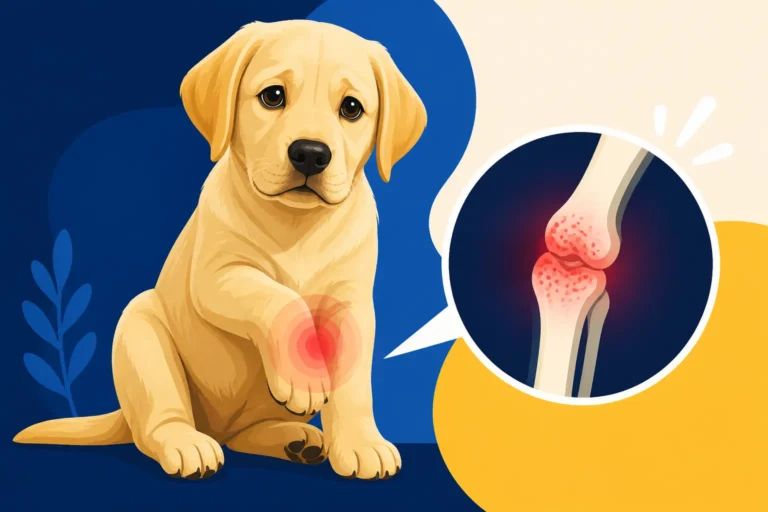
Just as critical as hip screening is the evaluation of elbow health. Elbow dysplasia is a complex condition, or rather a group of conditions, that affects the elbow joint's normal development in growing dogs. It's a common cause of forelimb lameness and can lead to severe arthritis and chronic pain. The condition can involve fragmented coronoid process (FCP), osteochondrosis dissecans (OCD), ununited anconeal process (UAP), or incongruity of the joint. All these lead to instability and degenerative joint disease.
The OFA also provides elbow evaluations, using X-rays taken after the dog is 24 months old. The results are graded as Normal (no evidence of elbow dysplasia), Grade I (mild elbow dysplasia), Grade II (moderate elbow dysplasia), or Grade III (severe elbow dysplasia). For breeding purposes, only dogs with "Normal" elbows should ever be considered. Breeding dogs with any grade of elbow dysplasia is irresponsible, as it directly contributes to perpetuating a condition that causes significant suffering and reduced mobility in future generations.
It's not uncommon for a dog to have excellent hips but problematic elbows, or vice-versa, which is why both screenings are absolutely non-negotiable. Skipping elbow clearances, or only checking hips, leaves a major gap in the health assessment of a breeding pair. Dogs with elbow dysplasia can live long lives, but they often require ongoing management, medication, and sometimes surgery, impacting both their quality of life and your wallet. Learning the signs and implications of this condition can be further explored in our article on Elbow Dysplasia in Labrador Retrievers.
A breeder should provide clear OFA certificates for both the dam and sire, showing "Normal" elbow grades. These records should be easily verifiable through the OFA public database. Any breeder who claims their dogs "passed" but can't produce official documentation should be avoided.
Essential Eye Health Clearances
Beyond orthopedic soundness, a Labrador's vision is vital for their quality of life and ability to engage in activities they love, from retrieving to simply navigating their world. Several inherited eye conditions can impact Labradors, making comprehensive eye clearances a must-have from any reputable breeder.
Annual Eye Exams CERF/OFA Eye Certification Registry
Many eye conditions are inherited and can unfortunately lead to significant vision impairment or even complete blindness. These can also cause chronic discomfort or require expensive corrective surgeries. Labradors are known to be prone to conditions such as hereditary cataracts, retinal dysplasia, and glaucoma, among others. Without regular screening, these issues can quietly progress and be unknowingly passed down to puppies.
A crucial part of a breeding dog's health profile is a current eye examination by a board-certified veterinary ophthalmologist. Historically, this was often referred to as a CERF (Canine Eye Registration Foundation) exam, but it's now primarily managed through the OFA Eye Certification Registry (ECR). These specialized veterinarians use specific instruments to examine the entire eye structure for any signs of inherited eye diseases. This includes checking the lens for cataracts, the retina for abnormalities like retinal dysplasia, and assessing overall ocular health.
It's critical that these eye exams are performed annually. Unlike hip or elbow clearances, which are generally done once after the age of two, some eye conditions can develop or progress over time. Therefore, an outdated eye certificate (more than 12 months old) is not sufficient. A reputable breeder will have documentation of recent, clear eye exams for both parent dogs, demonstrating their commitment to screening for conditions that might not be apparent to the casual observer. This annual check ensures that the breeding dogs remain free of observable inherited eye diseases throughout their breeding careers.
Progressive Retinal Atrophy PRA Testing
Beyond the general annual eye exam, specific genetic tests are available for particularly devastating eye conditions. Progressive Retinal Atrophy (PRA) is one such group of inherited diseases that cause the gradual degeneration of the retina, which is the light-sensing tissue at the back of the eye. This degeneration leads to progressive vision loss, eventually resulting in complete blindness, usually over several months or years. It is an untreatable condition, making prevention through genetic testing paramount.
For Labradors, one of the most common forms is progressive rod-cone degeneration (prcd-PRA). Fortunately, a DNA test is available that can definitively identify a dog's genetic status for prcd-PRA. The results typically come in three forms: "Clear" (meaning the dog does not carry the gene and will not develop prcd-PRA), "Carrier" (the dog carries one copy of the gene but will not develop the disease itself, though it can pass the gene to offspring), and "Affected" (the dog has two copies of the gene and will develop the disease).
Understanding these results is crucial for responsible breeding. A "Clear" dog can be bred to any other dog without fear of producing affected puppies. A "Carrier" dog is perfectly healthy and can be safely bred, but only to a "Clear" mate. This pairing will ensure that no affected puppies are born, though some may be carriers themselves. However, breeding a "Carrier" to another "Carrier" or, even worse, to an "Affected" dog, guarantees that some or all of the puppies will be "Affected" and will eventually go blind. A responsible breeder will have proof that at least one parent of the litter is "Clear" of prcd-PRA, especially if the other parent is a carrier, to ensure no affected puppies are produced. Our article on Progressive Retinal Atrophy in Labradors delves deeper into managing this condition.
Critical Genetic Disease Screening
Modern veterinary science has given us incredible tools to identify specific genetic mutations responsible for various diseases. For Labradors, certain DNA tests are now considered standard practice for any reputable breeder. These tests allow breeders to make informed decisions and prevent the propagation of debilitating, and sometimes fatal, conditions.
Exercise-Induced Collapse EIC
Exercise-Induced Collapse (EIC) is a well-documented genetic disorder in Labradors and other retrieving breeds. Affected dogs appear healthy and normal during routine activity, but after 5-20 minutes of strenuous exercise, especially if it involves high excitement or heat, they can experience progressive weakness, unsteady gait, and eventually collapse. While most dogs recover within 5-30 minutes, an EIC episode can be terrifying to witness and, in rare cases, can be fatal. The specific gene responsible for EIC has been identified as DNM1.
Fortunately, a reliable DNA test is available to identify a dog's genetic status for EIC. The results will categorize the dog as "Clear" (no copies of the EIC gene, will not develop EIC, and cannot pass it on), "Carrier" (one copy of the EIC gene, will not develop EIC, but can pass it on to offspring), or "Affected" (two copies of the EIC gene, will develop EIC if intensely exercised, and will pass the gene to all offspring). While carriers are completely healthy and lead normal lives, they should only be bred to "Clear" mates to ensure no "Affected" puppies are produced.
Knowing a puppy's EIC status is vital, particularly for families who anticipate an active lifestyle with their Labrador, or for those involved in performance sports like hunting or agility. A responsible breeder will have tested both parents and will be able to tell you the EIC status of your potential puppy. This test allows owners to manage their dog's activity appropriately if they are affected, preventing potentially dangerous collapses. You can find more detailed information about this condition and testing in our article on Testing a Labrador for Exercise-Induced Collapse.
Centronuclear Myopathy CNM
Centronuclear Myopathy (CNM), also sometimes referred to as hereditary myopathy, is another severe inherited muscle disease specific to Labradors. Puppies affected by CNM typically show signs of generalized muscle weakness and poor muscle tone as early as 2-5 months of age. They often have difficulty eating, walking with a high-stepping gait, and appear to fatigue easily. The disease is progressive, and severely affected dogs rarely live past their early years, often requiring euthanasia due to profound weakness and inability to thrive.
Similar to EIC, a DNA test is available for CNM, allowing breeders to identify "Clear," "Carrier," and "Affected" dogs. Again, "Carrier" dogs are healthy and show no symptoms of the disease. They can be safely bred, but only if paired with a "Clear" mate to ensure no "Affected" puppies are born. Breeding two carriers together, or an affected dog, will result in puppies that will suffer from this devastating condition.
The availability of this genetic test means that CNM is entirely preventable through responsible breeding practices. Any reputable Labrador breeder will have their breeding stock tested for CNM to ensure they are not producing affected puppies. This test is a critical component of ensuring the welfare of Labrador puppies and maintaining the integrity of the breed. It’s an easy, non-invasive cheek swab test, making it inexcusable for breeders to skip it. Our resource, Centronuclear Myopathy in Labradors, provides a deeper dive into this condition.
Retinal Dysplasia OSD Testing
While the annual eye exam checks for various observed conditions, specific genetic tests address certain forms of retinal dysplasia. One particularly severe form is OculoSkeletal Dysplasia (OSD), which, as the name suggests, impacts both the eyes and the skeletal system. In affected Labradors, OSD can cause significant eye abnormalities, including blindness, as well as dwarfism and skeletal malformations.
A genetic test for OSD allows breeders to determine if their dogs are "Clear," "Carrier," or "Affected." Dogs affected with OSD can have severe ocular defects, including retinal folds and detachment, leading to significant vision impairment or total blindness, usually evident from a young age. They may also display disproportionate dwarfism. This condition is inherited in a recessive manner, meaning a puppy must inherit two copies of the mutated gene (one from each parent) to be affected.
A reputable breeder will screen their breeding stock for OSD, using the DNA test to prevent affected puppies. If a dog is a carrier, it can still be bred responsibly to a clear mate, but never to another carrier or an affected dog. This test ensures that puppies will not suffer from this severe combination of vision and skeletal problems. It's an important complement to the annual ophthalmologist exam, as the genetic test identifies the potential for the condition before it might even be clinically visible. For more detailed information, consult Retinal Dysplasia and Labrador Eye Panels.
Cardiac Health and Other Important Screenings
While hip, elbow, and specific genetic eye/neurological conditions often take center stage in Labrador health discussions, responsible breeders also consider other potential health concerns. Proactive screening for cardiac health and other issues further demonstrates a commitment to producing the healthiest puppies possible.
Cardiac Health Auscultation and Echocardiograms
Though less common than orthopedic or eye issues, certain cardiac conditions can affect Labrador Retrievers. One of the primary concerns is Subvalvular Aortic Stenosis (SAS), a congenital heart defect where a fibrous ring forms just below the aortic valve, obstructing blood flow from the heart. SAS can range from mild to severe and, in serious cases, can lead to fainting, congestive heart failure, and sudden death, often at a young age.
Responsible breeders often pursue cardiac evaluations for their breeding dogs. The Orthopedic Foundation for Animals (OFA) maintains a database for cardiac clearances. The initial screening typically involves an auscultation, which is a thorough listening to the heart with a stethoscope by a board-certified veterinary cardiologist. The cardiologist specifically listens for murmurs, which can be an indicator of SAS or other heart abnormalities. If a murmur is detected, further diagnostics, such as an echocardiogram (an ultrasound of the heart), would be recommended to determine its cause and severity.
A breeder should be transparent about any heart murmurs detected in their breeding dogs. While some murmurs are benign ("innocent murmurs"), a breeder should always seek a specialist's evaluation to rule out inherited conditions like SAS. Ideally, breeding dogs will have a "Normal" OFA Cardiac clearance by a cardiologist, indicating no clinically significant murmurs or other heart abnormalities. This screening provides an additional layer of assurance that the puppy you bring home is starting with a strong and healthy heart.
Other Important Health Considerations
Beyond the commonly mandated clearances, some highly responsible breeders may go above and beyond by screening for additional conditions, reflecting an even deeper commitment to breed health. While not universally required for all Labradors, these extra steps can provide further peace of mind. These additional genetic panels can provide a comprehensive picture of a dog's health profile, and we cover them extensively in Genetic Panels Worth Running on a Labrador.
One such consideration is thyroid function. Hypothyroidism, an underactive thyroid gland, can occur in Labradors and is often inherited. While it's treatable with medication, it can lead to a range of symptoms including weight gain, lethargy, skin problems, and a dull coat. Some breeders will have their breeding stock regularly tested for thyroid hormone levels through the OFA Thyroid Registry, ensuring their dogs have healthy thyroid function and are less likely to pass on a predisposition to this condition.
Another condition occasionally seen in Labradors, particularly in some lines, is patellar luxation, or "slipping kneecaps." This is where the kneecap temporarily dislocates from its normal position. While more common in smaller breeds, it can occur in Labradors and can cause pain and lameness, sometimes requiring surgical correction. Breeders can have their dogs manually examined by a veterinarian for patellar luxation, and these results can also be recorded with OFA. While not as prevalent as hip or elbow dysplasia, screening for patellar luxation can indicate a breeder's thoroughness and dedication to overall structural soundness.
Deciphering and Verifying Health Clearance Results
Okay, so you understand what clearances are needed. But what good are they if you can't properly read and verify them? A reputable breeder will not only have these clearances but will be eager to show them to you and even help you understand them. This transparency is a cornerstone of ethical breeding.
Reading OFA and CERF Certificates
When a breeder presents you with health certificates, it's essential to know what you're looking at. For OFA (Orthopedic Foundation for Animals) clearances, you should expect to see a certificate that includes:
- The dog's full registered name and registration numbers (e.g., AKC number): This is crucial for matching the certificate to the specific parent dog.
- The specific test performed: Clearly stating "Hip Evaluation," "Elbow Evaluation," "Cardiac Evaluation," etc.
- The date of the examination: Important for ensuring the results are current, especially for annual eye exams.
- The results: For hips, this will be "Excellent," "Good," or "Fair" (passing). For elbows, it must be "Normal." For cardiac, "Normal" by a specialist.
- The identifying information of the examining veterinarian/radiologist.
For eye clearances through the OFA Eye Certification Registry (ECR, formerly CERF), you'll look for a certificate from a board-certified veterinary ophthalmologist. This certificate will typically state "No evidence of inherited eye disease" and list the date of the exam. Remember, eye exams need to be current – within the last 12 months. Pay close attention to the registered names and dates on both parents' certificates. You are buying a puppy whose genes come from two individuals, so both must be screened appropriately.
It's also important to physically compare the dog in front of you (the parent dog) to the name and, if possible, the description on the certificate. Ensure there's no discrepancy. A good breeder will readily provide these documents and allow you time to review them. Any hesitation or a claim that the "paperwork is at home" is a significant red flag.
Utilizing Online Public Databases
The absolute best way to verify health clearances, and a hallmark of a truly transparent breeder, is through public, online databases. Organizations like the OFA maintain extensive, searchable databases where you can look up any dog that has received an OFA clearance. This takes the guesswork out of it and ensures the certificates you're seeing are legitimate.
Here’s how you can use the OFA database:
- Go to the OFA website: Navigate to their public search portal.
- Search by Registered Name or Registration Number: Ask the breeder for the full registered names of both parent dogs (e.g., "CH Amazing River's Golden Retriever"). You can also often search by their AKC registration number.
- Review the Results: Once you find the dog, you'll see a list of all their OFA clearances, including hip, elbow, cardiac, eye, and various DNA tests. Each entry will show the date of the evaluation and the official result. This allows you to cross-reference with the physical certificates the breeder provided.
A truly reputable breeder will not only show you the physical certificates but will also encourage you to look up their dogs in these public databases. They will see it as a sign of your diligence and their commitment to transparency. Being able to independently verify the health clearances provides an invaluable layer of assurance that you are indeed working with an ethical breeder who prioritizes the health of their Labrador line. It’s an investment in your peace of mind and your puppy’s future, potentially reducing the need for extensive veterinary care for preventable issues that even comprehensive plans like those from Healthy Paws can't entirely erase.
Red Flags: What to Watch Out For in a Breeder
While looking for the right health clearances, it's equally important to recognize the signs of a breeder who might be cutting corners or, worse, running a puppy mill. These red flags are crucial indicators that you should walk away, no matter how cute the puppies are.
Lack of Transparency or Evasiveness
One of the biggest red flags you can encounter is a breeder who is unwilling or hesitant to provide health clearances for their breeding dogs. If you ask about hip, elbow, eye, or genetic test results and receive vague answers like "Oh, my vet says they're perfectly healthy," or "They passed all their tests," without producing any verifiable documentation, that's a major cause for concern. A responsible breeder has invested significant time and money into these tests and will be proud to share the results with you. They understand why these documents are important and will have them readily available.
Furthermore, be wary of breeders who try to distract you from the health clearance conversation. If they immediately change the subject to the puppy's adorable antics, their champion bloodlines (without proof of health), or try to pressure you into making a quick decision, it's a tactic to avoid scrutiny. Any breeder who is truly confident in the health of their dogs and breeding program will welcome your questions and provide all necessary documentation without hesitation. Their transparency should extend to openly discussing any potential health issues they've encountered in their lines, not just highlighting the good.
A truly ethical breeder will educate you about the health concerns in the breed and explain how their testing protocols address those risks. They won't just hand you a certificate; they'll explain what it means. If a breeder gives you any impression of being secretive, defensive, or simply brushes off your inquiries about health testing, consider it a serious warning sign. This lack of transparency signals that they may be hiding something, and it's simply not worth the risk for you or the future health of your Labrador puppy.
Generic Health Claims and Missing Parents
Another significant red flag is when a breeder relies solely on a generic "health guarantee" without providing any specific health clearances for the parent dogs. A piece of paper promising a healthy puppy doesn't undo a genetic disease if one manifests. While a health guarantee can offer some recourse, it's a reactive measure. Proper health clearances are proactive, aiming to prevent the issues in the first place. You want evidence of prevention, not just a promise of compensation after a problem arises.
Equally concerning is a situation where you cannot meet one or both parent dogs. While it's common for the sire (father) to not be on the premises (as breeders often use stud services from other reputable kennels), the breeder should still have complete health clearances and temperament information for the absent sire. More importantly, you should always be able to meet the dam (mother) of the puppies. She should be visibly healthy, well-socialized, and in good condition. If the breeder makes excuses about why you can't see the mother or tells you she's "too shy" or "not here right now," it’s a massive red flag that could indicate a puppy mill or a backyard breeder hiding unsanitary conditions or an unhealthy breeding dog.
A breeder who cannot, or will not, provide verifiable health documentation for both parents, or allow you to interact with at least the dam, is likely not operating ethically. These breeders often prioritize profit over the welfare of their dogs and puppies. When breeders cut corners, prospective owners often bear the brunt of unexpected vet bills for conditions that could have been avoided through proper screening. While pet insurance, such as a plan from Healthy Paws, can certainly help manage these costs, nothing beats prevention. Choosing a puppy from such a source increases your risk of inheriting costly and heartbreaking health problems, as detailed in our article on Which Labrador Problems Cost the Most to Treat, and ultimately impacts your Labrador Puppy Health in the First Year.
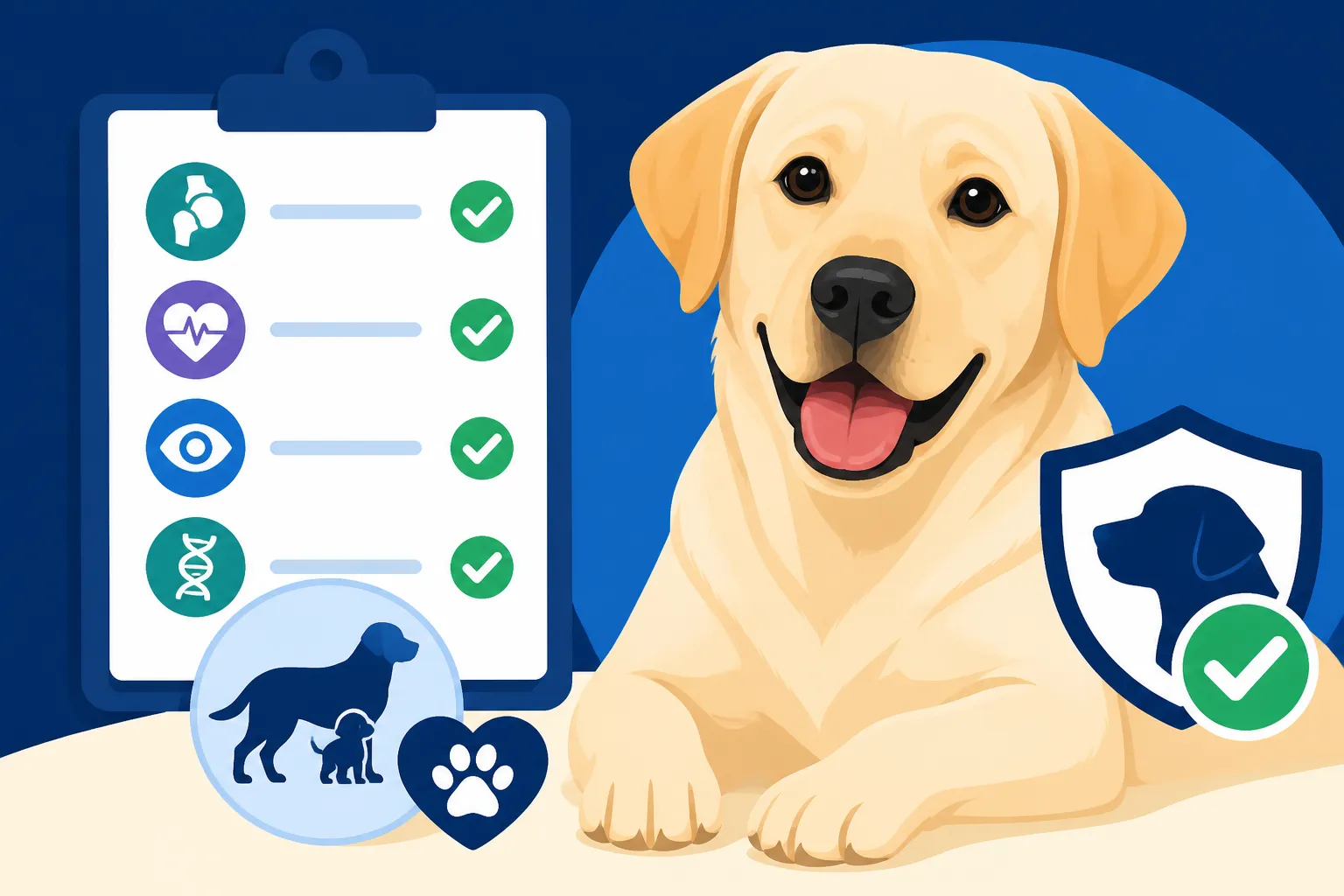
Essential Health Clearances for Labrador Retrievers
| Clearance Type | Condition Tested For | Method / Database | Acceptable Result (for breeding) | Why It Matters |
|---|---|---|---|---|
| Orthopedic | ||||
| Hip Dysplasia | Malformation of the hip joint | OFA (Radiograph) / PennHIP (laxity) | OFA: Fair, Good, Excellent / PennHIP: Low DI | Prevents painful arthritis, mobility issues |
| Elbow Dysplasia | Abnormal development of the elbow joint | OFA (Radiograph) | OFA: Normal | Prevents lameness, chronic pain |
| Eye Health | ||||
| Annual Eye Exam | Cataracts, Retinal Dysplasia, other inherited issues | OFA Eye/ECR (Ophthalmologist exam) | Normal, no observable conditions | Preserves vision, prevents pain |
| Progressive Retinal Atrophy (PRA) | Degeneration of the retina (blindness) | DNA Test | Clear / Carrier (bred to clear only) | Prevents inherited, untreatable blindness |
| Genetic Diseases | ||||
| Exercise-Induced Collapse (EIC) | Collapse during strenuous exercise | DNA Test | Clear / Carrier (bred to clear only) | Prevents dangerous exercise-induced episodes |
| Centronuclear Myopathy (CNM) | Muscle weakness and atrophy | DNA Test | Clear / Carrier (bred to clear only) | Prevents severe, debilitating muscle disease |
| Retinal Dysplasia/OSD | Eye and skeletal abnormalities | DNA Test | Clear / Carrier (bred to clear only) | Prevents severe vision impairment and skeletal issues |
| Cardiac | ||||
| Cardiac (SAS) | Subvalvular aortic stenosis (heart murmur) | OFA (Cardiologist exam) | Normal, no murmur | Prevents severe heart conditions |
Disclaimer
The information provided in this article is for general informational purposes only and does not constitute veterinary advice. Always consult with a qualified veterinarian for any health concerns or before making any decisions about your pet's health or treatment.