Reading a Dog Food Label for a Labrador
Labrador dog food labels explain ingredient weight order, protein sources, meat meals, fillers, and whole foods for diet choices.
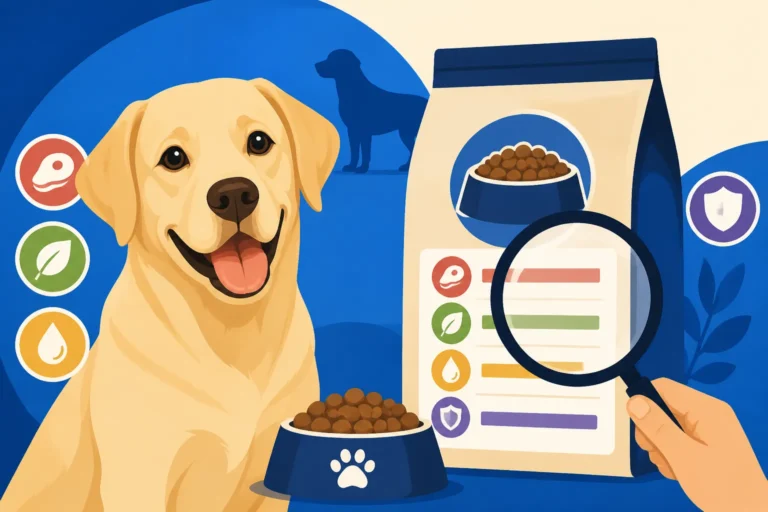
Labrador dog food labels explain ingredient weight order, protein sources, meat meals, fillers, and whole foods for diet choices.

Weight control formulas help manage Labrador weight by reducing calorie intake and addressing genetic overeating tendencies.

Accurate Labrador food measurement prevents overfeeding and underfeeding, safeguarding health, joints, and preventing obesity and nutritional deficiencies.
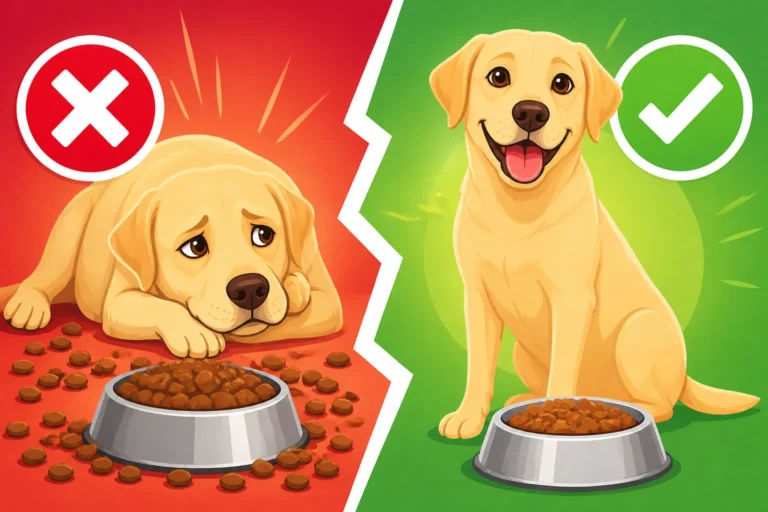
Free-feeding a Labrador fails because a POMC gene deletion prevents satiety, causing constant hunger and obesity.

Senior Labrador metabolism and energy needs change, requiring fewer calories to prevent unwanted weight gain and health issues.

Labrador growth plate closure occurs between 12 and 18 months, indicating when large breed dogs can safely transition to adult food.

Large breed puppy food provides specific protein, fat, and calcium ratios to protect growing Labrador joints from damage.

Adult Labrador daily food portions depend on individual metabolism, activity level, calorie density per cup, and overall body condition.
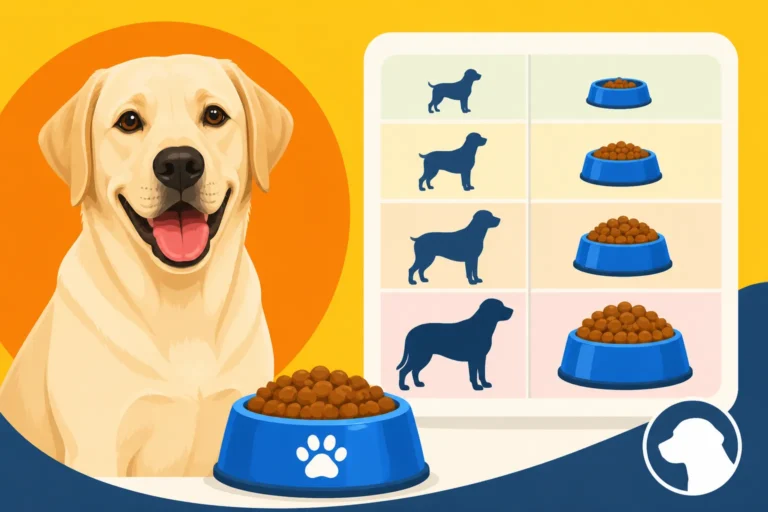
Labrador feeding chart details help owners determine daily portions using weight, age, activity level, and health factors.

Labrador puppy nutrition needs, protein requirements, fat content, and calcium-phosphorus balance for healthy bone and joint development.