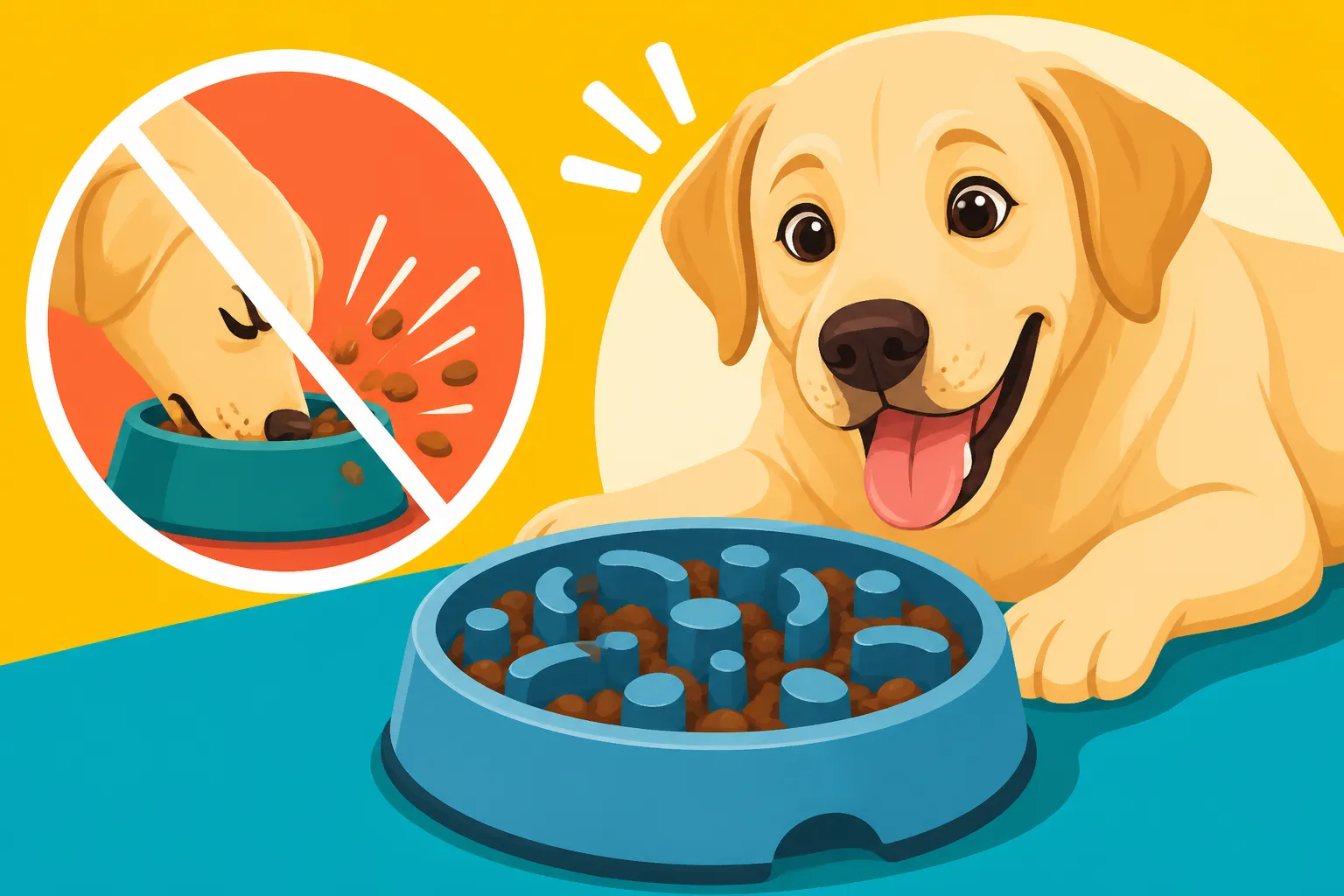
Slow Feeder Bowls for a Gulping Labrador
It's a scene many Labrador owners know all too well: you put down a fresh bowl of kibble, and before you can even turn around, it's gone. Your beloved Lab has inhaled their entire meal in what feels like mere seconds, leaving you wondering if they even tasted it. This rapid eating isn't just a quirky habit; it can lead to some serious health concerns, from uncomfortable indigestion to life-threatening bloat. This guide is here to walk you through why your Labrador might be gulping their food and how slow feeder bowls can be a game-changer, helping them eat at a healthier pace and enjoy their meals more safely.
Why Labradors Gulp Their Food So Fast
Our Labradors, bless their hungry hearts, are often characterized by their profound love of food. It's almost legendary, isn't it? But this intense food drive, while endearing, can translate into lightning-fast eating habits that are far from ideal for their digestion and overall well-being. Understanding why they do it is the first step toward addressing the problem.
The Labrador's Natural Instinct and Genetic Predisposition
Let's be real: Labradors aren't just fond of food; many are obsessed with it. This isn't just anecdotal; there's a scientific basis for it. Research has shown that some Labradors carry a genetic mutation (specifically, a deletion in the POMC gene) that impacts satiety signals, essentially making them feel hungry more often and less full after eating. For these dogs, every meal feels like a race against time, as if the food might vanish if they don't consume it immediately. It's a deeply ingrained drive, making them efficient, if not overly enthusiastic, eaters. You can learn more about this by checking out The POMC Gene and Labrador Appetite.
Beyond genetics, consider their historical role. Labradors were bred to be working dogs, often retrieving game or assisting fishermen. In such environments, food might have been less predictable, leading to an instinct to eat quickly when it was available. In a litter of puppies, competition for resources, even food, can teach them to eat fast to ensure they get their share. This behavior, once learned, can stick with them into adulthood, even when they're the only dog in a loving home with a consistent feeding schedule.
The Health Risks of Eating Too Quickly
While a speedy eater might seem harmless, a Labrador who gulps down their food is putting themselves at risk for several health issues. The most commonly cited and arguably most dangerous is Gastric Dilatation-Volvulus (GDV), more commonly known as bloat. This isn't just an upset stomach; it's a condition where the stomach fills with gas and twists, trapping air and food, and cutting off blood supply. It's a life-threatening emergency that requires immediate veterinary intervention. You can read more about Labrador Bloat Risk and Deep Chests and Bloat Symptoms in a Labrador Retriever to understand the severity.
Beyond bloat, rapid eating can lead to a host of other digestive woes. Swallowing large amounts of air along with their food can cause uncomfortable gas, burping, and even vomiting shortly after a meal. The food isn't properly chewed, which means the digestive enzymes in saliva don't get a chance to start breaking it down effectively, putting more strain on the stomach and intestines. This can lead to indigestion, nutrient malabsorption, and a general feeling of discomfort for your furry friend. It’s a real frustration for owners to see their dog suffering from these issues simply because they can't slow down their eating.
How Slow Feeder Bowls Work Their Magic
If you've watched your Labrador vacuum up their dinner for years, the idea of them eating slowly might seem like a distant dream. But slow feeder bowls are specifically designed to turn that dream into a reality, transforming mealtime from a frantic gulping session into a more measured, engaging experience. These aren't just fancy bowls; they're thoughtfully engineered tools.
Design and Functionality: The Maze and the Mountain
The secret to a slow feeder bowl lies in its internal design. Unlike a traditional smooth-bottomed bowl that offers an unimpeded path to the food, slow feeders incorporate various obstacles. These can be intricate mazes, raised ridges, spiral patterns, or even small "mountains" and valleys built into the bowl's surface. The purpose of these designs is simple: to make it harder for your Labrador to get a large mouthful of food at once. Instead of being able to scoop up a big chunk of kibble, they have to navigate their tongue and nose around the obstructions, picking up smaller portions.
This forces them to take more time with each bite. What typically happens is that a Labrador will try their usual gulping technique, only to find they can't get enough leverage to pick up a significant amount of food. They quickly learn they need to adjust their eating strategy, nudging the kibble, licking it, and taking smaller, more deliberate bites. This physical challenge engages their minds as well as their mouths, turning mealtime into a mini-puzzle they need to solve before they can enjoy their reward. It's a subtle but incredibly effective way to slow down even the most enthusiastic eater.
The Psychological Shift for Your Lab
Beyond the physical mechanics of eating slower, slow feeder bowls also introduce a beneficial psychological shift. For a Labrador, who often views food as a race, the slow feeder encourages a more mindful approach. The "puzzle" aspect stimulates their brain, providing a form of mental enrichment that a standard bowl simply doesn't offer. This mental engagement can actually reduce anxiety around mealtime, as they're no longer frantically competing with an imaginary rival.
Think about it: when they're forced to work a little for their food, they might actually savor it more. The process of extracting each piece of kibble makes the meal last longer, extending the pleasure of eating. This can help reinforce a healthier relationship with food, moving away from frantic consumption and towards a more relaxed enjoyment. It might even help them register feelings of fullness more effectively since their body has more time to process the intake. This shift in mindset, combined with the physical slowing, contributes significantly to better digestion and a happier, healthier pup.
Choosing the Right Slow Feeder Bowl for Your Labrador
With so many options on the market, picking the right slow feeder bowl can feel a bit overwhelming. You want something effective, durable, and safe for your large, powerful Labrador. Considering their size, strength, and propensity for chewing, a bit of careful thought will go a long way in making the best choice.
Material and Durability for the Enthusiastic Eater
Labradors, especially younger ones or those prone to chewing, need a slow feeder bowl that can withstand their enthusiasm. You'll generally find slow feeder bowls made from plastic, ceramic, or stainless steel. Plastic bowls are often the most affordable and come in a vast array of designs. However, if your Labrador is a vigorous chewer or tends to pick up and drop their bowl, plastic might not be the most durable option. It can also harbor bacteria more easily if scratched, which is something to consider for hygiene.
Ceramic bowls offer a heavier, more stable option, less likely to be pushed around the floor or tipped over. They're also usually dishwasher-safe and look quite nice. The main drawback, of course, is that they can chip or break if dropped or if your Labrador tries to chew on the rim. Stainless steel, on the other hand, is incredibly durable, hygienic, and chew-resistant, making it an excellent choice for Labs. It's easy to clean and won't harbor bacteria. However, stainless steel options might have simpler maze designs compared to the more intricate patterns possible with plastic or ceramic, so you'll need to weigh durability against puzzle complexity. Brands like Amazon and Chewy offer a wide selection across all these materials, making it easy to compare and find one that fits your needs.
Design Complexity and Size for Optimal Results
The effectiveness of a slow feeder bowl largely depends on its design complexity. For a Labrador who inhales food in mere seconds, a bowl with higher ridges and more intricate mazes will be more effective than one with gentle curves. You want a design that truly forces them to slow down, not just one that adds a slight impediment. Some bowls feature distinct sections, deep channels, or even removable puzzle pieces that can be adjusted as your dog adapts.
Consider the size of the bowl as well. A Labrador needs a bowl that can comfortably hold their entire meal portion without overflowing the puzzle sections. Too small, and the food will just pile up, defeating the purpose. Too large, and it might not engage them effectively. Read product descriptions carefully for dimensions and capacity. Remember, the goal is to create a challenge that makes eating slower, not to frustrate your dog to the point of giving up. If your Lab is just starting out, a moderately challenging design might be best, gradually moving to more complex ones if needed. You can often find a good range of options with various complexities through retailers like Chewy or Ollie (for fresh food, some of their enrichment feeders serve a similar purpose).
| Bowl Material | Pros | Cons | Best For |
|---|---|---|---|
| Plastic | Affordable, wide design variety, lightweight | Can be chewed, scratches harbor bacteria | Moderate eaters, budget-conscious owners |
| Ceramic | Heavy, stable, aesthetically pleasing, easy to clean | Fragile, can chip or break | Dogs who don't chew bowls, stable eating areas |
| Stainless Steel | Highly durable, hygienic, chew-proof, easy to clean | Fewer intricate designs, can be noisy | Aggressive chewers, long-term durability |
| Silicone (inserts) | Flexible, safe for teeth, can fit in existing bowls | Less durable than steel, may shift around | Gentle chewers, adding a temporary challenge |
Integrating the Slow Feeder into Your Lab's Routine
Bringing a new slow feeder bowl into your Labrador's life should be a smooth transition. It's not just about swapping out one bowl for another; it's about introducing a new routine and ensuring your Lab adapts positively to this change. Patience and consistency are key to making this a successful and enjoyable experience for both of you.
Gradual Introduction and Encouragement
When you first introduce a slow feeder, your Labrador might be a bit confused or even frustrated. They're used to a clear path to their food, and suddenly there's a maze! Don't just toss their regular meal into the new bowl and walk away. Start by making it easy for them. For the first few meals, you might sprinkle a little extra kibble on the easiest-to-reach parts of the maze or use a less complex design initially. You can even combine a small portion in the slow feeder with a larger portion in their old bowl, gradually increasing the amount in the slow feeder.
Stay with your Labrador during these initial feedings. Offer verbal encouragement and praise when they successfully get a piece of kibble. This positive reinforcement helps them associate the new bowl with a rewarding experience, rather than a frustrating one. You might find that some Labs catch on immediately, while others need a few days or even a week to fully adjust to the new challenge. The goal is to make mealtime an engaging activity, not a source of stress, especially for a dog with a strong food drive. For more insights on managing their food habits, consider reading Whether a Food-Obsessed Labrador Can Be Trained Out.
Cleaning, Maintenance, and Beyond the Bowl
Just like any dog dish, a slow feeder bowl needs regular cleaning to prevent bacteria buildup. Because of their intricate designs, they can sometimes be a bit more challenging to clean than a flat-bottomed bowl. Many slow feeder bowls are dishwasher safe, which makes maintenance much easier. If hand-washing, use a bottle brush or a sponge that can reach into all the nooks and crannies to ensure all food residue is removed. Keeping it clean is crucial for your Labrador's health, preventing the growth of mold or bacteria that can cause digestive upset.
While slow feeder bowls are fantastic, they're not the only tool in your arsenal for slowing down a gulping Labrador. You can also explore other methods of food delivery that engage their minds and bodies. Puzzle toys, for example, require your Lab to manipulate the toy to release kibble, turning mealtime into a hunt. Scattering your Labrador's food across a clean floor or lawn (weather permitting) can also force them to forage and eat individual pieces, slowing down their intake significantly. This also provides mental enrichment and uses their natural scenting abilities. Brands like Chewy offer a vast selection of puzzle feeders and slow feeder options that cater to different levels of challenge and material preferences. Remember, the ultimate goal is a slower, safer, and more satisfying mealtime for your beloved Labrador. You might find more ideas in Puzzle Feeders That Slow a Greedy Labrador.
Disclaimer
This article is for general informational purposes only and does not constitute professional advice. Laws, prices and regulations vary by location and change over time. Consult a qualified professional for guidance on your specific situation.