Puzzle Feeders That Slow a Greedy Labrador
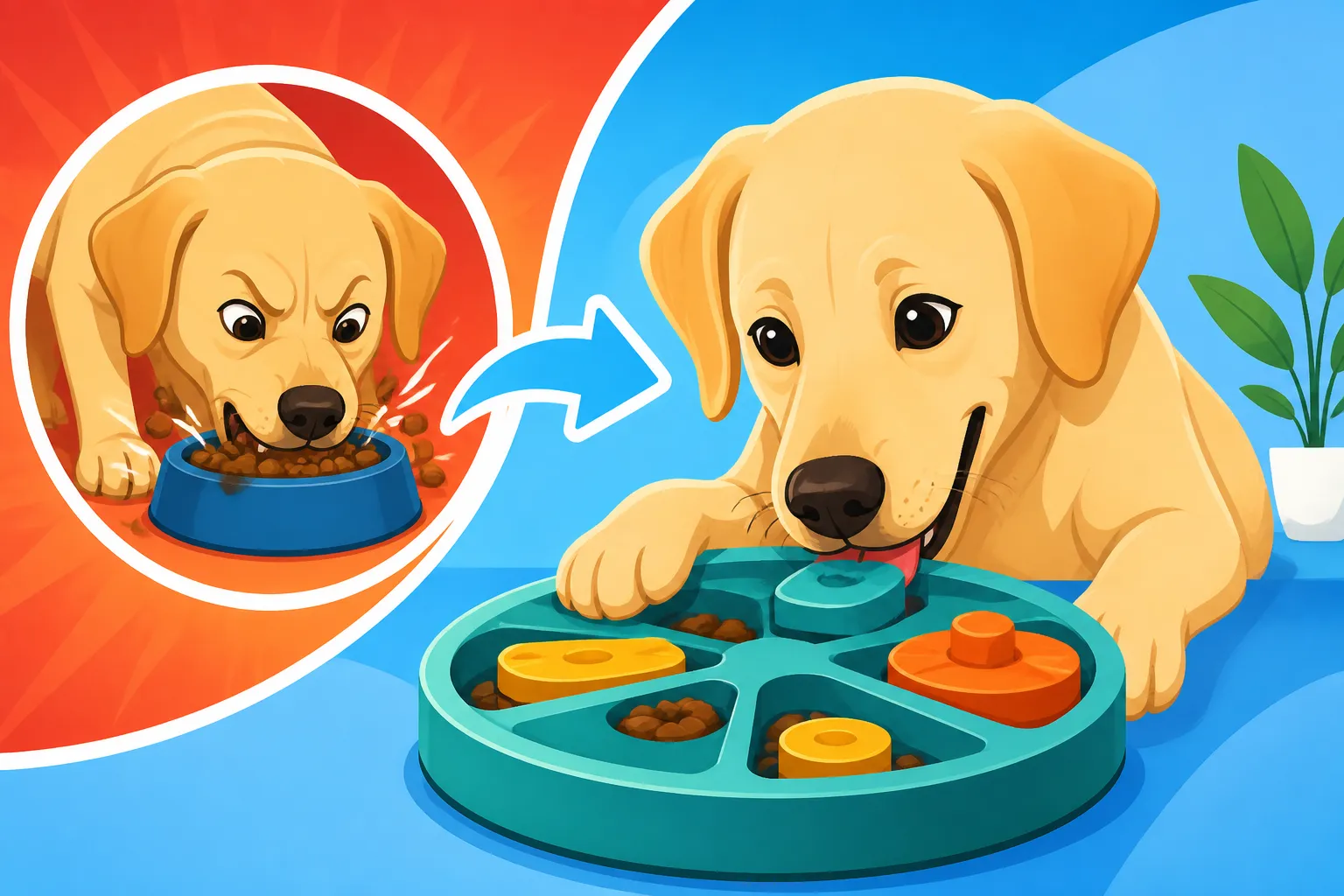
It’s a common sight for Labrador owners: you put down a fresh bowl of kibble, and before you can even turn around, it's gone. Your beloved Lab has inhaled their meal in mere seconds, leaving you wondering if they even tasted it. This rapid eating isn't just a quirky Labrador trait; it can lead to some serious health and behavioral issues. This guide will walk you through why your Labrador eats so fast and how puzzle feeders can become your secret weapon to slow them down, boost their mental engagement, and improve their overall well-being.
Why Labradors Eat So Fast And Why It's a Problem
There's a reason Labradors are often referred to as "food hoovers." Their powerful drive for food is legendary, a trait that's deeply ingrained in their genetics and history. Understanding this can help us approach the problem with more empathy and effective solutions.
The Instinctual Drive to Gulp
Labradors were originally bred as working dogs, specifically to retrieve game for fishermen and hunters in the harsh conditions off Newfoundland. These dogs needed to be hardy, intelligent, and, yes, opportunistic when it came to food. In a world where food sources might be scarce or competition high, a dog that could quickly consume a meal had a survival advantage. This instinct to eat quickly, to secure resources before another animal could, is still very much alive in our modern-day Labradors. They see food and their brains essentially scream, "Get it before it's gone!"
It's a powerful instinct, often overriding any gentle manners we try to instill. Even with their famous "soft mouth," which allows them to retrieve delicate game without damage, this doesn't extend to their eating habits! Many Labradors act as if every meal is their last, or as if a rival dog is about to swoop in and steal their dinner, even if they're the only pet in a quiet household. This inherent food drive, while charming in its enthusiasm, needs careful management to prevent problems.
Health Risks of Rapid Eating
Beyond the sheer mess of a food bowl being pushed around or the frantic gulps that send kibble flying, rapid eating poses several significant health risks for your Labrador. These aren't just minor inconveniences; some can be life-threatening emergencies.
One of the most concerning risks is bloat, or Gastric Dilatation-Volvulus (GDV). This is where the stomach fills with gas and then twists, trapping the gas and cutting off blood supply. It's incredibly painful and can be fatal if not treated immediately with emergency surgery. While the exact causes are complex, eating too quickly, especially large meals, and then exercising, is a known risk factor. Labradors, being a deep-chested breed, are particularly susceptible to this terrifying condition. You can learn more about Labrador Bloat Risk and Deep Chests. When a dog gulps air along with their food, that excess air contributes to the risk.
Fast eating also leads to a host of other digestive upsets. Without proper chewing, large pieces of food are swallowed whole, making digestion more difficult for the stomach. This can result in indigestion, regurgitation (where they bring up undigested food shortly after eating), excessive gas, and even choking hazards. Imagine trying to digest a whole cookie without chewing it first—it's much harder work for your system! Over time, this constant strain on their digestive system can contribute to chronic issues. Furthermore, when dogs eat too fast, they often don't register that they're full until they've significantly overeaten, which can contribute to weight gain. This is a common struggle for many owners, as Why Labradors Gain Weight So Easily highlights.
Types of Puzzle Feeders for Labradors
The good news is that there's a whole world of solutions designed specifically to combat rapid eating: puzzle feeders! These aren't just fancy bowls; they're tools that transform mealtime into a stimulating activity, forcing your Labrador to slow down and work for their food.
Beginner-Friendly Slow Feeder Bowls
When you're first introducing the concept of a puzzle feeder, a dedicated slow feeder bowl is an excellent starting point. These bowls look like regular dog bowls but have raised ridges, mazes, or pillars molded into the design. Instead of an open expanse, your Labrador has to navigate around these obstacles to get to each piece of kibble.
The design effectively breaks up the feeding surface, preventing your dog from taking large mouthfuls at once. They're forced to use their tongue and nose to push kibble out of crevices, which significantly slows down their eating pace. These bowls are typically made from durable, food-safe plastic or silicone, and many are dishwasher-safe, making cleanup a breeze. You'll find a wide variety of shapes and sizes, from simple spiraled designs to more complex geometric patterns. They're usually quite affordable and widely available from retailers like Amazon, offering an easy way to dip your toes into the world of enrichment feeding. While they might not provide intense mental stimulation, they are incredibly effective at tackling the immediate problem of rapid consumption.
Intermediate Snuffle Mats and Treat-Dispensing Toys
Once your Labrador masters the basic slow feeder bowl, or if they're already quite food-motivated and smart, you can upgrade to options that offer more mental engagement. Snuffle mats and treat-dispensing toys are fantastic for this next step.
Snuffle mats are essentially fabric mats with many strips of fleece sewn on, creating a "grass-like" texture. You sprinkle your Labrador's kibble or treats among the fabric strips, and they have to "snuffle" around with their nose to find every morsel. This engages their powerful sense of smell, which is incredibly enriching for a dog. It turns mealtime into a treasure hunt, requiring focus and problem-solving. They're soft, often machine washable, and can be quite durable, though very strong chewers might try to shred the fabric.
Treat-dispensing toys, on the other hand, are typically made of rubber or hard plastic. Think of classic toys like a KONG, which you can stuff with kibble, wet food, or even frozen treats. Other versions include balls with adjustable holes that drop kibble as your dog rolls them around, or interactive toys with levers or buttons they learn to manipulate. These toys require more physical interaction and sometimes a bit of strategic thinking. Some, like those from our friends at BAXTER & Bella, even have tutorials or ideas for how to use them effectively within a broader training program. These types of feeders not only slow eating but also provide valuable Mental Work for a Bored Labrador, helping to reduce destructive behaviors stemming from lack of mental enrichment.
Advanced Interactive Puzzle Toys
For the truly clever or easily bored Labrador, advanced interactive puzzle toys offer the highest level of mental challenge. These toys often involve multiple steps, sliding components, flip-up lids, or even small drawers that your dog needs to figure out how to open or move to access their food.
They typically come in various difficulty levels, often rated by the manufacturer. You might start with a puzzle where your Labrador simply has to slide a few covers to reveal treats, and gradually move up to puzzles that require lifting a peg, then sliding a tile, then nudging another piece. These are often made from sturdy plastic or wood. The beauty of these puzzles is how much brainpower they demand. They turn eating into an engaging game, preventing boredom and satisfying a Labrador's natural curiosity and problem-solving abilities. While they can be a bit more expensive than basic bowls, the long-term benefits for your dog's mental health and behavior are invaluable. Just remember to start simple and always supervise your Labrador with new puzzles to ensure they don't get frustrated or try to chew the toy apart instead of solving it.
Choosing the Right Puzzle Feeder for Your Labrador
With so many options out there, how do you pick the perfect puzzle feeder for your particular Labrador? It's not a one-size-fits-all solution, and what works for one dog might be too easy or too frustrating for another.
Considering Your Labrador's Temperament and Skill Level
The first step is to really observe your Labrador. Are they a gentle, methodical eater who just happens to be fast, or are they a frantic gulp-and-run kind of dog? Do they get easily frustrated, or do they relish a challenge?
For a Labrador new to puzzle feeders, or one that gets frustrated easily, start with something straightforward like a basic slow feeder bowl or a very simple snuffle mat. You want them to succeed quickly and build positive associations with the feeder. If they get too frustrated right away, they might give up or, worse, try to chew the feeder apart. Gradually increase the difficulty. If they conquer a maze bowl in minutes, it's time for a more complex design or a treat-dispensing ball. If your Lab is a super chewer, consider the material carefully from the outset. Their general Labrador Temperament and Personality will play a big role in how they react to new challenges. Some Labs dive right in, others need more encouragement.
Material, Durability, and Cleaning
When selecting a puzzle feeder, the material is crucial, especially with a powerful breed like a Labrador. They have strong jaws, and some are notorious chewers, especially during adolescence.
- Plastic: Common and affordable. Look for sturdy, BPA-free plastic. Ensure there are no small pieces that can break off and be swallowed. Softer plastics might not stand up to determined chewing.
- Rubber/Silicone: Excellent for treat-dispensing toys like KONGs. They're durable, flexible, and often withstand chewing well. Silicone slow feeder inserts can be a good option for bowls too.
- Metal: Less common for the puzzle elements themselves, but some slow feeder bowls are made of stainless steel with a slow-feeding insert. Metal is highly durable and easy to clean.
- Fabric (Snuffle Mats): Generally safe but not for unattended heavy chewers. They're good for sniffing and light pawing but can be shredded.
Cleaning is another practical consideration. Puzzle feeders get covered in slobber and food particles, so regular cleaning is essential to prevent bacterial growth. Look for designs that are easy to rinse, disassemble, or are dishwasher-safe. A complex puzzle with tiny nooks and crannies might slow down eating, but if it takes you 20 minutes to clean, you might not use it consistently.
Integrating Puzzle Feeders into Their Routine
Puzzle feeders shouldn't just be an occasional treat; they can become a regular, enriching part of your Labrador's daily life. Think of them as more than just slow eating devices; they are opportunities for engagement and mental exercise.
You can use them for all meals, or just one meal a day, supplementing with a regular bowl for others. They are also perfect for dispensing high-value treats or for times when you need your Labrador to be quietly occupied, such as when you have guests over or are trying to work. If you're looking for ways to provide mental stimulation on a dreary day, puzzle feeders are excellent tools for Tiring a Labrador on a Rainy Day without needing to go outside. For puppies, they can even help manage their boundless energy and provide an appropriate outlet for their natural chewing instincts. Remember that physical exercise is still vital, so don't replace their Daily Walk Length for a Labrador with just puzzles. Instead, see them as complementary tools for a well-rounded and happy dog. Many comprehensive training programs, such as those offered by BAXTER & Bella, advocate for using enrichment tools like puzzle feeders to build confidence and independence in dogs, integrating them into a holistic approach to training and behavior management.
Getting Started and Troubleshooting Common Challenges
Introducing something new to your Labrador, even if it's food-related, can sometimes come with a few bumps. Don't get discouraged if it's not an instant success!
Introducing the Puzzle Feeder
The key to successful introduction is to make it easy and rewarding at first. Don't throw your Labrador into the deep end with a super complex puzzle.
- Start Simple: For a treat-dispensing toy, leave the holes wide open or use a treat that falls out easily. For a slow feeder bowl, just put their regular kibble in. For a snuffle mat, sprinkle food loosely on top so it's easy to find.
- Make it Enticing: Use high-value treats or their favorite kibble initially. Let them see you loading the feeder.
- Supervise: Always supervise your Labrador with a new puzzle feeder, especially if it's a chewable toy. You want to ensure they understand how to use it safely and aren't getting frustrated to the point of destructive behavior. Watch for signs of frustration, like batting it aggressively or trying to chew through it instead of solving it.
- Praise Success: When they figure it out and get a treat, offer calm praise to reinforce the positive experience.
Over time, you can gradually increase the difficulty by using smaller openings on treat balls, stuffing KONGs more tightly, or introducing more complex puzzles. Remember, the goal is to make it a positive, engaging experience, not a frustrating test.
When Your Labrador Gets Frustrated (or Too Clever)
Labradors are smart, and sometimes they get too smart for their own good, or too easily frustrated.
Frustration: If your Labrador is whining, pawing aggressively, or ignoring the puzzle feeder after a few attempts, it might be too hard. Simplify the puzzle or go back to an easier one. You can also "seed" the puzzle with very obvious, easy-to-get treats at first to build their confidence. Sometimes, just rotating different types of puzzles can keep things fresh and prevent boredom or fixation on one challenge.
Too Clever: On the flip side, some Labradors figure out puzzles incredibly quickly, defeating the purpose of slowing down. If your Lab is emptying a "slow feeder" in under a minute, it's a sign they're ready for an upgrade. This might mean moving from a basic slow feeder bowl to a more intricate treat-dispensing ball, or from a simple snuffle mat to a multi-step slide puzzle. Don't be afraid to invest in a few different types and rotate them to keep your Labrador guessing and engaged. This also prevents them from getting bored and finding their own, less desirable, forms of entertainment, like raiding the trash or chewing on furniture. If your Labrador is prone to ingesting non-food items, understanding Why a Labrador Steals and Swallows Things is crucial, and puzzle feeders can sometimes help redirect that oral fixation.
The Benefits Beyond Slow Eating
While the primary goal of puzzle feeders for a greedy Labrador is to slow down their eating, the ripple effects on their overall well-being are significant.
One of the biggest advantages is the mental stimulation they provide. Labradors are highly intelligent dogs with a strong desire to work. When they're not given appropriate outlets for their minds, they can become bored, which often manifests as destructive behaviors, excessive barking, or general restlessness. Puzzle feeders tap into their natural instincts to forage and problem-solve, burning mental energy in a constructive way. This kind of enrichment is just as important as physical exercise for a balanced dog.
Beyond mental stimulation, puzzle feeders can contribute to better digestion and reduced risk of health issues like bloat. By forcing slower eating, they reduce the amount of air ingested and allow the digestive system to process food more effectively. This means less gas, less regurgitation, and a happier gut for your furry friend.
Finally, and perhaps surprisingly, puzzle feeders can aid in weight management. When a Labrador eats slowly, their brain has more time to register fullness. Instead of gulping down their entire meal before their body can signal satiety, they feel full on an appropriate portion. This can be a game-changer for Labs prone to obesity, a common problem for the breed. Keeping your Labrador at a healthy weight is vital for their longevity, as discussed in articles like How Much Longer a Lean Labrador Lives and Labrador Obesity and the Years It Costs. So, while a puzzle feeder might seem like a simple accessory, it's actually a powerful tool for enhancing your Labrador's physical health, mental well-being, and overall quality of life.
| Puzzle Feeder Type | Difficulty Level | Key Benefits | Durability (Chewers) | Cleaning | Ideal For |
|---|---|---|---|---|---|
| Slow Feeder Bowl | Beginner | Slows eating, reduces gulping | Good (plastic/ceramic) | Dishwasher safe, easy to wipe | First-timers, very fast eaters |
| Snuffle Mat | Beginner/Intermediate | Mental stimulation, scent work | Low to Moderate | Machine washable, can hold debris | Engagement, nose work, less active chewing |
| Treat-Dispensing Ball | Intermediate | Physical interaction, fun, portable | Moderate to Good | Can be hard to clean inside, hand wash | Active dogs, on-the-go, moderate chewers |
| Stuffable Toy (e.g., KONG) | Intermediate/Advanced | Long-lasting, chew-resistant, versatile | Excellent | Dishwasher safe, specialized brushes for nooks | Power chewers, extended engagement, separation |
| Interactive Puzzle Toy | Intermediate/Advanced | High mental challenge, problem-solving | Moderate to Good | Wipes clean, some disassemble for washing | Smart dogs, boredom prevention, mental workout |
Disclaimer
This article is for general informational purposes only and does not constitute professional advice. Laws, prices and regulations vary by location and change over time. Consult a qualified professional for guidance on your specific situation.