Walking a Labrador Past Other Dogs Calmly
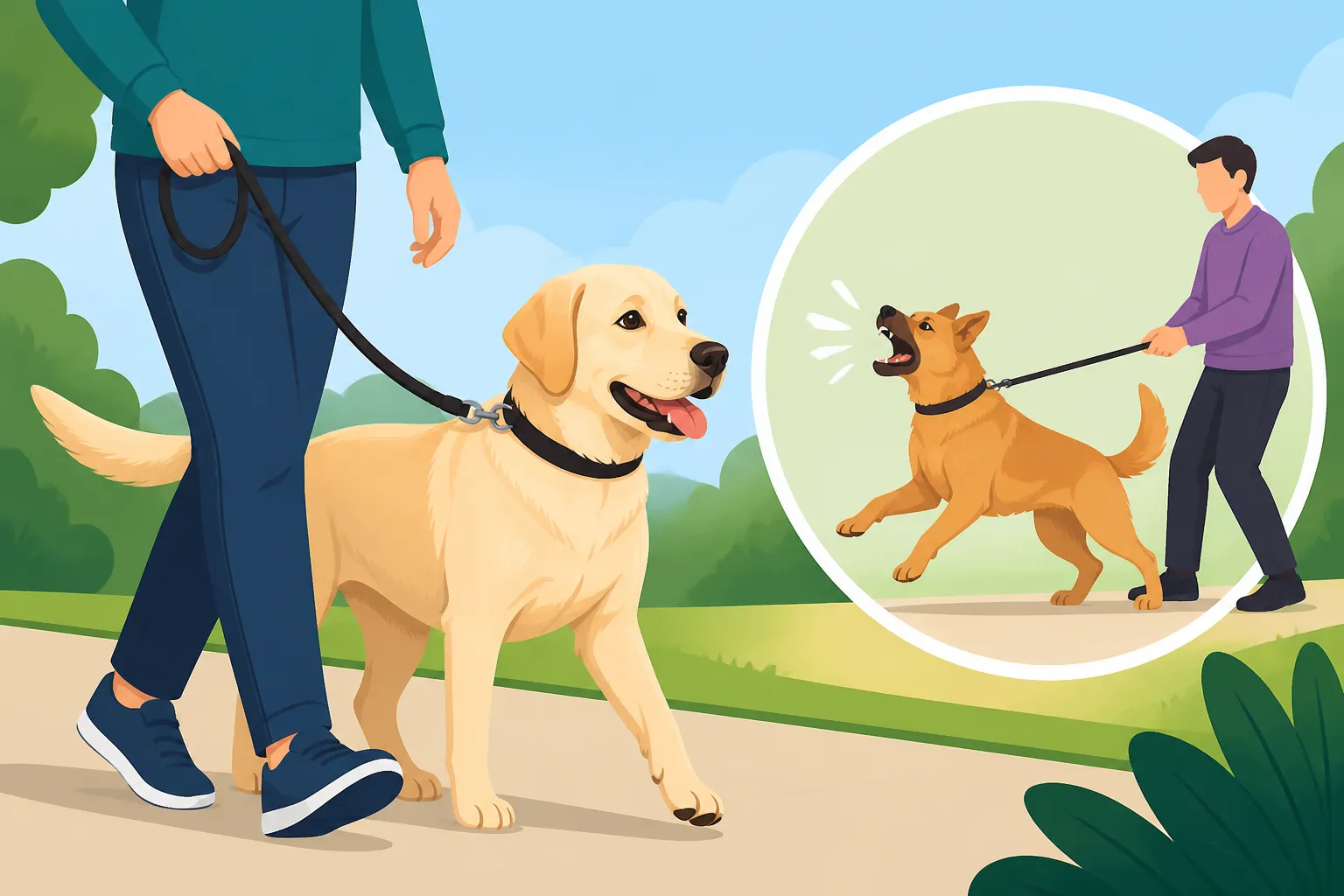
We all know the sheer joy and boundless energy a Labrador brings into our lives. But let's be honest, that joy can quickly turn into pure arm-yanking frustration when you're out for a walk and another dog appears on the horizon. Your well-behaved companion suddenly transforms into a lunging, barking, pulling beast, leaving you red-faced and apologizing. This guide is here to help you understand why your beloved Labrador acts this way and, more importantly, equip you with practical strategies to achieve those calm, enjoyable walks you've always dreamed of, even when other dogs are present.
Understanding Why Your Labrador Reacts to Other Dogs
It’s easy to feel embarrassed or even angry when your Labrador starts acting up on a walk. You might wonder what you’ve done wrong, or why your otherwise sweet dog turns into a monster at the sight of another canine. The truth is, there are several reasons behind this behavior, and understanding them is the first step toward finding a solution. It's rarely about your dog being "bad"; it's usually about miscommunication, over-excitement, or underlying anxieties they're struggling to express appropriately.
The Labrador's Natural Enthusiasm and Drive
Labradors, by nature, are incredibly friendly and enthusiastic dogs. They're often eager to meet everyone and everything, and this can sometimes manifest as an over-the-top greeting when another dog approaches. What looks like aggression might actually be intense excitement. They might be thinking, "Friend! Playmate! Let's go!" but their way of expressing this, especially on a leash, can be overwhelming and appear quite rude. This is particularly true if they didn't get consistent guidance on polite greetings when they were younger.
Think about it: your Labrador lives for interaction, for retrieving, for engaging with the world. When they see another dog, it’s a huge, moving, exciting stimulus. Their strong retrieving drive, which makes them such excellent working dogs, can translate into a powerful urge to 'go get' that other dog, leading to pulling and lunging. This isn't usually malicious; it's just pure, unadulterated Labrador energy directed without appropriate boundaries or self-control.
Sometimes, this enthusiasm can even be a bit of a self-fulfilling prophecy. If they pull and lunge, and you instinctively pull back on the leash, the tension can actually heighten their arousal. They might associate the tightness of the leash with the appearance of other dogs, making the situation even more charged for them next time. It's a tricky cycle to break, and it often requires a deliberate change in how we manage these encounters.
Underlying Fear or Anxiety
While many Labradors are outwardly boisterous, some reactivity stems from a place of fear or insecurity, rather than over-excitement. A fearful Labrador might bark, growl, or lunge to create distance from another dog because they feel threatened or anxious. This behavior is often their way of saying, "Stay away! I don't know what you're going to do, and I need space." It's a defensive mechanism, not an offensive one, even though it can look quite aggressive to others.
Signs of fear-based reactivity can include a tucked tail, flattened ears, yawning, lip-licking, or averting gaze before the lunge and bark, often followed by a rapid escalation. If your Labrador is trying to pull away from the other dog, or if they seem stressed even before the other dog gets too close, it’s a strong indicator that fear is at play. They might have had a bad experience in the past, or simply not had enough positive exposure to a variety of dogs and environments during their crucial Labrador Puppy Socialization Windows.
Identifying whether it's fear or excitement is critical, as the training approach will differ significantly. An excited dog needs to learn impulse control and polite greetings, while a fearful dog needs help building confidence and feeling safe. Misinterpreting their signals can inadvertently make the problem worse, so paying close attention to their body language throughout the encounter is key.
Lack of Early Socialization or Training
Another common reason for reactive behavior is insufficient socialization or a gap in their early training. If a Labrador puppy didn't have enough positive, well-managed experiences with other dogs, people, and different environments during their critical developmental period, they might grow up to be unsure or overly excited in novel situations. This isn't to say it's too late to fix, but it explains some of the root causes.
Beyond early experiences, consistent leash manners are paramount. Many Labrador owners find that their puppy pulls a bit, but it's manageable. Then adolescence hits, and suddenly that sweet puppy has the strength of a small horse, and their pulling is no longer a minor annoyance but a major problem. If you haven't diligently worked on Loose Leash Walking With a Labrador from the start, those ingrained habits become much harder to break, especially when the added distraction of another dog is thrown into the mix.
Sometimes, it's also a matter of what the dog has learned works. If lunging and barking makes the other dog (and its owner) move away, your Labrador might have inadvertently learned that this behavior is effective in creating space or getting what they want. They might not understand that you, their trusted human, are capable of managing these situations and keeping them safe. We need to teach them a better way to communicate and to trust our guidance.
Essential Tools and Techniques for Better Walks
Once you understand why your Labrador might be reacting, you can start implementing effective strategies. The right tools and a consistent training approach can make a world of difference, turning those stressful encounters into manageable moments. Remember, consistency is your superpower here, and every walk is a training opportunity.
Choosing the Right Gear
The equipment you use can significantly impact your ability to manage a powerful Labrador. A standard flat collar, while fine for ID tags, offers very little control when your dog decides to pull or lunge, often leading to choking and discomfort for the dog, and a sore arm for you. This is why many owners reach for alternative tools, available from retailers like Amazon, that are designed to redistribute pressure and give you more leverage.
Front-clip harnesses are often a game-changer for Labradors. Unlike harnesses that clip on the back, which can actually encourage pulling (think sled dogs!), a front-clip harness has the leash attachment point on your dog's chest. When your Labrador pulls, the leash redirects them to the side, gently turning their body back towards you. This makes it very difficult for them to get full leverage for pulling forward and encourages them to pay attention to your direction. You can find a wide variety of these harnesses easily, and they are usually comfortable for your dog to wear. For more in-depth information, you might want to read Front-Clip Harnesses on a Strong Labrador.
For some Labradors, especially those with extreme pulling or reactivity, a head halter can be an even more effective tool. A head halter fits over your dog's muzzle and around their neck, giving you control over their head direction. Where the head goes, the body follows. This doesn't cause pain; it simply gives you the ability to gently redirect their attention away from distractions and keep their focus on you. Like harnesses, head halters can be found at most pet stores and online. Always introduce any new equipment gradually and with positive reinforcement, making it a comfortable and pleasant experience for your dog.
| Leash Walking Tool | Pros | Cons | Best For |
|---|---|---|---|
| Flat Collar | Simple, holds ID tags, inexpensive. | Little control over pulling/lunging, can cause choking if dog pulls hard, not ideal for strong pullers. | Dogs with excellent leash manners, short walks in low-distraction areas. |
| Back-Clip Harness | Comfortable, good for small dogs or those with neck issues. | Can encourage pulling, offers minimal control for strong, reactive dogs. | Dogs who don't pull, senior dogs, comfortable wear. |
| Front-Clip Harness | Reduces pulling significantly, redirects dog's attention, comfortable. | Some dogs might dislike initial fit, can tangle legs if not fitted correctly. | Most Labradors, moderate pullers, reactive dogs. |
| Head Halter | Excellent control over head direction, prevents lunging, redirects focus easily. | Some dogs initially resist it, requires careful introduction to ensure comfort. | Strong pullers, highly reactive dogs, those needing quick redirection. |
High-Value Rewards and Environmental Management
When training a Labrador, especially around high-level distractions like other dogs, your rewards need to be top-tier. Forget the dry kibble or basic biscuits; you need something incredibly motivating – think cooked chicken, cheese, hot dogs, or liver treats. These "high-value" treats instantly grab and hold your Labrador's attention, making you far more interesting than the other dog. We cover Treats That Motivate a Food-Driven Labrador in another post, and it's essential reading for this kind of work.
Environmental management is just as crucial. You wouldn't try to learn calculus in a noisy, crowded concert hall, right? The same applies to your Labrador. Start training in environments where the "trigger" (other dogs) is at a comfortable distance and infrequent. This might mean walking at off-peak hours, choosing less popular routes, or practicing in a large, open field where you can control the distance. The goal is to set your dog up for success, not failure.
As your Labrador improves, you can gradually decrease the distance and increase the frequency of other dogs, but always stay below their threshold – that point where they start to react. If your dog is pulling, barking, or lunging, you've pushed them too far, too fast, and it’s time to increase your distance again. This methodical approach builds confidence and positive associations over time, rather than continually reinforcing negative reactions.
The "Engage-Disengage" Game
This game is a fantastic way to change your Labrador's emotional response to seeing other dogs. Instead of seeing another dog and immediately reacting, they learn that seeing another dog is a cue to look at you for a reward. It's about shifting their focus. Online training programs, like those offered by BAXTER & Bella, often have excellent modules on this specific technique.
Here's how it works: When you spot another dog at a distance where your Labrador notices but doesn't react, mark the moment with a clicker or a verbal marker like "yes!" the instant your dog looks at the other dog. Then, immediately follow with a super high-value treat. Repeat this. Dog sees other dog, you click/say "yes," treat appears. The trick is to reward the observation, not the reaction.
Over time, your Labrador will start to associate the sight of another dog with good things happening – specifically, treats from you. They'll begin to look at the other dog, then automatically turn their head to you, anticipating that reward. This is a game-changer because it teaches them to disengage from the distraction and re-engage with you, creating a positive conditioned emotional response.
Practical Steps for Walking Past Other Dogs Calmly
Once you have your tools and a basic understanding, it's time to put it all into practice. Remember, patience is key, and every small success is a step in the right direction. Don't expect perfection overnight; celebrate the moments where your Labrador chooses to check in with you instead of launching forward.
The "Look at That" (LAT) Game
The "Look at That" (LAT) game is a more advanced version of the engage-disengage, focusing on actively teaching your Labrador to look at a trigger (like another dog) and then voluntarily look back at you for a reward. This empowers your dog to make a good choice and puts you in control of the situation. It truly solidifies the idea that other dogs predict good things from you.
Start in a controlled environment, perhaps in your yard or a quiet park, with a friend and their dog at a significant distance. The moment your Labrador glances at the other dog, say "Look at that!" (or your chosen phrase) in a calm, neutral tone. The instant their head turns back to you (even if it's just a flicker), praise enthusiastically and give a high-value treat. Repeat, repeat, repeat. The timing is crucial: you want to reward the voluntary shift of attention back to you.
Gradually, as your Labrador becomes proficient, you can decrease the distance between you and the other dog. The goal is that when they see another dog, they automatically glance at it, then quickly look back at you, anticipating their reward. This proactive approach prevents the escalation of excitement or fear, because your Labrador is engaging their brain with you, rather than reacting solely on instinct.
Creating Distance and Changing Direction
Sometimes, despite your best efforts, another dog might appear suddenly, or get too close for your Labrador's comfort level. In these situations, your best strategy is often to proactively create distance. Don't be afraid to cross the street, turn around, or step behind a car or bush to give your Labrador the space they need. This isn't failing; it's smart management that prevents a reactive outburst and keeps everyone safe and calm.
If you find yourself in a tight spot, a quick U-turn can be incredibly effective. The moment you see another dog approaching that might be too much for your Labrador, cheerfully say "Let's go!" or "This way!" and immediately turn 180 degrees, walking swiftly in the opposite direction. Use your high-value treats to keep your Labrador engaged as you move away. This teaches them that you're in charge of managing encounters, and sometimes, the best strategy is to simply remove yourselves from the situation. It avoids practicing the unwanted behavior entirely.
Remember, every time your Labrador successfully avoids a meltdown, it reinforces calm behavior. By actively managing the environment and not forcing them into situations they can't handle yet, you are building their confidence and trust in you. Don't worry about what other people think; your priority is your Labrador's well-being and your peace of mind on walks. For further tips on managing a strong puller, you might find Stopping a Labrador From Pulling on Leash helpful.
Consistency and Patience
This journey to calm walks isn't a sprint; it's a marathon. Labradors are smart, but changing ingrained habits takes time, repetition, and immense consistency from you. There will be good days and bad days. Some walks will feel like a huge success, while others will remind you how far you still have to go. It's important not to get discouraged by setbacks. Every single interaction is a learning opportunity for both you and your dog.
Commit to short, frequent training sessions. Labradors have a great work ethic, but their attention spans, especially puppies or adolescents, benefit from focused bursts of activity. Five-minute training sessions throughout the day can be far more effective than one long, overwhelming session. This is a concept explored in Short Training Sessions That Suit a Labrador. Keep your energy positive and calm, even when your dog isn't. Your mood directly impacts theirs.
Praise generously and reward quickly. Build a strong positive association with looking at you around distractions. Over time, with consistent effort, your Labrador will learn that focusing on you means safety, treats, and a much more enjoyable walk for everyone involved. Don't be afraid to experiment with different high-value treats or toys to find what truly motivates your specific Labrador, as their preferences can change over time.
When to Seek Professional Help
While these strategies are incredibly effective for many Labradors, there are times when the problem is too deeply rooted or too severe to handle on your own. Recognizing when you need to bring in the pros isn't a sign of failure; it's a sign of a responsible and caring owner.
Recognizing When You've Reached Your Limits
If your Labrador's reactivity is escalating, or if you're consistently feeling overwhelmed and frustrated on walks, it might be time for outside help. Warning signs include:
- True aggression: If your Labrador is consistently trying to bite, growl aggressively, or lunge with intense intent beyond just excitement or frustration.
- Fear that turns to panic: If your dog seems genuinely terrified, shivering, urinating, or becoming completely unresponsive to you around other dogs.
- Injury risk: If your Labrador's pulling is so extreme that you're at risk of falling, or they're causing themselves harm by choking against their collar.
- Lack of progress: You've been diligently applying these techniques for a significant period (weeks or months) and aren't seeing any improvement, or the behavior is worsening.
Sometimes, the emotional toll on you is reason enough to seek help. If walking your dog has become a source of dread rather than enjoyment, a professional can offer a fresh perspective and tailored guidance that can rekindle that joy for both of you. They can also help rule out any underlying medical issues that might be contributing to behavioral changes, as even minor discomfort can impact a dog's tolerance for stress.
Finding a Qualified Trainer or Behaviorist
Not all dog trainers are created equal, and for reactivity, you need someone experienced and using modern, positive reinforcement methods. Look for certified professional dog trainers (CPDT-KA) or certified applied animal behaviorists (CAAB). Avoid anyone who advocates for harsh corrections, shock collars, prong collars, or physical punishment, as these methods can exacerbate fear and aggression in reactive dogs.
Ask for references, watch them work with other dogs, and ensure their philosophy aligns with yours. Many excellent trainers offer initial consultations where you can discuss your specific challenges and get a feel for their approach. A good trainer will teach you how to train your dog, empowering you with the skills and confidence to continue the work. Programs like BAXTER & Bella’s comprehensive online puppy program can also be a fantastic resource for foundational skills, which are crucial for managing more complex behaviors like reactivity later on. They provide structured lessons you can follow at your own pace.
A qualified professional can assess your Labrador's specific body language and triggers, helping you create a customized training plan. They can identify nuances you might be missing and provide hands-on coaching during challenging situations. Investing in professional guidance can ultimately save you time and frustration, leading to a happier, calmer Labrador and more peaceful walks for everyone. Sometimes, you might even consider Labrador Training Class Costs to see if group settings under a trainer's eye are beneficial.
Disclaimer
This article is for general informational purposes only and does not constitute professional advice. Laws, prices and regulations vary by location and change over time. Consult a qualified professional for guidance on your specific situation.