Teaching a Labrador to Heel Properly
Getting your spirited Labrador Retriever to walk politely by your side, rather than dragging you down the street like a sled dog, can feel like an impossible dream. Many Labrador owners find themselves with aching shoulders and a sense of defeat, especially when their beloved companion lunges after a squirrel or strains to greet every passing stranger. This guide will walk you through the practical, empathetic steps to teach your Labrador how to heel properly, transforming your walks into a calm, enjoyable experience for both of you.
Why "Heel" Feels Like a Battle with a Labrador
It's easy to get frustrated when your Labrador is pulling on the leash, but it’s important to remember that this isn't usually born out of defiance. Labradors are incredible dogs, but their natural instincts and physical build often make leash manners a particular challenge. Understanding why they do what they do can help us approach training with more patience and a clearer strategy.
The Natural Drive to Pull
Labradors were bred for a job that required strength, endurance, and a powerful drive to get where they needed to go, often through challenging terrain. They were partners with fishermen and hunters, retrieving game from icy waters or dense cover. This historical role means they are naturally strong, eager, and have a high prey drive. When they see something exciting – another dog, a person, a leaf blowing across the path – their instinct is to surge forward. That pull you feel on the leash is simply their enthusiasm and physical capability meeting an interesting stimulus. They’re not trying to be bad; they’re just being a Labrador, wired to investigate and move. They literally have webbed feet and a powerful "otter tail" designed for propulsion, so pulling on a leash just feels like a natural extension of that drive.
Many owners can attest to the sheer power a full-grown Labrador can exert. Even a lean Labrador can easily outweigh a small adult, making it a struggle of wills and physics every time you step out the door. Without proper training, that leash becomes less of a communication tool and more of a tug-of-war rope. This isn't just about comfort; it's about safety, too. A strong pull can lead to falls, injuries for you, or your dog getting into a dangerous situation. It's a very common scenario for Leash Manners for a Powerful Labrador to be at the top of an owner's training priority list.
Confusing Early Leash Training
Often, our earliest interactions with a leash can inadvertently reinforce pulling. When you first clip that leash on a puppy, they naturally explore, and if they pull and get to sniff that interesting patch of grass or greet that person, they've just learned that pulling works. We want to be lenient with puppies, of course, but consistency from the start is key. A puppy pulling to get somewhere and being rewarded by arriving there sets a precedent that is incredibly difficult to undo later.
Furthermore, many owners confuse "loose leash walking" with "heeling." Loose leash walking simply means the leash isn't taut, and your dog isn't pulling. Heeling, on the other hand, is a specific, formal position where your dog walks precisely by your side, typically with their shoulder aligned with your leg. While loose leash walking is a great first step, proper heeling requires more focus and precision. If your early training didn't establish clear boundaries or provide sufficient motivation for staying close, your Labrador might view the leash as a suggestion rather than a partnership tool, leading to the constant struggle of Stopping a Labrador From Pulling on Leash.
Essential Foundations Before You Start Heeling
Before diving into the mechanics of teaching a precise heel, it’s vital to lay some groundwork. Think of it like building a house – you need a solid foundation before you start framing the walls. For heeling, that foundation is built on engagement and the right equipment.
Mastering Focus and Engagement
Your Labrador is a highly intelligent, food-motivated, and people-oriented dog. We need to harness those traits before we even think about asking for a perfect heel. If your dog isn't paying attention to you indoors, they certainly won't outdoors where the world is a giant, exciting distraction. Start by building a strong bond and teaching your Labrador that you are the most interesting thing around.
Practice short, fun training sessions indoors with high-value treats. Work on simple commands like "sit," "stay," and "watch me." The goal is to make eye contact and attention a rewarding habit. Use their favorite Treats That Motivate a Food-Driven Labrador to capture their focus. When your Labrador looks at you, even for a split second, mark it with a verbal "yes" or a clicker, and immediately give them a treat. Gradually increase the duration of eye contact you ask for. This isn't just about obedience; it's about building a relationship where your Labrador wants to engage with you, even when there are other things vying for their attention. A strong foundation of focus indoors will translate directly to better leash manners outside.
Choosing the Right Gear for Heeling Success
The equipment you use can make a huge difference in your heeling journey. While a standard flat collar and leash are fine for many dogs, a strong, enthusiastic Labrador often benefits from tools that offer more control and provide clearer communication without causing discomfort.
Here's a quick rundown of popular options:
| Equipment Type | Pros | Cons | Best For |
|---|---|---|---|
| Flat Collar | Simple, everyday use, comfortable. | Offers little control if dog pulls hard, can strain neck. | Dogs with good leash manners, short training bursts. |
| Front-Clip Harness | Redirects pulling power, prevents neck strain, comfortable. | Can tangle legs, may not prevent all pulling, less precise control. | Front-Clip Harnesses on a Strong Labrador needing pull redirection. |
| Head Halter | Excellent control, redirects head, often stops pulling immediately. | Some dogs resist, can look like a muzzle, requires careful introduction. | Head Halters for a Labrador Who Lunges or with strong pull instincts. |
| Martingale Collar | Prevents slipping off, provides gentle tightening feedback. | Not for constant pulling, can still cause discomfort if misused. | Dogs who can slip out of flat collars, mild corrections. |
For heeling, many trainers start with a front-clip harness or a head halter because they reduce pulling power and allow the handler more leverage. This lets you focus on teaching the desired behavior rather than constantly bracing against a pull. Avoid retractable leashes entirely, as they teach your dog that pulling extends their range and offer very little control. A standard 6-foot leash made of durable material (nylon or leather) is ideal. You can find a vast array of these training tools on platforms like Amazon, making it easy to experiment and find what works best for your specific dog. Remember, the goal is to make walks safer and more enjoyable, not to cause pain.
Step-by-Step: Teaching the Heel Command
Now that you have the foundation in place, let's get into the nitty-gritty of teaching the actual "heel" command. This process relies heavily on positive reinforcement and breaking the behavior down into tiny, achievable steps. Remember, consistency and patience are your best friends here.
Lure and Reward the Position
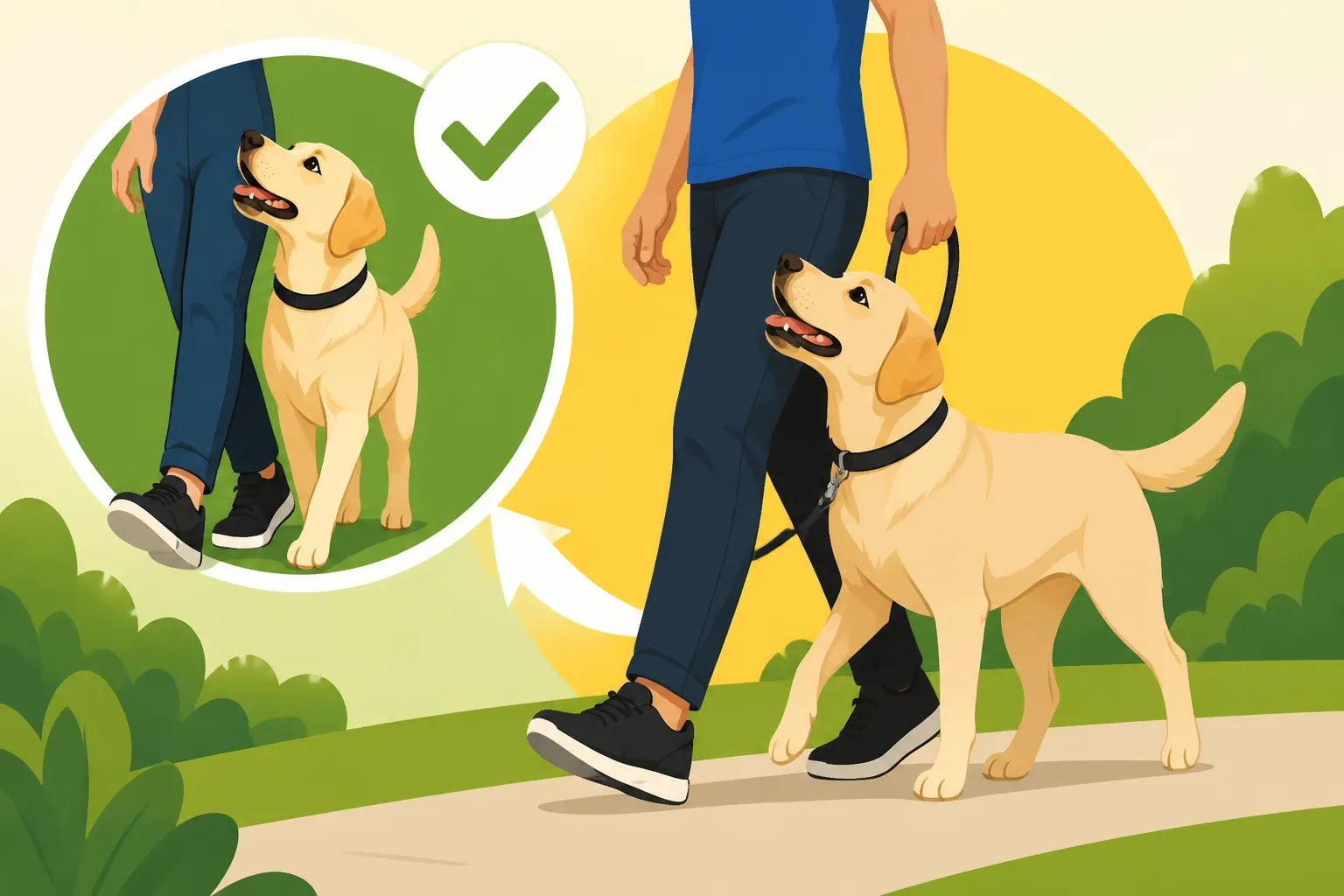
We start by luring your Labrador into the correct heel position. This means your dog's shoulder should be aligned with your leg, typically on your left side (though you can choose either side, just be consistent).
- Start Indoors, Zero Distractions: Begin in a quiet room with your Labrador off-leash. Hold a high-value treat in your hand, close to your dog's nose.
- Lure to Position: With the treat, lure your dog to your chosen heel side, guiding them so their shoulder is lined up with your seam. As soon as they are in position, even for a second, mark the behavior ("yes!" or click) and give them the treat. Repeat this many, many times. Keep sessions short, maybe 3-5 minutes, especially with a young or easily distracted Labrador. Short Training Sessions That Suit a Labrador are much more effective than long, drawn-out ones.
- Take One Step: Once your Labrador reliably moves into position with the lure, start taking one step forward. Lure them into position, take one step, and as they move with you, mark and reward. If they break position, stop immediately, lure them back, and try again. The key is to reward them for staying in position as you move.
- Gradually Increase Steps: Slowly increase the number of steps you take – two steps, then three, then five. Always reward generously when they maintain the heel position. The treat should come from your hand at your side, reinforcing that the good stuff happens right there next to you.
Adding the "Heel" Cue
Once your Labrador understands the desired physical position and can maintain it for several steps with a lure, it's time to introduce the verbal cue.
- Say "Heel" Before the Lure: As you start to lure your dog into position, say "Heel" just before you move the treat. Lure, move a few steps, mark, and reward.
- Fade the Lure: Gradually, make the hand lure less obvious. Instead of holding the treat right at their nose, move it a little higher or hold it with an open palm but no visible treat. Your dog should start responding to the verbal cue and the subtle hand motion rather than the physical lure. You're beginning the process of Fading Food Rewards With a Labrador, transitioning from constant treats to more intermittent rewards.
- Practice in Different Directions: Practice heeling in a straight line, then turning left, turning right, and doing U-turns. The turns are excellent for teaching your Labrador to stay engaged and adjust their body with yours. Reward heavily when they navigate turns smoothly while maintaining position.
Incorporating Movement and Distractions
The real test of heeling comes when you introduce movement and distractions. This is where many owners get stuck, but it’s crucial to progress systematically.
- Adding the Leash (Still Indoors): Once your Labrador is consistently heeling off-leash indoors, put the leash on. Continue practicing the one-step, then two-step, then multiple-step method, just as you did before. The leash at this stage is simply an extension of your hand, not a tool for pulling. Keep it loose and use it only to gently guide if necessary.
- Moving to Low-Distraction Areas: Graduate to a low-distraction environment, like your backyard or a quiet park at an off-peak hour. The moment your Labrador starts to get distracted, stop. Get their attention with a "watch me" command, lure them back to heel position, and then continue. If they pull, simply stop moving. Wait for the leash to go slack, even for a second, then mark and reward, and resume walking. This teaches them that pulling gets them nowhere, but a loose leash keeps them moving.
- Gradually Increasing Distractions: Slowly introduce more challenging environments. A quiet street, then a busier park, then near other dogs (Walking a Labrador Past Other Dogs Calmly). Each time, start with shorter sessions and lower expectations. If your Labrador struggles, go back to an easier environment where they can succeed. The goal is to set them up for success, not failure. Use your verbal praise and those coveted high-value treats to make staying in heel more rewarding than whatever distraction comes their way.
Troubleshooting Common Heeling Challenges
Even with the best intentions and consistent training, you're bound to run into snags. Labradors are smart and full of life, which means they'll test boundaries and get distracted. Don't get discouraged! These challenges are normal, and with the right approach, you can overcome them.
When Your Labrador Forgets "Heel" Outside
It's a familiar scenario: your Labrador is a superstar indoors, but the moment you step outside, all your careful training seems to vanish. This happens because the outdoor environment is a whole new ball game, loaded with novel smells, sights, and sounds that are far more stimulating than your living room. Your Labrador isn't being stubborn; they're simply over-stimulated, and their brain is having trouble filtering out all the exciting information to focus on you.
The solution here is to go back to basics and reduce the challenge. When you're outside and your Labrador "forgets" heel, it's usually because the environment is too distracting. Don't push through it. Instead, stop walking, get their attention (perhaps with a loud kissy noise or a highly appealing treat), and ask for a simple "sit" or "watch me." Reward them generously for that moment of focus. Then, either return to a less distracting area to practice heeling, or if you must continue, simply focus on loose-leash walking for that portion of the walk. Break down outdoor heeling into smaller components. For example, practice heeling for just a few steps next to a quiet bush, reward, then let them sniff. Gradually increase the duration and proximity to distractions.
Dealing with Distractions and Lunging
Distractions are the arch-nemesis of heeling. Whether it's another dog, a person, or the tantalizing scent of something intriguing on the ground, Labradors are prone to lunging and pulling when something catches their eye (or nose). This is where proactive management and counter-conditioning come into play.
As soon as you spot a potential distraction before your Labrador does (or the moment they notice it but haven't reacted yet), immediately get their attention. Use your highest value treat. Say "Heel" and quickly move a few steps past the distraction, showering them with treats and praise as long as they stay in position and don't react. The goal is to associate the presence of a distraction with good things happening when they stay by your side. If your Labrador still lunges, stop immediately. Do not move forward. Wait for them to calm down, even if it means standing still for a minute or two. Once the leash is loose and they've disengaged from the distraction, then you can ask for a "watch me" or a "sit," reward, and continue. Consistency is paramount here; every time they lunge and are rewarded by moving forward (even if you're being dragged), the behavior is reinforced. Remember, tools like front-clip harnesses can really help manage the physical aspect of Stopping a Labrador From Pulling on Leash while you work on the behavioral change.
Maintaining Enthusiasm for Training
Training a Labrador, especially something as precise as heeling, takes time and dedication. It's easy for both you and your dog to lose enthusiasm if sessions become monotonous or frustrating. The key to long-term success is to keep training fun, varied, and always end on a positive note.
Keep your training sessions short and sweet – no more than 5-10 minutes, especially for puppies or during the initial stages. Use a variety of high-value rewards, not just treats, but also praise, a favorite toy, or a quick game of fetch after a good heeling session. Incorporate training into your daily routine; a few steps of heel on the way to the mailbox, or while walking around the living room. Don't expect perfection every time; celebrate the small victories. If you're feeling frustrated, take a break. Your Labrador will pick up on your mood, and it can sour the training experience. Consider enrolling in a local obedience class or exploring online training resources, such as those offered by BAXTER & Bella, which can provide fresh ideas, structured lessons, and support. A change of scenery or a new game can rekindle your Labrador's (and your own) joy in learning. The more positive and rewarding you make the experience, the more your Labrador will want to work with you.
Disclaimer
This article is for general informational purposes only and does not constitute professional advice. Laws, prices and regulations vary by location and change over time. Consult a qualified professional for guidance on your specific situation.