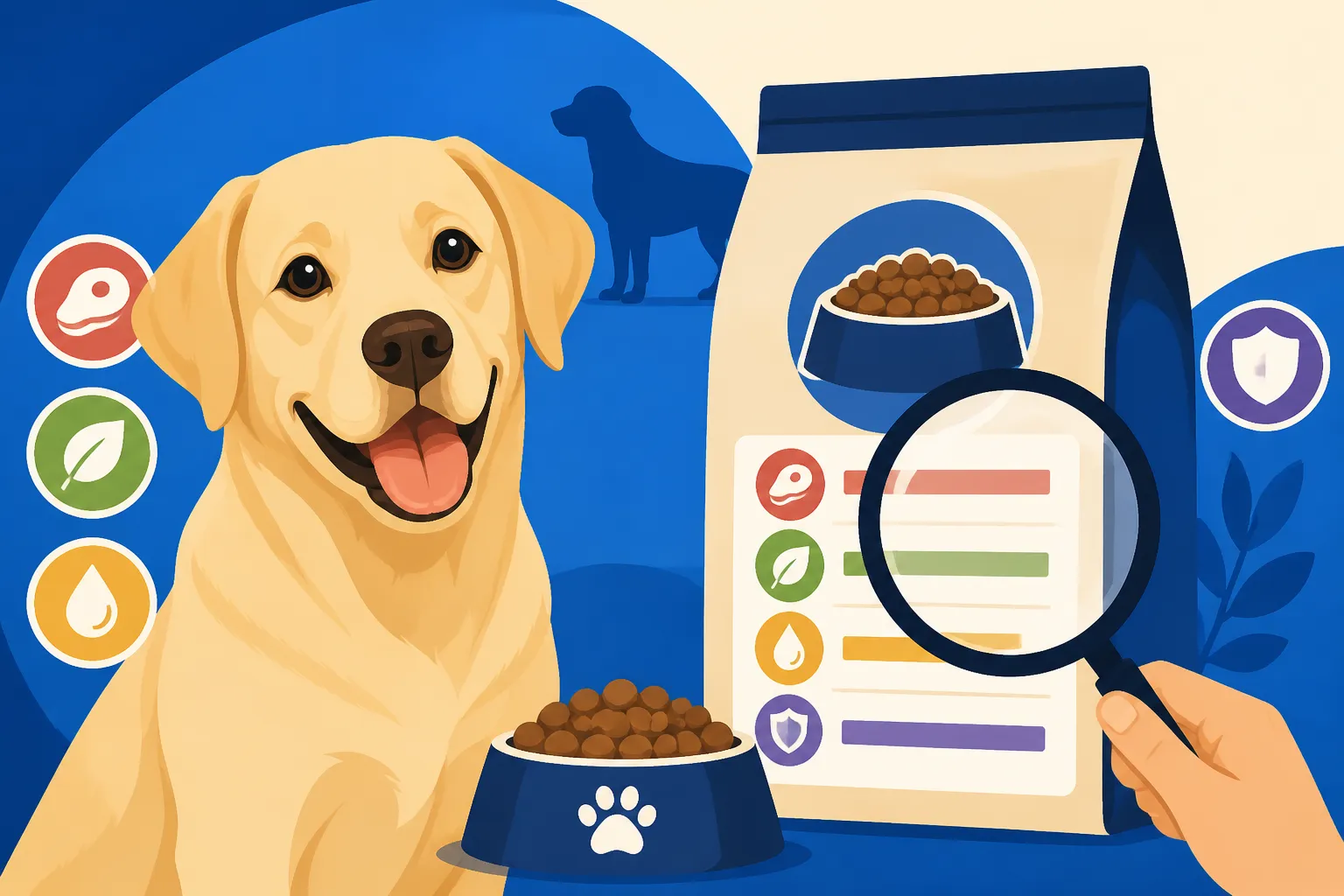
Reading a Dog Food Label for a Labrador
It can feel like you need a nutrition degree just to understand what you're feeding your beloved Labrador. Standing in the pet store aisle, staring at dozens of bags, each with a dazzling array of claims and tiny, indecipherable print, is enough to make anyone feel utterly overwhelmed. This guide is here to cut through the jargon, helping you make informed decisions about your Labrador's diet and ensuring they get the balanced nutrition they need to thrive.
Understanding the Ingredient List: More Than Just the First Five
The ingredient list on your Labrador's dog food bag is arguably the most crucial section to examine. It tells you exactly what goes into their bowl, listed in descending order by weight before processing. However, a quick glance isn't enough; you need to know what to look for, what to question, and how different ingredients contribute to your Labrador's overall health and energy.
Deciphering the Top Ingredients
When you look at a dog food label, the first few ingredients are what truly make up the bulk of the food. For a robust and active breed like a Labrador, you want to see quality protein sources at the top. This typically means a named animal protein, like "chicken," "beef," or "salmon." However, it's not always as straightforward as it seems. Whole meats, while excellent, contain a high percentage of water, which gets cooked out during processing. This means that a meat listed first might actually contribute less protein to the final dry product than a meat meal listed a little further down.
Meat meals, such as "chicken meal" or "lamb meal," are often misunderstood. Despite their name, these are highly concentrated protein sources. They are rendered products, meaning much of the water content has been removed before they are added to the kibble. This makes them a very efficient way to deliver protein. A high-quality meat meal from a named source (e.g., "chicken meal" not "poultry meal") can actually be a fantastic ingredient for your Labrador, providing concentrated amino acids essential for muscle maintenance and repair.
Recognizing Fillers and Red Flags
Not all ingredients are created equal, and some common ones are often considered "fillers." These are ingredients that offer little nutritional value beyond calories and might be used to bulk up the food. Examples include corn gluten meal, wheat middlings, or generic "meat by-products" without a specified animal source. While not necessarily harmful in small amounts, if these appear high on the ingredient list, it suggests the food might not be providing the optimal nutrient density your active Labrador needs. Remember, Labradors are often food-obsessed, and filling them up with low-nutrient ingredients won't satisfy their needs long-term.
Another red flag can be "ingredient splitting." This is a tactic where a manufacturer breaks down a less desirable ingredient into several smaller components, listing them separately so that they appear further down the list. For example, instead of listing "corn," they might list "ground corn," "corn gluten," and "corn bran." Individually, these seem less prominent, but combined, corn might make up a significant portion of the food. Always read the entire ingredient list carefully, looking for patterns that might suggest a hidden agenda to reduce the perceived amount of a specific ingredient.
The Importance of Whole Foods
Beyond the primary protein sources, look for a variety of whole, recognizable ingredients. This includes things like sweet potatoes, peas, carrots, apples, and various berries. These ingredients provide essential vitamins, minerals, antioxidants, and fiber. Fiber, in particular, is vital for a Labrador's digestive health and can help them feel full, which is a big win for a breed known for its insatiable appetite. A diet rich in diverse, whole foods mirrors what we consider healthy for ourselves and provides a broad spectrum of nutrients that work synergistically.
Many modern dog food brands, including those found on platforms like Chewy, are moving towards formulations that prioritize these whole food ingredients. Some, like Ollie, even offer fresh food options where the ingredients are immediately identifiable. Choosing foods with recognizable whole vegetables and fruits indicates a commitment to quality and comprehensive nutrition. For a Labrador, who needs sustained energy and good digestive function, these ingredients are far more beneficial than synthetic additives or generic fillers.
Guaranteed Analysis: What Those Percentages Really Mean
The Guaranteed Analysis is a crucial section on any dog food label, providing a breakdown of the minimum and maximum percentages of key nutrients. Unlike the ingredient list, which tells you what is in the food, the Guaranteed Analysis tells you how much of specific nutrients are present. For a Labrador, understanding these percentages helps you ensure they are getting the right balance of protein, fat, fiber, and moisture for their life stage and activity level.
Protein: The Building Block for Muscle and Energy
The "Crude Protein (min)" percentage is often the first thing Labrador owners look at, and for good reason. Labradors are muscular, active dogs, and protein is essential for building and repairing tissues, supporting a healthy immune system, and providing energy. For adult Labradors, a protein content of 25-30% is often a good target, though highly active working dogs might benefit from slightly higher levels. For puppies, who are growing rapidly, a higher protein content, typically around 28-32%, is often recommended in specific large breed puppy formulas.
It's important to remember that this is a minimum guarantee. The actual protein content might be higher. When comparing different foods, especially those with varying moisture levels (like wet food versus dry kibble), you'll need to calculate the "dry matter basis" to get an accurate comparison. A higher protein percentage in wet food might be misleading if you don't account for the high water content. Focus on consistent, high-quality sources of protein, as discussed in the ingredient list, to ensure optimal health for your Labrador.
Fat: Essential for Coat Health and Sustained Energy
"Crude Fat (min)" indicates the minimum amount of fat in the food. Fat is a concentrated source of energy, making it vital for active Labradors. It also plays a crucial role in absorbing fat-soluble vitamins, maintaining a healthy skin and coat, and providing palatability. For most adult Labradors, a fat content between 12-18% is generally appropriate. Puppies may need slightly higher fat content to support their rapid growth and energy demands.
However, like protein, this is a minimum. Excessive fat can lead to weight gain, which is a common problem for Labradors. Labrador Obesity and the Years It Costs highlights the serious health implications of carrying extra pounds. If your Labrador is prone to weight gain or has specific health conditions, you might look for foods on the lower end of this range or specialized weight management formulas. Sources of fat should ideally be from named animal fats (like chicken fat) or beneficial plant-based oils (like flaxseed or salmon oil), which provide omega-3 and omega-6 fatty acids for skin and joint health.
Fiber and Moisture: Often Overlooked but Crucial
"Crude Fiber (max)" and "Moisture (max)" are two percentages often overlooked, but they provide valuable insights. Fiber, though not digestible by dogs, is essential for healthy digestion, bowel regularity, and can help your Labrador feel fuller between meals. For adult Labradors, a crude fiber content of 3-5% is typical. Higher fiber diets (6%+) can be particularly helpful for dogs on a weight loss regimen, as fiber adds bulk without extra calories.
"Moisture (max)" tells you the maximum water content. This is critical when comparing foods, as kibble is typically 10% moisture, while wet foods can be 75-80% moisture. This difference dramatically impacts the concentration of other nutrients. For example, if a dry food has 25% protein and a wet food has 8% protein, the dry food actually contains far more protein per serving once the water is accounted for. To compare accurately, always convert to a "dry matter basis." For example, if kibble is 10% moisture, it's 90% dry matter. If protein is 25%, then 25/0.90 = ~27.8% protein on a dry matter basis. This helps you make a truly apples-to-apples comparison between different product types you might find on Amazon or other retailers.
Nutritional Adequacy Statement: The AAFCO Seal of Approval
Beyond the ingredient list and guaranteed analysis, the Nutritional Adequacy Statement is your most direct assurance that the food meets basic nutritional standards. This often-overlooked statement is regulated by the Association of American Feed Control Officials (AAFCO), a voluntary organization that sets nutritional standards for pet foods in the United States. Without this statement, you have no guarantee that the food provides complete and balanced nutrition for your Labrador.
Understanding "Complete and Balanced"
When a dog food label states "complete and balanced," it means that the food, when fed as directed, is formulated to meet the nutritional needs of a dog. AAFCO provides two ways for a manufacturer to achieve this claim:
- Formulation Method: The food is formulated to meet the nutrient profiles established by AAFCO. This means the recipe was created to include all the minimum (and not exceed maximum) levels of essential nutrients.
- Feeding Trial Method: The food has undergone animal feeding tests following AAFCO procedures and has been shown to provide complete and balanced nutrition. This method is often considered the gold standard, as it proves the food is not only formulated correctly but also performs well in actual dogs.
For your Labrador, always look for this "complete and balanced" claim. It’s your first line of defense against nutritional deficiencies. Foods without this statement, like treats or toppers, are not meant to be a sole source of nutrition and should only be given in moderation.
Life Stage Specific Formulations
AAFCO outlines specific nutrient profiles for different life stages: "Growth" (for puppies), "Adult Maintenance," and "All Life Stages."
- "Growth" formulas are designed for puppies and pregnant/lactating female dogs, providing higher levels of protein, fat, and certain minerals to support rapid development. For a Labrador puppy, choosing a large breed puppy formula is crucial, as these are specifically formulated to support controlled growth and help prevent orthopedic issues like Labrador Hip and Elbow Dysplasia. You can find excellent options on Chewy or other online retailers that specify "large breed puppy."
- "Adult Maintenance" formulas are for adult dogs whose growth is complete. These diets balance energy and nutrients to maintain a healthy weight and activity level.
- "All Life Stages" foods meet the more stringent nutritional requirements for growth and reproduction, meaning they are appropriate for puppies and adult dogs alike. While seemingly convenient, if you have an adult Labrador, an "Adult Maintenance" specific formula might be a better choice as "All Life Stages" foods are often richer than an adult dog truly needs, potentially contributing to weight gain if portion control isn't strictly managed.
Knowing your Labrador's age and activity level is key to choosing the correct life stage formula. Feeding a Labrador Through Every Life Stage dives deeper into how these needs change.
When a Food Isn't Complete and Balanced
You'll also encounter dog food products that explicitly state they are "for intermittent or supplemental feeding only." This means they do not provide complete and balanced nutrition and should not be fed as your Labrador's primary diet. These are typically treats, food toppers, or specialized prescription diets that your veterinarian has recommended.
Feeding too many of these "supplemental" items, or homemade diets that aren't properly balanced by a veterinary nutritionist, can lead to serious nutritional imbalances over time. For a breed like the Labrador, known for its hearty appetite, it's easy to overdo treats. While a few treats are fine, their main nutrition should always come from a complete and balanced diet. If you're considering a raw or home-cooked diet, consult with a board-certified veterinary nutritionist to ensure it meets all of your Labrador's dietary needs.
Decoding Feeding Guidelines and Calorie Content
One of the biggest challenges for Labrador owners is managing their dog's weight. These dogs are notorious food hounds, and keeping them at a healthy weight requires vigilance. The feeding guidelines on the bag are a starting point, but they are rarely a one-size-fits-all solution for every Labrador. Understanding calorie content and how to adjust portions is essential for your dog's long-term health.
Why Generic Guidelines Aren't One-Size-Fits-All for Labradors
Every dog food bag has a chart suggesting how much to feed based on your dog's weight. The problem? These are general guidelines, often calibrated for an "average" dog, which doesn't perfectly describe your unique Labrador. Factors like age, activity level, metabolism, and even genetics (like The POMC Gene and Labrador Appetite) play a huge role in how many calories your Labrador truly needs. A highly active field-line Labrador who spends hours retrieving might need significantly more food than a calm, show-line Labrador who enjoys leisurely walks.
If you blindly follow the bag's recommendations, you might find your Labrador quickly packing on the pounds. It's far better to use these guidelines as a starting point and then carefully monitor your dog's body condition. You should be able to easily feel, but not necessarily see, their ribs, and they should have a discernible waist when viewed from above. Regularly checking your Labrador Body Condition Scoring is a better indicator than just the bag's chart.
Calculating Your Labrador's Caloric Needs
To truly dial in your Labrador's diet, you'll need to look beyond the general feeding chart and find the food's calorie content, typically expressed as "kcal/kg" or "kcal/cup." Most dog food companies list the caloric content on their website, or sometimes on the bag itself. Once you know this, you can calculate a more precise daily ration.
A good starting point for calculating your Labrador's caloric needs is to consider their ideal weight and activity level. There are various formulas available online and through your vet that can help estimate daily caloric requirements. For instance, a moderately active adult Labrador might need around 25-30 calories per pound of ideal body weight per day. Once you have an estimated daily caloric intake, you can divide that by the food's kcal/cup to determine how many cups your Labrador truly needs. This allows you to tailor the portions much more accurately than relying solely on generic charts.
The Role of Treats in Daily Intake
Let's be honest, resisting those big, pleading Labrador eyes when they ask for a treat is almost impossible! But those treats, even small ones, add up quickly. Many Labrador owners forget to factor treats into their dog's daily calorie budget, leading to inadvertent weight gain. A good rule of thumb is that treats should make up no more than 10% of your Labrador's total daily caloric intake.
If your Labrador is prone to begging or you use a lot of treats for training, consider using a portion of their daily kibble ration as treats instead. You can also opt for very low-calorie options like small pieces of carrots, green beans, or blueberries, which you can easily purchase from a grocery store or via Amazon Fresh. Being mindful of every morsel that enters your Labrador's mouth is crucial for Keeping a Labrador at a Healthy Weight. Remember, consistent Portion Control for a Food-Obsessed Labrador is key.
Navigating Marketing Claims and Buzzwords
Walking through the pet food aisle can feel like a linguistic minefield. Every bag screams a different claim, from "grain-free" to "natural" to "human-grade." While some of these claims highlight genuine benefits, many are simply marketing buzzwords designed to catch your eye and appeal to human trends, sometimes without clear scientific backing for canine health. It's important to understand what these terms truly mean – and what they don't – when choosing food for your Labrador.
"Grain-Free," "Limited Ingredient," and Other Popular Labels
"Grain-Free" became incredibly popular for a while, driven by the misconception that grains are inherently bad for dogs or cause allergies. While some dogs do have grain sensitivities, they are far less common than sensitivities to animal proteins. For most Labradors, grains like rice, barley, and oats are excellent sources of complex carbohydrates, fiber, and nutrients. More importantly, research has indicated a potential link between grain-free diets that use legumes (like peas, lentils, and chickpeas) as primary carbohydrate sources and a form of heart disease called Dilated Cardiomyopathy (DCM) in some breeds, including Labradors. Before choosing a grain-free diet, especially if your Labrador doesn't have a diagnosed grain allergy, it's wise to discuss it with your veterinarian. You can also read more about Grain-Free Diets and Labrador Heart Health.
"Limited Ingredient Diets (LID)" are often recommended for Labradors with food sensitivities or allergies. These diets simplify the ingredient list, typically containing a single source of animal protein and a single source of carbohydrate to help identify and avoid allergens. While useful for diagnostic purposes or for dogs with known issues, LIDs aren't always necessary for healthy dogs and sometimes lack the diversity of nutrients found in broader formulas.
Human-Grade, Organic, and Natural: Are They Worth It?
"Human-Grade" is a term that sounds impressive. It legally means that every ingredient in the food and the manufacturing facility itself must be fit for human consumption. This is a higher standard than "feed-grade," which applies to most pet foods. While it suggests higher quality control, it doesn't automatically mean the food is nutritionally superior or better for your Labrador than a well-formulated feed-grade food. It often comes with a significantly higher price tag, which might not always translate to better health outcomes for your dog. Brands like Ollie often emphasize their human-grade ingredients, appealing to owners who want the best for their pets.
"Organic" refers to ingredients grown or raised without synthetic pesticides, hormones, or antibiotics. Just like with human food, organic dog food means the ingredients meet USDA organic standards. This can be a good choice if you're concerned about potential chemical residues, but similar to human-grade, it doesn't necessarily make the food more nutritionally complete for your Labrador. It primarily speaks to the sourcing and growing practices of the ingredients.
"Natural" is another term that's often misunderstood. According to AAFCO, "natural" pet food means it's composed of ingredients that are un-processed or subject only to physical processing or heat treatment, including fruits, vegetables, and animal products, but excluding chemically synthesized additives. However, many "natural" foods still contain chemically synthesized vitamins, minerals, and trace nutrients to ensure complete and balanced nutrition. It's a broad term and doesn't guarantee a specific level of quality beyond the absence of artificial colors, flavors, or preservatives.
Regional Sourcing and Ethical Considerations
Beyond the nutritional aspects, some Labrador owners choose dog food based on regional sourcing or ethical considerations. Labels might boast "locally sourced ingredients," "sustainable fishing practices," or "humanely raised animal proteins." These claims speak to the brand's commitment to environmental stewardship and animal welfare, which can be important factors for many consumers.
While these claims don't directly impact the nutritional adequacy statement or guaranteed analysis, they reflect a company's values. If these aspects are important to you, researching brands that align with your ethical preferences is a great way to choose a food you feel good about feeding your Labrador. Many smaller, specialty brands sold through retailers like Chewy or independent pet stores focus on these values, offering an alternative to mass-produced options.
Here's a quick comparison table for navigating common dog food label sections:
| Label Section | What It Tells You | Why It Matters for Your Labrador | Key Action |
|---|---|---|---|
| Ingredient List | The specific components of the food, by weight pre-processing. | Reveals source quality, potential allergens, and nutrient density. | Look for named animal proteins, whole foods; avoid generic fillers & splitting. |
| Guaranteed Analysis | Min/Max percentages of protein, fat, fiber, and moisture. | Ensures adequate levels of macronutrients for health and energy. | Compare dry matter basis; aim for 25-30% protein, 12-18% fat for adults. |
| Nutritional Adequacy | Confirms "complete and balanced" status for a life stage. | Guarantees the food meets AAFCO standards for your dog's age/needs. | Always choose "complete & balanced" for the correct life stage (puppy/adult). |
| Calorie Content | Energy per serving (kcal/cup or kcal/kg). | Essential for precise portion control and weight management. | Calculate daily needs and adjust portions; factor in treats! |
| Marketing Claims | Buzzwords like "grain-free," "natural," "human-grade." | Appeals to trends; sometimes misrepresents benefits or carries risks. | Research claims; consult vet on trends like grain-free; don't overpay for buzz. |
Disclaimer
This article is for general informational purposes only and does not constitute professional advice. Laws, prices and regulations vary by location and change over time. Consult a qualified professional for guidance on your specific situation.