Labrador Body Condition Scoring
It's incredibly common for Labrador owners to wonder if their beloved companion is carrying a few too many pounds, or perhaps not enough. Our Labs are masters of the "feed me!" gaze, and with their boundless energy and thick coats, it can be genuinely challenging to discern what a truly healthy physique looks like underneath all that charm. This guide isn't just about numbers; it's about giving you the practical tools and confidence to accurately assess your Labrador's body condition, ensuring they live their healthiest, happiest life by your side.
Why Body Condition Scoring Matters for Your Labrador
Let's be honest, it's easy to spoil our Labs. They have such expressive eyes, and they make us feel guilty for withholding just one more treat. But underneath that desire to please them, there's a serious responsibility to keep them physically sound. Body Condition Scoring (BCS) isn't about vanity; it's a vital health tool that lets you objectively evaluate your dog's fat reserves and muscle mass, giving you a clear picture of their overall well-being. It's much more nuanced and accurate than simply stepping on a scale. While the scale gives you a raw number, BCS tells you what that number means for your dog's physical state.
The Hidden Dangers of Too Much or Too Little Weight
Both ends of the weight spectrum come with their own set of serious health implications for our Labs. When a Labrador is overweight, the risks stack up dramatically. You're looking at increased strain on joints, exacerbating conditions like Labrador Hip and Elbow Dysplasia or increasing the likelihood of Cruciate Ligament Tears in Labradors. Beyond orthopedics, obesity drastically raises the risk of diabetes, heart disease, respiratory issues, and even certain cancers. It’s a sad truth that Labrador Obesity and the Years It Costs can shorten their precious lives. A leaner Labrador generally lives longer and has a better quality of life.
On the flip side, an underweight Labrador isn't a picture of health either. While less common for the famously food-motivated Labrador, being too thin can indicate underlying health problems such as parasites, gastrointestinal issues, metabolic diseases, or even chronic stress. A lack of adequate fat reserves can lead to poor immunity, difficulties regulating body temperature, and a general lack of energy and vitality. It's crucial to identify if your Labrador is too thin, as it's often a red flag that something deeper needs attention from your vet.
Why Your Labrador's Appetite Makes It Tricky
Ah, the Labrador appetite! It's legendary, isn't it? If you've ever owned a Lab, you know they live for food. This incredible drive, often rooted in their genetic makeup—with many carrying The POMC Gene and Labrador Appetite mutation that makes them feel perpetually hungry—makes managing their weight a constant challenge. They'll finish their meal and look at you like they haven't eaten in days, and then proceed to vacuum up any crumbs the children might drop.
This unyielding love for food, coupled with their dense double coat that can cleverly mask a thickening waistline, means we as owners have to be extra vigilant. We can't rely on their pleading eyes to tell us if they're full, because they rarely are! And that fluffy coat can make a slightly pudgy Lab look perfectly normal to the casual observer. This is precisely why a hands-on, objective method like body condition scoring is so indispensable for Labrador owners. It cuts through the visual trickery and the emotional manipulation (yes, they're good at it!) to give you the real story.
Understanding the Body Condition Score (BCS) Scale
Body condition scoring is essentially a standardized, subjective assessment of a dog's fat stores and muscle mass. It’s about how your dog looks and feels, rather than just their weight. Think of it as a physical exam you can do at home, focusing on specific landmarks. It's a skill you develop over time, but once you get the hang of it, it becomes an intuitive part of your routine Labrador care.
The 5-Point vs. 9-Point Scale: What's the Difference?
You might encounter two main scales when looking into BCS: a 5-point scale and a 9-point scale. Both aim to do the same thing, just with different levels of granularity.
-
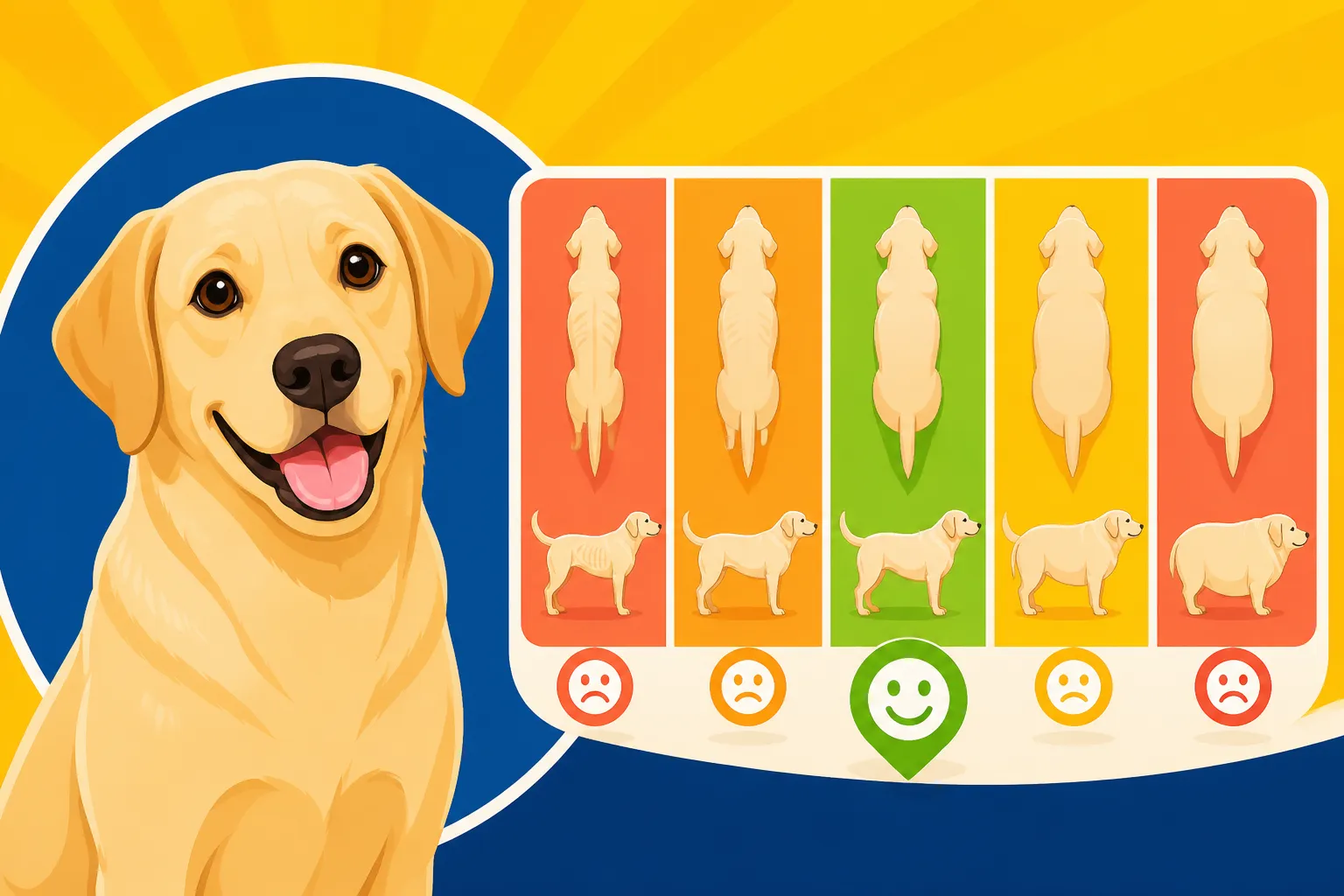
The 5-Point Scale: This is simpler and often used for quicker assessments.
- 1: Emaciated
- 2: Underweight
- 3: Ideal
- 4: Overweight
- 5: Obese
This scale is easy to remember and implement, but it can sometimes feel like you're trying to fit a slightly plump dog into either "ideal" or "overweight" without much in-between.
-
The 9-Point Scale: This is generally preferred by veterinarians and offers more precision. It breaks down the categories further, making it easier to track subtle changes.
- 1-3: Underweight
- 4-5: Ideal (with 5 being on the slightly heavier side of ideal)
- 6-9: Overweight/Obese
For Labradors, the 9-point scale is often more helpful because it allows you to identify when they are just starting to creep into the "overweight" category (like a BCS 6) before it becomes a significant problem. Many vets consider a 4.5 or 5 on this scale to be the sweet spot for a fit Labrador.
Visual Cues: What You Should See
When you look at your Labrador from above and from the side, you should be able to spot certain characteristics if they're at a healthy weight. This is your "eye test," and it's the first step in BCS.
From above, when your Labrador is standing squarely, you should be able to see a distinct waistline. It should narrow slightly behind the rib cage, almost like an hourglass shape. If your dog looks like a straight block from neck to tail, or even bulges out, that’s a visual cue they might be carrying too much weight. A very thin dog, on the other hand, might have an overly pronounced, almost pinched waist, and their hip bones might protrude obviously.
From the side, you're looking for an "abdominal tuck." This means that the belly line should gently slope upwards from the bottom of the rib cage towards the hind legs. It shouldn't be a straight line from chest to groin, nor should it sag. If your Lab's belly hangs down, or there's no visible tuck, it suggests excess abdominal fat. Conversely, if the tuck is extremely sharp and dramatic, almost scooped out, they might be underweight.
Hands-On Assessment: What You Should Feel
This is where the real work of body condition scoring happens, especially with a breed like the Labrador who can hide so much under their coat. You need to get your hands on your dog and feel for key anatomical landmarks. Don't be shy; you need to apply gentle pressure, but enough to feel what's beneath the fur.
-
Ribs: Place both hands on your Labrador's chest, just behind their front legs. Spread your fingers and gently feel along their side. You should be able to feel their ribs easily, like running your fingers over the knuckles on your hand, with just a thin layer of fat and muscle covering them. If you have to press hard to feel them, or can't feel them at all, they're likely overweight. If the ribs feel very prominent, sharp, and you can see them without even touching, your dog is likely too thin.
-
Spine: Run your hand along your Labrador's backbone, from their shoulders to their tail. You should be able to feel the individual bumps of the vertebrae, again, with a slight covering. If the spine feels like a sharp ridge, or you can count each vertebra distinctively, they're too thin. If you can't feel the spine at all, or it feels like a soft, padded cushion, they're carrying too much weight.
-
Hip Bones: Feel for the bony prominences of their hips. Similar to the ribs and spine, you should be able to feel them easily, but they shouldn't be sharply jutting out. Too prominent means underweight; too padded means overweight.
This tactile assessment is crucial because it gives you information that your eyes alone might miss, especially if your Labrador has a particularly thick coat during shedding season or is just naturally fluffy.
Decoding the Scores: Underweight, Ideal, and Overweight Labradors
Let's break down what each general category of BCS means for your Labrador, using the more detailed 9-point scale as our guide. Remember, this isn't about shaming; it's about empowerment to make informed decisions for your dog's health.
Recognizing an Underweight Labrador
A Labrador scoring a BCS of 1, 2, or 3 (out of 9) is considered underweight.
BCS 1 (Emaciated):
- Visual: Ribs, lumbar vertebrae (lower spine), pelvic bones (hips), and all bony prominences are extremely visible from a distance. There's no fat discernible, and there might even be obvious muscle loss.
- Touch: You can easily see and feel bones sticking out with no effort. There's no fat padding whatsoever.
- Scenario: This is a severe condition that often indicates serious underlying illness, severe malnutrition, or neglect. If your Labrador ever reaches this point, immediate veterinary intervention is critical. You might notice them lacking energy, and their coat might look dull.
BCS 2 (Very Thin):
- Visual: Ribs, spine, and hip bones are readily visible. There is some minimal muscle mass, but very little body fat. The abdominal tuck is highly exaggerated.
- Touch: Ribs are easily felt and distinct, with minimal fat cover. Spine and hips are prominent.
- Scenario: Perhaps your Lab is a picky eater (rare, I know!), or has been dealing with chronic diarrhea, or maybe you've inadvertently miscalculated their Cups Per Day for an Adult Labrador. If you suspect your Lab is this thin, it's time for a vet check-up to rule out any medical reasons.
BCS 3 (Thin):
- Visual: Ribs are easily palpable and might be slightly visible. Top of lumbar vertebrae is visible. Pelvic bones becoming prominent. Obvious waist and abdominal tuck.
- Touch: Ribs are very easy to feel with minimal pressure. Slight fat cover, but clearly defined.
- Scenario: Sometimes a very active, high-energy Lab (especially a field line dog) can hover here if their calorie intake isn't quite matching their output. Or perhaps they've been ill and lost a little weight. This is a point where you might want to consider increasing their food slightly or having a chat with your vet if you're unsure why they're not holding more condition.
The Gold Standard: An Ideal Body Condition
An ideal Labrador typically scores a BCS of 4 or 5 (out of 9). This is where we want our dogs to be, as it correlates with optimal health, longevity, and quality of life.
BCS 4 (Lean Ideal):
- Visual: Ribs are easily palpable, but not visible. Waist is easily noted when viewed from above. Abdominal tuck is evident.
- Touch: You can distinctly feel each rib with light pressure, almost like the back of your hand, with just a thin layer of skin and muscle over them. Spine and hips are palpable but not prominent.
- Scenario: This is a wonderfully fit Labrador, often seen in active working dogs or those carefully managed. They look athletic and have great stamina.
BCS 5 (Mid-Range Ideal):
- Visual: Ribs are easily palpable with a thin layer of fat covering them. Waist is visible from above, but not overly dramatic. Abdominal tuck is present.
- Touch: Ribs are felt without much effort, with a smooth, thin padding. The spine and hip bones are felt but not sharply defined.
- Scenario: This is the classic "healthy weight" for most Labs. They have good muscle tone, a nice smooth silhouette, and move with ease. This is the target for Keeping a Labrador at a Healthy Weight.
Identifying an Overweight or Obese Labrador
When your Labrador scores a BCS of 6, 7, 8, or 9 (out of 9), they are considered overweight or obese. This is a common issue for our beloved Labs, and recognizing it early is key to reversing the trend.
BCS 6 (Slightly Overweight):
- Visual: Ribs are palpable but with slight excess fat cover. Waist is discernible from above but not prominent. Abdominal tuck is still present, but less pronounced.
- Touch: You need to apply a bit more pressure to feel the ribs. They feel softer and less distinct, like running your hand over the palm of your hand.
- Scenario: This is often the starting point for weight creep. Maybe you've been a little too generous with treats, or their Daily Walk Length for a Labrador has decreased without a corresponding cut in food. This is the ideal time to intervene with slight dietary adjustments and increased activity before it becomes a bigger problem.
BCS 7 (Overweight):
- Visual: Ribs are difficult to feel due to moderate fat cover. Waist is absent or barely visible. Abdominal tuck is minimal or absent. Broadening of the back.
- Touch: You definitely have to press to feel the ribs, and they feel quite padded. Spinal processes and hip bones are hard to feel.
- Scenario: At this point, your Lab is definitively overweight. You might notice them slowing down, panting more easily, or struggling with longer walks. Their movement might be less fluid. This is a serious health concern that requires a more structured weight loss plan.
BCS 8 (Obese):
- Visual: Ribs are very difficult to feel due to thick fat cover. No waist. Abdomen is distended. Obvious fat deposits over the lumbar area and base of tail.
- Touch: Ribs are covered by a thick layer of fat; you can barely feel them, if at all. Spine and hips are completely buried in fat.
- Scenario: This is significant obesity. Your Lab's quality of life is severely impacted. They're likely much less active, struggle with heat, and are at high risk for multiple health complications. A vet-supervised weight loss plan is absolutely essential.
BCS 9 (Severely Obese):
- Visual: Massive fat deposits over chest, spine, and tail base. Abdominal distension with no waist or tuck. Fat deposits on legs, face, and neck.
- Touch: Impossible to feel ribs, spine, or hips.
- Scenario: This is a life-threatening level of obesity, almost always indicative of a serious caloric imbalance over a prolonged period. This dog needs immediate and aggressive intervention under strict veterinary guidance.
Here's a quick reference table to help visualize these scores:
| BCS (9-Point Scale) | Visual Cues (Side & Top) | Hands-On Cues (Ribs, Spine, Hips) | General Health Status |
|---|---|---|---|
| 1 (Emaciated) | All bones easily seen from distance. Extreme tuck. | Ribs, spine, hips very prominent, no fat. | Critical |
| 2 (Very Thin) | Ribs, spine, hips easily seen. Dramatic tuck. | Ribs, spine, hips very distinct, minimal fat. | Underweight |
| 3 (Thin) | Ribs slightly visible. Obvious waist & tuck. | Ribs easily felt, slight fat. Spine/hips prominent. | Underweight |
| 4 (Lean Ideal) | Ribs not visible. Clear waist, evident tuck. | Ribs felt easily, thin fat. Spine/hips palpable. | Ideal |
| 5 (Mid-Range Ideal) | Ribs not visible. Visible waist, present tuck. | Ribs felt with light effort, smooth fat. | Ideal |
| 6 (Slightly Overweight) | Ribs palpable but slight fat. Discernible waist, less tuck. | Ribs felt with more pressure, slight excess fat. | Overweight |
| 7 (Overweight) | Ribs difficult to feel. Absent waist, minimal tuck. | Ribs hard to feel, moderate fat. Spine/hips hidden. | Overweight |
| 8 (Obese) | Ribs very hard to feel. No waist, distended belly. | Ribs very difficult, thick fat. | Obese |
| 9 (Severely Obese) | Massive fat deposits everywhere. No body shape. | Ribs impossible to feel, enormous fat. | Critically Obese |
Putting BCS into Practice: A Step-by-Step Guide
Now that you understand the theory, let's get practical. The best way to learn BCS is by doing it regularly. Make it a part of your Labrador's weekly grooming routine, or after a good long cuddle session. The more you practice, the more intuitive it becomes.
The Rib Test: Your First Touchpoint
This is arguably the most important part of the hands-on assessment. Your Labrador's ribs tell a clear story about their fat coverage.
Start by placing both hands flat on your Labrador's side, just behind their shoulder blades, where the rib cage begins. Spread your fingers gently, so you can cover a good area of the ribs. Now, with gentle, steady pressure, slide your palms back and forth over the ribs.
What you're aiming for is to feel each individual rib bone distinctively, almost like feeling the slats of a venetian blind through a thin curtain. You shouldn't have to push hard to find them. If you feel a smooth, squishy, unbroken surface, or have to really press deeply to get a sense of the bones, your Lab is likely carrying too much fat. If the ribs are sharp and prominent and feel like they're right under the skin, with no padding at all, your Lab is too thin. The sweet spot is feeling them easily but not seeing them or having them feel pointy. It's about that thin, protective layer.
Assessing the Waist and Abdominal Tuck
Once you've done the rib test, take a step back and visually assess your Labrador from two angles.
First, look at your Labrador from directly above. They should be standing squarely on all four legs, not stretched or hunched. From this vantage point, you should see a discernible waistline, a gentle indentation just behind the rib cage before their hips. Think of a subtle hourglass figure. If your Labrador's body appears to go straight from their rib cage to their hips, or even bulges out, that's an indication of excess weight. If you see a very deep, almost concave waist, combined with easily visible ribs, they might be underweight.
Next, view your Labrador from the side. Here, you're looking for the "abdominal tuck." This refers to the upward slope of the belly from the bottom of the rib cage to the groin area. It shouldn't be a straight line or, worse, sag downwards. A healthy Labrador will have a noticeable tuck, showing that their abdomen isn't weighed down by fat. If their belly hangs low, or there's no visible upward curve, they're likely overweight. An extremely pronounced, almost hollow tuck could suggest they are too lean. This visual assessment complements your tactile findings, providing a complete picture.
Observing the Overall Silhouette
Finally, step back and take in your Labrador's entire silhouette. Consider their overall proportion and athleticism. Do they look agile and ready to spring into action, or do they seem a bit heavy and reluctant to move?
Notice the muscle definition. A fit Labrador will have well-developed muscles, especially in their hindquarters, which you can feel and sometimes even see subtly when they move. An overweight Labrador might have a softer, more rounded appearance, with less visible muscle tone obscured by fat. An underweight Lab might show signs of muscle wasting, with bony protrusions more evident.
It's also about how they carry themselves. A Lab at an ideal weight will typically have more energy for Exercise a Labrador Needs Each Day, play, and generally appear vibrant and healthy. An overweight Lab might tire more quickly, pant excessively, or show signs of Labrador Arthritis in Middle Age earlier due to the extra strain on their joints. Regularly assessing your Labrador's body condition allows you to catch these subtle changes and address them proactively, before they become serious health issues.
Adjusting Your Labrador's Weight Based on BCS
Once you've performed a thorough Body Condition Score on your Labrador, you'll have a much clearer idea of whether they're in that ideal range, or if some adjustments are needed. This isn't a one-time check; it's an ongoing process. Regular monitoring and proactive changes are key to your Labrador's long-term health.
Strategies for a Labrador Who Needs to Gain Weight
Finding an underweight Labrador is less common, but if your BCS indicates your dog is too thin, it's vital to consult your veterinarian first. As mentioned earlier, unexplained weight loss can be a symptom of underlying medical conditions that need professional diagnosis and treatment. Once medical causes are ruled out, or if your vet confirms it's a simple matter of calorie intake, here are some strategies:
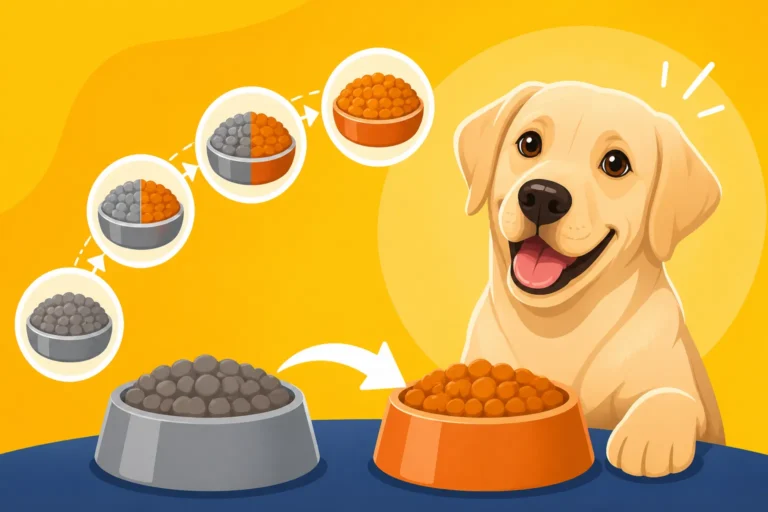
- Gradual Increase in Food: Don't drastically increase their food overnight. Gradually add a small amount (e.g., 10-15%) to their existing meals over several days, monitoring their digestion. A sudden change can lead to an upset stomach. You can refer to resources like Feeding a Labrador Through Every Life Stage to ensure you're meeting their general caloric needs.
- Higher Calorie Density Food: Sometimes, simply feeding more isn't the answer, especially if your dog has a sensitive stomach. Look for dog foods that are formulated for active dogs or puppies, as these typically have a higher calorie and fat content per cup. While your Lab may not be a puppy, a high-quality "all life stages" or "performance" formula might be beneficial under vet guidance.
- Additional Meals, Not Just Larger Ones: Instead of two huge meals, consider splitting their daily ration into three or four smaller meals. This can be easier on their digestive system and ensure more consistent nutrient absorption throughout the day.
- Nutrient-Dense Toppers: You can add small amounts of vet-approved, high-calorie, nutrient-dense toppers to their regular food. This could be a spoonful of canned pumpkin (plain, not pie filling), cooked lean meat, or a specific weight-gain supplement recommended by your vet. Remember, anything extra counts towards their daily calories.
- Monitor Progress: Continue to do weekly BCS assessments. You want to see a gradual, steady increase towards the ideal weight, not a sudden jump. Rapid weight gain can be just as unhealthy as rapid loss, especially for a large breed where How Fast Growth Damages a Labrador's Joints is a concern.
Helping an Overweight Labrador Shed Pounds
This is a much more common scenario for Labrador owners, and thankfully, it's often reversible with dedication. Again, a veterinary check-up is always recommended to rule out any metabolic issues that might be contributing to weight gain, though for many Labs, it's simply a matter of too many calories in, not enough calories out. Why Labradors Gain Weight So Easily is a struggle many of us face.
- Strict Portion Control: This is the absolute cornerstone of weight loss for a Labrador. Free-feeding is almost never an option for this breed. You need to know exactly how many calories your dog is getting. Use a measuring cup, or even better, a kitchen scale for accuracy. Portion Control for a Food-Obsessed Labrador is essential.
- Calorie-Reduced Diet: Switch to a high-quality "weight management," "light," or "senior" dog food. These formulas are designed to be lower in calories and fat, often higher in fiber to help your dog feel full. Brands like Chewy, Ollie, or Amazon offer a variety of specialized weight management formulas. Your vet can recommend specific options or even prescribe a therapeutic diet if needed.
- Increase Exercise (Gradually): Exercise is crucial, but don't overdo it initially, especially if your Labrador is significantly overweight. Start with longer, more frequent walks and gradually build up intensity and duration. Swimming is an excellent low-impact exercise for Labs that are carrying extra weight, as it's gentle on their joints. Aim to increase their daily activity towards the recommendations in Exercise a Labrador Needs Each Day.
- Smart Snacking: Those extra treats add up fast! Eliminate high-calorie treats and replace them with low-calorie alternatives like baby carrots, apple slices (no core/seeds), or green beans. If you use training treats, make them tiny and factor them into their daily calorie allowance. Many owners simply use a portion of their daily kibble ration as treats.
- Consistency is Key: Every family member needs to be on board with the new feeding and exercise plan. A single "cheat meal" or too many extra treats from one person can undo days of progress for a food-obsessed Labrador.
- Regular BCS and Weigh-ins: Monitor your Labrador's weight loss with weekly BCS assessments and monthly weigh-ins at your vet's office or even a local pet supply store. Aim for a slow, steady weight loss, usually 1-2% of their body weight per week. Rapid weight loss can be unhealthy.
Maintaining That Ideal Labrador Physique
Once your Labrador reaches that ideal BCS of 4 or 5, the goal shifts to maintenance. This is where you leverage all the habits you've built during the weight adjustment phase.
- Continue Regular BCS Checks: Even when they're at an ideal weight, a monthly BCS check will help you catch any slight drift towards being too thin or too heavy before it becomes a problem. Your hands and eyes are your best tools.
- Balanced Diet and Consistent Portions: You may be able to slightly increase their food from the strict weight-loss amount, but always stick to measured portions of a high-quality diet appropriate for their activity level and life stage. Reading a Dog Food Label for a Labrador can help you understand calorie content.
- Vary Exercise: Keep their exercise routine engaging and varied. Combine walks with swimming, fetch, or even Scent Work for a Labrador Indoors to provide mental and physical stimulation. A fit Labrador is a happy Labrador!
- Healthy Treat Habits: Continue to use low-calorie treats or portions of their kibble for rewards. This reinforces good habits for everyone involved.
- Proactive Health Monitoring: Remember that a healthy weight supports overall health. Regular vet check-ups, appropriate vaccinations, and parasite prevention are still critical. Understanding Caring for a Senior Labrador also becomes crucial as they age, as their metabolism and activity levels will naturally change. Staying on top of their body condition will allow you to make necessary adjustments to keep them comfortable and active for as long as possible. A lean, fit Labrador truly enjoys a longer, more vibrant life, and that's the best gift we can give them.
Disclaimer
This article is for general informational purposes only and does not constitute professional advice. Laws, prices and regulations vary by location and change over time. Consult a qualified professional for guidance on your specific situation.