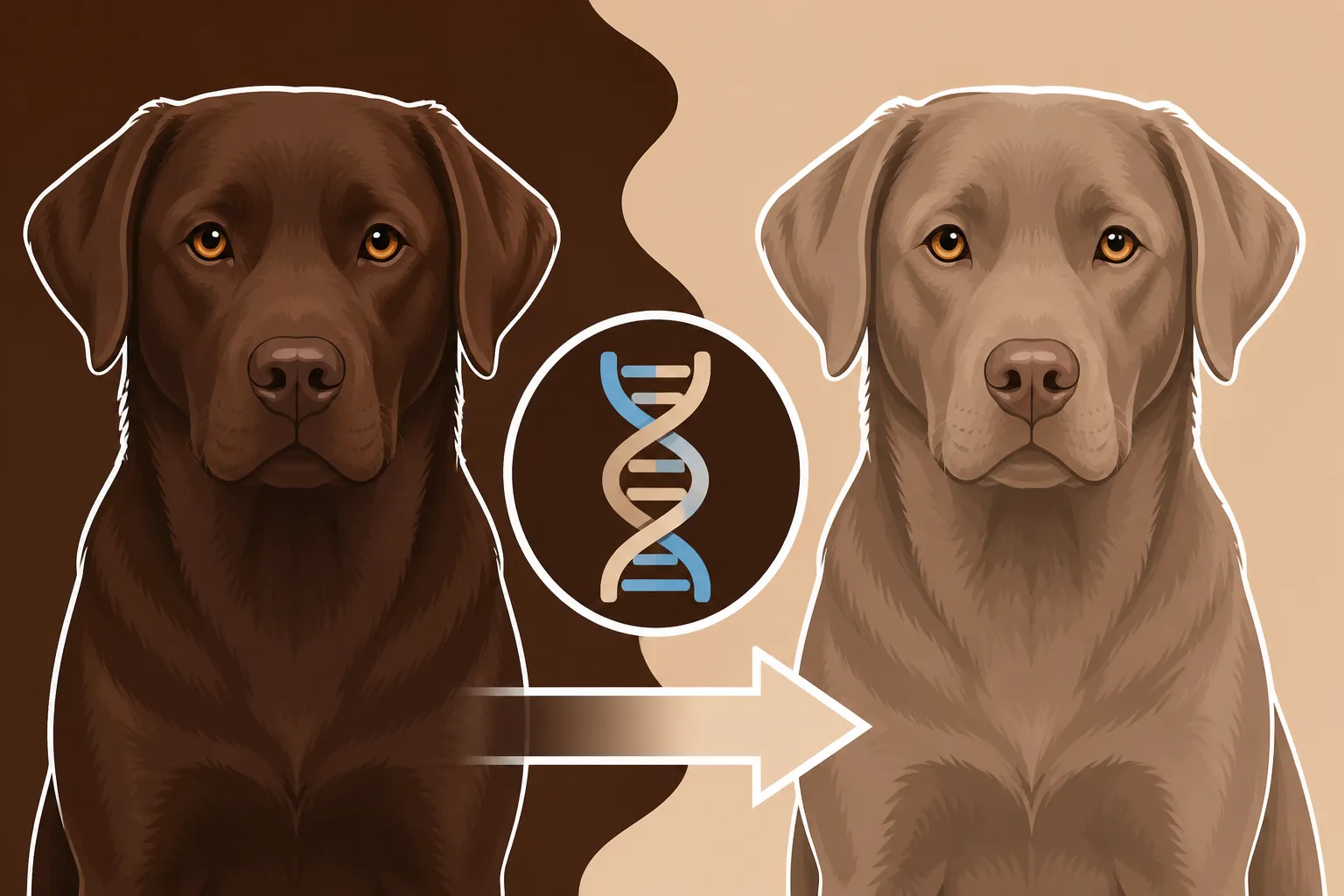
What the Dilute Gene Does to a Chocolate Coat
It's confusing, isn't it? You see pictures of Labradors that look a little different from the classic black, yellow, or chocolate you're used to, and sometimes they're called "silver" or "charcoal." Especially with chocolate Labradors, there's a particular gene at play that can subtly, or not so subtly, alter their beautiful brown coat into something entirely different, sparking a lot of questions and even controversy. This guide will help you understand precisely what the dilute gene does to a chocolate Labrador's coat, the genetics behind it, and what it means for the breed.
Decoding Labrador Coat Colors: Beyond Black and Yellow
Before we dive into the fascinating world of dilute colors, it's essential to first grasp the foundational genetics that give Labradors their traditional black, yellow, and chocolate coats. It's a bit like baking: you need to understand the main ingredients before you can tweak the recipe. Understanding these basics helps clarify why the dilute gene acts the way it does and why it causes such a stir in the Labrador community.
The Genetic Blueprint: B, E, and D Loci
At its heart, Labrador coat color is determined by a few key genes, or "loci," as geneticists call them. The two primary players for the standard colors are the B locus and the E locus. The B locus determines whether a dog can produce black pigment. A dog with at least one dominant 'B' allele will produce black pigment, while a dog with two recessive 'b' alleles (bb) can only produce chocolate pigment. Then there's the E locus, which dictates whether that pigment (black or chocolate) actually shows up in the coat. A dominant 'E' means the dog's B locus color will be expressed, while two recessive 'e' alleles (ee) mean the dog will be yellow, regardless of what its B locus genes say. It's a complex interplay, but these two genes alone account for the vast majority of Labrador color variations seen historically.
Now, let's introduce the third player, the dilute gene, which operates at the D locus. This gene is responsible for creating the "dilute" colors, which are essentially faded versions of the standard colors. The dominant 'D' allele means full pigment expression – no dilution. However, if a Labrador inherits two recessive 'd' alleles (dd) from its parents, it means their coat will be diluted. This dilution effect works on whatever color the B and E loci have already determined. So, a black Labrador (B_E_) with the dd genotype becomes silver, a yellow Labrador (B_ee or bbee) with dd becomes champagne, and, as we'll explore in detail, a chocolate Labrador (bbE_) with dd becomes charcoal. This 'dd' combination is the key to understanding how chocolate transforms into something else entirely.
The Traditional Palette: Black, Yellow, and Chocolate
For generations, Labrador enthusiasts have celebrated the three classic colors: black, yellow, and chocolate. These are the colors recognized by major kennel clubs worldwide, like the American Kennel Club (AKC) and The Kennel Club in the UK, as the only acceptable coat colors for purebred Labradors. Black Labradors, with their sleek, shining coats, are often seen as the epitome of the working retriever, effortlessly blending into the shadows of a duck blind. Yellow Labradors range from nearly white to a rich fox red, glowing with warmth and often embodying the friendly family companion image. Chocolate Labradors, with their deep, luxurious brown coats, have seen a surge in popularity, loved for their distinctive hue and often sweet, gentle nature.
Each of these traditional colors comes with its own history and place within the breed's development. Black was the original and most common color in the early days of the breed, prized by fishermen and hunters for its practicality. Yellows began to appear more consistently as selective breeding continued, eventually becoming a popular choice. Chocolates, while present from early on, were less common and sometimes even culled as undesirable traits initially. However, through dedicated breeding, they have become a beloved and accepted part of the Labrador family. The emphasis on these three colors is deeply ingrained in the breed's heritage and standards, setting the stage for the discussions and debates that arise when non-standard colors like charcoal appear.
The Mystery of the Charcoal Labrador: A Dilute Chocolate
Imagine looking at a Labrador and thinking, "Is that chocolate, but… softer? Greener, maybe?" That's often the initial reaction to a charcoal Labrador. It's a color that exists in a kind of twilight zone, not quite fitting the traditional descriptions, yet undeniably beautiful in its own right. This unique hue isn't a random occurrence; it's the direct result of a specific genetic combination that alters the way pigment is deposited in the hair shaft.
Visualizing Charcoal: What Makes It Different
A charcoal Labrador possesses a coat that is a muted, grayish-brown. Think of a deep, rich chocolate coat, and then imagine someone desaturated it slightly, adding a hint of smoke or ash. It's not the vibrant, warm brown of a standard chocolate Labrador, nor is it the stark gray of a silver Labrador (which is a dilute black). Instead, it's a distinct, earthy tone that can range from a lighter, almost taupe-like shade to a very dark, smoky brown that might only reveal its unique color in certain lighting. Many owners describe it as a slate-brown or a dark pewter hue. The nose and paw pads will also follow this diluted coloration, appearing grey rather than the black or liver typical of standard Labradors.
This visual difference is a direct result of the dilute gene (dd) affecting the chocolate pigment. Instead of the pigment granules being densely packed and evenly distributed, the dd gene causes them to be less concentrated and clumped together. This change in pigment distribution literally "dilutes" the intensity of the color, giving it that faded, softened appearance. It's a subtle but unmistakable shift, and once you've seen a charcoal Labrador, it's hard to unsee the distinction from a traditional chocolate. These dogs can be quite striking, capturing attention precisely because they deviate from the expected Labrador palette.
The 'dd' Gene: How Chocolate Becomes Charcoal
At the heart of the charcoal Labrador lies the genetic combination 'bbdd'. Let's break that down. The 'bb' part means the Labrador has inherited two recessive 'b' alleles, making it genetically chocolate. This is the same genetic makeup as any standard chocolate Labrador (bbE_ or bbee, though the E locus determines if it's chocolate or yellow). However, the critical difference for a charcoal Labrador is the addition of the 'dd' genotype at the D locus. As we discussed earlier, 'dd' signifies the presence of two recessive dilute alleles.
So, when a Labrador inherits both the 'bb' for chocolate and the 'dd' for dilution, the result is a charcoal coat. The dilute gene doesn't change the type of pigment (eumelanin, which is black/brown pigment), but rather how that pigment is expressed. Think of it like a printer running low on ink: the color is still there, but it's lighter and less intense. A standard chocolate Labrador has at least one dominant 'D' allele (D_ or Dd), meaning its chocolate pigment is fully expressed. A charcoal Labrador, however, having 'dd', experiences this dilution, transforming its chocolate into that distinct smoky, grayish-brown. This genetic formula is why, despite appearances, charcoal Labradors are still genetically Labradors, albeit with a non-standard color.
Dilute Colors and the Labrador Breed Standard
The emergence of dilute colors in Labradors, particularly silver and charcoal, has been a hot-button issue within the breed community for decades. While individual owners might adore their uniquely colored dogs, the official stance of major kennel clubs and dedicated breed organizations is clear and often unyielding. This creates a fascinating tension between genetic reality and breed ideals.
Why Major Kennel Clubs Don't Recognize Dilutes
The official breed standards for Labrador Retrievers, as set by organizations like the American Kennel Club (AKC) and The Kennel Club (UK), are very specific. They explicitly state that only black, yellow, and chocolate are acceptable colors. Any deviation from these three is considered a disqualifying fault or indicates that the dog is not a purebred Labrador according to their lineage and genetic requirements. This is where the controversy truly ignites for colors like charcoal. When a charcoal Labrador is registered, it typically has to be listed as "chocolate" to fit within the accepted categories, even though visually it is quite distinct. This practice highlights the disconnect between genetic reality and the established rules. You won't see a charcoal Labrador competing in an AKC conformation ring, for example, unless its color is officially misrepresented.
The historical argument against dilute colors is rooted in the belief that the dilute gene (d allele) was not present in the original Labrador Retriever gene pool. Proponents of this view suggest that the dilute gene was introduced through outcrossing to other breeds, such as Weimaraners, at some point in the breed's history. While this "Weimaraner theory" has been debated and, for many, remains unproven as a definitive origin, it underpins the steadfast refusal of many traditionalists to accept dilute colors. They see these colors as an impurity, a divergence from the true Labrador type that was meticulously developed over centuries. This firm stance means that, regardless of how much an individual adores their dilute Labrador, officially, its color remains outside the recognized standard.
The Ethical Breeding Debate Around Dilute Labradors
This brings us to a crucial ethical debate in the breeding world. Reputable breeders of standard Labradors typically prioritize health, temperament, and adherence to the breed standard. For them, producing puppies with dilute colors is a genetic anomaly to be avoided. Many responsible breeders will perform genetic testing, often available through companies like Chewy, to ensure their breeding stock does not carry the recessive dilute gene ('d'). If a dog is found to be a carrier (Dd), they might choose to breed it only with a non-carrier (DD) to avoid producing dilute puppies (dd). The goal is to maintain the purity and integrity of the established Labrador gene pool.
However, a segment of breeders does intentionally breed for dilute colors, often marketing them as "rare" or "unique" and sometimes charging a premium. This practice is highly contentious. Critics argue that these breeders are operating outside the ethical guidelines of recognized kennel clubs and are potentially undermining the breed standard for financial gain. Furthermore, some argue that focusing on a non-standard color may lead to less attention on crucial health clearances, temperament, and structural soundness, which should always be paramount in responsible breeding. Prospective owners should be aware of these dynamics. If a breeder is advertising "charcoal Labradors" as a specialty, it's a strong indicator that they are not adhering to the traditional breed standards and practices, which can have broader implications for the long-term health and genetic diversity of their lines. Always ask a breeder about Health Clearances a Labrador Breeder Must Show before committing to a puppy.
Practical Considerations for Owners and Future Owners
So, you're enchanted by the unique look of a charcoal Labrador, or perhaps you've stumbled upon one and are curious about its background. Understanding the genetics and the breed-wide conversation is one thing, but knowing what this means for you, as an owner or a prospective one, is another. It's about making informed choices that prioritize the well-being of your future companion.
Genetic Testing: Uncovering the Dilute Gene
For those who want to definitively know if a Labrador carries the dilute gene or is indeed a dilute color, genetic testing offers a clear answer. These tests are readily available from several reputable canine DNA testing companies. A simple cheek swab can reveal a dog's genotype at the D locus:
- DD: The dog does not carry the dilute gene and cannot pass it on.
- Dd: The dog carries one copy of the dilute gene. It will not express a dilute color itself but can pass the 'd' allele to its offspring. If bred with another 'Dd' carrier, there's a 25% chance of producing 'dd' (dilute) puppies.
- dd: The dog has two copies of the dilute gene and will express a dilute coat color (e.g., silver if genetically black, champagne if genetically yellow, charcoal if genetically chocolate).
This testing is invaluable for responsible breeders who want to ensure they are not inadvertently producing dilute puppies. It also provides peace of mind for owners of visually charcoal dogs who want to confirm their dog's genetic makeup. You can often find these genetic testing kits through online pet suppliers like Chewy, making them accessible to any interested owner. Understanding What a Labrador DNA Test Reveals can be incredibly empowering.
Health and Temperament in Dilute-Coated Labradors
One of the most common questions people have about dilute Labradors, including charcoal ones, is whether the color itself comes with health problems. It's important to distinguish between the dilute gene's direct effect and the potential implications of breeding practices. In Labradors, unlike some other breeds where the dilute gene is directly linked to conditions like Color Dilution Alopecia (CDA), there is no definitive scientific evidence to suggest that the 'dd' genotype itself causes specific health issues like joint problems or unique diseases. A charcoal Labrador is genetically a Labrador, and as such, is susceptible to the same health conditions common in the breed, such as Labrador Hip and Elbow Dysplasia, Labrador Eye Conditions and Vision Loss, and Cancer in Labrador Retrievers.
The real concern often lies with the source of dilute-colored Labradors. Because major kennel clubs and ethical breeders discourage intentional breeding for dilute colors, dogs with these coats sometimes come from less reputable breeding operations. These breeders may not conduct proper health clearances, may not focus on genetic diversity, or may not prioritize sound temperament, leading to a higher risk of puppies inheriting various health problems or undesirable behavioral traits. Therefore, while the charcoal color itself isn't inherently unhealthy, the breeding practices behind it might be. Similarly, temperament is not linked to coat color. A charcoal Labrador's personality will be determined by its individual genetics, socialization, and upbringing, just like any other Labrador. A well-bred, well-socialized charcoal Labrador should exhibit the typical Labrador Temperament and Personality.
Finding a Reputable Breeder, Regardless of Color
Whether you're looking for a traditional black, yellow, or chocolate Labrador, or you're considering a charcoal one, the advice remains the same: always prioritize finding a truly reputable breeder. A good breeder will be transparent about their dogs' health clearances, genetic testing, and lineage. They will be eager to answer your questions, allow you to meet the puppy's parents (if available), and ensure their dogs are well-socialized. They will also prioritize matching puppies with suitable homes, rather than simply making a sale.
If you encounter a breeder advertising "charcoal Labradors," be extra vigilant. Ask probing questions about their breeding philosophy, why they choose to breed non-standard colors, and crucially, what health certifications they provide for hips, elbows, eyes, and relevant genetic panels. Be wary of breeders who focus solely on "rare" colors as a selling point without emphasizing health and temperament. A truly responsible breeder, regardless of what colors they produce, will show a deep commitment to the welfare of their dogs. You might also consider rescuing an adult Labrador; many wonderful dogs of all colors, including mixed breeds with Labrador characteristics, find themselves in need of loving homes. For more guidance on choosing a breeder, look for resources on Finding a Reputable Labrador Breeder.
| Feature | Standard Chocolate Labrador (bbD_) | Charcoal Labrador (bbdd) |
|---|---|---|
| Genetic Code | bb and at least one D allele (DD or Dd) | bb and two d alleles (dd) |
| Coat Color | Rich, warm brown; varies from light to dark chocolate | Muted, grayish-brown; smoky or slate-like |
| Nose & Paw Pads | Liver/brown | Gray/charcoal |
| Eye Color | Typically hazel to brown | Can be lighter, sometimes amber or green-gold |
| Kennel Club Status | Recognized color; eligible for conformation shows | Not recognized; considered a disqualifying fault |
| Health | Susceptible to common Labrador health issues | Susceptible to common Labrador health issues; color itself not directly linked to specific diseases, but breeding practices may be a concern |
| Temperament | Typical Labrador temperament | Typical Labrador temperament |
Disclaimer
This article is for general informational purposes only and does not constitute professional advice. Laws, prices and regulations vary by location and change over time. Consult a qualified professional for guidance on your specific situation.