Cruciate Ligament Tears in Labradors
It's absolutely heart-wrenching to watch your active, joyful Labrador suddenly go lame, refusing to put weight on a leg that was perfectly fine just moments ago. The panic sets in as you wonder what on earth could have happened, and often, what you're witnessing is the hallmark sign of a cranial cruciate ligament (CCL) tear, a notoriously common and painful injury in our beloved Labs. This comprehensive guide is here to walk you through everything you need to know about cruciate ligament tears in Labradors, from the initial signs to diagnosis, treatment options, and the long road to recovery.
Understanding Cruciate Ligament Tears in Labradors
Cruciate ligament tears are incredibly common in Labradors, and it can feel like a devastating blow when your otherwise healthy, energetic companion is suddenly sidelined. It's a complex injury that can happen suddenly or develop gradually, but either way, it significantly impacts your dog's mobility and quality of life.
What is the Cranial Cruciate Ligament?
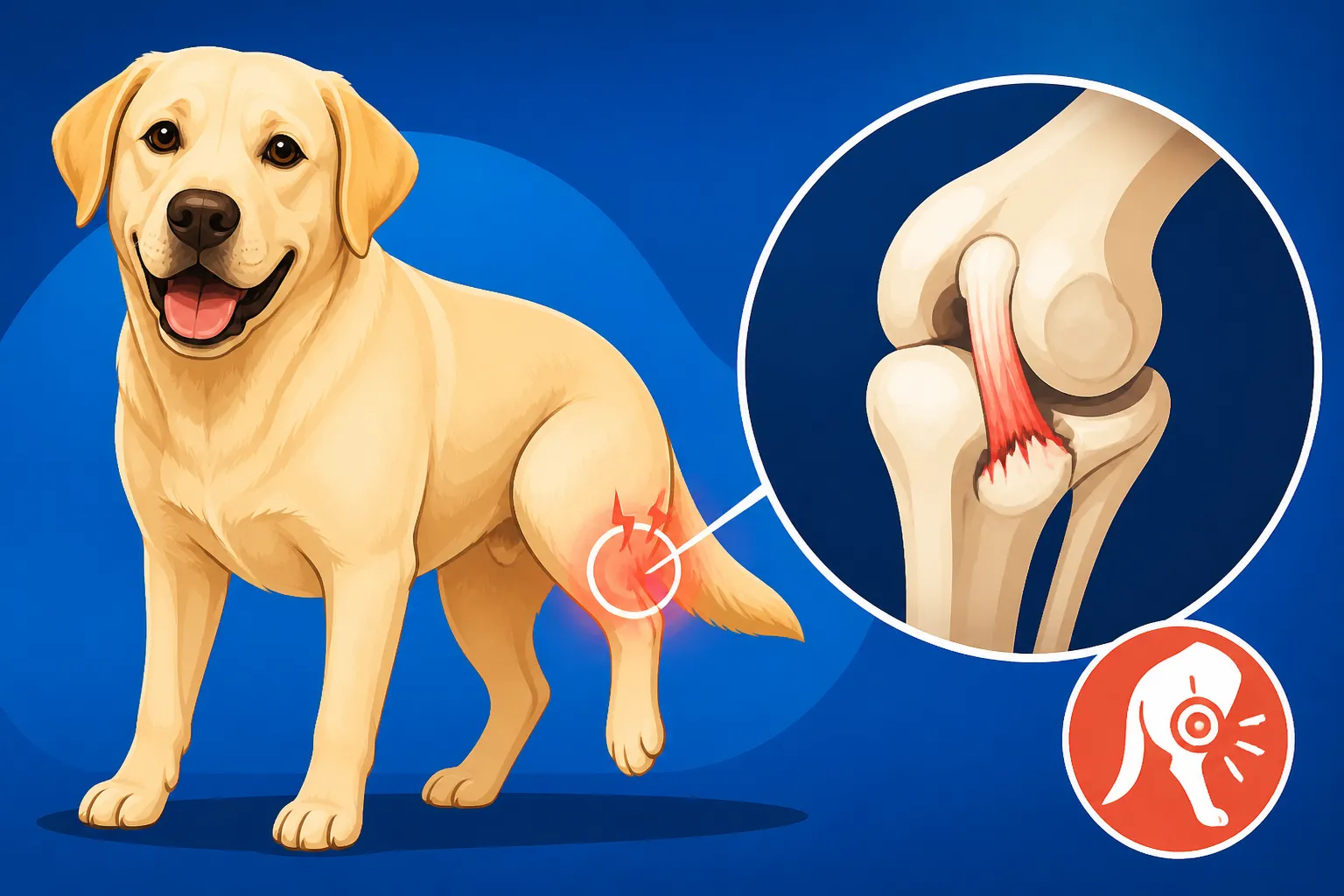
To truly grasp what's happening, let's break down the anatomy a bit. Inside your Labrador's knee joint, there are two crucial ligaments that cross over each other, forming an "X" shape. These are called the cranial cruciate ligament (CCL) and the caudal cruciate ligament. For dogs, the one most often injured is the cranial cruciate ligament, which is the equivalent of the anterior cruciate ligament (ACL) in humans.
The primary job of the CCL is to provide stability to the knee joint, specifically preventing the tibia (shin bone) from sliding forward excessively relative to the femur (thigh bone) and preventing over-rotation of the joint. When this ligament is torn, that stability is compromised, leading to pain, inflammation, and abnormal movement within the joint. Think of it like a hinge on a door that’s suddenly lost its pin – things just aren't moving smoothly anymore. Because Labradors are so active and often have conformations that put extra stress on their knees, they are unfortunately highly predisposed to this type of injury.
Acute Tears vs. Degenerative Disease
When we talk about cruciate tears, it's not always a dramatic, sudden event. There are generally two ways these injuries manifest in Labradors, and understanding the difference can help you recognize the signs earlier.
An acute tear is what most people picture: your Labrador is running, jumping, or playing, makes a sudden twist or lands awkwardly, and lets out a yelp. They immediately become severely lame, often holding the leg up entirely or barely touching their toes to the ground. This is a sudden rupture of an otherwise healthy (or mostly healthy) ligament, and the symptoms are usually very clear and appear out of nowhere. The sudden onset can be alarming and distressing for any owner.
More commonly in Labradors, however, is a degenerative disease process. This means the ligament gradually weakens and frays over time, rather than tearing all at once. It's like a rope slowly unraveling. This can lead to partial tears, where some fibers are still intact, but the knee is unstable. The symptoms in these cases are often more subtle and progressive. You might notice a fluctuating lameness – good days and bad days – or stiffness after rest. Eventually, a partial tear can progress to a full rupture, often with a seemingly minor activity being the "final straw." This degenerative process is a significant factor in why so many Labradors experience this issue.
Why Labradors Blow Out Their Knees
It’s an unfortunate reality that Labradors seem to have a target on their knees when it comes to cruciate tears. Several factors contribute to why Labradors blow out their knees so often, making them one of the most commonly affected breeds.
Firstly, there's a strong genetic component. While it's not a simple one-gene issue, certain conformational traits and a predisposition to weaker ligaments can be inherited. Some Labradors, for example, might have what's called a "straighter stifle" (the angle of their knee joint), which puts more shear force on the CCL during weight-bearing. This anatomical difference means their ligaments are under greater strain with every step they take, predisposing them to wear and tear.
Another huge factor is obesity. Labradors are notorious for their love of food, and it’s very easy for them to become overweight, which significantly increases the stress on all their joints, including the knees. Even a few extra pounds can greatly exacerbate the risk of a cruciate tear or worsen an existing one. Beyond genetics and weight, their sheer athleticism and enthusiasm play a role. Labradors love to run, jump, and play hard, often without much self-preservation. A sudden twist, a quick stop, or an awkward landing during vigorous play can put immense pressure on an already compromised ligament, leading to a tear. Understanding these underlying causes is key to both prevention and effective treatment planning.
Recognizing the Signs of a Cruciate Tear
Spotting a cruciate ligament tear in your Labrador can sometimes be straightforward, but other times it might present as a more subtle, chronic issue. As caring owners, learning to recognize these signs is crucial for getting your dog the help they need quickly.
Sudden Lameness and Non-Weight Bearing
This is often the most dramatic and alarming sign that something is seriously wrong. If your Labrador is playing, running, or even just trotting along, and suddenly lets out a yelp, freezes, and then refuses to put any weight on one of their back legs, an acute cruciate tear should be high on your list of suspects. They might hold the leg up completely, or only lightly touch their toes to the ground, what veterinarians call "toe-touching lameness."
The pain is often intense, and your dog might appear distressed. You might notice them trying to hop on three legs to get around, or struggling immensely to rise from a lying position. The suddenness of this presentation often makes owners rush to the emergency vet, and for good reason—it’s a clear indication of a significant injury that requires immediate attention. It's important to remember that even our typically stoic Labradors will show clear signs of pain with an injury of this magnitude.
Chronic Limping and Instability
While an acute tear is hard to miss, many Labradors experience a more gradual onset of symptoms, especially if they have a degenerative condition leading to a partial tear. In these cases, the signs can be much more subtle and easily dismissed as "just getting older" or a minor strain. You might observe a mild, intermittent lameness that seems to come and go. Perhaps your Labrador is stiff when they first get up in the morning or after a nap, but they seem to "warm out of it" after a few minutes of walking.
Over time, this limping might become more consistent, and you might notice other changes. The affected leg might start to lose muscle mass (atrophy) because your dog is instinctively trying to protect it by putting less weight on it. They might be reluctant to jump into the car, climb stairs, or engage in their usual playful activities. As the knee becomes more unstable, you might even hear or feel a "click" when they walk, which could indicate a meniscus tear developing alongside the cruciate injury. These subtle changes can often be early warning signs that a larger problem is brewing.
The "Sitting Sideways" Sign
This particular sign is a classic tell-tale indicator of a cruciate ligament problem in Labradors, and once you know what to look for, it's quite distinctive. When a Labrador with a healthy knee sits down, they typically fold both hind legs underneath them, with their feet tucked somewhat symmetrically beside their body. They sit squarely on their haunches, with their pelvis level.
However, a Labrador with a painful or unstable knee due to a cruciate tear will often avoid fully flexing the injured leg. Instead, they’ll tend to sit with the affected leg extended out to the side, almost like a "lazy sit" or what's sometimes called "sitting sideways." They do this to avoid putting full pressure on the knee joint and to keep it from flexing too much. It's an instinctive way for them to make themselves comfortable and reduce pain. If you notice your typically square-sitting Labrador suddenly adopting this asymmetrical posture, especially if it's new and consistent, it's a strong indicator that their knee is bothering them significantly and warrants a vet visit.
Diagnosing a Cruciate Ligament Injury
When you suspect a cruciate tear, getting an accurate diagnosis from your veterinarian is the critical next step. This process typically involves a thorough physical examination, specific orthopedic tests, and often imaging to confirm the injury and rule out other issues.
Physical Examination and Palpation
Your veterinarian will start with a comprehensive physical examination, observing your Labrador's gait, posture, and muscle symmetry. They'll likely gently palpate the affected knee, feeling for swelling, pain, and any abnormal movement. However, the definitive diagnostic tests for a cruciate tear are the "cranial drawer test" and the "tibial compression test."
- Cranial Drawer Test: During this test, the vet stabilizes the femur (thigh bone) with one hand and attempts to slide the tibia (shin bone) forward with the other. If the cranial cruciate ligament is torn, the tibia will "draw" forward excessively, much like a drawer opening, indicating instability.
- Tibial Compression Test: For this test, the vet holds the femur with one hand and flexes the ankle (hock) joint with the other, which causes the gastrocnemius muscle to contract and pull the tibia forward. If the ligament is torn, the tibia will move abnormally forward.
It's important to know that these tests can sometimes be challenging on a large, muscular, or painful Labrador. Often, your vet may recommend light sedation to get an accurate assessment, as a tense or painful dog can guard their muscles, making it difficult to feel the subtle instability.
X-rays and Other Imaging
While X-rays cannot directly show a torn ligament (ligaments are soft tissue and don't show up on standard X-rays), they are an absolutely invaluable diagnostic tool. Your vet will take X-rays of both knees to:
- Assess for secondary signs: X-rays can reveal signs of inflammation within the joint (effusion), the presence of arthritis (osteophytes) which is common with chronic instability, and can help measure the angle of the tibial plateau, which is important for surgical planning.
- Rule out other orthopedic issues: Lameness can be caused by many things. X-rays help rule out fractures, bone tumors, or other joint diseases like arthritis or a luxating patella, which might present with similar symptoms.
- Evaluate overall joint health: They provide a baseline for future comparisons, especially if arthritis is already present.
In some complex cases, or if the diagnosis remains ambiguous after physical exam and X-rays, your vet might recommend more advanced imaging like an MRI or CT scan. These provide much more detailed images of soft tissues and can be particularly useful for identifying partial tears or concurrent meniscus injuries, though they are much more expensive and typically referred to a specialist.
Differential Diagnoses to Consider
When your Labrador is limping, a cruciate tear is certainly a major concern, but it's not the only possibility. Your veterinarian will carefully consider several other conditions that can cause similar symptoms, which is why a thorough diagnostic workup is so important.
Other potential causes of hind limb lameness in a Labrador include:
- Meniscus Tears: The meniscus is a cartilage disc in the knee that can tear, often in conjunction with or after a CCL tear. This can cause significant pain and clicking sounds.
- Luxating Patella: This is when the kneecap (patella) slips out of its groove. While more common in smaller breeds, it can affect Labradors and cause intermittent lameness.
- Hip Dysplasia: This condition, common in Labradors, involves an abnormal formation of the hip joint. It can cause chronic pain and lameness that might initially be confused with knee issues. If your Labrador shows signs of lameness or struggles with their back end, your vet will want to check their hips too.
- Soft Tissue Injuries: Simple muscle strains, sprains, or tendonitis can also cause limping, though they usually resolve with rest and anti-inflammatory medication.
- Other Joint Diseases: Less common conditions like osteochondritis dissecans (OCD) or even bone infections can also present as lameness.
Your vet will use their clinical expertise, the results of physical exams, and imaging to differentiate between these possibilities, ensuring your Labrador receives the correct diagnosis and the most appropriate treatment plan.
Treatment Options for Labrador Cruciate Tears
Once a cruciate ligament tear is confirmed, the discussion inevitably turns to treatment. This is where many owners feel overwhelmed, as there are significant decisions to make, especially when considering surgery. For a large, active breed like a Labrador, surgical intervention is often the most recommended and successful path.
Non-Surgical Management (Conservative Care)
While surgery is generally the gold standard for Labradors, non-surgical or conservative management might be considered in very specific circumstances. This approach is usually reserved for:
- Very small dogs: Where body weight places less stress on the knee.
- Mild, partial tears: Where the knee has some remaining stability.
- Dogs with significant other health issues: That make anesthesia too risky.
- Financial constraints: When surgery is truly not an option.
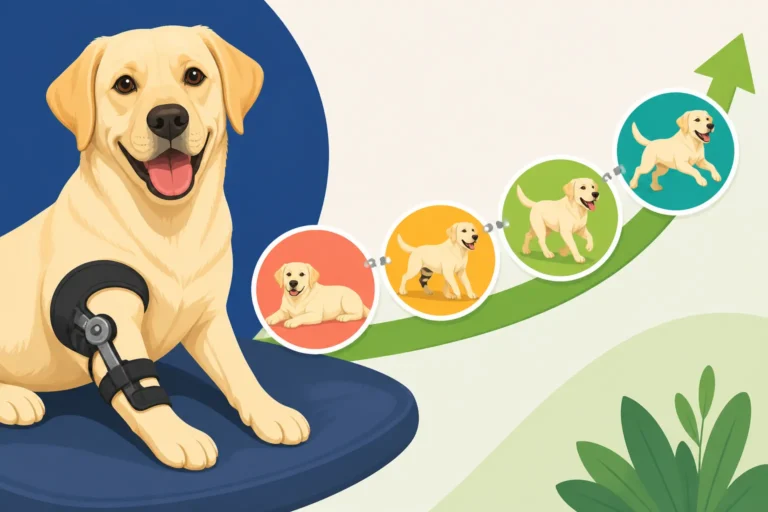
Conservative care involves strict rest, often kennel confinement for several weeks to months, combined with anti-inflammatory medications (NSAIDs) to manage pain and swelling. Physical therapy, including passive range of motion exercises and controlled leash walks, is slowly introduced. Some owners opt for external knee braces, though their effectiveness in large, active breeds like Labradors is debated. While bracing might provide some temporary support, it rarely achieves the same long-term stability as surgery. The biggest limitation for Labradors is that their size and high energy levels often make conservative management very challenging to implement effectively, and the outcome is usually less successful in restoring full function compared to surgery. The long-term risk of arthritis is also higher with instability.
Surgical Interventions: TPLO and TTA
For most Labradors, surgical repair offers the best chance at regaining full or near-full function of their leg. The two most common and highly successful surgical techniques are Tibial Plateau Leveling Osteotomy (TPLO) and Tibial Tuberosity Advancement (TTA).
What Happens During a Labrador TPLO Operation
The Tibial Plateau Leveling Osteotomy (TPLO) is arguably the most common and widely recommended surgery for CCL tears in large breeds. The principle behind TPLO is not to repair the torn ligament itself, but to change the biomechanics of the knee joint so that the torn ligament is no longer necessary for stability.
During a TPLO procedure, a curved cut is made into the top of the tibia (shin bone), specifically the tibial plateau. This segment of bone is then rotated to change the angle of the tibial plateau, effectively leveling it. Once the desired angle is achieved, the bone segment is secured in its new position using a bone plate and screws. By flattening the angle, the surgeon eliminates the "cranial tibial thrust," which is the forward sliding motion of the tibia that occurs when the dog bears weight on a torn CCL. This stabilization allows the knee to function normally without the need for an intact cranial cruciate ligament. TPLO is a technically demanding surgery, typically performed by board-certified veterinary orthopedic surgeons, and it has a very high success rate in restoring excellent function for active dogs like Labradors.
TTA (Tibial Tuberosity Advancement)
Another advanced surgical option is Tibial Tuberosity Advancement (TTA). Similar to TPLO, TTA also aims to neutralize the cranial tibial thrust by altering the knee's biomechanics, rather than repairing the ligament directly. In TTA, the front part of the tibia (the tibial tuberosity), where the patellar tendon attaches, is cut and moved forward (advanced). A titanium cage or wedge is inserted to hold the advanced bone in place, and the whole assembly is secured with a plate and screws. This advancement changes the angle of pull of the quadriceps muscle, which in turn reduces the forward thrust on the tibia during weight bearing.
Both TPLO and TTA are excellent surgical options for Labradors, and the choice between them often comes down to the surgeon's preference, their expertise with a particular technique, and the individual dog's anatomy. Both procedures effectively stabilize the knee and allow for good recovery.
The costs associated with these advanced surgeries can be substantial, often ranging from $3,000 to $6,000 per knee, depending on your location and the surgeon's fees. This is where pet insurance can be a literal lifesaver. Companies like Healthy Paws are designed to help cover these unexpected and expensive veterinary bills, making sure you can choose the best treatment for your Labrador without financial distress. Many owners find that having a robust pet insurance plan in place, especially with a breed prone to orthopedic issues, offers immense peace of mind.
Other Surgical Techniques
While TPLO and TTA are the most prevalent, especially for large, active Labradors, other surgical techniques exist.
- Extracapsular Repair (Lateral Suture Stabilization): This is an older, more traditional technique, often called a "fishing line" surgery by owners. It involves placing a strong suture material (like nylon or a specialized orthopedic fiber) outside the joint capsule, mimicking the action of the torn CCL. The suture runs from the lateral fabella (a small bone behind the femur) to a drill hole in the front of the tibia. This provides immediate stability, allowing scar tissue to form inside the joint over time to create longer-term stability. While less expensive and less invasive than TPLO/TTA, it is often considered less effective for very large or highly active dogs, as the suture material can stretch or break. However, it can still be a good option for smaller dogs or those with less activity.
- Arthroscopy: This minimally invasive technique involves using a small camera (arthroscope) to visualize the inside of the knee joint. It's often used for diagnostic purposes, especially to confirm a partial tear or to assess and repair meniscal injuries without opening the entire joint. When combined with a TPLO or TTA, it allows the surgeon to address any meniscal damage with minimal trauma to the surrounding tissues.
A detailed discussion with your veterinary orthopedic surgeon will help determine the most appropriate surgical approach for your individual Labrador, considering their size, activity level, and the extent of their injury.
Recovery and Rehabilitation After Surgery
The surgery itself is only half the battle. The recovery and rehabilitation phase after a cruciate repair are just as, if not more, critical to a successful outcome. It's a demanding period for both you and your Labrador, requiring patience, discipline, and a commitment to their healing process.
Immediate Post-Operative Care at Home
Bringing your Labrador home after cruciate surgery is a big deal. They’ll likely be groggy from anesthesia and will have a significant incision. Your primary focus will be on pain management and strict activity restriction.
Your vet will prescribe a course of pain medication, often a combination of NSAIDs and other analgesics, which must be given exactly as directed. Keeping your Labrador comfortable is paramount, not just for their well-being but also to encourage them to use the leg appropriately without overdoing it. Many Labradors are naturally stoic and will try to hide discomfort, so it's vital to be vigilant for subtle signs that they might be hurting. Understanding Why Labradors Hide Pain So Well is key here.
Strict crate rest is non-negotiable for the first several weeks. This means no running, jumping, playing, or off-leash activity. Potty breaks must be on a leash, directly outside and back inside, with no sniffing around or sudden movements. You’ll need to prevent them from licking or chewing at their incision, usually with an Elizabethan collar (e-collar), which they will undoubtedly despise but is absolutely necessary. Regularly check the incision for redness, swelling, or discharge, which could indicate infection. This period requires immense dedication to prevent setbacks.
Physical Therapy and Controlled Exercise
While strict rest is crucial initially, structured physical therapy and controlled exercise are the cornerstones of successful long-term recovery. This phase usually begins a few weeks after surgery and gradually progresses over several months.
Working with a certified canine rehabilitation therapist can make a world of difference. They can guide you through exercises tailored to your Labrador’s progress. Common therapies include:
- Passive Range of Motion (PROM) Exercises: Gently flexing and extending the knee to maintain joint flexibility and prevent stiffness.
- Controlled Leash Walking: Gradually increasing duration and speed on a flat, even surface.
- Balance Exercises: Using wobble boards, balance discs, or walking over small obstacles to improve proprioception and strengthen supporting muscles.
- Hydrotherapy: Swimming or underwater treadmill therapy is fantastic for Labradors. The buoyancy of water reduces weight-bearing stress on the joint while allowing them to build muscle and improve range of motion. It's a great way to provide exercise without impacting damaged joints.
The goal is to gradually rebuild muscle strength, improve joint stability, and restore normal gait patterns. It’s a slow and steady process, and pushing too hard too soon can easily lead to re-injury or complications. Consistency with these exercises is vital for the best possible outcome.
Potential Complications and Long-Term Outlook
Despite excellent surgery and diligent rehabilitation, complications can occur. These can include:
- Infection: Despite sterile surgical conditions, infection around the implant or incision is a possibility.
- Implant Failure: Though rare, plates or screws can loosen, break, or cause irritation, sometimes requiring removal.
- Meniscus Tears: Even if the meniscus was healthy at the time of surgery, it can tear later, requiring additional surgery.
- Re-injury: While the repaired knee is stable, overactivity or improper rehabilitation can lead to issues.
- Tearing the Second Knee: This is a significant concern for Labrador owners. This is often due to the same underlying genetic predisposition and the increased stress placed on the "good" leg during recovery.
Despite these potential challenges, the long-term outlook for Labradors undergoing TPLO or TTA is generally very good to excellent. Most dogs return to a high quality of life, often able to enjoy their favorite activities again. However, it's realistic to expect some degree of arthritis to develop in the joint over time, even with successful surgery. Proactive management of arthritis, including joint supplements, weight control, and appropriate exercise, will be crucial throughout your Labrador's life to keep them comfortable and mobile for as long as possible.
Preventing Cruciate Ligament Injuries in Labradors
While not all cruciate ligament tears are entirely preventable, especially given the genetic predispositions in Labradors, there are certainly proactive steps you can take as an owner to significantly reduce the risk and promote overall joint health for your beloved companion.
Maintaining a Healthy Weight
This is perhaps the single most impactful factor you have control over when it comes to preventing joint issues in your Labrador. Labradors are famously food-motivated and prone to packing on pounds, but excess weight puts enormous, unnecessary stress on their joints, particularly their knees. Every extra pound your Labrador carries multiplies the forces acting on their cruciate ligaments during movement, accelerating wear and tear and increasing the risk of both acute and degenerative tears.
This means being diligent with portion control, avoiding free-feeding, and choosing appropriate, high-quality dog food. Treats should be healthy and given in moderation, or better yet, use a portion of their daily kibble as rewards. Regularly assessing your Labrador's body condition score is essential; you should be able to easily feel their ribs without pressing hard, and they should have a discernible waist when viewed from above. We've often discussed obesity and the detrimental impact it has on their overall well-being. Keeping them lean is one of the best gifts you can give their joints.
Regular, Appropriate Exercise
While exercise is vital for a Labrador's physical and mental health, the type and intensity of exercise can play a role in injury prevention. Consistent, moderate exercise helps build strong muscles that support the joints, but sudden, intense, or uncontrolled activity on an unprepared body can be risky.
Avoid sudden bursts of high-impact activity, like intense fetch sessions or agility drills, if your Labrador isn't regularly conditioned for them. Always incorporate a proper warm-up before vigorous play and a cool-down afterward. Activities that involve quick stops, sharp turns, or jumping from heights can be particularly stressful on the knees. Instead, focus on consistent, steady activities like long leash walks, controlled swimming, or jogging on soft surfaces. Building strong core and hindquarter muscles through varied activities helps provide natural stability for the knee joints. Remember that exercise in their first year should be limited to avoid stressing their growing joints.
Genetic Screening and Responsible Breeding
While CCL tears are complex and not linked to a single gene, responsible breeding practices can contribute to reducing the incidence of orthopedic issues in Labradors generally. Although there's no specific "CCL clearance," breeders who screen their dogs for other common orthopedic problems, like Hip Dysplasia or elbow dysplasia, are demonstrating a commitment to producing healthier puppies. These conditions often share underlying genetic factors that relate to overall joint quality and conformation.
When looking for a Labrador puppy, always ensure the breeder provides proof of Health Clearances a Labrador Breeder Must Show for the parent dogs. This indicates they are actively trying to minimize the risk of inherited joint diseases. While a perfect genetic background doesn't guarantee your Labrador will never suffer a cruciate tear, choosing a puppy from health-tested parents significantly improves their odds of having a sound musculoskeletal system. A well-bred Labrador from health-conscious lines is a great starting point for a long, active life.
| Surgical Procedure | Primary Mechanism | Advantages | Disadvantages | Typical Cost Range |
|---|---|---|---|---|
| TPLO | Alters knee biomechanics by leveling tibial plateau | Highly effective for large/active dogs, excellent long-term stability | More invasive (bone cut), higher cost, specialized surgeon required | $3,500 – $6,000 |
| TTA | Alters knee biomechanics by advancing tibial tuberosity | Good success rate, often less soft tissue trauma than TPLO | More invasive (bone cut), higher cost, specialized surgeon required | $3,500 – $6,000 |
| Extracapsular Repair (Lateral Suture) | Provides external stability with synthetic suture | Less invasive, lower cost, can be done by general practice vets | Less robust for large/active dogs, suture can stretch/break, lower long-term success for big dogs | $1,500 – $3,000 |
Disclaimer
The information provided in this article is for general informational purposes only and is not intended as a substitute for professional veterinary advice. Always consult with a qualified veterinarian for any health concerns or before making any decisions related to your Labrador's health or treatment.