Treating a Hot Spot on a Labrador
It's incredibly frustrating, isn't it, when you're just enjoying some downtime with your beloved Labrador, only to run your hand over their coat and discover a hot, raw, inflamed patch of skin that wasn't there just hours ago? These intensely itchy, rapidly growing skin lesions, often called "hot spots" or acute moist dermatitis, seem to appear out of nowhere and can cause your cheerful, stoic Lab a surprising amount of discomfort. This guide is here to walk you through exactly what a hot spot is, how to provide immediate relief, when it's time for a vet visit, and most importantly, how to prevent these nasty surprises from ruining your and your Labrador's day.
What Exactly Is a Hot Spot?
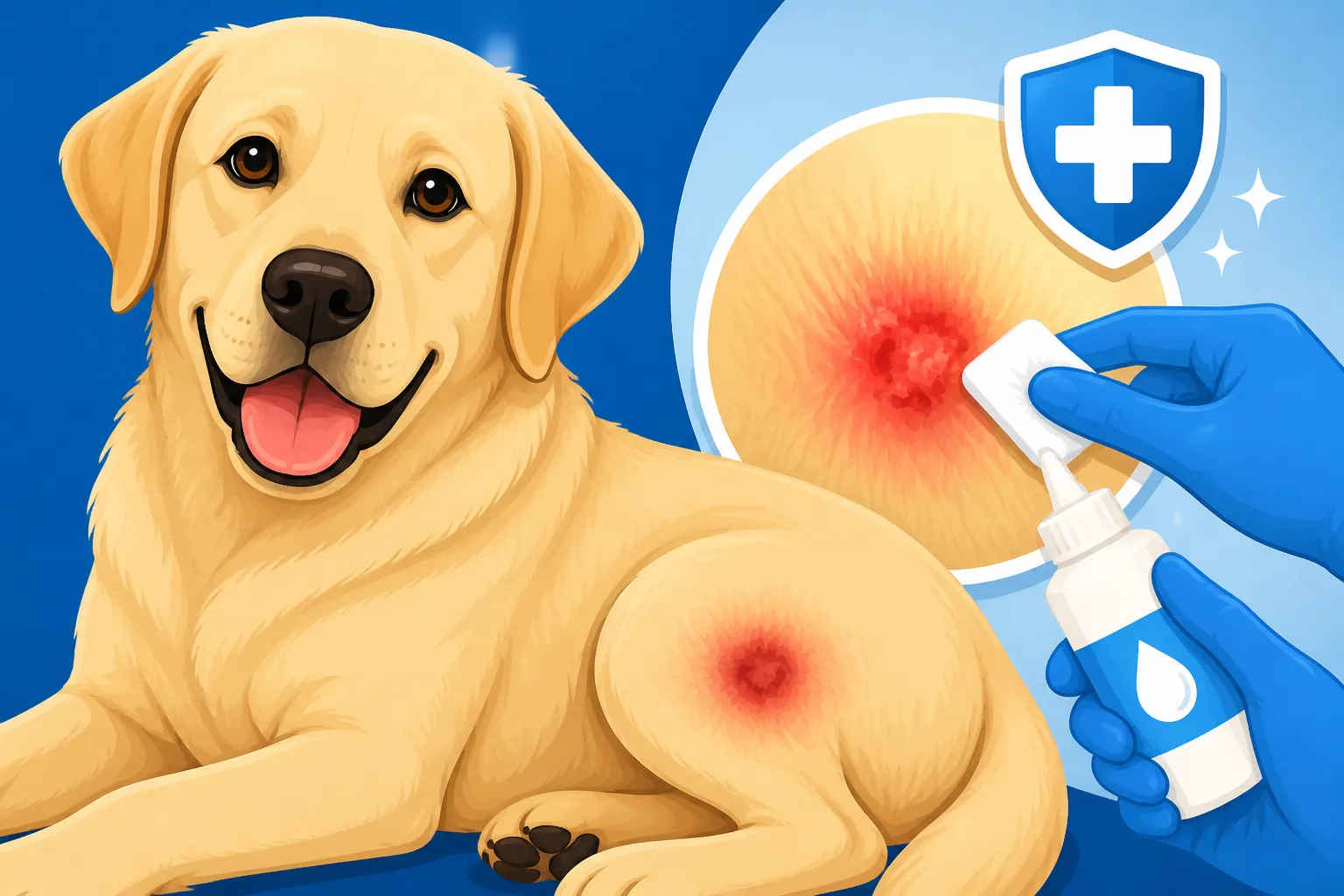
A hot spot, scientifically known as acute moist dermatitis, is essentially a superficial skin infection that occurs when your Labrador's skin barrier is compromised and normal skin bacteria multiply rapidly. It starts with an itch, often subtle at first, that leads to excessive licking, chewing, or scratching. This self-trauma quickly breaks the skin, allowing bacteria that normally live harmlessly on the skin to invade and cause an infection. The result is a red, oozing, painful lesion that can grow alarmingly fast, sometimes doubling in size within a single day. The area often feels warm to the touch, hence the name "hot spot," and it can be quite painful for your dog.
The Vicious Cycle of Itch and Scratch
Imagine a tiny mosquito bite on your arm. You scratch it, and it itches more. You scratch again, and soon you've got an angry red welt. Now, magnify that by a thousand for your Labrador. The initial irritation – be it an insect bite, an allergy flare-up, or even just some trapped moisture – causes a localized itch. Your Labrador, being a dog, responds by licking, chewing, or scratching that spot with gusto. This constant attention damages the skin's surface, creating a warm, moist environment that is absolutely perfect for bacteria to thrive.
As the bacteria multiply, the infection worsens, and the inflammation intensifies. This, in turn, makes the spot even itchier and more painful, prompting your Labrador to continue the cycle of licking and chewing. It's a cruel feedback loop that can turn a small irritant into a full-blown, oozing hot spot in a matter of hours. Breaking this cycle is the absolute key to successful treatment. The thick, dense double coat of a Labrador, especially during shedding season, can also trap moisture and heat against the skin, exacerbating the problem and making these spots harder to spot until they're quite advanced.
Common Triggers for Labradors
Labradors, with their water-loving nature and dense coats, are particularly prone to hot spots. There are several common culprits that can kick off this uncomfortable cycle. One of the biggest offenders is moisture trapped against the skin, often after a swim in the lake or a rainy walk if their coat isn't dried properly. The humidity creates a breeding ground for bacteria. Another frequent trigger is allergic reactions – whether to environmental allergens like pollen, grass, or dust mites, or even food allergies. You might notice other signs like your Labrador constantly licking their paws raw or rubbing their face if allergies are the underlying issue.
Parasites are also a major factor. A single flea bite can be enough to start the itching for a flea-allergic Labrador, leading to a hot spot. Mites can also be a cause. Other irritants include insect bites (mosquitoes, flies, ticks), matted fur (especially if your grooming a Labrador's short double coat has been less frequent), or even contact with irritating substances like certain chemicals in grass. Sometimes, boredom or stress can lead to excessive licking in one area, inadvertently creating a hot spot. Understanding these triggers is vital for long-term prevention.
Immediate First Aid for a Developing Hot Spot
When you discover a hot spot on your Labrador, the first thing to do is not panic, but act quickly. The faster you intervene, the less severe the hot spot will become and the quicker your dog will find relief. Your immediate goal is to stop the self-trauma, clean the area, and dry it out to discourage bacterial growth.
Clipping and Cleaning the Area
This step is crucial and often the most challenging, as hot spots are typically painful. The dense fur around a hot spot traps moisture and hides the true extent of the lesion, making it difficult for air to reach the skin and for topical medications to penetrate. You'll need a pair of electric clippers (not scissors, as you risk cutting the skin) to carefully trim away all the fur from around and above the hot spot, creating a margin of at least an inch of healthy skin around the visible lesion. This allows you to assess the full size of the problem and enables the skin to breathe.
Once clipped, gently clean the area. You can use an antiseptic solution like diluted chlorhexidine (available at most pet stores and pharmacies) or even a mild, pet-safe iodine solution diluted to the color of weak tea. Avoid alcohol or hydrogen peroxide, as these can be irritating to raw skin. Dab the area gently with a cotton ball or soft cloth, removing any crusts, pus, or debris. The goal is to get it clean and dry. After cleaning, blot the area completely dry with a clean towel. Airflow is your friend here.
Preventing Further Irritation
Stopping your Labrador from licking, chewing, or scratching the hot spot is paramount to breaking the itch-scratch cycle. An Elizabethan collar (e-collar or "cone of shame") is often the most effective tool for this. While your Lab might not be thrilled about it, it's a necessary step for healing. There are various types of e-collars available, from traditional plastic cones to softer, inflatable versions – choose one that your dog tolerates best and that effectively prevents access to the hot spot.
Once the area is clean and dry, you can apply a topical treatment. For mild hot spots, over-the-counter options like Vetericyn Plus or a thin layer of an antibiotic ointment (such as Neosporin, but ensure it doesn't contain pain relievers like benzocaine or lidocaine which can be toxic if ingested) can be helpful. Some pet parents also find success with soothing applications like a very thin layer of aloe vera gel or witch hazel, as long as it's safe for dogs and doesn't get licked off immediately. The key is to apply very thinly and ensure the area remains dry, as thick creams can trap moisture. Repeat the cleaning and application 2-3 times a day. If your Labrador is constantly trying to get to the area, consider consulting your vet immediately as it may be more serious.
When to Head to the Vet for a Hot Spot
While some small, superficial hot spots can be managed at home, there are definite signs that indicate your Labrador needs professional veterinary attention. Ignoring these can lead to a deeper, more widespread infection and prolonged discomfort for your dog.
Signs Your Labrador Needs Professional Help
Knowing when home care isn't enough is crucial. If the hot spot is rapidly growing despite your best efforts, or if it's larger than a quarter, it's time to call the vet. Signs of a deeper infection, such as significant swelling, a foul odor, excessive pus, or if your Labrador is lethargic, has a fever, or is losing their appetite, also warrant immediate veterinary care. Sometimes, these lesions can be incredibly painful, and your dog might flinch, growl, or even snap when you try to touch the area. If your normally stoic Labrador is showing significant pain, they need professional help.
Another important indicator is if the hot spot doesn't show significant improvement within 24-48 hours of starting home treatment. If the itching continues unabated, or if new hot spots are appearing, there might be a more systemic issue at play, like severe allergies or an underlying condition that only a vet can diagnose and treat. Don't hesitate to seek professional advice. It's always better to be safe, especially when dealing with something that can escalate as quickly as a hot spot. Remember, having a pet insurance plan like those offered by Healthy Paws can significantly ease the financial burden of unexpected vet visits for conditions like these.
Common Vet Treatments
When you take your Labrador to the vet for a hot spot, they will likely start by thoroughly clipping and cleaning the area, just as you would at home, but with professional tools and often with sedation if the area is too painful for your dog to tolerate awake. They might take a sample for cytology to identify the specific bacteria or yeast involved, which helps guide antibiotic selection.
Typical veterinary treatments include oral antibiotics to combat the bacterial infection from the inside out, often prescribed for 10-14 days or longer depending on the severity. They may also prescribe anti-inflammatory medications, such as corticosteroids, to reduce the intense itching and swelling, providing your Labrador with much-needed relief and breaking the itch-scratch cycle. Topical sprays, creams, or gels with antibiotics, antifungals, and/or steroids might also be dispensed, which are often more potent than over-the-counter options. Your vet will also likely recommend continuing with an e-collar until the area is fully healed. For recurrent issues, they might explore allergy testing or a trial of an elimination diet for a Labrador to pinpoint underlying causes.
Preventing Future Hot Spots on Your Labrador
The best way to deal with hot spots is to prevent them from happening in the first place. This often involves a multi-pronged approach, focusing on good hygiene, addressing underlying health issues, and being proactive about your Labrador's skin health.
Addressing Underlying Allergies and Skin Issues
Many recurrent hot spots stem from underlying allergies. If your Labrador frequently develops hot spots, especially during certain seasons, it's worth investigating environmental allergies or even Signs a Labrador Has a Food Allergy. Your vet might suggest allergy testing or an elimination diet to identify the culprits. Managing allergies can involve various strategies:
- Environmental: Antihistamines, allergy shots (immunotherapy), or medications like Apoquel or Cytopoint. Regular bathing with a hypoallergenic shampoo for a Labrador with itchy skin can also help remove allergens from their coat.
- Food: A prescription hypoallergenic diet or carefully Running an Elimination Diet on a Labrador under veterinary guidance.
Beyond allergies, other skin conditions or parasites can instigate hot spots. Ensure your Labrador is on a consistent flea and tick prevention program, using products safe for Labradors. Regular check-ups with your vet can help catch other skin issues early. Sometimes, a "hot spot" isn't a hot spot at all, but rather a manifestation of an ear infection if it's near the ear, or a deeper skin issue that needs more specific treatment.
Proactive Grooming and Moisture Management
Given that Labradors are known for their love of water and dense coats, meticulous grooming and drying are essential preventative measures. After any swim or bath, thoroughly dry your Labrador, paying extra attention to areas like behind the ears, under the armpits, and around the tail. A high-velocity pet dryer can be incredibly effective for this, getting deep into the double coat. Regular brushing, particularly during Labrador Coat Blowing in Spring and Fall, helps remove dead undercoat, improves air circulation, and allows you to spot any skin irritations early.
Routine How Often to Bathe a Labrador with a gentle, moisturizing shampoo can also keep their skin healthy. Don't forget their ears; Labrador Ear Infections and Swimming often go hand-in-hand with hot spots in that region, so routine ear cleaning is a must. If your Labrador tends to lick their paws excessively, a common allergy symptom, consider booties or a cone during flare-ups to prevent hot spots from forming there. Keeping a close eye on your Labrador's skin, especially in warmer, humid weather, and addressing any persistent licking or scratching promptly can save you and your furry friend a lot of discomfort down the line.
| Hot Spot Severity | Action Needed | Typical Home Care | Typical Vet Treatment |
|---|---|---|---|
| Mild / Early Stage | Small (dime-sized), lightly red, minimal oozing. | Clip hair, clean with antiseptic, apply thin OTC topical, e-collar. | May not require vet if improving within 24-48 hrs. |
| Moderate | Growing, quarter-sized or larger, noticeable oozing/crusting. | Clip hair, clean thoroughly, e-collar. Vet visit recommended if no improvement. | Oral antibiotics, topical steroids/antibiotics, anti-inflammatories. |
| Severe / Persistent | Rapidly spreading, foul odor, deep red, significant pain, fever. | Keep clean, apply e-collar to prevent further trauma. Immediate vet visit essential. | Oral antibiotics, potent steroids, possibly sedation for deep cleaning, allergy investigation. |
Remember, early detection and intervention are always best. If you're ever unsure about the severity of a hot spot or if your Labrador is in significant discomfort, don't hesitate to consult your veterinarian.
Disclaimer
The information provided in this article is for general informational purposes only and is not a substitute for professional veterinary advice. Always seek the advice of your veterinarian or other qualified animal health provider with any questions you may have regarding a medical condition or treatment for your Labrador.