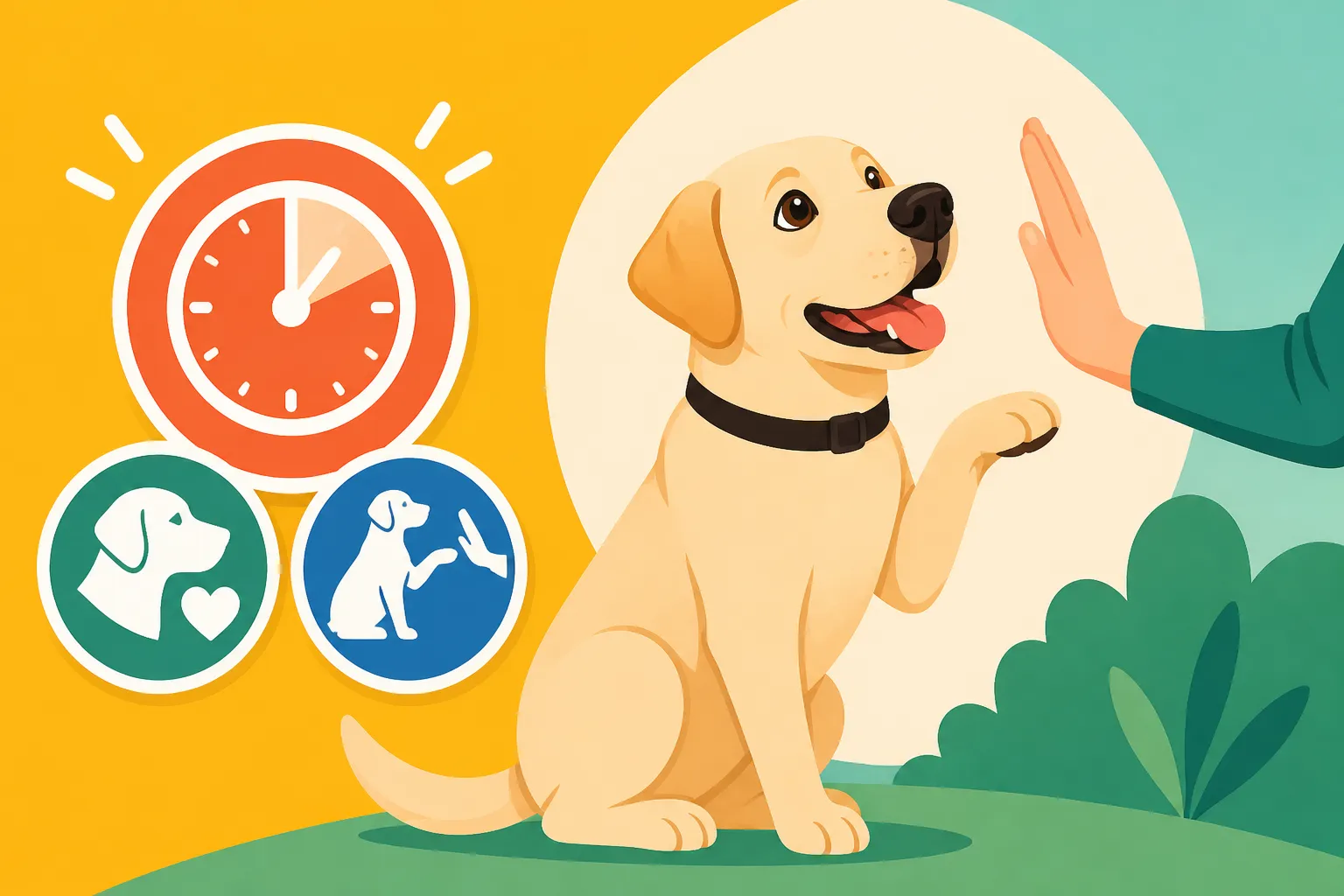
Short Training Sessions That Suit a Labrador
One of the biggest hurdles we face as Labrador owners, especially with those boisterous puppies or even high-energy adults, is getting them to actually focus during training. It can feel like you're constantly battling a short attention span, leading to frustration for both you and your furry friend. This guide is all about embracing the power of short, punchy training sessions, showing you exactly why they're so effective for Labradors and how to make every moment count.
Why Short Sessions Are a Labrador's Best Friend
You've probably been there: you set aside a good chunk of time, twenty minutes maybe, to really "work" with your Labrador on a new command. Five minutes in, their eyes are glazing over, they're sniffing the floor, or they've decided your shoelaces are far more interesting than "sit." It’s disheartening, and it makes you feel like you’re doing something wrong. But the truth is, the problem often isn't your dog's intelligence or your training skills; it's the length of your session.
Labradors, with their boundless energy and insatiable curiosity, thrive on engagement and variety. Long, drawn-out sessions can quickly become monotonous, leading to disinterest and a breakdown in learning. Imagine trying to learn a new, complex task if the instructor just kept droning on without breaks or changes in activity. You'd zone out too, right? For our Labs, short, focused bursts of training keep them sharp, motivated, and eager to learn, turning training into a fun game rather than a chore.
Understanding the Labrador Attention Span
Let's be realistic about what we're asking from our dogs. A Labrador puppy, much like a human toddler, has a very limited attention span. They're exploring the world, processing tons of new information, and their little brains simply aren't wired for sustained, repetitive tasks for long periods. Expecting a ten-week-old puppy to focus for fifteen minutes is setting both of you up for failure and frustration. Their minds are like sponges, soaking up everything, but they need frequent wrings to prevent overflow.
Even adult Labradors, for all their smarts and eagerness to please, have their limits. They might be able to concentrate longer than a puppy, but their drive is still geared towards action, retrieving, and bursts of activity. When a session drags, you start to see the tell-tale signs: yawning, looking away, sniffing, scratching, or even getting mouthy and over-aroused. These aren't signs of disobedience; they're signs of a dog whose mental battery has run dry. Understanding How Long a Labrador Puppy Can Concentrate is key to setting realistic expectations and tailoring your approach.
Preventing Boredom and Frustration
Boredom is the enemy of effective training. When a Labrador gets bored, they'll invent their own entertainment, which often involves things we don't want them doing – like chewing on the rug, jumping up, or running off with your slippers. This isn't naughty behavior; it's a natural response to a lack of mental stimulation. Long, repetitive training can also lead to frustration. If your dog isn't understanding a concept and you keep drilling it, they can get discouraged, and that can erode their willingness to try.
Short, exciting sessions prevent this downward spiral. By keeping things quick, lively, and constantly varied, you maintain your Labrador's enthusiasm. You're constantly resetting their mental clock, keeping them engaged and excited for the next mini-challenge. This approach fosters a positive association with training, making your Labrador see it as a joyful bonding activity rather than a tedious task. It builds a foundation of eagerness that will serve you well for more complex behaviors down the line.
The Ideal Length for Labrador Training Sessions
There’s no magic number that applies to every single Labrador, as each dog is an individual. However, there are general guidelines that work incredibly well for the breed, especially when you consider their developmental stage. The goal is always to stop before your dog loses interest, leaving them wanting more. This builds a positive anticipation for the next training session, rather than a sigh of resignation.
Think of it like a trailer for a movie – you want to show them just enough exciting clips to make them desperate to see the whole film, not so much that they feel like they've already watched it. Ending on a high note, even if it's just after a couple of successful reps of a simple command, is far more beneficial than pushing through until your dog is mentally checked out. The general consensus among experienced trainers for Labradors leans heavily towards quality over quantity.
Puppy Considerations for Training Duration
For Labrador puppies, we're talking about extremely brief periods. In the very early weeks, a session might literally be 30-60 seconds, repeated several times a day. By 8-12 weeks, you can aim for 1-2 minute sessions, maybe 3-5 times a day. As they grow a bit older, say 3-6 months, you might stretch these to 3-5 minutes. The key is to watch your puppy, not the clock. If their attention wanders, you've gone too long.
These tiny bursts are powerful. In just a minute, you can practice "sit," reward, release, and maybe throw in a quick "down" before they get bored. This frequent, short exposure builds consistency and helps them learn rapidly without getting overwhelmed. It also teaches them that training is fun and ends quickly, so they don't dread it. This foundation is critical for future learning and for setting up a strong bond based on positive experiences. Remember, every successful short session is a building block, making your puppy more confident and responsive.
Adjusting for Adolescent and Adult Labradors
Once your Labrador hits adolescence (roughly 6 months to 2 years), their attention span will lengthen, but they still benefit immensely from shorter sessions. Adolescence is a time of huge hormonal shifts and testing boundaries, and long, monotonous training can exacerbate their "teenager" tendencies. For an adolescent, 5-10 minute sessions, 2-3 times a day, often yield the best results. You might even go up to 15 minutes if you're working on something highly engaging or varied, but always be prepared to cut it short.
Adult Labradors, especially those with a solid training foundation, can handle longer periods. However, "longer" rarely means more than 15-20 minutes of intense focus. Even experienced working Labradors often do their best work in concentrated bursts. For most pet Labradors, keeping sessions to 10-15 minutes, once or twice a day, is perfectly sufficient for maintaining skills and teaching new ones. If you're tackling something particularly challenging, break it down into even smaller steps and keep the individual practice segments very brief. This approach ensures sustained enthusiasm and prevents burnout for both of you. Why Five Minute Sessions Work on a Labrador is a concept that extends well beyond puppyhood.
Structuring Your Effective Micro-Training Sessions
Okay, so we know short is good. But how do you pack maximum learning into those precious few minutes? It's not just about cutting time; it's about optimizing what happens within that time. You need to be prepared, enthusiastic, and ready to make every second count. This isn't casual play (though play should be part of it); it's focused engagement designed to reinforce or teach specific behaviors.
Think of your session as a mini-performance. You're the director, your Labrador is the star, and treats are the audience applause. Each cue, each successful response, each reward needs to be clear, quick, and positive. This clarity helps your Labrador understand exactly what you want and builds their confidence in offering that behavior again. The better your structure, the more impactful even a two-minute session can be.
Maximizing Engagement with High-Value Rewards
Labradors are notoriously food-motivated, which is a fantastic advantage in training. But not all treats are created equal. For short, high-impact sessions, you need truly high-value rewards – something your Labrador will practically do backflips for. Think tiny pieces of cooked chicken, cheese, hot dogs, or liver treats. These aren't your everyday kibble; these are the big guns that grab and hold their attention. Using these treats creates a powerful incentive and helps your Labrador quickly form a positive association with the desired behavior. Treats That Motivate a Food-Driven Labrador can make all the difference.
Beyond food, praise and quick games can also be high-value rewards. A squeaky toy toss, a brief tug session, or a burst of excited verbal praise can be incredibly motivating. Vary your rewards to keep things interesting. The key is to deliver the reward immediately after the correct behavior. This precision helps your Labrador understand exactly what they're being rewarded for. Many trainers also advocate for Marker Training a Labrador With a Clicker, as the click provides an instant, clear marker of the exact moment they did something right, followed by their high-value reward. This clarity supercharges their learning.
Incorporating Play and Movement
Labradors are active dogs, and forcing them into a rigid, stationary training routine for even a few minutes can be a challenge. Incorporating play and movement into your short sessions helps keep their energy channeled positively and prevents boredom. Instead of just "sit, stay, come" in a static position, try adding movement. Ask for a "sit" before throwing a toy, or a "down" before letting them chase a thrown treat.
You can also use play as a reward between repetitions. For example, after two successful "recalls," engage in a quick game of tug or fetch before going back to another command. This breaks up the intensity and taps into their natural retrieving drive, making the session feel less like work and more like fun. Movement can also be part of the training itself. Practice loose-leash walking for a minute, then reward with a run to a favorite spot. For a breed that loves to move, integrating this into their learning makes perfect sense and ensures they remain engaged and happy.
When and Where to Train
The beauty of short training sessions is their flexibility. You don't need a dedicated half-hour slot or a specific training area. You can train anywhere, anytime, as long as you can minimize distractions and focus for those few minutes. This means you can fit multiple short sessions into your day without it feeling like a huge time commitment.
- Before Meals: Your Labrador is already motivated! Ask for a "sit" or "down" before setting down their bowl.
- Before Going Outside: "Sit" at the door, "wait" before going through.
- During Walks: Practice "heel" for 30 seconds, then release them to sniff. Work on Building a Labrador's Recall From Scratch in an open, safe area.
- During Playtime: Ask for a "drop it" with a toy, reward, then continue play.
- Commercial Breaks: A perfect moment for a quick "stay" practice on the couch.
Varying locations also helps your Labrador generalize commands, meaning they learn that "sit" means "sit" whether they're in the kitchen, the park, or your friend's house. This is crucial for real-world reliability. You can even use online resources like the BAXTER & Bella online puppy school, which often emphasizes short, frequent sessions and provides structured guidance for integrating training into daily life. They understand that consistency in small doses trumps infrequent, long hauls.
Common Pitfalls to Avoid in Short Training Sessions
While short training sessions are incredibly effective, there are still ways to inadvertently undermine their benefits. It's easy to fall into old habits or make assumptions about what your Labrador is capable of, especially when you're making good progress. The success of this method lies in its deliberate structure and your attentive observation of your dog. Rushing, pushing too hard, or failing to acknowledge their effort can quickly turn a positive experience into a negative one.
One of the biggest mistakes is seeing "short" as an excuse for "unfocused." A short session still requires your full attention and clarity. If you're distracted or inconsistent, even a minute can be unproductive. The goal is intense, positive focus, not just brevity. By being mindful of these common missteps, you can ensure your short training bursts are always productive and enjoyable for your Labrador.
The Trap of Endless Repetition
It might seem logical: if you want your Labrador to master a command, just repeat it over and over, right? Not so fast. While repetition is part of learning, endless repetition, especially within a single short session, can quickly lead to boredom and even frustration. Your Labrador isn't a robot. Once they've performed a command correctly a couple of times, their brain has registered the connection. Drilling it another ten times without a break or a change in activity is likely to diminish their enthusiasm, not enhance their understanding.
Instead of repeating "sit" ten times in a row, try for two or three perfect "sits," then switch to "down," then maybe a quick "come," then back to "sit." This keeps their mind active and prevents them from anticipating the next command or tuning you out. Think of it as mixing up their mental workout. This varied approach makes the session more engaging and helps solidify learning by presenting the command in different contexts. For teaching First Commands to Teach a Labrador, variety is truly the spice of life.
Overlooking Progress and Ending on a High Note
Perhaps the most important rule of short training sessions is knowing when to stop. And that time is almost always before your Labrador gets tired or makes a mistake. Too often, we push our dogs until they start failing, thinking we need to "fix" the problem in that moment. But stopping when they're still performing well, when they're still eager, leaves them feeling successful and motivated for the next session. This is what we call "ending on a high note."
It's tempting, when your Labrador is doing everything perfectly, to think "just one more time!" Resist that urge. If they've aced a new trick or performed an old one flawlessly, give them a jackpot reward (a handful of extra tasty treats, an exciting play session) and end the training. This reinforces the idea that training is rewarding and fun. Conversely, if your Labrador is struggling with a new concept, make it easier (break it down into tiny steps, reduce distractions) until they can succeed once or twice, then end the session. Never end on a failure if you can help it. This builds confidence and eagerness, essential ingredients for long-term training success. This principle also applies beautifully to Fading Food Rewards With a Labrador; you want to end on success as you transition away from constant treats.
Integrating Training Throughout Your Labrador's Day
The real magic of short training sessions isn't just that they're brief; it's that they can be woven seamlessly into the fabric of your daily life. This isn't about setting aside a specific time slot that you might miss when things get busy. It's about recognizing and capitalizing on the countless mini-opportunities that naturally arise every day. By adopting this mindset, you're not just training your Labrador; you're living training with them, constantly reinforcing good behavior and strengthening your bond.
This consistent, low-pressure approach is far more effective than infrequent, intense sessions. It teaches your Labrador that learning happens all the time, not just when you pull out the treat pouch. It also helps to prevent boredom and gives their intelligent minds something productive to do, which is especially important for a breed as smart and active as the Labrador. When you view your entire day as a series of training opportunities, your Labrador will become a more well-behaved and engaged companion without you even feeling like you're putting in "extra" work. This is a fantastic way to offer Mental Work for a Bored Labrador throughout the day.
Turning Everyday Moments into Learning Opportunities
Think about all the interactions you have with your Labrador daily. Each one is a potential training moment. Instead of simply existing, turn these moments into active learning experiences.
- Greeting Guests: Instead of letting your Labrador jump, ask for a "sit" as guests arrive. Reward calm greetings.
- Getting Dressed: Practice a "stay" while you put on your shoes, then reward with a verbal release.
- Meal Prep: Teach a "place" command, sending them to their bed while you prepare food, then reward with release for their meal.
- Opening the Car Door: Ask for a "wait" before jumping in, especially important for safety.
- Walking Through Doorways: Make them wait and release them with a cue. This teaches impulse control.
The beauty of this "lifestyle training" is that it's natural and less formal, making it fun for both of you. It's not about perfect execution every time, especially in the beginning. It's about consistency and making small requests that lead to small successes. Over time, these small successes build into strong, reliable behaviors, reinforcing Why Labradors Are Ranked Easy to Train because of their eagerness to engage with us. You can find excellent, durable training tools like clickers, treat pouches, and long lines for recall practice on Amazon to help with these spontaneous sessions.
Utilizing Different Environments for Skill Proofing
It's one thing for your Labrador to "sit" perfectly in your quiet living room. It's quite another for them to do it at a busy park with squirrels, kids, and other dogs running around. This is where "proofing" comes in – practicing commands in a variety of environments with increasing levels of distraction. Short, integrated training sessions are perfect for this.
Once your Labrador reliably performs a command in a low-distraction environment, take that command on the road. Practice a "stay" for ten seconds in your backyard, then try it for five seconds outside a coffee shop. Work on your recall in an unfenced field, then try it at the edge of a park. Keep these sessions extremely short and set your dog up for success by starting with easy distractions and gradually increasing the challenge. If they struggle, make it easier, succeed, and then end.
By breaking down skill proofing into these small, manageable steps across different locations, your Labrador learns that commands apply everywhere, not just in specific places. This builds confidence and reliability, ensuring your well-trained Labrador is a joy to be around, no matter where your adventures take you. This systematic approach is also crucial when you're working on advanced skills or addressing specific behavioral challenges. Using a Labrador's Food Drive as Leverage in different environments can make these sessions particularly effective.
Training Session Length for Labradors: A Quick Guide
To help you visualize the ideal session lengths, here's a general guideline. Remember, these are starting points; always adjust based on your individual Labrador's focus and enthusiasm.
| Labrador Age | Suggested Session Length (Minutes) | Frequency Per Day | Primary Focus (Examples) | Key Considerations |
|---|---|---|---|---|
| 8-12 Weeks | 1-2 minutes | 5-10 times | Name recognition, "sit," "touch," crate games | Very short attention span, high energy, frequent potty breaks |
| 3-6 Months | 3-5 minutes | 4-6 times | Basic obedience, "down," "stay" (short), leash manners | Still short attention, easily distracted, high learning curve |
| 6-12 Months | 5-10 minutes | 2-3 times | Proofing cues, recall, impulse control, advanced basics | Adolescence, testing boundaries, bursts of energy |
| 1-2 Years | 10-15 minutes | 1-2 times | Refining skills, complex cues, mental stimulation | Energy still high, focus improving, seeking challenges |
| 2 Years + (Adult) | 10-20 minutes | 1-2 times | Maintaining skills, new tricks, advanced concepts | Can handle more, but still benefits from engagement |
This table isn't about rigid adherence, but about understanding the developmental stage of your Labrador and tailoring your expectations accordingly. The most important metric is always your dog's engagement. If they're focused and happy, keep going; if they're distracted or showing signs of boredom, it's time to end the session on a positive note.
Disclaimer
This article is for general informational purposes only and does not constitute professional advice. Laws, prices and regulations vary by location and change over time. Consult a qualified professional for guidance on your specific situation.