Teaching Children to Handle a Labrador
It’s a common scenario: you’ve got a wonderful, boisterous Labrador who is absolutely part of the family, and you’re trying to navigate their interactions with the children in your life. You want everyone to be safe, happy, and respectful of one another, but sometimes it feels like you're constantly intervening. This guide is here to walk you through practical strategies for teaching children how to handle a Labrador, fostering a harmonious and safe environment for both your furry friend and your little ones.
Understanding the Labrador's Perspective Around Children
Before we even begin to talk about rules for kids, it’s vital that we, as the adults, truly understand what’s going on in our Labrador’s head. Too often, we project human emotions onto our dogs, or we assume they have the same understanding of safety and personal space that we do. Labs are incredible dogs, known for their friendly nature, but they’re still animals with instincts, and those instincts can sometimes clash with the unpredictable energy of children.
Labradors Are Not Nanny Dogs (Despite the Myth)
There's this lovely, enduring myth that Labradors are naturally "nanny dogs" — that they instinctively know how to be gentle and protective with children, tolerating anything a small human might do. While Labradors are generally good-natured and patient, this idea can be incredibly dangerous if taken too literally. Your Labrador is a powerful, energetic animal, even as a puppy. They can weigh upwards of 50-80 pounds as adults, and even their joyful wagging tail can knock a toddler over.
Think about a typical Labrador: they love to mouth things, they get incredibly excited by fast movements, and they are notoriously food-driven. A child running, squealing, or waving a snack can trigger a Labrador's natural instincts in ways that aren't malicious, but can still be overwhelming or even harmful. A playful nip from a puppy, intended as an invitation to play, can easily frighten a child and lead to an accidental injury. It's crucial to remember that their default setting is often boisterous enthusiasm, not delicate restraint.
Reading a Labrador's Signals (Beyond the Wagging Tail)
One of the biggest mistakes we make is assuming a wagging tail means a happy dog in all situations. While it often does, a tail wag can also indicate excitement, anxiety, or even overstimulation. To truly understand your Labrador’s state of mind, you need to look at their entire body language. Are their ears flattened? Is their body stiff? Are they giving "whale eye," where you see the whites of their eyes? Are they yawning excessively or licking their lips when no food is present? These are all subtle signs that your Labrador might be uncomfortable, stressed, or trying to disengage.
Teaching yourself to read these signals is the first step, and then, slowly, you can start to teach older children to recognize them too. Imagine a child excitedly reaching for a dog who is showing a stiff body and lip licks; knowing those signals means you can intervene before the situation escalates. Understanding these cues helps you respect your Labrador's boundaries, which, in turn, helps your Labrador feel safer and more secure around your children. Remember, a dog who feels cornered or constantly pestered is more likely to react defensively, regardless of their usually sweet disposition. Reading Pain in a Stoic Labrador can help you understand even more subtle signs your dog might be trying to communicate.
Essential Rules for Children Interacting with Labradors
Establishing clear, consistent rules for children is paramount. These aren't just suggestions; they are non-negotiable boundaries designed to protect both your child and your Labrador. Think of them as the foundational principles that everyone in the household, especially the kids, needs to internalize. Without these in place, you’re constantly putting your dog in a position where they might feel uncomfortable, and your children at risk of misinterpreting your dog’s intentions.
The "Leave the Dog Alone" Rule
This is perhaps the most important rule of all. Your Labrador needs a safe haven, a place where they can retreat and be undisturbed. This applies especially when the dog is eating, sleeping, or in their crate or bed. Imagine trying to eat your dinner with someone constantly bothering you, or being woken up abruptly from a deep sleep. It’s irritating and can make anyone (or any dog) grumpy. For a dog, being disturbed while eating can trigger resource guarding instincts, which can be dangerous.
Teach your children that if the dog is in their crate, on their dog bed, or actively eating, they are absolutely off-limits. Their crate, especially, should be seen as their personal "den" – a sanctuary where they can relax without being bothered. You might even consider using a baby gate to create a separate "dog zone" if you have very young children. This rule instills respect for the dog's personal space and helps prevent potential conflicts stemming from discomfort or perceived threats.
Gentle Hands and No Roughhousing
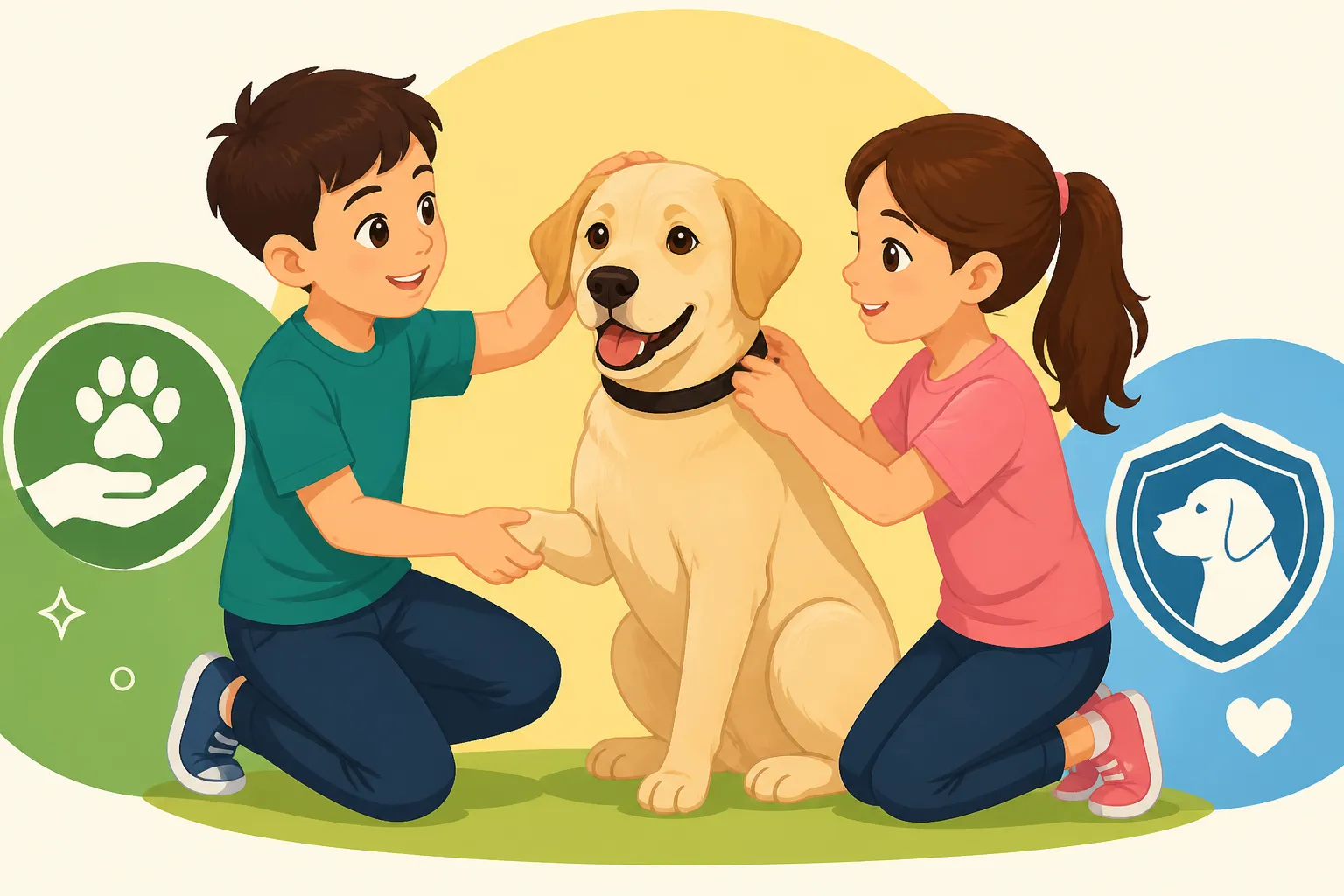
Labradors, especially puppies, love to play, and they often communicate through mouthing and boisterous physical contact. While this might be fine for adults or other dogs, it's not appropriate with children. Children need to learn to interact with the Labrador using gentle hands. This means no pulling tails, no tugging ears, no poking eyes, and definitely no riding the dog like a pony. These actions can cause pain or fear, leading to a defensive reaction from even the most tolerant Labrador.
Explain to children that petting should be calm and gentle, focusing on areas the dog enjoys, like the chest or shoulders, rather than sensitive spots like the top of the head or tail. Avoid games that encourage chasing or wrestling between children and the dog, as this can easily escalate. A Labrador's play drive, combined with their strong jaws and body, can inadvertently injure a child. Teach them that playtime with the dog should be structured, like fetch with a toy, rather than uncontrolled rough-and-tumble. For more on managing playful nips, see Labrador Puppy Mouthing and How to Redirect It.
Supervising ALL Interactions (The Golden Rule)
No matter how well-behaved your Labrador is, or how well-trained your children are, direct, active adult supervision is non-negotiable. Period. This isn't just about preventing bad things from happening; it's about proactively teaching and guiding positive interactions. You are the referee, the coach, and the protector for both your child and your dog. Don't leave young children and dogs unattended for even a second. That quick dash to the kitchen or bathroom is often all it takes for an incident to occur.
Supervision means being physically present and engaged, not just in the same room scrolling on your phone. You should be close enough to intervene immediately, either by redirecting the child, redirecting the dog, or separating them if necessary. Think of it as an ongoing learning process. Each interaction is an opportunity to reinforce the rules, praise good behavior, and gently correct mistakes. Even adult Labradors can be unpredictable around children, so constant vigilance is truly the golden rule.
Teaching Children How to Behave Around Your Labrador
It's not enough to simply tell children the rules; you need to show them and practice with them. Just like teaching a Labrador a new command, teaching a child proper dog etiquette requires patience, repetition, and positive reinforcement. By involving them in the process, you empower children to be responsible and considerate pet owners, building a stronger, safer bond with their Labrador.
Approaching and Petting Correctly
Children often have an instinct to rush up to a dog, immediately reach for their head, or wrap their arms around them in a hug. While well-intentioned, these actions can be alarming for a dog, especially a large, strong one like a Labrador. Teach your child to approach the Labrador calmly and slowly. The best approach is often to allow the dog to approach the child first. If the dog chooses to come over, that's a clear sign of willingness to interact.
Once the dog is calm and willing, teach your child to offer a hand (palm up, not over the head) for the dog to sniff. If the dog sniffs and seems relaxed, they can gently pet the dog on the chest, shoulder, or side, rather than going straight for the top of the head, which can be perceived as threatening. Explain to them that hugs can feel restrictive and scary to a dog. Encourage "gentle pats" instead of rough handling. This helps build the dog's trust in the child. Introducing a Labrador to Children offers more detailed guidance on initial introductions.
Voice Control and Calm Movements
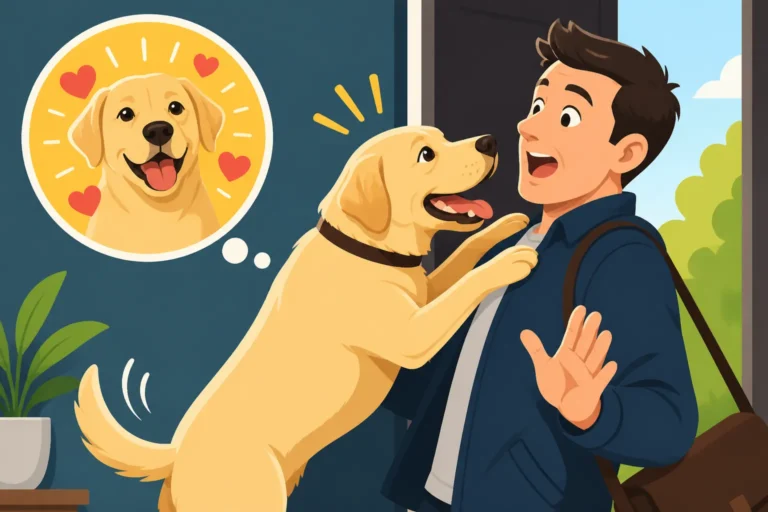
Labradors are often highly excitable. A child's high-pitched squeal, sudden running, or energetic movements can easily trigger your Labrador's play drive, leading to jumping, barking, or even nipping. While these actions are often born of joy for the dog, they can be overwhelming or frightening for a child. It's important to teach children to use calm, quiet voices around the dog, and to move slowly and deliberately.
Practice "sitting nicely" when the Labrador is in the room. If a child becomes overly excited, it's often best to separate them from the dog until they can calm down. You can explain that the Labrador loves gentle play, but gets too bouncy with loud noises and fast movements. When your child interacts calmly, praise them profusely and maybe give the Labrador a treat for remaining settled. This reinforces positive association with calm behavior. To help with the jumping, check out Stopping a Labrador From Jumping Up.
Involving Children in Positive Training
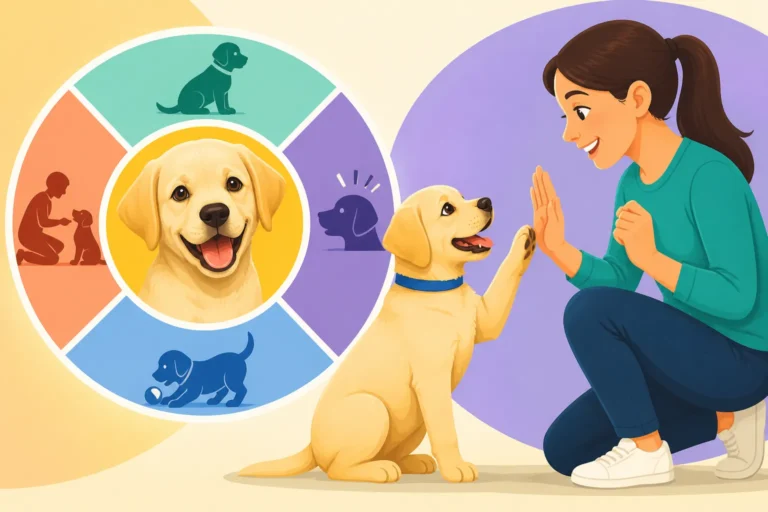
One of the most effective ways to teach children to handle a Labrador is to involve them in positive reinforcement training. This isn't just about the dog learning commands; it's about the child learning how their actions influence the dog's behavior in a positive way. Start with simple commands like "sit" or "stay." Have your child give the command in a clear voice, and then reward the dog with a small, high-value treat when they comply. You can even find training treats on Amazon that are perfectly sized for quick rewards.
This teaches children that they can communicate with the dog effectively and that positive interactions are rewarding for everyone. Structured play, such as throwing a tennis ball for fetch, is also excellent. This teaches the child how to engage the Labrador in appropriate ways, channeling the dog's natural retrieving drive without encouraging rough play. Programs like BAXTER & Bella offer fantastic online resources and step-by-step guidance for puppy training, which often includes modules on family integration and teaching children how to interact safely and positively with their new puppy. This can be a great resource for reinforcing what you're teaching at home. First Commands to Teach a Labrador has some great starting points.
Setting Up the Environment for Success
A well-managed environment is just as crucial as well-trained children and dogs. By proactively arranging your home, you can minimize opportunities for conflict and maximize the chances of peaceful coexistence. This often involves creating clear boundaries, managing resources, and ensuring everyone understands the rules of the house.
Creating Safe Spaces for Both Dog and Child
Just as your Labrador needs a safe retreat, your children need their own safe areas, especially if they are very young. For the dog, a crate, a designated dog bed in a quiet corner, or even a separate room can serve as their sanctuary. Teach everyone in the family that when the dog is in this space, they are not to be disturbed. This empowers the dog to self-regulate and retreat when they feel overwhelmed.
For children, especially toddlers, a playpen or a gated area in the house can provide a safe zone where they can play without accidental bumps, licks, or the possibility of grabbing a dog's tail. Strategically placed baby gates are your best friend here. They allow you to easily separate children and dogs when you can't offer 100% active supervision, or when one party needs a break. Creating these physical boundaries reduces stress for everyone and helps prevent unwanted interactions before they happen.
Managing Food and Toys
Labradors are famously food-driven. This means they are prone to counter-surfing, begging, and potentially even resource guarding if not managed properly. It’s vital to establish a strict rule: no human food for the dog. Children, with their good intentions, often want to share their snacks. This needs to be a firm "no." Not only can human food be unhealthy or even toxic for dogs, but allowing it encourages begging and creates opportunities for conflict if the dog tries to snatch food from a child. Foods That Are Dangerous for Labradors provides a good list of things to avoid.
Similarly, separate dog toys from child toys. Teach your children that the dog's toys are only for the dog, and their toys are only for them. Labradors are notorious for chewing, and they might easily mistake a child's beloved stuffed animal for one of their own chew toys. Teach your dog strong "leave it" and "drop it" commands, and model this behavior for your children. Using a slow feeder bowl from Amazon can also help manage your Labrador's intense food drive, making meal times calmer and less of a scramble. For more on this, consider Labrador Counter Surfing and Food Theft.
Consistent Rules for Everyone
The rules for interacting with the Labrador must be consistent across all family members and visitors. If children are told not to roughhouse, but an adult occasionally wrestles with the dog, it creates confusion for the Labrador. They won't understand why the rules change depending on who they're with. Every adult, grandparent, babysitter, and older child needs to be on the same page about how to interact with your Labrador and how to supervise interactions with younger children.
Take the time to explain the rules to anyone who will be regularly interacting with your dog and children. Consequences for breaking the rules, whether for the dog (e.g., a time-out in their crate) or the child (e.g., losing playtime privileges with the dog), should also be consistent and clearly communicated. Consistency builds trust and predictability for both the children and the Labrador, making for a much safer and more harmonious home.
| Do's for Children with Labradors | Don'ts for Children with Labradors |
|---|---|
| Do allow the dog to approach you. | Don't rush at the dog. |
| Do pet gently on the chest or shoulder. | Don't pull tails, ears, or poke eyes. |
| Do use a calm, quiet voice. | Don't scream or make loud, sudden noises. |
| Do move slowly and predictably. | Don't run or chase the dog. |
| Do let the dog eat and sleep undisturbed. | Don't bother the dog in their crate/bed. |
| Do offer treats for good behavior. | Don't share human food with the dog. |
| Do play structured games like fetch. | Don't wrestle or play tug-of-war excessively. |
| Do ask an adult for help if you're unsure. | Don't interact unsupervised. |
Disclaimer
This article is for general informational purposes only and does not constitute professional advice. Laws, prices and regulations vary by location and change over time. Consult a qualified professional for guidance on your specific situation.