Indoor Exercise for a Labrador in Winter
Indoor exercise for a Labrador in winter prevents destructive behavior, weight gain, and joint strain when outdoor activity is limited.
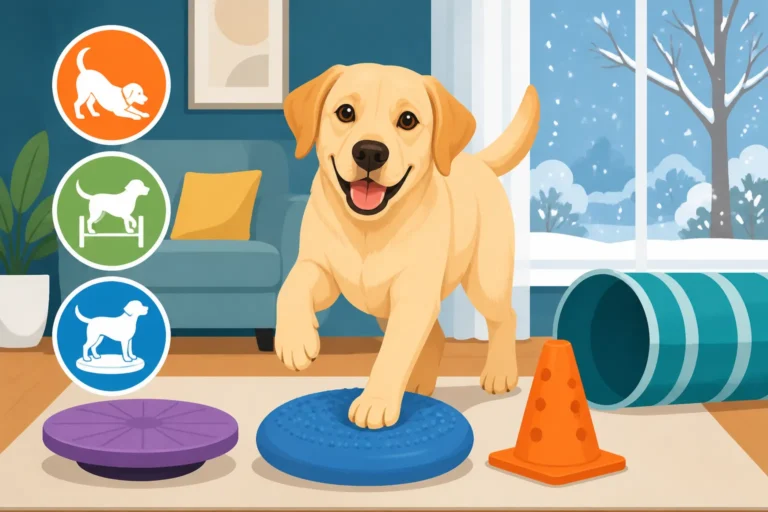
Indoor exercise for a Labrador in winter prevents destructive behavior, weight gain, and joint strain when outdoor activity is limited.
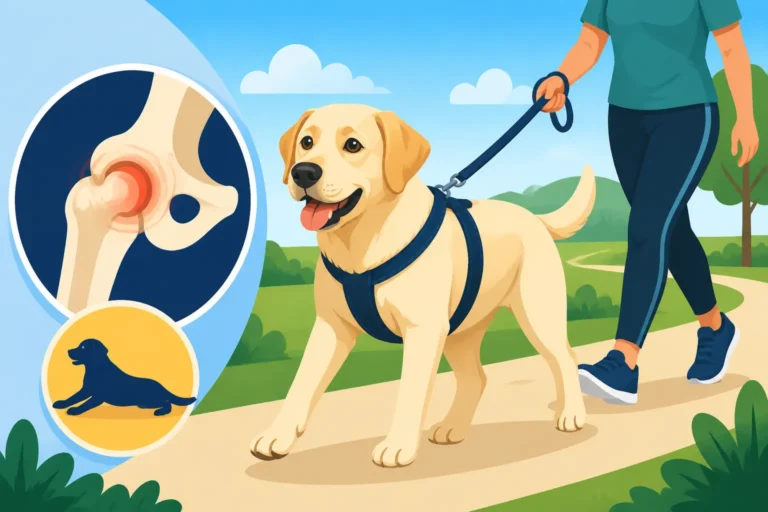
Safe exercise routines for Labradors with hip dysplasia protect painful joints while maintaining muscle mass and healthy body weight.
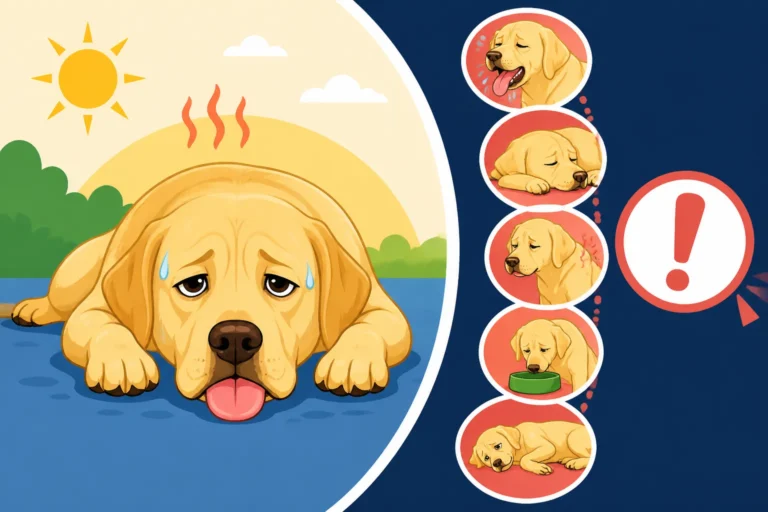
Physical and behavioral signs of overexercise in Labradors help owners recognize fatigue, stiffness, and subtle gait changes in working dogs.

Post-ocean rinsing removes salt crystals from a Labrador to protect natural oils, prevent dry skin, and avoid hot spots.

Chlorine pool water strips natural oils from a Labrador coat, causing dry fur, skin irritation, and the loss of natural water resistance.

Labrador swimming distances depend on age, fitness level, and water conditions, requiring careful endurance building for safe exercise.

Summer hiking risks for Labradors include heatstroke above 104 degrees and burned paw pads caused by dense double coats.

Labrador hiking distances depend on age and fitness, explaining safe limits for puppies, adults, and seniors with arthritis.
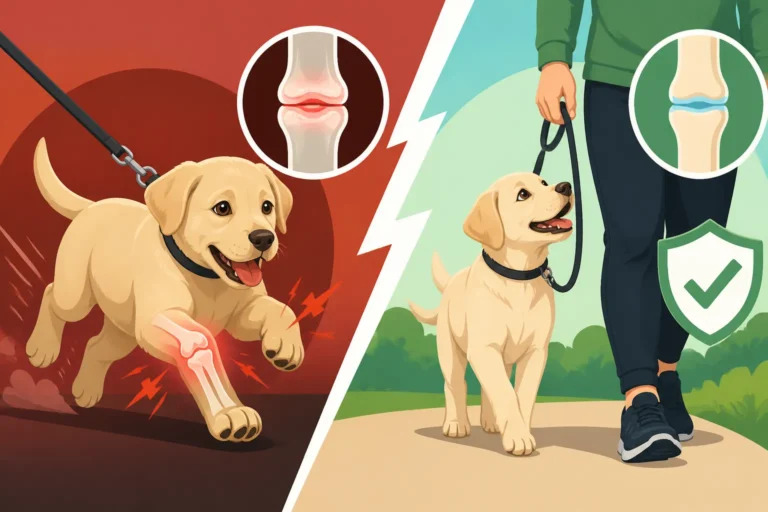
Forced exercise in young Labrador puppies damages soft cartilage growth plates and causes severe long term orthopedic joint issues.

Growth plate closure determines the exact age a Labrador can start running safely without risking bone damage or joint disease.