Indoor Exercise for a Labrador in Winter
When winter sets in, and the days get shorter and colder, many Labrador owners face a real dilemma: how do you burn off all that boundless energy when going outside for a long run or a romp at the park just isn't feasible? It's a common frustration, watching your usually happy-go-lucky companion start pacing, getting into mischief, or simply looking downright bored. This guide is here to rescue you from the winter doldrums, offering practical and creative ways to keep your Labrador physically exercised and mentally stimulated, all from the comfort and warmth of your home.
Understanding Your Labrador's Winter Woes
Let's be honest, Labradors are not built for idleness. They're a breed steeped in a history of hard work, retrieving, and being incredibly active partners. So, when the snow flies, the rain pours, or the temperatures plummet, preventing those long outdoor adventures, it's not just a minor inconvenience for them; it's a fundamental challenge to their very nature. Understanding why winter is such a tough time for them is the first step to finding the best solutions.
Why Winter is a Challenge for Labradors
Your Labrador retriever, whether a boisterous young pup or a seasoned adult, possesses an inherent drive that needs an outlet. They were bred to work tirelessly in challenging conditions, often involving cold water, fetching game for hours on end. This means they come pre-programmed with an energy level that far exceeds simply lounging on the couch. When their usual opportunities for sprawling runs, swimming, or lengthy games of fetch are severely curtailed by inclement weather, that energy doesn't just disappear; it gets pent up.
Imagine yourself, full of vigor and ready to tackle the day, suddenly confined to a small space with nothing to do. You'd get restless, right? That's precisely what happens to our Labs. Their athletic build, their keen intelligence, and their natural enthusiasm all demand an outlet. Without it, they can quickly become frustrated, leading to behaviors that might seem naughty but are really just their way of trying to cope with an abundance of unused physical and mental capacity. Even a short walk on a freezing, icy day might not be enough to satisfy their deep-seated need for movement and engagement.
The Dangers of Insufficient Exercise
When a Labrador isn't getting enough exercise, the consequences can range from annoying to genuinely detrimental to their well-being. One of the most immediate and noticeable effects is often the emergence of destructive behaviors. That sofa cushion that suddenly looks so tempting to shred, the baseboards that become a chewing project, or the incessant barking at every single sound – these are often cries for help from a dog with too much energy and too little to do. A bored Labrador is a creative (and often destructive) Labrador, finding their own "work" if you don't provide it.
Beyond the home damage, there are more serious concerns. Labradors are notoriously food-motivated, and when their activity levels drop but their caloric intake doesn't, Why Labradors Gain Weight So Easily becomes a stark reality. A few extra pounds might not seem like much, but for a breed prone to joint issues like hip and elbow dysplasia, that added weight puts immense strain on their bodies, potentially leading to or exacerbating painful conditions. Over time, Labrador Obesity and the Years It Costs can even shorten their lifespan and diminish their quality of life.
Moreover, a lack of physical and mental stimulation can impact their temperament. You might notice your usually happy-go-lucky Lab becoming more anxious, easily startled, or even a bit withdrawn. They might struggle to settle down, pace incessantly, or exhibit excessive licking. These subtle shifts are all indicators that their fundamental needs aren't being met. Keeping them active, even indoors, is crucial for their physical health, mental stability, and overall happiness.
Unleashing Physical Energy Indoors
Okay, so your backyard is a frozen tundra and the park is a slushy mess. That doesn't mean your Labrador has to become a couch potato. With a little creativity and some strategic use of your indoor space, you can still provide plenty of opportunities for them to stretch their legs and burn some calories. The key is to think about how you can replicate their natural tendencies – running, jumping, and retrieving – in a safe and controlled environment.
Creative Fetch and Retrieve Games
Labradors live for retrieving, it's in their DNA. You might not have acres of open field, but you likely have a hallway or a large living room. Get creative with your fetch games! Instead of a hard tennis ball that might bounce off walls and cause damage, opt for soft, lightweight toys that won't harm furniture or windows. Think plush toys, soft fabric balls, or even a rolled-up sock for a low-impact indoor toss.
A long hallway can become your personal indoor track. Throw the toy to one end, let your Lab race after it, and bring it back. If you have stairs, a supervised game of "fetch up the stairs" can be a fantastic calorie burner. Just be mindful of your dog's age and joint health; a young, healthy Lab might bound up and down with glee, but an older dog or one with Labrador Hip and Elbow Dysplasia might need a gentler approach. Never encourage them to slide down or jump awkwardly.
Another variation is "hide-and-seek" with their favorite toy. Get your Lab to "stay" in one room, then hide a high-value toy in another. Once you give the "find it!" command, watch them sniff and search, engaging both their body and their incredible nose. This adds a mental component that makes the exercise even more effective. Remember, the goal isn't just distance, but bursts of activity and mental engagement. For more ideas, check out Retrieving Games That Tire a Labrador.
Indoor Agility and Obstacle Courses
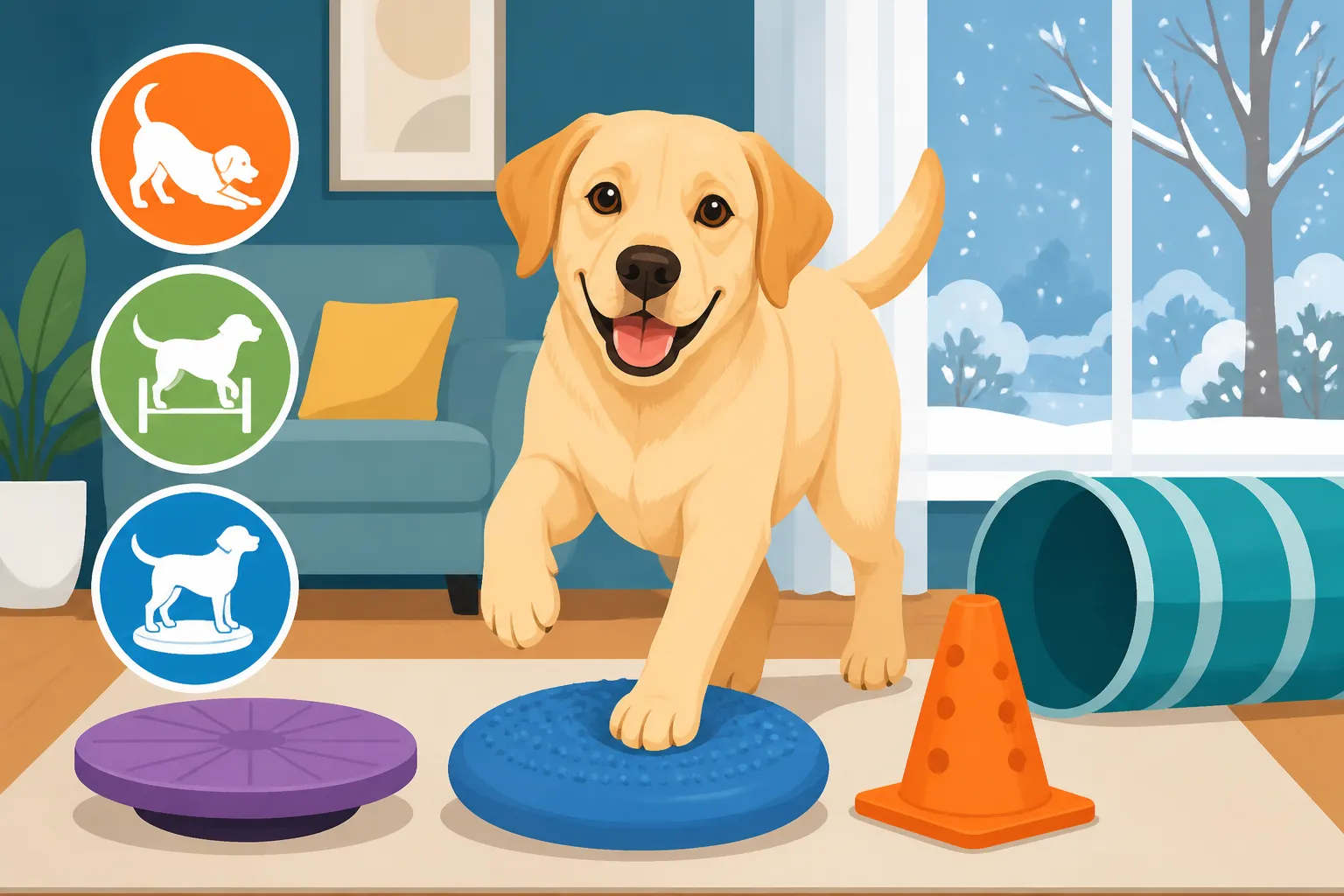
Who says agility is just for outdoor rings? You can set up a perfectly stimulating (and safe!) obstacle course right in your living room or basement. This isn't about championship-level hurdles, but rather using household items to encourage movement, problem-solving, and coordination.
Here are some ideas:
- Weave poles: Arrange kitchen chairs or sturdy boxes in a line for your Lab to weave through. Guide them with a treat initially, then use hand signals.
- Tunnel crawl: Drape a blanket over two chairs or laundry baskets to create a short, inviting tunnel for them to crawl through. Start short and wide to build confidence.
- Low jumps: Use a broomstick laid across two low stacks of books, or even just a thick pillow, for them to step or gently jump over. Keep the height very low to avoid strain, especially on developing joints in puppies or aging joints in seniors.
- Paws Up: Teach them to place their front paws on a sturdy step stool or a low coffee table. This engages their core and builds strength.
Always prioritize safety. Ensure the floor isn't slippery, and clear away any breakables. Use positive reinforcement with treats and praise to make it a fun, rewarding experience. This kind of varied movement helps to build strength, flexibility, and confidence, mimicking the kind of complex physical activity they get outdoors. If you're really enjoying this, you might even consider actual Starting Agility With a Labrador classes once the weather improves!
Treadmills and Flirt Poles (with caution)
Sometimes, no amount of fetch in the hallway is enough for a truly high-energy Labrador. For these dogs, or for owners with limited mobility themselves, options like dog treadmills or flirt poles can be incredibly useful, but they require careful introduction and supervision.
A dog treadmill (not a human one, which can be dangerous for a dog's gait and paw pads) can provide a consistent cardio workout. However, it's not something you can just strap your dog onto. Introduction must be slow, positive, and patient, associating the treadmill with treats and praise. Start with the machine off, letting them walk on it, then introduce very slow speeds for short durations. Always use a harness, not just a collar, and never leave them unsupervised. The goal is a steady walk or a gentle trot, not a full-speed sprint that could lead to injury.
A flirt pole is essentially a long stick with a lure (a toy, a piece of fabric) attached to a rope at the end. It's fantastic for mimicking prey chase, allowing your Lab to stalk, pounce, and chase the lure in a controlled environment. This provides intense bursts of exercise in a relatively small space. Think of it as a super-sized cat toy for dogs. Again, ensure you have enough clear space to prevent your dog from slamming into walls or furniture, and let them "catch" the lure frequently to prevent frustration. Keep sessions short and sweet to avoid over-exertion, and always allow for a cool-down period.
Neither of these tools should replace actual outdoor walks and adventures when possible, but they can be invaluable supplements on days when Mother Nature simply isn't cooperating. Remember, the general rule of thumb for Exercise a Labrador Needs Each Day is a solid hour or two, and indoor activities can contribute significantly to that total.
Engaging Their Brilliant Minds
Physical exercise is crucial, but Labradors are more than just athletic bodies; they possess sharp minds that also need a workout. Mental stimulation can be just as tiring, if not more so, than a vigorous run. Think about how exhausted you feel after a day of intense problem-solving at work – your brain is fried! It's the same for our dogs. Engaging their intelligence can help satisfy their needs when their physical outlets are limited, and it's a fantastic way to bond with them.
Puzzle Toys and Slow Feeders
For a breed as food-motivated as a Labrador, puzzle toys are an absolute godsend, especially during the long winter months. These toys require your dog to manipulate, roll, or nudge them to release kibble or treats. They slow down eating, prevent gulping, and make mealtime an enriching activity rather than a quick scarf-down.
There's a huge variety available through retailers like Chewy or Amazon. You can find simple treat-dispensing balls that just require a nudge, or more complex puzzles with sliding compartments and levers. Start with easier ones to build confidence, then gradually introduce more challenging options. Even classic Kong toys, stuffed with a mixture of kibble and a bit of peanut butter or plain yogurt and then frozen, can provide a good 20-30 minutes of focused licking and problem-solving. This keeps their minds busy and their jaws happily engaged. For more ideas on managing a Labrador's appetite, you might want to look into Puzzle Feeders That Slow a Greedy Labrador.
Slow feeder bowls are another excellent tool. While not strictly "puzzle" toys, they have ridges or mazes that force your Lab to eat around obstacles, significantly extending mealtime. This prevents bloat (a serious concern for deep-chested breeds) and provides a mild mental challenge.
Scent Work and Hide-and-Seek
Your Labrador's nose is an incredibly powerful tool, arguably their most impressive sense. Putting that nose to work is one of the best ways to provide mental enrichment and tire them out without needing a lot of physical space. Scent work, often called "nose work," is surprisingly easy to set up at home.
Start simple:
- Hide a treat: Let your Lab watch you place a high-value treat (or a piece of their kibble) under a cup or behind a small barrier. Give them the "find it!" command.
- Increase difficulty: Once they understand the game, make it harder. Hide treats in different rooms, under blankets, inside empty cardboard boxes, or behind furniture.
- Use a specific scent: You can even introduce a specific scent (like a particular essential oil on a cotton swab, hidden in a container) to train them to find a specific target, much like detection dogs do.
"Hide-and-seek" with you or a family member can be another fun twist on this. Have your Lab "stay" in one room, then hide somewhere in the house. Call their name, and reward them with praise and a treat when they find you. This game builds recall, strengthens your bond, and makes them use their senses to track you down. These activities are incredibly mentally fatiguing. Even 15-20 minutes of dedicated nose work can leave a Labrador happily snoozing. You can read more about this in Scent Work for a Labrador Indoors.
Learning New Tricks and Obedience Drills
Winter is the perfect time to brush up on old commands or teach your Labrador some dazzling new tricks. The quiet, distraction-free environment of your home provides an ideal setting for focused training sessions. Labradors are intelligent and eager to please, making them excellent students.
Start with foundational obedience. Can they "sit," "stay," and "down" reliably in different spots in the house? Can they hold a "stay" for longer periods? This reinforces good manners and gives their brains a solid workout. For some great starting points, check out First Commands to Teach a Labrador.
Then, move on to tricks!
- Shake a paw/High five: Easy and fun.
- Roll over: A bit more complex but rewarding.
- Spin/Twist: Simple body awareness.
- "Go to your mat/place": Incredibly useful for teaching them to settle down.
- "Clean up your toys": Teach them to put their toys in a basket. This is a life skill and a trick!
Use short, frequent training sessions (5-10 minutes a few times a day) to keep them engaged and prevent boredom. High-value treats and enthusiastic praise are your best friends here. Consistent training not only provides mental stimulation but also strengthens your bond and improves communication between you and your dog. It's all part of Training a Labrador From Puppy to Adult.
Practical Tips for Indoor Exercise Success
Making indoor exercise a success with a high-energy breed like a Labrador isn't just about throwing a toy around. It requires a bit of planning, a commitment to safety, and a understanding of how your specific dog thrives. These practical tips will help you create an effective and enjoyable winter routine.
Safety First: Preparing Your Space
Before you unleash the indoor zoomies, take a moment to "Labrador-proof" your chosen play area. Your dog might not be thinking about delicate vases or sharp table corners when they're in pursuit of a squeaky toy.
- Clear the clutter: Move any breakable items, tripping hazards, or furniture with sharp edges out of the way. If you have a coffee table with glass, consider moving it temporarily or covering the corners.
- Non-slip surfaces: Hardwood, tile, or laminate floors can be very slippery for a fast-moving Labrador, potentially leading to slips, falls, and injuries, especially to joints. Lay down rugs, yoga mats, or even old blankets to create traction. This is particularly important for games involving quick turns or jumps.
- Stair safety: If incorporating stairs into your routine, ensure the area is well-lit and free of clutter. Supervise closely and don't encourage reckless behavior. If your Lab is a puppy, be extra cautious, as their growth plates are still open. For Caring for a Senior Labrador, stairs might be entirely off-limits.
- Supervision is key: Never leave your Labrador unattended during intense indoor play. You need to be there to prevent accidents, redirect unwanted behaviors, and ensure they don't overdo it.
By taking these precautions, you create a safe environment where your Labrador can burn off energy without you constantly worrying about property damage or potential injuries.
Consistency and Variety
Just like humans, Labradors can get bored with the same old routine. To keep them engaged and prevent mental stagnation, it's vital to offer a variety of activities and maintain some level of consistency.
- Rotate activities: Don't do the exact same puzzle toy or the same retrieve game every single day. Have a rotation of toys and games. Maybe Monday is for scent work, Tuesday is for new tricks, Wednesday is for indoor fetch, and Thursday is for an agility course.
- Mix it up: Combine physical and mental exercises throughout the day. A quick 15-minute fetch session, followed by a puzzle toy for breakfast, then a short training session later in the afternoon. This provides a holistic approach to their energy levels.
- Establish a rhythm: While variety is good, a predictable routine also helps. Your Lab will learn when to expect playtime and when it's time to settle down. Even if the activities change, the times of day they happen can remain consistent. This structure can actually help reduce anxiety and improve behavior. Providing Mental Work for a Bored Labrador is just as important as physical exercise.
Think of yourself as their personal activity coordinator. By keeping things fresh and consistent, you'll find your Labrador remains much more engaged and satisfied, even when stuck indoors.
Harnessing Your Labrador's Drive
Labradors come with some incredible built-in drives that you can leverage for indoor exercise. Their natural instincts are your secret weapons for keeping them happy and tired.
- Retrieving instinct: This is the big one! They love to fetch. As discussed, use soft toys and clear spaces for repeated throws. You can even make them "wait" or "stay" for a moment before releasing them to fetch, adding a layer of impulse control to the game.
- Food motivation: Labradors are famous for their love of food. Don't fight it; embrace it! This makes them perfect candidates for puzzle toys, snuffle mats, and using kibble as rewards during training sessions. Why feed from a bowl when you can make them work for every meal? This is a prime example of Using a Labrador's Food Drive as Leverage. Many brands, from Ollie to Chewy, offer a variety of slow feeders and puzzle toys that are perfect for this.
- Desire to please: Labradors genuinely enjoy making their humans happy. Use positive reinforcement liberally. Every successful retrieve, every found treat, every new trick learned should be met with enthusiastic praise and a tasty reward. This makes them eager to participate and deepens your bond.
By tapping into these natural tendencies, you're not just exercising your dog; you're fulfilling their innate needs in a way that resonates with their breed characteristics.
Post-Exercise Wind Down
Just like a human athlete needs to cool down after an intense workout, your Labrador benefits from a wind-down period after vigorous play. This helps regulate their heart rate, calm their minds, and prevent over-stimulation.
- Transition to calm: Immediately after an energetic game, don't just leave them to their own devices. Offer a calming activity. This could be a sturdy chew toy, a long-lasting treat (like a bully stick or a dental chew), or a puzzle toy that requires focused, quiet work.
- Cuddle and connection: A little quiet cuddle time or a gentle massage can also help them transition from high energy to relaxation. This reinforces your bond and provides comfort.
- Hydration: Always ensure fresh water is available, especially after a workout.
The goal is to move from high-octane fun to a state of relaxed contentment. A well-exercised and mentally stimulated Labrador should be able to settle down and enjoy a good nap after their indoor adventures. This also teaches them an important life skill: how to switch off and relax when playtime is over.
| Activity Type | Examples | Benefits | Space Needed | Key Considerations |
|---|---|---|---|---|
| Physical | Hallway fetch, Indoor agility, Stairs fetch | Burns energy, builds muscle, improves coordination | Hallway, living room, basement | Clear obstacles, non-slip surfaces, supervise closely |
| Mental | Puzzle toys, Scent work, New tricks | Reduces boredom, calms mind, enhances problem-solving | Any room | Appropriate difficulty, high-value rewards, short sessions |
| Combined | Hide-and-seek (toy or person), Flirt pole | Engages body & mind, mimics natural behaviors | Open room, basement | Ensure safety, allow "catches" for flirt pole |
Disclaimer
This article is for general informational purposes only and does not constitute professional advice. Laws, prices and regulations vary by location and change over time. Consult a qualified professional for guidance on your specific situation.