Mast Cell Tumors on a Labrador
Mast cell tumors are a cancerous growth that often worry Labrador owners, who need to recognize a lump and understand its diagnosis and treatment.
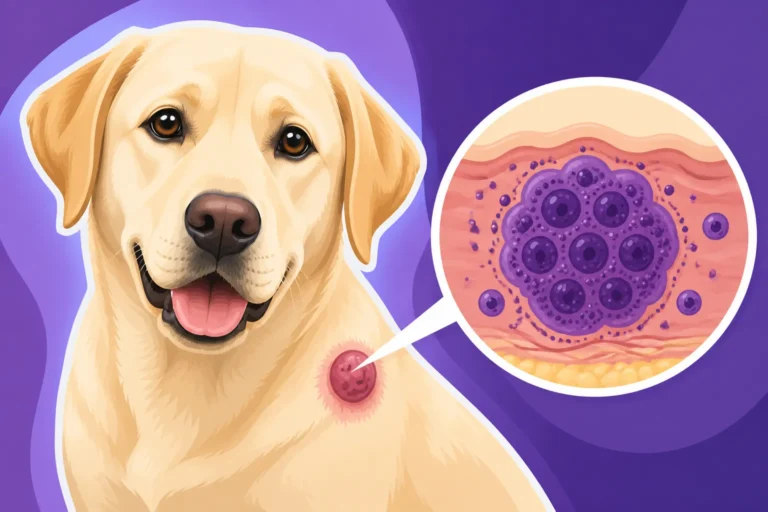
Mast cell tumors are a cancerous growth that often worry Labrador owners, who need to recognize a lump and understand its diagnosis and treatment.

Labrador lipomas are benign fatty tumors that usually require monitoring unless they grow large, press on nerves, or irritate joints.

Labrador lumps and bumps are often harmless lipomas, which are benign, non-cancerous tumors made of fat cells located under the skin.

Warning signs of cancer in Labradors, including lymphoma and mast cell tumors, help owners detect early physical changes.

Lymphoma and other common cancers affecting Labrador Retrievers are explained, detailing risks and early detection signs.

Lean Labrador lifespan data and the POMC gene mutation explain how extra weight shortens a dog life and causes joint issues.

Labrador retriever obesity statistics, health risks, and veterinary body condition scoring methods explained using recent research data.

Labrador food obsession, driven by the POMC gene and retriever instincts, requires practical management and consistent behavioral training.

Labrador obesity linked to the POMC gene deletion explains why twenty five percent of these dogs constantly feel hungry.

The POMC gene deletion in Labradors breaks internal fullness signals, creating constant hunger and severe overeating risks.