Labrador Obedience and Field Titles
It’s easy to look at those incredible working Labradors you see in videos or at events, flawlessly performing complex tasks, and wonder if your own furry friend could ever reach that level. The journey to earning obedience or field titles with your Labrador can feel daunting, like scaling a mountain when you’re still trying to master a polite heel. But let me tell you, it's a deeply rewarding path that taps into the very essence of what makes a Labrador, well, a Labrador. This guide will walk you through what these titles mean, what's involved, and how you can embark on this exciting adventure with your intelligent companion.
Understanding the Labrador's Drive for Titles
Labradors were quite literally bred for a job, and that incredible work ethic and desire to please is still deeply ingrained in them. When we talk about obedience and field titles, we're not just discussing fancy ribbons; we're talking about formally recognizing and nurturing the skills and temperament that make Labradors such extraordinary partners. It's about giving them a purpose, a challenge, and a way to truly shine.
The Instinct to Retrieve and Please
If you own a Labrador, you know their enthusiasm for fetching. Whether it's a slobbery tennis ball, a prized dummy, or even your misplaced sock, they live for retrieving. This isn't just a cute quirk; it's a powerful genetic instinct that dates back to their origins as companions to Newfoundland fishermen. They were essential for retrieving fish, lines, and lost gear from icy waters. This historical role means they possess an inherent "soft mouth" — the ability to carry objects gently without damaging them — and an insatiable desire to bring things back to their human.
This drive is a massive advantage when training for field titles, which are all about controlled retrieving in various environments. But it also translates beautifully into obedience work. A Labrador's strong desire to please, coupled with their food or toy motivation, makes them incredibly biddable and responsive to training. They genuinely want to work with you, and when they understand what you want, they'll put their whole heart into achieving it. Channeling a Labrador's Retrieving Drive is key to success in many of these competitive endeavors, as it allows you to direct their natural enthusiasm toward specific tasks.
Temperament Traits That Excel in Competition
Beyond the retrieve, Labradors boast a suite of temperament traits that make them exceptional candidates for competitive sports. They are renowned for their intelligence, which means they can learn and retain a vast array of commands and behaviors. This isn't to say it's always easy – sometimes their intelligence manifests as clever problem-solving (like figuring out how to open the treat cabinet!), but with consistent, positive reinforcement, they are quick studies. Labrador Temperament and Personality is built for partnership and resilience.
Their high energy levels, particularly in younger dogs, can be channeled into focused, athletic performance. They have stamina, drive, and often a seemingly endless capacity for fun, all of which are assets in demanding competition environments. A good Labrador thrives on having a job, and titles provide that structured outlet for their mental and physical energy. Moreover, their typically friendly and stable nature allows them to handle the distractions of a trial environment – strange places, new people, and other dogs – with relative calm, a crucial factor when precision and focus are paramount.
Navigating the World of Obedience Titles
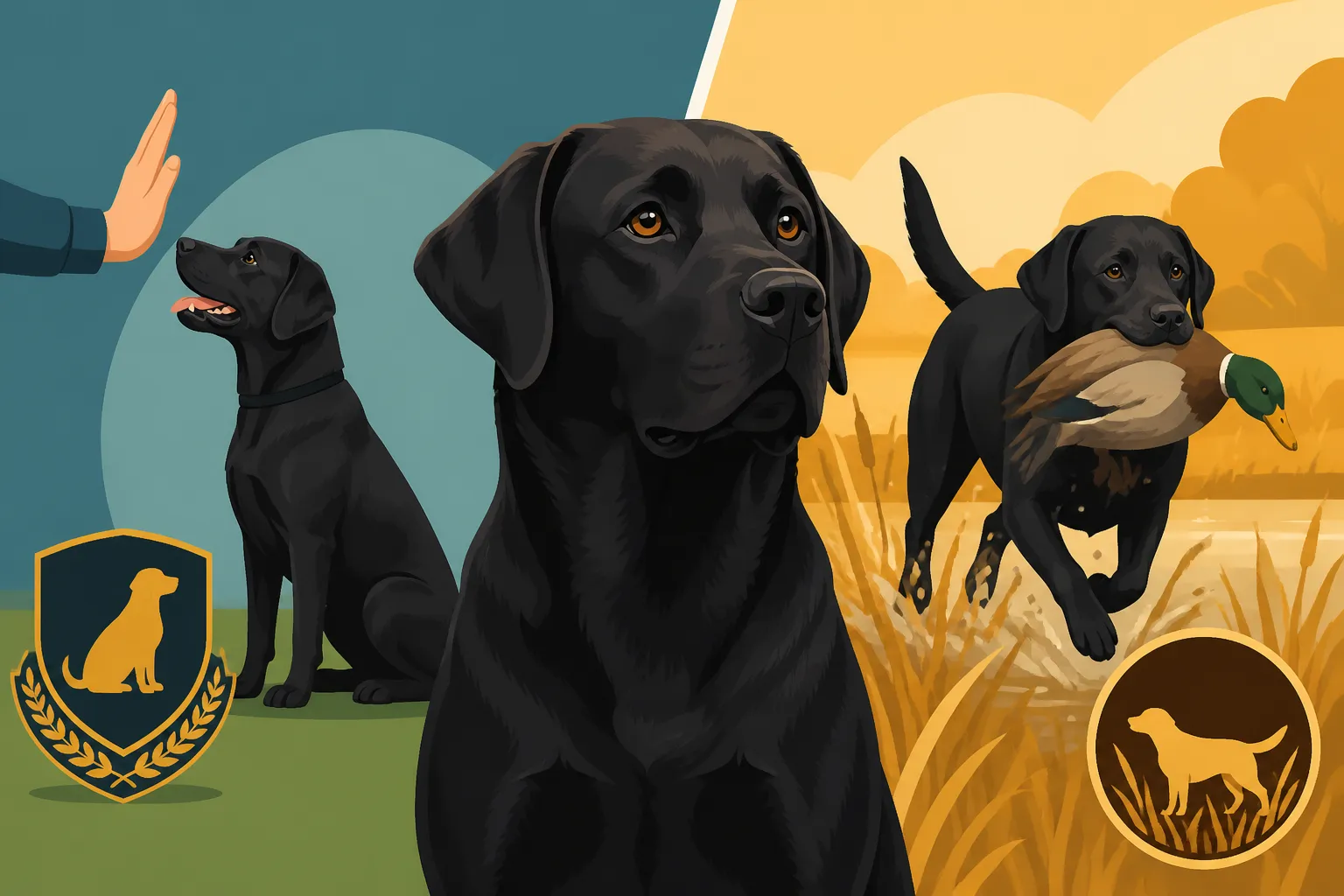
Obedience trials are a fantastic way to showcase your Labrador's manners, responsiveness, and teamwork with you. These competitions involve a series of exercises performed in a ring, judged on precision, willingness, and accuracy. It's about demonstrating that your dog can reliably perform commands under distraction, even when they'd rather be sniffing interesting smells or greeting a new friend. Each title builds upon the last, requiring more advanced skills and a higher level of teamwork.
Beginner Novice and Companion Dog (CD)
The journey into competitive obedience often starts with the Beginner Novice (BN) and Companion Dog (CD) titles. Don't let the "beginner" fool you; these still require significant training and consistency, but they're a wonderful entry point for many teams.
The Beginner Novice title is a relaxed, introductory level. It focuses on basic commands like "heel" on leash, "sit," "stay," and "come," performed with the handler. The emphasis here is on the dog's willingness to work and the handler's ability to communicate clearly. It's a great way to dip your toes into the competition world without the pressure of perfect precision. Think of it as a solid foundation, showing that your Labrador understands and responds to core commands in a structured setting. It’s also an excellent way to continue reinforcing the positive relationship you've built during basic puppy training, like when you were Training a Labrador From Puppy to Adult.
The Companion Dog (CD) title is often considered the first true competitive obedience title. It requires more precise execution of commands, both on and off leash. Exercises typically include:
- Heel on Leash and Figure Eight: Your Labrador must walk attentively by your side, maintaining position whether you speed up, slow down, or turn, and navigate around two stewards.
- Stand for Examination: Your dog must stand still and allow a judge to lightly touch them, demonstrating trust and good manners.
- Heel Off Leash: The same heeling exercise, but now without the leash, requiring an even stronger bond and focus.
- Recall: Your dog must reliably come to you when called from a distance.
- Sit Stay and Down Stay: Your dog must hold a sit or down position for a specified period, often with the handler across the ring and other dogs present, demonstrating significant self-control and focus.
Earning a CD title signifies that your Labrador is a well-behaved and responsive companion, capable of performing foundational obedience skills under pressure. It's a testament to your hard work and their intelligence.
Open and Utility Titles (CDX, UD, UDX)
Once you and your Labrador have mastered the CD level, the Open (CDX) and Utility (UD) titles present a whole new set of challenges that really test your partnership and your dog's advanced understanding.
The Companion Dog Excellent (CDX) title requires all the exercises of the CD, but with increased difficulty. For example, the retrieve exercise becomes much more complex, often involving retrieving a dumbbell over a jump. The off-leash heeling is longer, and the stays are held for extended periods with more distractions. This level demands a higher degree of communication and trust, as your Labrador needs to execute commands with greater independence and precision. It’s no longer just about knowing the command, but perfecting the execution under varied circumstances.
The Utility Dog (UD) title is where competitive obedience truly shines in terms of complexity and mental challenge for your Labrador. This level introduces exercises like:
- Signal Exercises: Your dog must respond to hand signals only, without verbal commands, showcasing their keen observation and your subtle communication.
- Scent Discrimination: Your Labrador must retrieve a specific article (often a glove) that you touched, from a pile of identical articles that other people have handled. This taps into their incredible olfactory senses and focus.
- Directed Retrieve: Your dog must retrieve a specific glove from a group of three, based on your direction.
- Moving Stand and Examination: Your dog must stand and stay as you walk away, then allow a judge to examine them, returning to you only on command.
These exercises demand immense mental engagement from your Labrador, requiring them to think, discriminate, and follow intricate directions. Earning a UD is a significant accomplishment, highlighting a truly exceptional working relationship.
Beyond Utility: Grand Utility Dog and Obedience Trial Champion (OTCH)
For those truly dedicated to the sport, there are titles beyond UD that represent the pinnacle of obedience achievement. The Utility Dog Excellent (UDX) title is awarded to dogs who qualify in both the Open and Utility classes at the same trial a specified number of times. This is a true test of consistency and endurance, as it means your Labrador is performing at an elite level across multiple demanding exercises on the same day.
The ultimate goal for many in obedience is the Obedience Trial Champion (OTCH) title. This is not just about accumulating qualifying scores; it's about winning specific placements in the Open B and Utility B classes, and earning a set number of points. An OTCH Labrador is a canine athlete of the highest caliber, demonstrating sustained excellence and a deep, symbiotic partnership with their handler. Achieving this title speaks volumes about the Labrador's intelligence, trainability, and the countless hours of dedicated Short Training Sessions That Suit a Labrador and teamwork invested.
| Title Level | Key Skills Required | Typical Exercises | What it Signifies |
|---|---|---|---|
| Beginner Novice (BN) | Basic obedience, handler guidance, willingness | On-leash heeling, sit, stay, recall | Introduction to competition, basic manners |
| Companion Dog (CD) | Precise obedience, focus, handler trust | Off-leash heeling, stand for exam, recalls, long stays | Solid foundation in obedience, reliable companion |
| Companion Dog Excellent (CDX) | Advanced obedience, retrieve over jump, longer stays | CD exercises with added difficulty, retrieving over jump | Higher level of control and skill, consistent performance |
| Utility Dog (UD) | Mental discrimination, hand signals, directed retrieves | Scent discrimination, signal exercises, directed retrieve | Advanced mental work, subtle communication, independent execution |
| Utility Dog Excellent (UDX) | Consistent high performance at CDX and UD levels | Qualifies in both Open B & Utility B multiple times | Sustained excellence in advanced obedience |
| Obedience Trial Champion (OTCH) | Highest level of competitive success, consistent wins | Wins and points in Open B and Utility B classes | Top-tier obedience athlete, exceptional team |
Exploring Field Titles: The Heart of the Labrador
While obedience titles showcase a Labrador's discipline and responsiveness in a controlled environment, field titles reveal their natural instincts, athleticism, and drive in scenarios that mimic real-world hunting conditions. This is where the Labrador's heritage truly shines, proving their capabilities as superb working retrievers. For many Labrador enthusiasts, engaging in field work is the most authentic way to connect with their dog's intrinsic purpose. Training a Labrador for Gundog Work isn't just a sport; it's a celebration of the breed's historical roots.
Hunt Tests: Junior, Senior, and Master Hunter (JH, SH, MH)
Hunt tests are designed to evaluate a dog's natural retrieving abilities, marking skills, water work, and obedience in simulated hunting scenarios. The goal isn't to compete against other dogs but against a standard of performance, with dogs earning qualifying scores to progress through the levels. Handlers often find these events to be incredibly supportive and educational, fostering a strong sense of community.
-
Junior Hunter (JH): This is the entry-level title, focusing on basic retrieving skills on land and water. A dog earning a JH must demonstrate:
- Marking Ability: Being able to see where a bird or dummy falls and remember its location.
- Retrieving: Going to the fallen "bird," picking it up, and returning it promptly to the handler.
- Desire: Showing enthusiasm for retrieving.
- Basic Obedience: Being reasonably steady at the line and responding to commands.
- Gun Safety: Being unfazed by the sound of a blank gun.
At this level, handlers often use a long line for control, and dogs may retrieve a single mark on land and water. It's an excellent way to introduce your Labrador to structured field work and build their confidence, even if you’re just starting with Retrieving Games That Tire a Labrador in your backyard.
-
Senior Hunter (SH): The Senior Hunter title builds on the JH foundation, introducing more complex retrieving challenges. At this level, dogs are expected to:
- Perform Double Marks: Remembering the fall of two birds and retrieving them in a specific order (often the farthest first, then the closer one).
- Perform a Blind Retrieve: Retrieving a bird that the dog did not see fall, relying solely on the handler's directions (casts) to find it. This tests the dog's ability to take and follow commands from a distance.
- Work Off-Leash: All retrieves are done off-leash, demanding a high level of trust and control.
- Have More Advanced Obedience: Showing steadiness, honoring (sitting quietly while another dog retrieves), and reliably taking casts.
The SH level requires significantly more training and refined communication between handler and dog. It's where the nuances of "lining" (sending the dog in a straight line) and "casting" (directing them left or right) really come into play.
-
Master Hunter (MH): The Master Hunter title is the highest level in hunt tests and requires dogs to demonstrate sophisticated retrieving skills in challenging scenarios. MH dogs must consistently perform:
- Multiple Marks: Often three or more birds, requiring exceptional marking and memory.
- Difficult Blinds: Longer, more complex blind retrieves over varying terrain and water obstacles, demanding precise handling.
- Diversion Birds: Sometimes a "diversion bird" is thrown to test steadiness and focus, where the dog must ignore it and retrieve the assigned bird.
- Honoring and Steadiness: Flawless steadiness at the line, remaining quiet and still even with intense distractions, and honoring other dogs' retrieves without breaking.
- Problem-Solving: Demonstrating the ability to navigate cover, strong currents, and challenging terrain to find and retrieve birds.
Earning an MH title is a monumental achievement, showcasing a Labrador that is a truly accomplished, well-trained gundog, capable of performing in diverse and demanding hunting situations. It's a testament to the dog's natural talent and the handler's dedication to developing those instincts into reliable performance.
Field Trials: The Pinnacle of Gundog Work
Field trials are the most demanding and competitive events for retrieving breeds, designed to identify the best of the best—dogs that would be exemplary hunting companions in challenging conditions. Unlike hunt tests, field trials are direct competitions against other dogs, with only a select few earning placements. The level of speed, marking ability, desire, and handling required is extraordinary.
In field trials, dogs compete in "stakes," which are categories based on age and experience. They face incredibly difficult tests, often involving:
- Multiple Complex Marks: Dogs must remember and retrieve multiple birds that fall at long distances, often in challenging cover or water, from different "guns" (throwers). These marks are often designed to be difficult to see or remember.
- Advanced Blind Retrieves: Dogs must execute long and intricate blind retrieves, sometimes through heavy cover, over obstacles, and across large bodies of water, guided solely by their handler's whistle and hand signals. The "blinds" are often hidden in dense vegetation or in places where currents or terrain complicate the retrieve. Why Labradors Read Human Cues So Well is put to the ultimate test here.
- Diversions and "Poison Birds": Dogs might be sent for a retrieve, only to have another bird fall, which they must ignore, or encounter a bird on their way to the assigned retrieve which they must also pass by. This tests their absolute steadiness and focus on the task given.
- Absolute Steadiness: A field trial Labrador must be absolutely "steady to shot and fall," meaning they cannot move from the line until sent by the handler, regardless of birds falling or guns firing.
- Control and Deliveries: Dogs are judged not only on retrieving the bird but on delivering it quickly and gently to hand.
Winning placements in field trials, particularly in all-age stakes, is incredibly difficult. Dogs that do so are awarded the Field Trial Champion (FC) title, and those who win enough points in multiple stakes can earn the National Field Champion (NFC) or National Amateur Field Champion (NAFC) titles. These are the top honors in the retriever world, signifying a Labrador of unparalleled genetic talent, incredible training, and exceptional partnership with its handler. It represents a lifetime of dedication and a truly remarkable dog-handler team.
Getting Started: Training for Competition
Embarking on the journey toward obedience or field titles with your Labrador is a significant commitment, but one that promises immense rewards. It's not just about the ribbons; it's about the bond you build, the skills your dog develops, and the incredible shared experiences along the way. But where do you even begin?
Finding the Right Trainer or Club
This is arguably the most crucial step. While you can certainly start with basic obedience at home, competitive training requires specialized knowledge and equipment. Look for trainers or clubs that have experience in the specific discipline you're interested in (obedience or field). Here's what to consider:
- Positive Reinforcement Focus: Good competitive trainers use positive, reward-based methods. Labradors thrive on praise, treats, and toys. Avoid trainers who advocate harsh corrections or punitive methods, as these can damage your dog's confidence and your relationship.
- Experience and Track Record: Look for trainers who have successfully competed with their own dogs and helped others earn titles. They'll understand the nuances of the rules, the demands of the exercises, and how to troubleshoot common challenges.
- Club Environment: Joining a club offers camaraderie, mentorship, and access to training grounds and equipment. Many clubs have members at various skill levels, from beginners to seasoned competitors, creating a supportive learning environment. Often, experienced members are happy to help new teams get started. You might even find local groups through platforms like Meetup or Facebook, which can be a valuable supplement to formal classes.
- Online Resources and Programs: If local options are limited, or you want to supplement in-person training, online programs can be incredibly helpful. Services like BAXTER & Bella offer comprehensive online puppy and obedience training programs that can lay a fantastic foundation. They provide structured lessons, video demonstrations, and often access to trainers for support, allowing you to learn at your own pace from home. This can be a great way to ensure you're both on the same page with fundamentals before diving into specialized competitive training. Choosing a Trainer for a Labrador is a decision that impacts your entire journey, so take your time and find a good fit.
Essential Gear and Resources
You don't need to break the bank, but certain tools will make your training more effective and enjoyable.
- High-Quality Treats and Toys: Labradors are incredibly food-motivated, so palatable, high-value treats are essential for reward-based training. Small, soft, smelly treats work best. A favorite retrieving toy or ball is also a powerful motivator for both obedience and field work. Using a Labrador's Food Drive as Leverage is a Labrador owner's superpower in training!
- Long Line: For recall practice and introducing off-leash work safely, a 15-30 foot long line is invaluable. It allows your dog to experience freedom while you maintain control.
- Whistle: Especially for field work, a dog whistle (like a "silent" or pea-less whistle) is critical for communicating at a distance, particularly for casting and recall.
- Dummies/Bumpers: For field training, you'll need retrieving dummies or bumpers. These come in various colors (white for land, black for water) and sizes. You can find a wide variety of these, along with training books and other useful equipment, on platforms like Amazon.
- Training Vest/Bag: A comfortable vest or bag with plenty of pockets for treats, dummies, and other gear will make your training sessions more organized and hands-free.
- Clicker: Many trainers use clicker training to mark desired behaviors with precision. It's a clear, consistent signal that tells your dog exactly what they did right. Marker Training a Labrador With a Clicker can be a game-changer for complex behaviors.
- Books and Online Courses: Beyond direct instruction, educating yourself on training theory and specific exercise breakdowns is vital. There are countless excellent books and online courses covering everything from basic obedience to advanced field work.
The Commitment to Consistent Practice
Titles are not earned overnight. They are the result of consistent, patient, and dedicated practice.
- Short, Frequent Sessions: Labradors, especially puppies and young adults, have relatively short attention spans. Multiple short training sessions (5-10 minutes each) throughout the day are far more effective than one long, tedious session. This keeps the training fun and prevents burnout for both you and your dog.
- Proofing and Generalization: Once your dog learns a command, you need to "proof" it by practicing in different environments, with different distractions, and with different people. A "sit" in your quiet living room is very different from a "sit" at a busy park or a noisy field trial.
- Patience and Persistence: There will be frustrating days, plateaus, and moments where you feel like you're not making progress. This is normal. Celebrate small victories, don't be afraid to take a break, and remember that training is a journey, not a race. Your Labrador is always learning, and so are you.
- Fitness: Competitive dogs need to be physically fit. Regular exercise, a healthy diet, and appropriate veterinary care are paramount to their performance and well-being. This is especially true for field dogs who perform strenuous retrieves.
The Benefits Beyond the Ribbons
While the prestige of an obedience or field title is undoubtedly satisfying, the true rewards of this journey extend far beyond the certificates and rosettes. Engaging in competitive training with your Labrador enriches both your lives in profound ways that foster a deeper connection and a more fulfilling partnership.
Strengthening the Bond with Your Labrador
The journey to earning a title is, at its heart, an incredible bonding experience. You and your Labrador are working as a team, facing challenges together, and celebrating successes. This shared endeavor builds trust, understanding, and a unique form of communication. Your dog learns to look to you for guidance, and you learn to read their subtle cues. This mutual reliance and cooperation forge an unbreakable partnership. When you successfully navigate a complex blind retrieve or achieve a perfect utility exercise, it's not just about the skill; it's about the unspoken understanding between you and your dog, a bond that is deepened with every training session and every trial. This is a critical aspect of Labrador Lifespan and What Changes It, as a strong bond contributes to a dog's overall well-being.
Moreover, the positive reinforcement methods used in competitive training strengthen this bond by making you the source of all good things—treats, praise, and fun. Your Labrador comes to view you as their most valuable resource, their leader, and their best friend, eager to engage and please. The joy your Labrador shows when performing a task well, and their excited gaze back at you for approval, is a clear indicator of this profound connection.
Mental and Physical Stimulation
Labradors are intelligent, energetic dogs that require significant mental and physical exercise to be truly happy and well-behaved. Without an adequate outlet, their considerable drive can manifest in undesirable behaviors like chewing, digging, or excessive barking. Competitive training provides an unparalleled form of constructive engagement.
- Mental Stimulation: Obedience and field exercises are complex puzzles for your dog. They demand focus, problem-solving, memory, and the ability to ignore distractions. Learning new commands, discriminating between scents, or remembering multiple fall areas for retrieves keeps their brilliant minds active and engaged. This kind of mental work is just as tiring, if not more so, than physical exercise, and is crucial for a well-balanced Labrador. Mental Work for a Bored Labrador is something every owner should strive for, and competitive titles offer a structured path.
- Physical Activity: Both obedience and field work require substantial physical exertion. Field training, in particular, involves running, swimming, jumping, and navigating varied terrain, keeping your Labrador in peak physical condition. Even obedience, with its demanding heeling patterns and retrieves, ensures your dog gets a good workout. Regular, purposeful exercise helps maintain a healthy weight, strengthens muscles, and supports overall well-being, potentially contributing to a longer, healthier Labrador Lifespan and What Changes It. It's a far cry from aimless walks; it's activity with a purpose.
Community and Shared Passion
Another often overlooked benefit of pursuing titles is the wonderful community you become a part of. Dog sports attract passionate, supportive individuals who share a common love for their dogs and a dedication to training.
- Networking: You'll meet experienced handlers, trainers, and breeders who can offer invaluable advice, mentorship, and encouragement. This network can be a lifeline when you encounter challenges or need guidance on the next steps.
- Camaraderie: There’s a unique camaraderie among people who spend countless hours training and traveling for trials. You’ll celebrate each other’s successes and commiserate over setbacks, forming lasting friendships with like-minded individuals.
- Learning Opportunities: Being part of a community means constant learning. You'll observe other teams, pick up new techniques, and gain insights into dog behavior and training methodologies that you might never discover on your own. Group training sessions and seminars offered by clubs are fantastic ways to expand your knowledge and skills.
The journey to Labrador obedience and field titles is a challenging yet profoundly rewarding adventure that celebrates your dog's natural abilities and strengthens the incredible bond you share. It's an investment in your Labrador's happiness, health, and purpose, and a testament to the extraordinary partnership you can forge.
Disclaimer
This article is for general informational purposes only and does not constitute professional advice. Laws, prices and regulations vary by location and change over time. Consult a qualified professional for guidance on your specific situation.