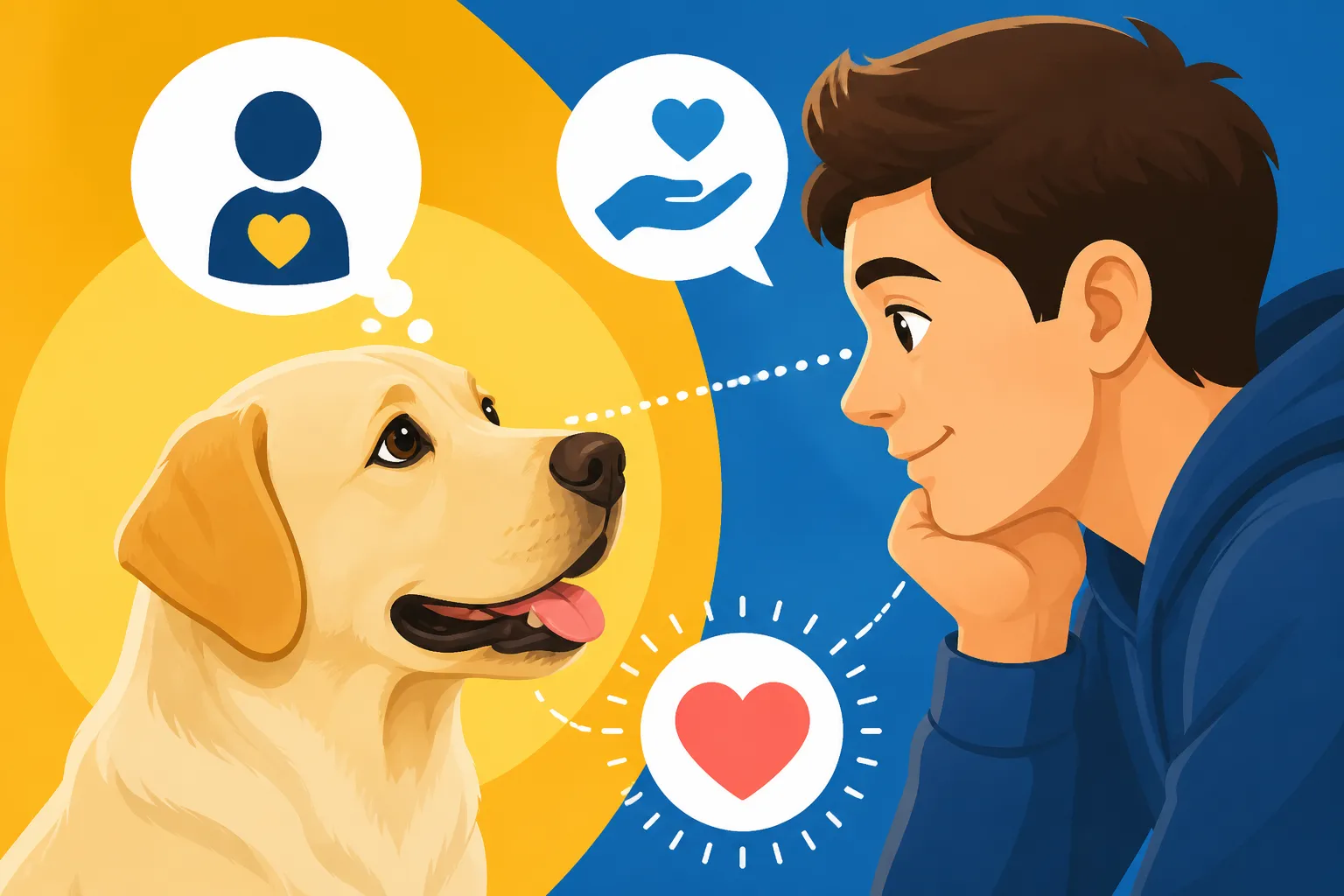
Why Labradors Read Human Cues So Well
It’s truly incredible, isn't it? You go to reach for your car keys, and suddenly your Labrador is by the door, tail wagging, eyes full of hopeful anticipation. Or maybe you just sigh deeply after a long day, and they’re immediately nudging your hand, offering comfort. It often feels like our Labs can read our minds, anticipating our every move or emotion before we even utter a word. This guide is dedicated to unraveling that mystery, exploring the fascinating reasons why Labrador Retrievers are so exceptionally good at picking up on our human cues, both spoken and unspoken, and how their history, intelligence, and deep bond with us contribute to this remarkable ability.
The Labrador's Deep-Rooted History of Partnership
When we talk about Labradors reading human cues, we're not just discussing a charming personality trait; we're delving into centuries of selective breeding that shaped them into the intelligent, collaborative companions they are today. Their very origins are steeped in working alongside humans, fostering an inherent understanding that few other breeds possess to the same degree. This history is crucial to understanding their current capabilities.
Bred for Collaboration, Not Independence
Before they were the beloved family pets and service dogs we know, Labradors, or their ancestors the St. John's Water Dogs, were working dogs in Newfoundland. Their job wasn't to herd sheep independently or guard a property alone, but to retrieve fish and fishing lines from icy waters and bring them back to their human partners. This required constant communication, attention to direction, and a strong desire to work with people, not just for them. Imagine a fisherman out on a boat, needing his dog to follow subtle hand signals or vocal commands over the roar of the ocean and the flapping of sails. This isn't a job for a dog that relies solely on instinct or operates independently.
This long history of working in close partnership meant that dogs who were most attuned to their human companions' intentions and signals were the ones most valued and therefore, bred. They needed to anticipate where a lost fishnet might drift, respond to a pointing finger, or understand a frustrated groan. This isn't just about simple obedience; it's about a dog actively trying to understand the human's goal and working together to achieve it. This foundational trait is still deeply ingrained in the modern Labrador, making them naturally inclined to observe and interpret our behaviors. It's a cooperative spirit that has been honed over generations, making them exceptional team players in our homes and lives today. The Labrador's Thirty-One Years at Number One speaks volumes about how well this partnership translates into companionship.
A Legacy of "Soft Mouth" and Gentle Retrieval
Another key aspect of their historical role, and one that directly influences their ability to read cues, is the concept of the "soft mouth." Labradors were bred to retrieve delicate items, like downed waterfowl or fish, without damaging them. This required not just physical gentleness but also an incredible focus and careful attention to the handler's instructions. A dog with a "soft mouth" isn't just born that way; it's a trait nurtured through selective breeding and enhanced by training that emphasizes control and responsiveness.
To successfully retrieve a bird without crushing it, the Labrador had to be keenly aware of the handler's presence, mood, and expectations. Was the handler pleased? Did they want the dog to deliver the item directly to hand, or place it gently nearby? This constant feedback loop between dog and human refined their ability to pick up on subtle cues. They learned to adjust their behavior based on the minute changes in a human's tone, posture, or even eye contact. This wasn't a crude command-and-response dynamic; it was a nuanced dance of understanding. This historical need for precise and gentle cooperation cemented their innate talent for observing and responding to our most subtle signals, helping them excel in tasks far beyond retrieving. Why Labradors Have Soft Mouths delves deeper into this fascinating trait.
Innate Intelligence and Empathy
Beyond their historical roles, Labradors possess inherent qualities like high intelligence and a profound capacity for empathy, which further enhance their ability to read and respond to human cues. It's not just about what they were taught to do, but also about how they are wired to interact with the world around them.
High Trainability and Desire to Please
Labradors are consistently ranked among the most intelligent and trainable dog breeds, and this isn't just anecdotal praise; it's a widely observed characteristic that contributes significantly to their cue-reading prowess. Their intelligence isn't just about performing tricks; it's about problem-solving, adaptability, and an eagerness to understand what's expected of them. When you combine this intelligence with their famous "desire to please," you have a dog that is actively engaged in trying to figure out what you want. They're not just waiting for a command; they're trying to anticipate it.
Think about a training session. A Labrador isn't just repeating a learned action; they're often trying to understand the reason behind the command. They observe your body language, the rhythm of your voice, the direction of your gaze, and even your slight leans or gestures, all as clues. This makes them incredibly quick learners, able to pick up on nuances that other dogs might miss. This active engagement in learning and interpreting our communication is what makes them so trainable for complex tasks, from guide dog work to scent detection. It's an ongoing feedback loop: the more they try to understand, the more we communicate, and the better they become at reading us. This high trainability is why so many people find them such rewarding companions. Why Labradors Are Ranked Easy to Train offers more insight into their impressive learning capabilities.
Emotional Responsiveness and Mirroring
One of the most heartwarming aspects of Labrador companionship is their incredible emotional responsiveness. They don't just react to our commands; they often seem to genuinely understand and even mirror our emotions. This isn't magic; it's a combination of their innate empathy and their keen observational skills. They are adept at picking up on subtle changes in our facial expressions, our overall demeanor, and even the "vibe" we're putting out.
When you're feeling down, your Labrador might bring you a toy, lean their head on your lap, or simply lie quietly beside you. When you're excited, they're often bouncing with you, sharing in the joy. This ability to pick up on our emotional states is a powerful form of cue reading. They learn through countless interactions that certain human expressions or tones are linked to certain emotional responses or actions. For instance, a tense posture and a sharp tone might mean "stop what you're doing," while a relaxed stance and a soft voice might mean "come closer for pets." Over time, they build a complex mental dictionary of these emotional cues, allowing them to adjust their own behavior to either comfort, engage, or simply coexist harmoniously with us. It’s part of their deep connection to the human members of their pack.
Observational Learning and Environmental Adaptation
Labradors are not just pre-programmed to understand us; a significant part of their cue-reading ability comes from their constant, diligent observation of our lives and their remarkable capacity to adapt to the environments we share. They are like furry, four-legged detectives, always gathering information.
Watching and Learning from Our Habits
Our daily routines, no matter how mundane we think they are, are a goldmine of information for a Labrador. They meticulously observe our habits and create associations between our actions and subsequent events. This is why your dog knows the difference between your "work clothes" and your "walk clothes" or the sound of the car keys versus the jingle of the leash. They don't understand the concepts of "work" or "walk" directly, but they've learned through repetition that specific actions from you reliably lead to specific outcomes for them.
Consider the simple act of preparing their meal. You might open the pantry, grab their food container, and then reach for their bowl. Each of these small, sequential actions becomes a cue. Soon, just the sound of the pantry door opening is enough to send them into a happy dance. This isn't mind-reading; it's extremely sophisticated pattern recognition. They are constantly predicting what will happen next based on what they've seen you do before. This observational learning is critical for their ability to fit seamlessly into our lives. Even if you don't deliberately train them for every single routine, they’ll pick up on the patterns. Products from Chewy, like slow feeder bowls, might become part of their routine, and they'll quickly associate you getting it out with mealtime.
The Power of Context and Association
Beyond just our direct actions, Labradors are masters of understanding context. They don't just process individual cues; they interpret cues within the broader situation. This allows them to adapt their behavior appropriately to different settings and circumstances. For example, the command "stay" might be understood differently at the dog park versus inside the house, depending on the surrounding environment and your posture.
They understand that certain items, places, or even times of day are associated with particular activities. The presence of your running shoes and a water bottle might signal a longer, more strenuous walk, while a casual slip-on shoe and car keys might mean a quick errand. They also learn to associate specific individuals with specific types of interactions. Your partner might be the designated "playtime" person, while you're the "feeding time" person. This comprehensive understanding of context, built on thousands of small associations, allows them to make incredibly accurate predictions about what you intend to do, and how they should respond. This deep associative learning is a hallmark of their intelligence and makes them incredibly responsive partners in our lives.
Communication Beyond Words
While we humans rely heavily on spoken language, Labradors operate in a world rich with unspoken signals. Their mastery of reading human cues extends far beyond just listening to our voices, encompassing a sophisticated interpretation of our body language, tone, and even subtle energetic shifts.
Body Language: Our Silent Signals
Perhaps the most potent form of human communication that Labradors excel at interpreting is our body language. We often communicate more with our posture, gestures, and facial expressions than with our words, and our Labs are constantly tuned into these silent signals. A direct gaze, a raised eyebrow, a slight lean forward, or a relaxed stance all convey meaning to them. They learn to associate these physical cues with our intentions and feelings.
Consider a simple scenario: you might say "come" in a neutral voice, but if your body is tense and you're staring directly at them, they might hesitate, sensing your unease. Conversely, a relaxed, open posture and a happy facial expression, even with a firm command, might encourage a faster, more enthusiastic response. They pick up on our subtle shifts in weight, the direction of our feet, or even the tension in our shoulders. This isn't just about reading a single cue, but about integrating a multitude of physical signals into a comprehensive understanding of our internal state and external intentions. This makes them remarkably intuitive, often responding to our unspoken requests before we even realize we've made them. Ensuring they have a comfortable space, like a sturdy bed from Chewy, also helps create a calm environment where they can better observe and process these cues.
Tone of Voice: The Unspoken Message
While Labradors don't understand the literal meaning of every word we say, they are exceptionally skilled at interpreting our tone of voice. The pitch, volume, rhythm, and inflection of our speech carry a wealth of information that they process with remarkable accuracy. A high-pitched, excited tone might signal praise or an invitation to play, whereas a low, firm tone indicates displeasure or a warning. They can discern the difference between an affectionate murmur and an urgent command, even if the words themselves are similar.
Think about how you might praise your dog. You don't just say "good boy"; you usually say it with a rising inflection, a happy lilt, and perhaps a slight smile. Your Labrador associates this vocal pattern with positive reinforcement. Conversely, a sharp, flat tone tells them they've done something wrong, even if the words are gentle. This nuanced understanding of our vocalizations allows them to gauge our mood, anticipate our reactions, and respond appropriately. It's why they often respond better to consistent vocal cues than to a barrage of constantly changing words.
Scent and Energy: Subtle Environmental Cues
While less overt than body language or tone of voice, Labradors also pick up on incredibly subtle environmental cues, including changes in scent and energetic shifts. Their sense of smell is vastly superior to ours, allowing them to detect pheromones and hormonal changes that might indicate our stress, excitement, or even illness. While we might not consciously emit a "stress scent," a Labrador's nose is keenly aware of such subtle shifts.
Furthermore, they are sensitive to the overall energy we project. If you're feeling anxious, agitated, or profoundly sad, your dog often picks up on this "energy" and reflects it, sometimes becoming anxious themselves or offering comfort. This isn't necessarily a conscious reading of a specific cue, but more of an intuitive sensing of our overall state. It's another layer of their deep connection to us, allowing them to perceive things that remain completely hidden to human senses. This holistic interpretation of our communication, combining visual, auditory, and even olfactory cues, is what makes Labradors such profoundly understanding and empathetic companions. Why Labradors Read Human Cues So Well is truly a testament to their complex abilities.
To summarize how our Labradors piece together all these signals, here’s a quick overview:
| Human Cue Type | Specific Examples | Labrador's Interpretation |
|---|---|---|
| Vocal | High pitch, rising inflection | Praise, excitement, invitation to play |
| Low pitch, firm tone | Displeasure, warning, command | |
| Specific words (e.g., "walk," "treat") | Associated activity or reward | |
| Visual | Reaching for keys, putting on shoes | Anticipation of going out |
| Direct gaze, pointing finger | Direction, focused attention | |
| Relaxed posture, open hands | Invitation for interaction, comfort | |
| Tense shoulders, furrowed brow | Stress, worry, negative emotion | |
| Environmental | Sound of pantry door, jingle of leash | Imminent mealtime or walk |
| Presence of specific objects (e.g., mail, suitcase) | Associated activity (e.g., visitor, travel) | |
| Olfactory/Energetic | Subtle changes in body scent (pheromones) | Changes in human emotional state (stress, fear) |
| General atmosphere (calm, agitated) | Reflection of human mood, adjustment of own behavior |
This remarkable ability to synthesize multiple streams of information is why Labradors are often described as having an almost human-like understanding. Whether it's picking up a new toy or a specialized diet, exploring options on Chewy can provide the resources to further enhance their well-being, which in turn strengthens that precious bond. The more we understand how they communicate, the deeper our relationship with these extraordinary dogs becomes. Labrador Temperament and Personality goes into more detail about what makes them such great companions, and Labrador Intelligence and Trainability further explains their mental prowess. Whether they are Labradors in Service and Detection Work or simply our furry family members, their ability to tune into us is consistently astounding.
Disclaimer
This article is for general informational purposes only and does not constitute professional advice. Laws, prices and regulations vary by location and change over time. Consult a qualified professional for guidance on your specific situation.