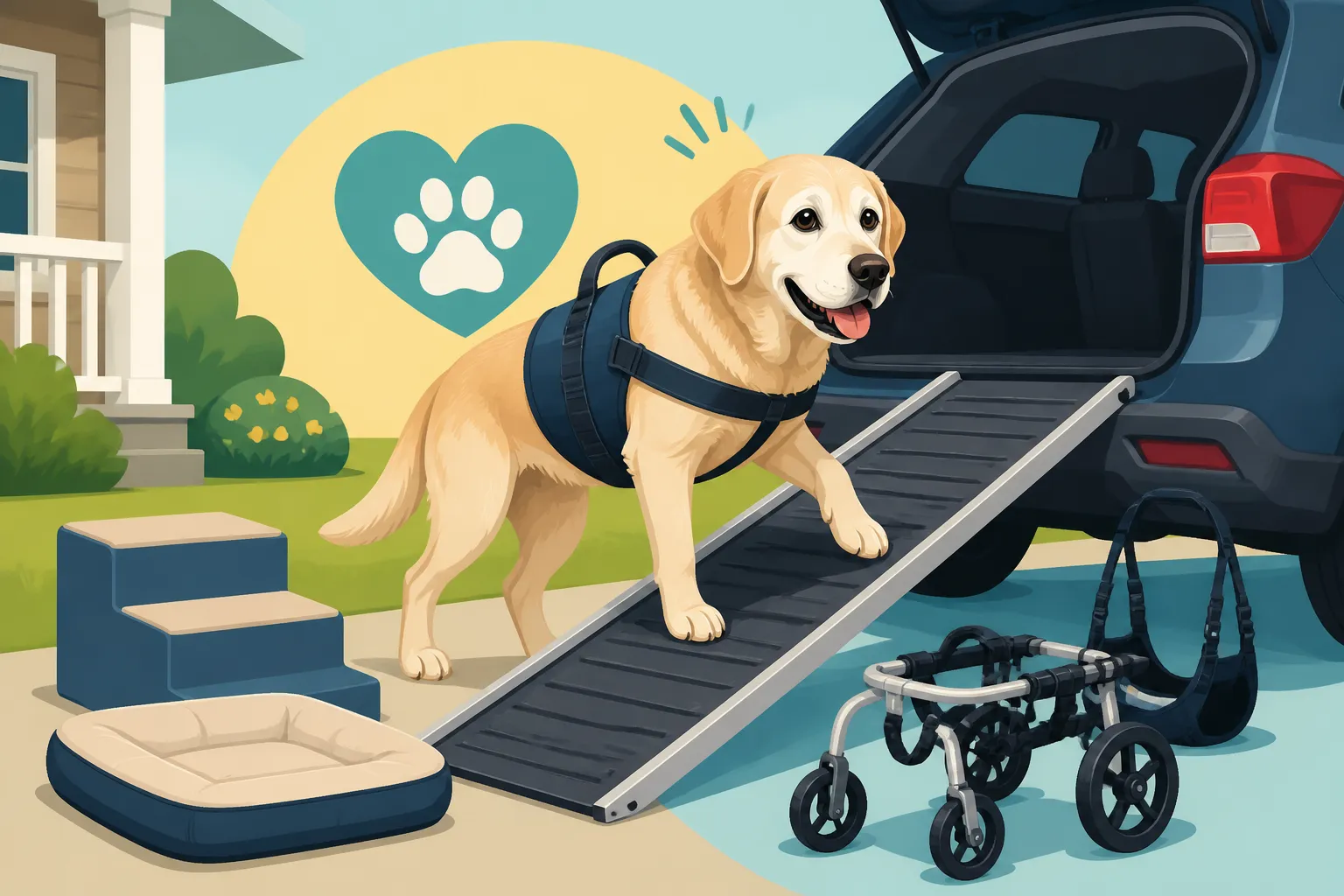
Ramps and Mobility Aids for an Old Labrador
It's incredibly tough to watch our beloved Labradors slow down as they age. One day they're leaping into the car for an adventure, and the next, a simple curb seems like an insurmountable mountain. This guide is here to help you navigate the common challenges of reduced mobility in senior Labradors and explore the various ramps and other mobility aids that can significantly improve their quality of life, allowing them to continue enjoying their golden years comfortably and safely.
Recognizing the Signs Your Labrador Needs Mobility Support
As Labradors age, just like us, their bodies start to change. Those once boundless bursts of energy become more measured, and certain movements might not come as easily. It's not always a dramatic event that signals a need for help; often, it’s a collection of subtle clues that your observant eye will pick up on. Understanding these signs is the first step toward providing the right support and ensuring your furry best friend remains happy and active for as long as possible.
Subtle Changes in Movement
You might notice your senior Labrador isn't quite as spry during their daily walks. Perhaps their gait seems a little stiffer, especially first thing in the morning or after a long nap. They might hesitate before jumping onto the couch where they used to effortlessly land, or take a moment longer to settle into a comfortable position. One common sign of discomfort, particularly related to conditions like Labrador Arthritis in Middle Age, is a reluctance to use stairs or a slight limp that comes and goes. Sometimes, it’s just a general slowing down, where they lag a bit behind you on a walk they once led with gusto. These aren't necessarily signs of severe pain, but rather indicators that their joints might be feeling the wear and tear of years of active life, and they could benefit from some assistance.
Another subtle cue can be how they carry themselves. A slight hunch in their back, a less confident wag of the tail during movement, or even a change in how they distribute their weight when standing can all signal underlying discomfort. Watch them carefully during play, too. While they might still chase a thrown ball, their turns might be wider, their jumps lower, and their recovery time after a burst of activity might be noticeably longer. These small adjustments are their way of coping with minor aches and pains, and they tell us that their body is asking for a little extra help.
Difficulty with Everyday Activities
Beyond the subtle shifts, you'll start to see more pronounced struggles with everyday tasks that used to be second nature. The most common frustration for both Labradors and their owners is often getting into and out of vehicles. A dog who once leaped into the car with joy might now stand at the open door, looking up expectantly but unable or unwilling to make the jump. This isn't just about strength; it can also be due to reduced flexibility or fear of a misstep causing pain. Similarly, jumping onto a favorite armchair or bed might become impossible, forcing them to lie on the floor instead, which can be disheartening for a dog accustomed to comfort.
Stairs present another significant challenge. Whether it's a few steps up to the porch or a full flight inside the house, you might notice your Labrador struggling. They could take each step one at a time, sometimes with a grunt or a visible wobble. Some might even refuse stairs altogether, forcing you to find alternative routes or carry them, which can be difficult given their size. This difficulty points to weakening hind limbs, compromised balance, and potential pain in their hips or knees, making mobility aids crucial for maintaining their independence. You can find more information on When a Labrador Stops Climbing the Stairs to help you understand this common issue.
Behavioral Shifts Indicating Discomfort
It's not just physical actions that change; your Labrador's behavior can also give you clues about their comfort levels. A dog who once greeted you at the door with an enthusiastic bounce might now offer a more subdued welcome, perhaps remaining lying down or slowly rising to meet you. They might become less interested in their usual games, preferring to lie down rather than engage in a vigorous session of fetch. This decreased enthusiasm for activities they once loved can often be a direct result of pain or stiffness.
Sometimes, discomfort can manifest as irritability. A normally tolerant Labrador might snap or growl if touched in a sensitive area, or if startled while sleeping. They might seek out quieter, secluded spots in the house to rest, avoiding busy areas where they might be bumped or disturbed. You might also notice changes in their sleeping patterns; they could restless, frequently shifting positions, or having trouble settling down. Paying attention to these emotional and behavioral cues, which can be indicators of Reading Pain in a Stoic Labrador, is just as important as observing their physical movements, as they are often the earliest warnings that your loyal companion needs a little more help.
Types of Ramps and When to Use Them
When it comes to mobility aids, ramps are often the first thing that comes to mind for a senior Labrador. They offer a safe, low-impact way for your dog to access elevated areas that were once easy jumps but are now too high or painful. However, not all ramps are created equal, and choosing the right one depends heavily on where and how your Labrador needs assistance. It's about finding the perfect blend of stability, traction, and ease of use to keep them moving independently.
Vehicle Ramps for Car and SUV Access
One of the most immediate needs for many senior Labrador owners is a reliable way to get their dog into and out of the car. Whether it's for vet visits, park outings, or family trips, the high jump into an SUV or truck bed can be dangerous, leading to injuries for both you and your dog. Vehicle ramps are designed specifically for this purpose, providing a gentle incline that takes the stress off their aging joints.
These ramps typically feature a non-slip surface, often made of sandpaper-like material or rubberized treads, to ensure good grip even on rainy days. They come in various lengths and widths; a longer ramp provides a shallower incline, which is often easier for a very stiff or anxious Labrador. Some models are telescopic, sliding to a compact size for storage, while others fold in half. When choosing a ramp, consider its weight capacity – your sturdy Labrador needs something robust – and how easily you can deploy and store it. Brands like PetSafe and WeatherTech offer popular options that are sturdy and easy to clean, ensuring your furry friend can still join you on all your adventures without risk of injury. Regularly using a ramp can significantly reduce the wear and tear on their joints and prevent serious injuries that could arise from a bad jump.
Household Ramps for Stairs and Furniture
Beyond the car, many Labradors cherish their spots on the couch for cuddles or their bed for a good night's sleep. As jumping becomes difficult or impossible, household ramps can restore access to these beloved spots. These ramps tend to be shorter and can be designed to match home decor more closely than outdoor-focused ramps.
For a few steps or a low piece of furniture, a short, stable ramp can work wonders. If your Labrador struggles with a full flight of stairs, a more substantial, fixed ramp might be necessary. These can sometimes be custom-built or purchased in modular sections. The key here is stability; a wobbly ramp will deter your dog. Look for ramps with carpeted surfaces or integrated grip strips, especially if they'll be used indoors where slick floors might be an issue. Introducing these ramps slowly, with lots of praise and treats, can make a huge difference in how quickly your Labrador adapts. Remember, a ramp to their favorite napping spot isn't just about physical access; it's about maintaining their sense of routine and comfort, which is vital for Caring for a Senior Labrador.
Portable Ramps for Outdoor Adventures
Sometimes, your Labrador just needs a little boost in less predictable environments. Maybe it's getting onto a picnic bench at a dog-friendly brewery, navigating uneven terrain on a gentle hike, or simply helping them over a particularly high curb. This is where portable ramps come into their own.
These ramps are generally lighter weight, more compact, and easier to carry than their vehicle or heavy-duty household counterparts. They might fold into a small briefcase-like package or have handles for easy transport. While they might not be as long or as wide as a dedicated car ramp, their portability makes them invaluable for spontaneous assistance. They're excellent for bridging small gaps or providing a gentle slope over an obstacle that would otherwise be a strain. Think of them as a versatile tool in your senior Labrador's mobility toolkit, allowing you to quickly deploy assistance wherever and whenever it's needed, keeping those outdoor adventures possible without undue stress.
Here's a quick comparison of common ramp types:
| Ramp Type | Primary Use Case | Key Features | Pros | Cons |
|---|---|---|---|---|
| Vehicle Ramp | Car, SUV, Truck bed access | Non-slip surface, foldable/telescopic | Easy vehicle entry/exit, prevents injury | Can be heavy/bulky, takes up cargo space |
| Household Ramp | Furniture, indoor stairs, low thresholds | Carpeted/grip strips, often fixed | Restores access to indoor comforts | May require dedicated space, less portable |
| Portable Ramp | Outdoor obstacles, short steps, travel | Lightweight, compact, easy to carry | Highly versatile, spontaneous assistance | Shorter length means steeper incline |
Other Essential Mobility Aids for Senior Labradors
Ramps are fantastic for overcoming height barriers, but a senior Labrador's mobility challenges can extend beyond just climbing. As their joints stiffen and muscles weaken, they might need more direct support for walking, standing, or even just resting comfortably. Thankfully, a range of other mobility aids can make a significant difference, addressing various aspects of their physical well-being and maintaining their independence.
Harnesses and Slings for Assisted Walking
For Labradors experiencing generalized weakness, arthritis, or recovering from injury, a dedicated mobility harness or lifting sling can be a godsend. These aren't your everyday walking harnesses; they are specifically designed to provide support and stability, allowing you to assist your dog safely without straining your own back.
A full-body mobility harness, often with handles over the hips and shoulders, allows you to gently lift and stabilize your Labrador as they walk. This is particularly helpful for dogs with significant hind-end weakness, a common issue as they age. Single-piece slings, often placed under the abdomen or hindquarters, are excellent for short-term assistance, like helping them up from a lying position, navigating a tricky patch of ice, or getting them in and out of a car if a ramp isn't an option. Look for padded options that won't chafe, and ensure a comfortable fit. Many pet supply retailers, including Chewy, offer a wide range of these supportive harnesses and slings, making it easier to find the perfect fit for your Lab's specific needs and allowing you to continue those precious walks together, even if they need a little extra help.
Orthopedic Beds and Joint Support
A good night's sleep is crucial for anyone, and it's especially important for senior Labradors with aching joints. Standard dog beds often don't provide adequate support, leading to pressure points and increased discomfort. This is where orthopedic beds become an absolute necessity.
These beds are typically made with high-density memory foam that conforms to your dog's body, distributing their weight evenly and alleviating pressure on hips, elbows, and shoulders. They come in various thicknesses and often have bolstered sides for head and neck support. A quality orthopedic bed can make a huge difference in your Labrador's comfort levels, reducing stiffness after rest and promoting better sleep. Beyond beds, consider specialized joint supplements. Many vets recommend glucosamine, chondroitin, and omega fatty acids to help Slowing Joint Decline in an Older Labrador. While these are not magic bullets, they can support joint health. For more detailed insights, explore Orthopedic Bed Prices for a Labrador.
Paw Protection and Traction Solutions
Slippery floors are a real enemy for a senior Labrador. Hardwood, tile, or laminate surfaces, once navigated with ease, can become treacherous ice rinks for a dog with reduced strength, poor balance, or arthritis. A slip and fall can lead to serious injury, undoing much of the good work done by other mobility aids.
Paw protection can come in several forms. Dog booties with rubberized soles offer excellent traction and can also protect sensitive paws from extreme temperatures outdoors. For indoor use, non-slip socks or toe grips can be applied directly to their nails, providing immediate grip. Even simple changes like laying down strategically placed non-slip runners or rugs can transform your home into a safer environment. Beyond just traction, proper paw care, including regular nail trims and checking for cracked pads, contributes to overall foot health and comfort. Remember that a diet rich in nutrients can also contribute to overall well-being, including joint health. Brands like Ollie focus on fresh, human-grade ingredients that could offer an edge in supporting your aging Labrador's health from the inside out.
Making Your Home Senior-Friendly for Your Labrador
Bringing home a new ramp or mobility sling is a fantastic start, but truly supporting your aging Labrador means looking at their entire environment. Just like we make adjustments for ourselves as we get older, our homes need to evolve to meet the changing needs of our senior dogs. Creating a senior-friendly home isn't just about preventing falls; it's about fostering comfort, confidence, and maintaining their cherished routines.
Assessing Your Labrador's Specific Needs
Before you start buying every mobility aid under the sun, take a step back and truly assess your individual Labrador's specific challenges. Every dog ages differently. Does your Lab struggle most with getting into the car? Or is it the stairs to the bedroom that pose the biggest hurdle? Perhaps they have significant hind-end weakness, making standing up difficult, or maybe slippery floors are their nemesis. Watching them closely, perhaps even filming them for a few days, can help you identify their primary pain points and prioritize your investments.
Consider their current physical condition, any diagnosed health issues like hip dysplasia or arthritis, and even their temperament. A more anxious Labrador might need a very gentle introduction to new aids, while a confident one might adapt more quickly. Thinking about their favorite spots and activities will also guide you. If they love to look out the window from the couch, a small ramp there becomes a high priority. If they still enjoy short walks, investing in a supportive harness might be key. This thoughtful assessment helps ensure you're providing targeted, effective support rather than a one-size-fits-all solution.
Gradual Introduction and Positive Reinforcement
New things can be scary, especially for an older dog whose world might already feel a bit less predictable. When introducing any new mobility aid – be it a ramp, a harness, or even a new orthopedic bed – patience and positive reinforcement are absolutely vital. Don't just set up a ramp and expect them to use it immediately.
Start small. For a ramp, place it flat on the ground and let your Labrador sniff it, walk on it flat, and associate it with treats and praise. Gradually introduce a slight incline. Lure them up with their favorite high-value treats. Make it a game, a positive experience, never a chore. The same goes for harnesses or slings; let them wear it for short periods with lots of praise before you actually use it to lift them. Remember, the goal is to build their confidence, not create more anxiety. With consistency and a loving, encouraging approach, most Labradors will readily adapt to these new tools, understanding that they're there to help, not hinder.
When to Consult Your Veterinarian
While many mobility issues can be managed with home modifications and aids, it’s crucial to remember that these tools are supportive, not curative. If you notice any significant or sudden changes in your Labrador's mobility, pain levels, or behavior, your first call should always be to your veterinarian. They can accurately diagnose the underlying cause of your dog's difficulties, whether it's Labrador Arthritis in Middle Age, a new injury, or another health condition.
Your vet can recommend appropriate medical treatments, pain management strategies, and physical therapy exercises that complement the use of mobility aids. They might also suggest specific joint supplements or dietary adjustments. For example, maintaining a healthy weight is paramount for joint health, and your vet can advise on how Labrador Obesity and the Years It Costs can impact mobility. They can also connect you with specialists, like certified canine rehabilitation therapists, who can develop tailored exercise programs. Remember, regular vet check-ups are essential for How Labrador Costs Change After Age Eight, allowing you to proactively address age-related changes and ensure your Labrador receives the best possible care throughout their senior years. This proactive approach can make all the difference in their comfort and longevity. If you're concerned about the cost of potential vet bills for ongoing mobility issues, pet insurance providers like Healthy Paws can offer peace of mind by covering a portion of unexpected medical expenses.
Disclaimer
This article is for general informational purposes only and does not constitute professional advice. Laws, prices and regulations vary by location and change over time. Consult a qualified professional for guidance on your specific situation.