Emergency Steps When a Labrador Bloats
Few things strike fear into a Labrador owner's heart quite like the thought of bloat. This sudden, life-threatening condition can turn a happy, energetic dog into a critical patient in a matter of hours, leaving us panicked and unsure of the right course of action. This guide is here to walk you through how to recognize the urgent signs of bloat and the crucial steps you need to take to save your beloved Labrador's life.
Recognizing the Urgent Signs of Bloat in Your Labrador
Bloat, scientifically known as Gastric Dilatation-Volvulus (GDV), isn't just a tummy ache; it's a terrifying emergency where your Labrador's stomach fills with gas, food, or fluid (dilation) and then often twists on its axis (volvulus). This twisting cuts off blood supply to the stomach and other organs, leading to rapid shock and potential organ failure. Knowing the signs is your first and most critical line of defense.
Distinguishing Bloat from a Simple Upset Stomach
It’s easy to dismiss early signs as just a "bad tummy," especially with our Labs who aren't always delicate with their diet choices. However, bloat presents with a distinct and rapidly escalating set of symptoms that demand immediate attention. While a regular upset stomach might involve vomiting, diarrhea, or mild lethargy, bloat is far more severe.
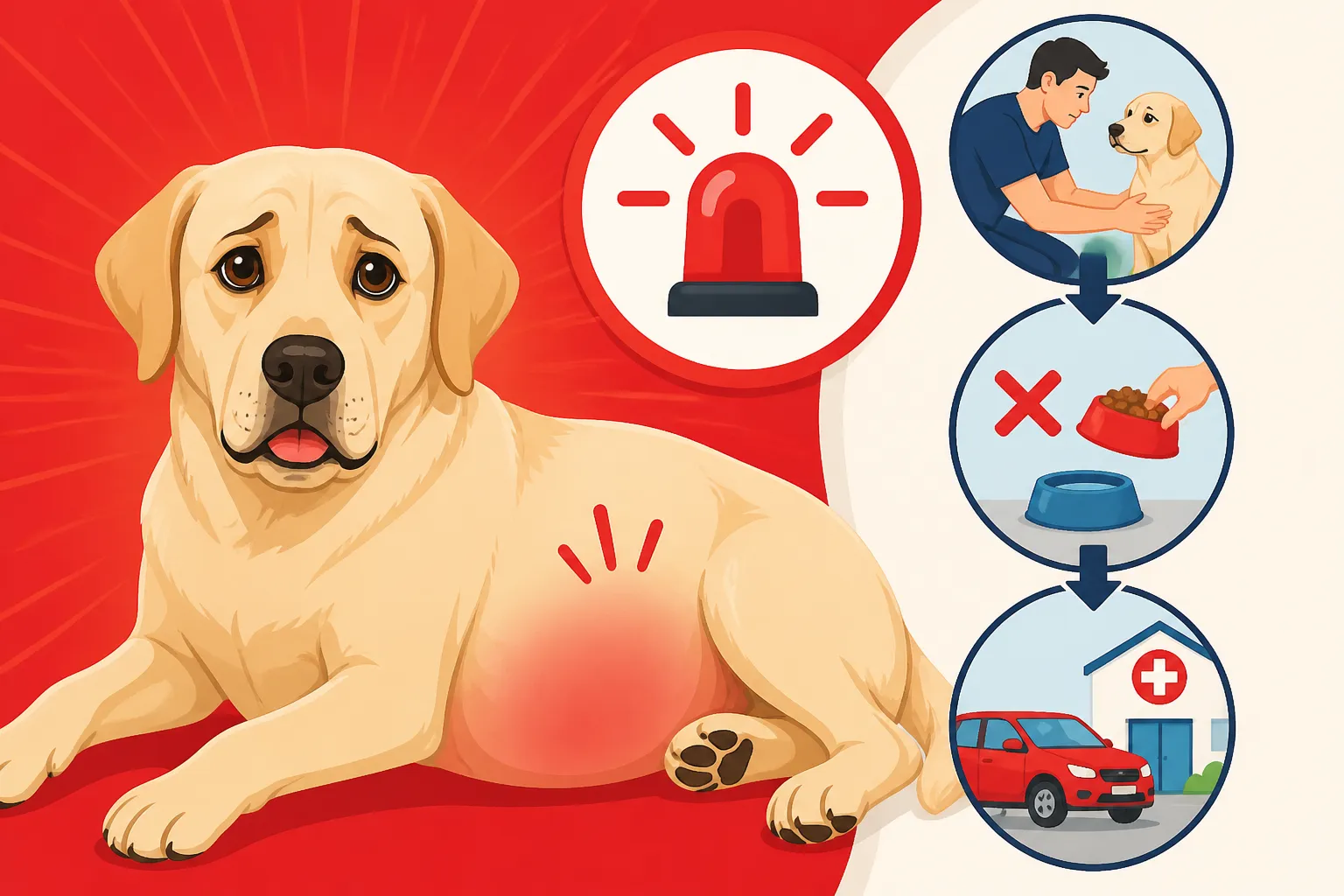
One of the most concerning visual cues is a visibly distended or swollen abdomen, particularly on your Labrador's left side behind the last rib. This might start subtly, but it can quickly become quite pronounced and feel hard or taut to the touch. Your dog might seem restless, pacing anxiously, unable to get comfortable, or stretching in unusual ways as if trying to relieve internal pressure. They might repeatedly try to vomit, retching forcefully but producing little to no actual vomit – sometimes just foamy saliva. This unsuccessful vomiting is a huge red flag for bloat. Furthermore, your Labrador may exhibit signs of intense pain, such as whining, groaning, a hunched-over posture, or being unwilling to lie down, even in their favorite comfy spot. They might also appear weak, have pale gums, or their heart rate might be noticeably elevated. If you observe any combination of these symptoms, especially the unproductive retching and a distended belly, you must act without hesitation. It's often said that Labradors are quite stoic about pain, so if your dog is clearly showing discomfort, it's a serious sign.
The Critical Race Against Time
Bloat isn't a condition where you can "wait and see" if your Labrador improves in an hour or two. It progresses at an alarming rate, and every minute counts. The twisting of the stomach not only traps gas but also prevents blood flow, leading to tissue death. This can quickly throw your dog into shock, causing damage to other vital organs like the heart, kidneys, and spleen. The pressure on the diaphragm also makes breathing difficult.
From the onset of subtle symptoms, a Labrador can go from uneasy to critically ill in just a few hours. Survival rates drop significantly if treatment is delayed. For instance, if surgery is performed within six hours of symptom onset, the prognosis is generally much better. Beyond that, the risk of complications, including necrosis of the stomach tissue, increases dramatically. This urgency is why it’s imperative to have a plan and know exactly what to do. Having quick access to emergency vet contact information, including clinics that are open 24/7, is vital. Remember, Labrador Bloat Risk and Deep Chests is higher for certain dogs, so if your Lab fits that description, be extra vigilant.
Immediate First Aid When You Suspect Bloat
When you suspect bloat, your immediate actions are crucial. There's no time for self-diagnosis or extensive internet research. Your priority is to get your Labrador to veterinary emergency care as swiftly and safely as possible.
Confirming the Crisis and Staying Calm
The very first "first aid" step is to take a deep breath and quickly re-assess your dog's condition. Are the signs still present and escalating? Is the abdomen noticeably distended? Is your Labrador still retching without producing anything? Once you’ve confirmed your suspicions, the next, most vital step is to pick up the phone. Call your veterinarian immediately, or if it's after hours, call your nearest 24-hour emergency veterinary clinic. Do not waste precious minutes searching online for home remedies or advice. Time is the enemy here.
When you call, clearly state that you suspect Gastric Dilatation-Volvulus (bloat) and are on your way. This pre-alert allows the veterinary staff to prepare for your arrival, ensuring they have the necessary equipment and personnel ready to begin treatment the moment you walk through the door. Provide them with a brief overview of your Labrador's symptoms and when they started. While it's natural to feel panicked, try your best to stay calm. Your Labrador will pick up on your anxiety, and keeping a steady demeanor can help keep them calmer, which is beneficial given their already stressful physical state.
Getting Your Labrador to Emergency Care Safely
Once you've made the call, focus on transporting your Labrador to the clinic safely and efficiently. If you have a large SUV or truck, that's ideal. For smaller vehicles, you might need help lifting your dog, especially if they are a larger, heavier Labrador. Try to avoid putting any unnecessary pressure on their abdomen during transport, which could cause further discomfort or complications. If possible, have someone else drive so you can monitor your dog and keep them as calm as possible.
Do not offer your Labrador any food or water on the way, no matter how much they might seem to want it. If surgery is required, an empty stomach is safer. Once you arrive at the clinic, be ready to provide the veterinary team with a concise history: what symptoms you observed, when they started, and any other relevant health information. Every detail can help them formulate the best treatment plan quickly. This is where having pet insurance like Healthy Paws can truly alleviate a huge burden, allowing you to focus purely on your dog's care without immediate financial stress. While pet insurance typically doesn't cover pre-existing conditions, a sudden emergency like bloat, when not pre-existing, would generally be covered, helping with the often significant Emergency Bloat Surgery Prices for a Labrador.
Understanding What Happens at the Emergency Vet
Once you arrive at the emergency clinic, a whirlwind of activity will likely begin. The veterinary team will move quickly to assess your Labrador's condition and initiate life-saving interventions.
Initial Assessment and Stabilization
The veterinary team will immediately perform an initial assessment to determine the severity of your Labrador's condition. This usually involves checking their vital signs – heart rate, respiratory rate, gum color (to check for shock), and capillary refill time. They'll also feel your dog's abdomen to confirm the distension and tension. IV fluids will likely be started right away to combat shock and stabilize their circulation. Pain medication will also be administered to make your Labrador more comfortable and reduce stress.
Next, diagnostics will be performed, most crucially an X-ray of the abdomen. This X-ray is essential to confirm two things: first, that gastric dilation (the bloated stomach) is present, and second, to ascertain if gastric volvulus (the twisting) has occurred. The classic "double bubble" or "Smurf hat" appearance on an X-ray confirms the twisting. Once GDV is confirmed, the veterinary team will often attempt to decompress the stomach. This might be done by inserting a tube through your Labrador's mouth into the stomach to release gas and fluid. However, if the stomach is severely twisted, the tube may not pass. In such cases, a large needle (trocar) might be used to carefully release gas directly from the stomach through the abdominal wall, providing temporary relief and stabilizing the patient for surgery. This initial stabilization is critical before considering surgical intervention.
Surgical Intervention for Gastric Dilatation-Volvulus
For true GDV where the stomach has twisted, surgery is almost always required. There's simply no other way to correct the torsion. During surgery, the veterinary surgeon will carefully untwist your Labrador's stomach and reposition it correctly within the abdominal cavity. They will then thoroughly inspect the stomach and surrounding organs for any signs of damage, such as tissue death (necrosis) due to lack of blood supply. If any parts of the stomach are necrotic, they may need to be removed, which can complicate recovery.
A crucial part of the GDV surgery is a procedure called a gastropexy. This involves permanently attaching the stomach wall to the abdominal wall, typically using sutures or sometimes a minimally invasive technique. The purpose of a gastropexy is to prevent the stomach from twisting again in the future. While it doesn't prevent dilation (gas buildup), it dramatically reduces the risk of recurrent volvulus, which is the life-threatening component of bloat. Recovery from GDV surgery can be intense, involving several days of hospitalization for monitoring, pain management, and preventing complications like arrhythmias or infection. The total cost can be substantial, which is another reason why Pet Insurance for a Labrador Retriever is so valuable. Many owners even consider a gastropexy proactively, particularly if their Labrador is considered high-risk, a topic discussed more in depth in Whether a Labrador Should Have a Gastropexy.
| Symptom Category | Mild Upset Stomach | Suspected Bloat (GDV) | Urgency Level |
|---|---|---|---|
| Abdominal Appearance | Normal to slightly tucked | Distended, firm, taut | Immediate |
| Vomiting | May vomit food/bile | Repeated unproductive retching (dry heaving), foamy saliva | Immediate |
| Pain Level | Mild discomfort | Severe pain, restlessness, hunched posture | Immediate |
| Behavior | Lethargy, disinterest | Pacing, whining, inability to get comfortable, weakness | Immediate |
| Gums/Breathing | Normal | Pale gums, rapid/shallow breathing | Immediate |
| Progression | Gradual, may resolve | Rapid, worsens quickly | Immediate |
Prevention and Risk Reduction for Your Labrador
While bloat can feel like a random and terrifying event, there are several proactive steps you can take to significantly reduce your Labrador's risk. Prevention is always better than emergency treatment.
Modifying Feeding Practices
One of the most impactful ways to reduce bloat risk involves how and when you feed your Labrador. Instead of feeding one large meal a day, break their daily ration into two or three smaller meals. This reduces the amount of food and gas that enters the stomach at any one time, lessening the risk of overfilling and rapid gas production. For our famously food-driven Labradors, gobbling down meals too quickly can also increase bloat risk. Using a slow feeder bowl can be incredibly effective in preventing them from gulping air along with their food. There's been a long-standing debate about elevated food bowls; historically, some believed they helped prevent bloat, but more recent research suggests they might actually increase the risk in some large breeds. It's best to consult your vet on this for your individual dog, but feeding at ground level is generally considered safe.
Crucially, avoid strenuous exercise or excitement for at least an hour before and two hours after meals. A full stomach combined with vigorous activity or stress can contribute to the stomach twisting. Make sure your Labrador has a calm, relaxed environment for eating. When considering Choosing Dog Food for a Labrador Retriever, opt for high-quality kibble with meat as the first ingredient and avoid foods with excessive fat or highly fermentable ingredients high up on the ingredient list, as these can produce more gas. For a deep dive into feeding best practices through their lives, you might want to read Feeding a Labrador Through Every Life Stage.
Considering a Prophylactic Gastropexy
For Labradors, especially those with a family history of bloat or very deep chests, a prophylactic (preventative) gastropexy is an option worth serious consideration. This elective surgical procedure involves permanently tacking the stomach to the abdominal wall, just like the gastropexy performed during emergency GDV surgery. The key difference is that it's done when your dog is healthy and not in crisis.
Many owners opt to have a prophylactic gastropexy performed at the same time as another abdominal surgery, such as spaying or neutering, or if their Labrador is already undergoing another procedure that requires anesthesia. This combines anesthetic events and recovery times, making it a more convenient and often more cost-effective choice. The benefit is immense: while it doesn't prevent the stomach from dilating with gas, it almost entirely eliminates the risk of the stomach twisting (volvulus), which is the fatal aspect of GDV. If you're concerned about costs, discussing options with your vet and reviewing your pet insurance policy from providers like Healthy Paws can be helpful. Some policies may cover this preventative procedure, or at least help with any unforeseen complications. It's an investment that could literally save your Labrador's life, and understanding the financial implications, perhaps by looking into Annual Cost of Keeping a Labrador Retriever, can help you plan. Ultimately, reducing the chances of your dog facing this terrifying emergency is one of the best ways to ensure their long, healthy life.
Disclaimer
The information provided in this article is for general informational purposes only and is not a substitute for professional veterinary advice. If you suspect your Labrador is experiencing bloat or any other medical emergency, seek immediate veterinary attention. Always consult with your veterinarian regarding any medical concerns or before making any decisions about your pet's health care.