Fading Food Rewards With a Labrador
It's a common story, isn't it? You get your adorable Labrador puppy, full of boundless energy and an even more boundless appetite, and suddenly you find yourself carrying a pouch full of treats everywhere you go. From "sit" to "stay" to "come," every command seems to be tied to a tasty morsel. While food rewards are absolutely invaluable for shaping behavior, many of us eventually hit a wall, wondering if we'll ever be able to ask our dogs to do something without them staring pointedly at our treat hand. This guide is all about confidently transitioning your Labrador away from constant food bribery and towards a more balanced, real-world reward system.
Why We Rely on Food So Much (And Why It's Okay… For Now!)
Let's be honest, Labradors are practically synonymous with food. Their enthusiasm for anything edible is legendary, and while it can sometimes feel like a challenge, it's also one of their most powerful training assets. Understanding why they're so food-driven helps us use that drive effectively.
The Labrador's Incredible Food Drive
The scientific community has even weighed in on this, discovering that many Labradors carry a genetic mutation (in the POMC gene, if you're curious) that actually makes them feel hungrier and less satiated after eating. This isn't just a quirky personality trait; it's often hardwired! So, when your Labrador seems absolutely obsessed with food, it's not a personal failing on your part as a trainer or owner. It's simply who they are, genetically speaking, to a large extent. This incredible food drive means they'll work hard for a reward they truly value, making them incredibly quick to learn new behaviors when food is involved. It's like having a highly motivated employee who will always go the extra mile for a bonus. For us, it means we can get incredibly clear and fast responses during initial training phases, which is a huge advantage compared to less food-motivated breeds. We can truly Using a Labrador's Food Drive as Leverage to our advantage.
This intense focus on food allows us to create strong, positive associations with commands and actions almost instantly. When you say "sit" and immediately follow it with a delicious treat, your Labrador quickly connects the verbal cue and the action with something highly desirable. There's no ambiguity for them; the reward is tangible, immediate, and satisfying. This clarity speeds up the learning process significantly, especially when teaching new or complex behaviors. It's why food is often the gold standard for shaping behaviors in the early stages, because it provides such powerful and unambiguous feedback.
Building the Foundation: Food as a Primary Reinforcer
In the world of dog training, food is considered a "primary reinforcer." This means it's something inherently rewarding that your dog needs or instinctively desires, like water or shelter. You don't have to teach a dog that food is good; they already know! This makes it incredibly effective for initial training. When you're first introducing commands, or working with a young puppy, food acts as a clear and powerful "yes!" signal. It tells your Labrador, "That! What you just did? Do more of that."
Think about teaching a puppy to sit for the first time. You might use a treat to lure their nose up, causing their rear to naturally drop. The moment their bottom touches the ground, boom, treat time! This repetition, where the action directly precedes the reward, builds a strong foundation. Without that strong foundation, relying solely on praise might not be enough for a super-motivated, easily distracted Labrador puppy. Food helps them understand what you want, even when they're still figuring out the world around them. It ensures they associate the command with a positive experience every single time, making the behavior more likely to be offered voluntarily in the future. Learning First Commands to Teach a Labrador almost always involves generous food rewards.
The Art of Transition: Moving Beyond Constant Treats
While food is fantastic for building that initial foundation, you don't want to be a walking treat dispenser forever. The goal is to gradually transfer the value from the food itself to other forms of reinforcement and to the intrinsic satisfaction of performing the behavior. This transition is an art, not a science, and it takes patience and consistency.
Introducing Secondary Reinforcers (Life Rewards!)
This is where the magic really starts to happen. "Secondary reinforcers" are things that your dog learns to associate with good stuff because they've been paired with primary reinforcers (like food). The most common secondary reinforcer is verbal praise ("Good dog!" or "Yes!"), but it also includes physical affection (a scratch behind the ears, a belly rub), toys, and even opportunities to do enjoyable activities.
To make secondary reinforcers powerful, you need to "charge them up." This means saying your verbal marker (like "Yes!" or "Good!") just as your Labrador performs the desired behavior, immediately followed by the food reward. Over time, your Labrador will start to associate "Yes!" with the treat, and eventually, "Yes!" itself becomes a reward. The same goes for toys or a game of fetch. If your Labrador sits patiently at the door and you say "Yes!" and then immediately open the door for a walk, that walk becomes a reward for sitting. Or if they retrieve a toy for you, saying "Good dog!" and then throwing it again reinforces the retrieve. Look for toys on Amazon that your Labrador absolutely loves, as these can be powerful motivators. It's all about making their everyday life, and your interactions with them, incredibly rewarding. Programs like BAXTER & Bella often integrate this philosophy into their online training plans, emphasizing making everyday activities into rewards.
Varying the Reward Schedule (Intermittent Reinforcement)
Once your Labrador reliably performs a behavior in various situations, it's time to start fading the food. This doesn't mean stopping treats entirely; it means changing when and how often they get them. This is called "intermittent reinforcement," and it's incredibly powerful. Think about a slot machine – you don't win every time, but you never know when you might hit the jackpot, so you keep playing. We want to create that same anticipation and motivation in our Labradors.
Start by rewarding every perfect execution of a command. Then, once they're consistent, switch to an intermittent schedule. Maybe you reward every other "sit," then every third, then seemingly randomly. They should still get a "Yes!" or praise every time, but the food reward becomes less predictable. For instance, if your Labrador has a rock-solid "stay," don't always give a treat for holding it for five seconds. Sometimes give it for two, sometimes for ten, sometimes for forty, and other times just enthusiastic praise and release. They'll continue to perform the behavior, hoping that this might be the time the super-tasty reward appears. This makes the behavior incredibly resilient because they're not just working for the treat, but for the chance of the treat. It's a subtle but significant shift in their motivation. You still want to reward good effort, but not with food every single time. This is especially useful for foundational skills like Building a Labrador's Recall From Scratch.
Practical Strategies for Fading Food Rewards
Fading food rewards isn't about abruptly stopping treats; it's a gradual process that involves smart technique and understanding your Labrador's learning style. It’s about making them want to perform the behavior even when there isn't a guaranteed tasty pay-off.
The "Lure, Reward, Fade" Technique
This technique is fundamental to getting behaviors established and then moving past constant food lures. Here's how it generally works:
- Lure: Initially, you might use a treat to physically guide your Labrador into position. For example, holding a treat near their nose and moving it back over their head to get them to sit. The moment they sit, mark the behavior ("Yes!") and give the treat. Repeat this many times.
- Reward: Once your Labrador reliably follows the lure, you start pairing the lure with a verbal cue ("Sit!") and a hand signal. Now, the verbal cue and hand signal become predictors of the lure. Continue to mark and reward with the treat every time they perform the behavior.
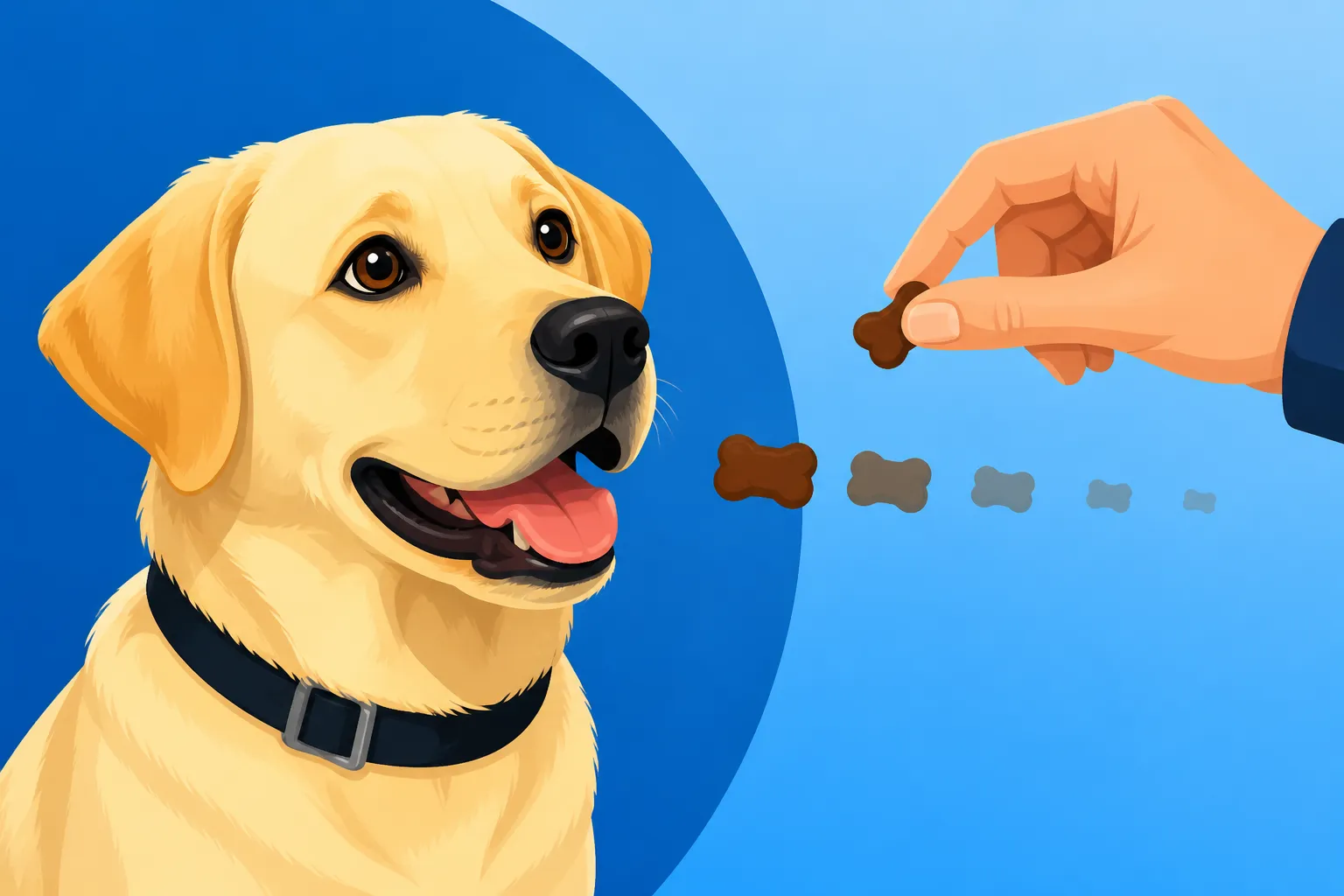
- Fade the Lure: Now, gradually make the physical lure less obvious. Instead of moving the treat directly over their head, make a smaller, more subtle hand movement. Eventually, the treat should be in your pocket, and your hand signal is what guides them. Mark and reward.
- Fade the Treat: Once your Labrador responds consistently to the verbal cue and subtle hand signal (without seeing the treat), you start to fade the food reward itself. This is where intermittent reinforcement comes in. Sometimes they get a treat, sometimes they get enthusiastic praise, a quick game of tug, or a toss of a favorite toy. The goal is to keep them guessing and keep them motivated. You can even use part of their daily kibble ration for this, helping manage their Portion Control for a Food-Obsessed Labrador.
The key here is gradual progression. Don't jump from luring with a giant piece of cheese to giving no reward at all. Make tiny, almost imperceptible steps, ensuring your Labrador is successful at each stage before moving on.
Using Environmental Rewards and Play
Labradors are intelligent, active dogs, and they find many things inherently rewarding in their environment. Tapping into these "life rewards" is crucial for fading food. An environmental reward is simply getting to do something they want to do because they performed a desired behavior.
Consider these scenarios:
- Your Labrador sits patiently before the leash goes on, and then you open the door for a walk. The walk is the reward.
- They wait politely at the curb, you say "Okay!" and they get to cross the street. The crossing is the reward.
- They come when called in the yard, and you immediately throw their favorite ball or engage in a vigorous game of tug. The play is the reward. This is a great way to provide Mental Work for a Bored Labrador and exercise at the same time.
For Labradors, play is often as high-value as food, especially for those from working lines. Integrating short bursts of play, like a game of fetch or tug, after a successful command can be incredibly motivating. Just be sure the play is brief and controlled so it doesn't devolve into over-excitement, which can undo the calm behavior you just rewarded. The best toys, those that can withstand a Labrador's enthusiasm, can be found on Amazon, giving you great options for play rewards.
Maintaining Motivation with Surprise Treats
Even after successfully fading food rewards for most known behaviors, treats shouldn't disappear entirely. Think of them as surprise bonuses or "jackpots." Occasionally, for an especially brilliant recall in a distracting environment, or a perfectly executed "leave it" when temptation is high, give a truly high-value treat. This keeps your Labrador engaged and reminds them that sometimes, amazing things do happen when they listen.
These surprise treats are also vital when you're working on new behaviors, proofing an existing behavior in a novel or highly distracting environment, or when your Labrador is having an "off" day. They act as a powerful re-motivator. For instance, if you're trying to practice Loose Leash Walking With a Labrador in a busy park, where distractions are everywhere, you might temporarily increase the frequency of high-value food rewards to ensure success and build positive associations in that challenging environment. The idea is that food becomes a special bonus, not the expected payment for every single interaction. You want your Labrador to be happy to work for praise and life rewards, but always open to the possibility of that glorious, unexpected treat.
Common Pitfalls and Troubleshooting
Fading food rewards isn't always a smooth, linear process. There will be days when your Labrador seems to "forget" everything or acts like you're speaking a foreign language without a treat in hand. This is normal! Understanding these common hiccups can help you navigate them.
When Your Labrador Isn't Motivated by Non-Food Rewards
Sometimes, you'll try to use praise, petting, or a toy as a reward, and your Labrador just… shrugs. They might look at you with an expression that says, "Where's the real payment?" This usually means those non-food rewards haven't been "charged up" enough yet, or they simply aren't as high-value to your individual Labrador as you might think.
Here's what to do:
- Re-evaluate Reward Value: What truly excites your Labrador? Is it a specific squeaky toy, a quick game of chase, or a particular kind of verbal praise? Spend some time observing what they naturally enjoy.
- Re-Charge the Secondary Reinforcers: Go back to pairing. For a week or two, every single time you say "Good dog!" or offer a belly rub, immediately follow it with a high-value treat. Your goal is to strongly re-establish the association.
- Make Non-Food Rewards Contingent: Ensure your Labrador understands that they earn these privileges. If they want to play fetch, they need to sit first. If they want to go outside, they need to calmly wait at the door. This reinforces that good behavior leads to good things, without needing a treat every time. Remember that Whether High Value Treats Backfire on a Labrador depends on how you use them.
Sometimes, we project what we think is rewarding onto our dogs. A quick ear scratch might feel good to us, but for a high-energy Labrador, a vigorous game of tug might be a much more potent reward. Be flexible and listen to what your dog tells you through their behavior.
Regression: When Your Labrador Seems to "Forget"
You've been diligently fading treats, and your Labrador has been doing beautifully. Then, suddenly, it's like they've never heard the word "sit" before without a treat in your hand. This regression is incredibly frustrating, but it's a common part of the learning process.
Here are some reasons why regression happens and what to do:
- New Environment/High Distraction: Behaviors are often context-dependent. A perfect "stay" in your quiet living room might fall apart at the dog park. When introducing a new environment, temporarily increase your reward rate, even bringing back food rewards, to help your Labrador generalize the behavior.
- Lack of Practice: If you haven't practiced a behavior regularly, especially without food, it can weaken. Make sure to schedule short, consistent training sessions throughout the week. Remember, Short Training Sessions That Suit a Labrador are often more effective than long, infrequent ones.
- Increased Difficulty: Have you inadvertently upped the ante? Asking for a longer "stay" or a faster "come" in a more distracting setting without adjusting rewards can lead to frustration.
- Stress or Unwellness: Sometimes, a dog that seems to "forget" is actually feeling stressed, anxious, or even unwell. Rule out any underlying issues if the regression is sudden and severe.
When regression occurs, don't get discouraged. Simply go back a step or two in your fading process. If they're struggling without food, bring back some high-value treats temporarily. Focus on building confidence and success again in easier environments, then slowly reintroduce the challenges. It's a journey, not a race!
Here's a quick comparison of early vs. advanced reward strategies:
| Training Phase | Primary Reward Type | Reward Schedule | Goal | Examples of Use |
|---|---|---|---|---|
| Early Learning | High-value food, tangible | Continuous (every time) | Establish behavior, build strong association | Puppy potty training, teaching "sit," "down" |
| Labrador Puppy Mouthing and How to Redirect It | ||||
| Intermediate | Food (varied value), praise | Intermittent (variable ratio) | Build reliability, generalize behavior | "Stay" in a new room, walking on a loose leash near home |
| Advanced/Maintenance | Praise, environmental, play | Random (surprise food bonuses) | Maintain behavior, intrinsic motivation | Reliable recall at the park, polite greetings, agility work |
| Tiring a Labrador on a Rainy Day |
Fading food rewards is about empowering your Labrador to be a capable, responsive companion in all aspects of life, not just when you have treats in your hand. It strengthens your bond and builds trust, knowing they'll respond because they understand and enjoy working with you.
Disclaimer
This article is for general informational purposes only and does not constitute professional advice. Laws, prices and regulations vary by location and change over time. Consult a qualified professional for guidance on your specific situation.