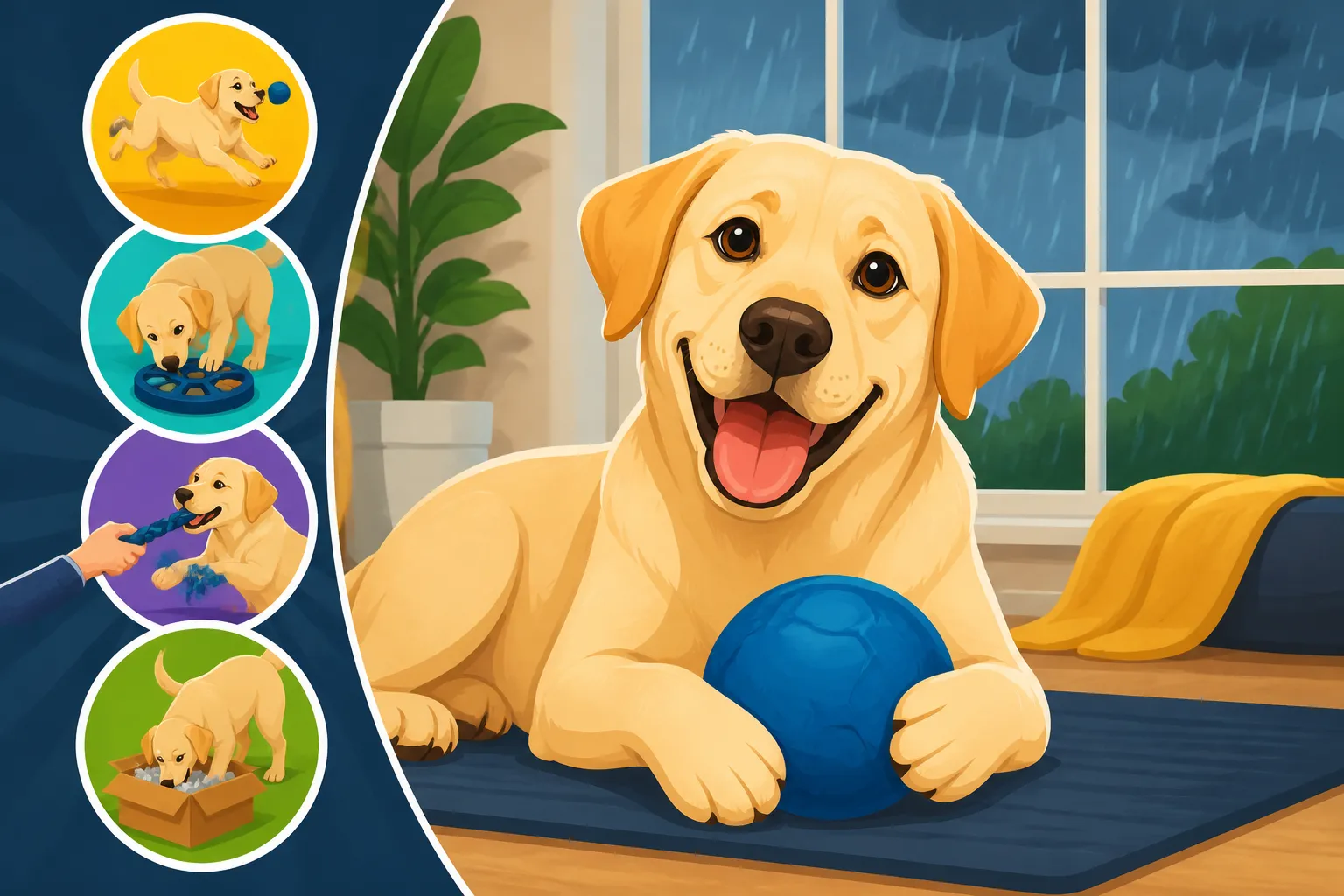
Tiring a Labrador on a Rainy Day
Many Labrador owners know the unique challenge of a rainy day all too well. Your typically outgoing, adventure-loving Lab is suddenly cooped up indoors, staring out the window with that hopeful, yet increasingly bored, expression. The endless pacing, the nudges with a slobbery toy, the "zoomies" through the living room – it's enough to drive any sane owner to despair. This guide is here to rescue your sanity (and your furniture!) by providing a treasure trove of creative, effective ways to tire out your high-energy Labrador when outdoor adventures are simply not an option.
Understanding Your Labrador's Indoor Energy Needs
When the rain starts to fall, or the snow piles up, or the heat becomes oppressive, our first thought is often, "How do I burn off all that Labrador energy indoors?" It’s a very real and valid concern. These dogs were bred for activity, for long days working alongside fishermen, retrieving in and out of water, and generally being busy. That drive doesn't simply disappear because the weather decides to be uncooperative.
Why a Labrador Gets Restless Indoors
Your Labrador Retriever is practically synonymous with boundless energy, a love for the outdoors, and an insatiable desire to do something. They were, after all, bred to be working dogs, retrieving game in harsh conditions for hours on end. This isn't just a quirky personality trait; it's deeply ingrained in their genetics. When the weather turns foul – be it a torrential downpour, a blizzard, or even scorching summer heat – and those usual long walks, trips to the dog park, or swimming sessions are off the table, all that pent-up energy has nowhere to go. It's like trying to cap an overflowing geyser with a thimble.
This restlessness isn't a sign of naughtiness; it's a genuine need. Imagine yourself stuck inside for days on end with nothing to engage your mind or body. You'd probably start pacing, picking at things, and generally feeling stir-crazy. Your Labrador feels the same, but without the benefit of a good book or Netflix. Their instinctual drives—to hunt, to retrieve, to explore—are still buzzing, even if they're confined to the living room. It's this disconnect between their natural inclination and their current environment that leads to unwanted behaviors, from incessant barking to destructive chewing.
Recognizing this fundamental need is the first step towards managing it effectively. Instead of viewing their indoor antics as misbehavior, try to see it as a desperate plea for engagement. They're not trying to annoy you; they're trying to communicate that their energetic cups are full and overflowing. Providing outlets, even small ones, can make a world of difference for their well-being and your home's integrity. Labrador Temperament and Personality talks more about their inherent drives.
The Difference Between Physical and Mental Exhaustion
When we think about tiring out a dog, our minds often jump straight to physical exercise: running, fetching, long walks. While crucial for a Labrador, especially one built for endless activity, it's only half the equation. Physical exertion burns calories and tires the body, but without mental stimulation, a Labrador's sharp mind can still be buzzing, leading to continued restlessness. It's like a person who runs a marathon but then tries to fall asleep after spending the day staring at a blank wall – physically tired, but mentally agitated.
Mental exercise is often far more exhausting for a Labrador than physical exercise. Think about it: sniffing out hidden treats, solving a puzzle, or learning a new command requires concentration, problem-solving, and a deep level of engagement. This kind of work taps into their natural intelligence and their history as working dogs. A short, intense session of brain games can leave your Labrador just as content, if not more so, than an hour of running around in the yard. In fact, many trainers will tell you that 15 minutes of focused mental work can be equivalent to a 45-minute walk in terms of how "tired" your dog feels.
On a rainy day, when extensive physical exercise isn't possible, leaning heavily into mental stimulation becomes your superpower. It not only tires them out but also reinforces positive behaviors, strengthens your bond, and prevents boredom-induced destructive habits. The goal isn't just to make them tired, but to make them satisfied—a tired and satisfied Labrador is a calm Labrador. Mental Work for a Bored Labrador explores this further.
Engaging Your Labrador's Mind: Brain Games for Rainy Days
When the weather forces you indoors, it's time to unleash your inner game show host and present your Labrador with a series of exciting brain challenges. These activities are fantastic for burning mental energy and satisfying their intelligent, problem-solving instincts.
Puzzle Feeders and Snuffle Mats
One of the easiest and most effective ways to engage your Labrador's mind indoors is through puzzle feeders and snuffle mats. These aren't just fancy toys; they're vital tools for mental enrichment. A Labrador's strong food drive, often due to their The POMC Gene and Labrador Appetite, makes them highly motivated to "work" for their meals or treats. Instead of simply gulping down their kibble in 30 seconds from a bowl, these devices force them to slow down, think, and problem-solve.
Puzzle feeders come in many forms, from intricate plastic contraptions with sliding parts and hidden compartments to simpler treat-dispensing balls. You can fill them with a portion of their daily kibble or some high-value treats. Your Labrador will have to sniff, nudge, paw, and sometimes even manipulate levers or doors to get to the food. This mimics the natural foraging behavior of dogs and provides a deeply satisfying challenge. You can find a huge selection of these on Amazon, from basic slow-feeder bowls to more advanced interactive toys, allowing you to choose based on your dog's skill level and your budget.
Snuffle mats are another fantastic option. These are fabric mats with dozens of strips of fleece sewn on, creating a dense, shaggy surface. You simply sprinkle kibble or small treats deep within the fabric strips, and your Labrador has to use their incredible sense of smell to sniff them out. It's an excellent way to engage their nose, which is arguably their most powerful tool. Sniffing is naturally calming and mentally taxing for dogs, making snuffle mats perfect for winding down a restless Lab. These are often easier to clean than complex plastic puzzles and can be surprisingly durable, even for a determined Labrador.
Scent Work and Hide-and-Seek
Building on the concept of engaging their powerful nose, scent work and hide-and-seek are fantastic no-cost activities for a rainy day. These games tap into your Labrador's innate retrieving and sniffing abilities, providing immense mental satisfaction. They don't require any special equipment beyond some treats and a willingness to get a little creative.
For a simple scent work game, start by having your Labrador sit and stay in one room. Show them a high-value treat, let them sniff it, and then go hide it in another room. Begin with easy spots, like under a cushion or behind a chair. Release your dog with a command like "find it!" and let them use their nose to track down the treat. As they get better, you can increase the difficulty by hiding treats in more obscure places, like on a low shelf, under a blanket, or even in an empty box. The process of searching, following scent trails, and ultimately succeeding is incredibly rewarding and tiring for them.
Hide-and-seek is similar but involves you (or another family member) as the "prize." Have your Labrador stay in one spot, then go hide somewhere in the house – behind a door, under a bed, or even in a closet. Call your dog's name excitedly. When they find you, reward them with praise, a quick play session, or a treat. This game strengthens their recall (even indoors!) and provides an element of surprise and engagement. It's also a wonderful way to interact and bond with your dog, making them feel loved and mentally stimulated simultaneously.
Learning New Tricks or Refreshing Old Ones
Training isn't just for puppies; it's a lifelong journey for a Labrador, and a rainy day is the perfect opportunity to dive into some indoor obedience or trick training. Learning new things, or even practicing familiar commands in a new context, requires focus and concentration, which is incredibly taxing for their brains. Plus, it's a fantastic way to improve your communication and bond with your dog.
Start with simple commands if your Labrador is a beginner, like "sit," "stay," "down," or "shake a paw." Break the training into short, positive sessions, about 5-10 minutes each, a few times throughout the day. Labradors thrive on positive reinforcement, so have plenty of tasty treats ready. You can even consider joining an online training program like BAXTER & Bella. They offer comprehensive virtual courses that guide you through everything from basic manners to more advanced behaviors, all from the comfort of your living room. Their structured curriculum, like that offered by BAXTER & Bella, ensures consistent progress and helps keep your Labrador's mind sharp.
For Labs who already know the basics, challenge them with more complex tricks. Think about "roll over," "play dead," "weave through your legs," or even stringing multiple commands together, like "Sit, stay, come, shake!" The mental effort required to process these new sequences and respond correctly is significant. Even practicing familiar commands like "stay" for longer durations or with increasing distractions can be a good mental workout. Remember to keep it fun and engaging, ending each session on a positive note. Short Training Sessions That Suit a Labrador emphasizes the importance of brevity and positivity.
Creative Ways to Burn Physical Energy Indoors
Even when outdoor space is off-limits, you can still find ways to incorporate physical movement into your Labrador's day. The key is to adapt, prioritize safety, and utilize your indoor environment strategically.
Indoor Fetch and Tug Games
While sprawling outdoor romps are out, that doesn't mean all physical exercise has to cease. Indoor fetch and tug games can still burn a surprising amount of energy, provided you have a safe space and appropriate toys. The key is to manage the intensity and ensure safety, especially in a house full of furniture.
For indoor fetch, ditch the hard tennis balls and opt for soft, lightweight toys that won't damage walls or break lamps. Soft plush toys, crinkle balls, or even a rolled-up sock can work perfectly. Clear a safe hallway or a large open room, like a living room with furniture pushed aside. Throw the toy a short distance, encouraging your Labrador to retrieve it. Keep throws low and controlled to prevent them from jumping and potentially slipping on smooth floors. The stop-and-start motion of repeated retrieves, even short ones, can add up quickly and tire them out. Just be mindful of their joints; avoid excessive twisting or jumping on slippery surfaces. Whether Endless Fetch Harms a Labrador's Joints is a great read on this topic.
Tug-of-war is another excellent option for physical and mental release. Use a sturdy, soft tug toy designed for large breeds. This game allows your Labrador to use their powerful jaw and body in a controlled, appropriate manner. It's not about aggression; it's about channeling their natural drive. Set clear rules: the game starts and stops on your command ("take it," "drop it"), and your Lab's teeth should never touch your skin. Tug is a fantastic way to bond and can be surprisingly tiring, engaging their whole body in a concentrated effort. Again, be mindful of slick floors and ensure they have good footing to prevent injuries.
Navigating an Obstacle Course
Transform your living space into a fun, low-impact obstacle course! This requires a bit of creativity but can be incredibly engaging and physically stimulating for your Labrador. It encourages them to think about their movements and use different muscle groups than they would during a simple walk.
Use household items to create challenges. You can drape blankets over chairs to make tunnels for them to crawl through, use pillows as low hurdles for them to step over (not jump, to protect joints!), or arrange furniture to create a winding path they have to navigate. Place treats at various points to encourage them to complete each "obstacle." You can guide them with a lure (a treat in your hand) or verbal cues. Make sure everything is stable and won't tip over or injure your dog.
This activity is less about speed and more about precision and problem-solving. It's a great way to practice body awareness and coordination. You can incorporate commands like "through," "over," "around," and "wait." It provides a sense of purpose and accomplishment for your Labrador, which contributes significantly to mental and physical satisfaction. Plus, it's pretty entertaining to watch your clever Lab figure out the route!
Treadmill Training with Caution
For some high-energy Labradors, a dog-specific treadmill can be an option for indoor exercise, especially when outdoor conditions are consistently bad. However, this is not something to jump into without significant preparation and caution. Treadmill training requires careful introduction, positive reinforcement, and constant supervision. It is never a replacement for real outdoor exercise, but a supplement.
Start by introducing your Labrador to the treadmill without it running. Let them sniff it, explore it, and offer treats for calmly being near it. Then, slowly introduce them to the belt moving at a very slow pace, just enough for them to take a few steps. Use treats and praise to make it a positive experience. You should always be standing right next to them, holding their leash. Never tie your dog to the treadmill or leave them unsupervised. The speed should be a comfortable walk, not a run, to avoid joint strain, especially for a large breed like a Labrador.
Not all Labradors will take to a treadmill, and that's perfectly fine. It's a tool that works for some, but not for others. If your dog shows any signs of fear, stress, or discomfort, stop immediately. The goal is a positive experience, not forced exercise. If you do use a treadmill, keep sessions short, perhaps 10-15 minutes, and combine it with mental games to ensure comprehensive stimulation. Always consult your vet before starting any new exercise routine, especially with equipment, to make sure it's appropriate for your individual dog.
Calming Activities and Enrichment
Beyond burning off energy, sometimes your Labrador just needs to settle down and relax. Rainy days are excellent opportunities for activities that promote calm, bonding, and self-soothing behaviors. These moments are just as important for their overall well-being as the high-energy play.
Chews and Lick Mats for Sustained Engagement
After all the mental games and indoor antics, sometimes your Labrador just needs to settle down with something deeply satisfying and calming. This is where long-lasting chews and lick mats come into their own. Chewing and licking are self-soothing behaviors for dogs, releasing endorphins that help them relax and feel content.
For chews, consider durable options that are appropriate for your Labrador's chewing style and age. Natural chews like yak cheese chews, bully sticks, or certain dental chews can keep them occupied for a significant amount of time. Always choose chews that are safe, digestible, and free from artificial ingredients. Supervise your dog, especially with new types of chews, to ensure they don't break off large pieces that could pose a choking hazard. Chew Toys That Survive a Labrador offers good advice here.
Lick mats are another excellent tool for calming and sustained engagement. These are silicone mats with textured surfaces that you spread soft, edible pastes onto. Think peanut butter (xylitol-free!), plain yogurt, mashed banana, or canned pumpkin. The act of meticulously licking all the food off the mat can keep a Labrador happily occupied for a long time. For an extra challenge, you can freeze the lick mat with the spread on it, making the activity last even longer. Lick mats are particularly great for nervous dogs or for helping your Lab settle down after an exciting play session.
Grooming and Massage
A rainy day can also be a perfect excuse for a dedicated grooming session, which, surprisingly, can be quite calming and bonding for your Labrador. While Labs don't have high-maintenance coats, regular brushing, ear cleaning, and nail care are essential.
Start with a good brushing session. Use a deshedding tool or a rubber curry brush to work through their dense double coat. Labradors are notorious for shedding, and a thorough brushing not only removes loose hair but also feels good for them, almost like a massage. Many Labs absolutely adore being brushed, and the repetitive motion can be very soothing. It's also a chance to check their skin for any issues like Hot Spots and Allergies in Labradors. You can even find specialty deshedding tools and durable brushes designed for double coats on Amazon.
After brushing, you can incorporate a gentle massage. Focus on areas where dogs hold tension, like their shoulders, neck, and hindquarters. Use slow, circular motions and pay attention to their reactions. If they lean into your touch and relax, you're doing it right. This physical contact is a powerful bonding experience and can help melt away any lingering restlessness. You can also take this time to clean their ears (especially important for Labs who love water) and trim their nails if needed. Labrador Ear, Paw and Nail Care provides detailed steps for these routines.
Structured Downtime and Crate Time
Sometimes, the best way to "tire" a Labrador on a rainy day is to actively teach and encourage structured downtime. Labradors are often "on the go" and don't always know how to switch off. Providing a designated, comfortable space for them to relax can be invaluable.
A crate can be a wonderful tool for this, even for adult dogs. If your Labrador is crate-trained, encourage them to go into their crate for a quiet period. Make it a cozy den with a soft bed and a safe chew toy. The confinement, when introduced positively, helps them understand that it's time to settle. This isn't a punishment; it's a quiet retreat where they can decompress without feeling the need to constantly seek activity. How Long a Labrador Can Stay Crated provides guidance on appropriate crate durations.
Even without a crate, designate a "place" command spot – a specific mat or bed where your Labrador learns to go and settle down. Practice short durations at first, rewarding them for staying calm. Gradually increase the time. This teaches them impulse control and that not every moment has to be filled with action. Playing soft, calming music or using an aromatherapy diffuser (dog-safe essential oils only, please!) can further enhance the relaxing atmosphere. Providing periods of forced relaxation throughout a long, rainy day can prevent them from becoming overstimulated and allow them to genuinely recharge their batteries.
| Activity Type | Description | Mental Stimulation | Physical Exertion | Equipment Needed |
|---|---|---|---|---|
| Puzzle Feeders | Dogs solve puzzles to get food/treats. | High | Low-Medium | Puzzle feeder, kibble/treats |
| Snuffle Mats | Dogs sniff out hidden treats in fabric. | High | Low | Snuffle mat, kibble/treats |
| Scent Work | Hiding treats and encouraging sniffing to find them. | High | Low | Treats |
| Hide-and-Seek | Dog finds owner/treats hidden indoors. | Medium-High | Low-Medium | Treats |
| Trick Training | Learning new commands or practicing old ones. | High | Low | Treats, clicker (optional) |
| Indoor Fetch | Tossing soft toys short distances in a safe space. | Low-Medium | Medium-High | Soft toys |
| Tug-of-War | Interactive game using a sturdy rope toy. | Medium | Medium-High | Tug toy |
| Obstacle Course | Navigating household items arranged as hurdles/tunnels. | Medium | Medium | Household items (blankets, pillows, chairs) |
| Long-lasting Chews | Durable chews for sustained chewing. | Medium | Low | Safe chew toy |
| Lick Mats | Spreading soft food on a textured mat for licking. | Medium | Low | Lick mat, soft food (peanut butter, yogurt) |
| Grooming/Massage | Brushing, ear cleaning, and gentle massage. | Low | Low | Brushes, ear cleaner, nail clippers |
| Structured Downtime | Encouraging relaxation in a crate or designated spot. | Low (calming) | Very Low | Crate/bed, chew toy, calming music |
This guide offers plenty of ideas to keep your Labrador happy, healthy, and tired, even when the weather isn't cooperating. Remember, a bored Labrador is often a destructive Labrador, so investing time in these indoor activities is an investment in your home and your peace of mind.
Disclaimer
This article is for general informational purposes only and does not constitute professional advice. Laws, prices and regulations vary by location and change over time. Consult a qualified professional for guidance on your specific situation.