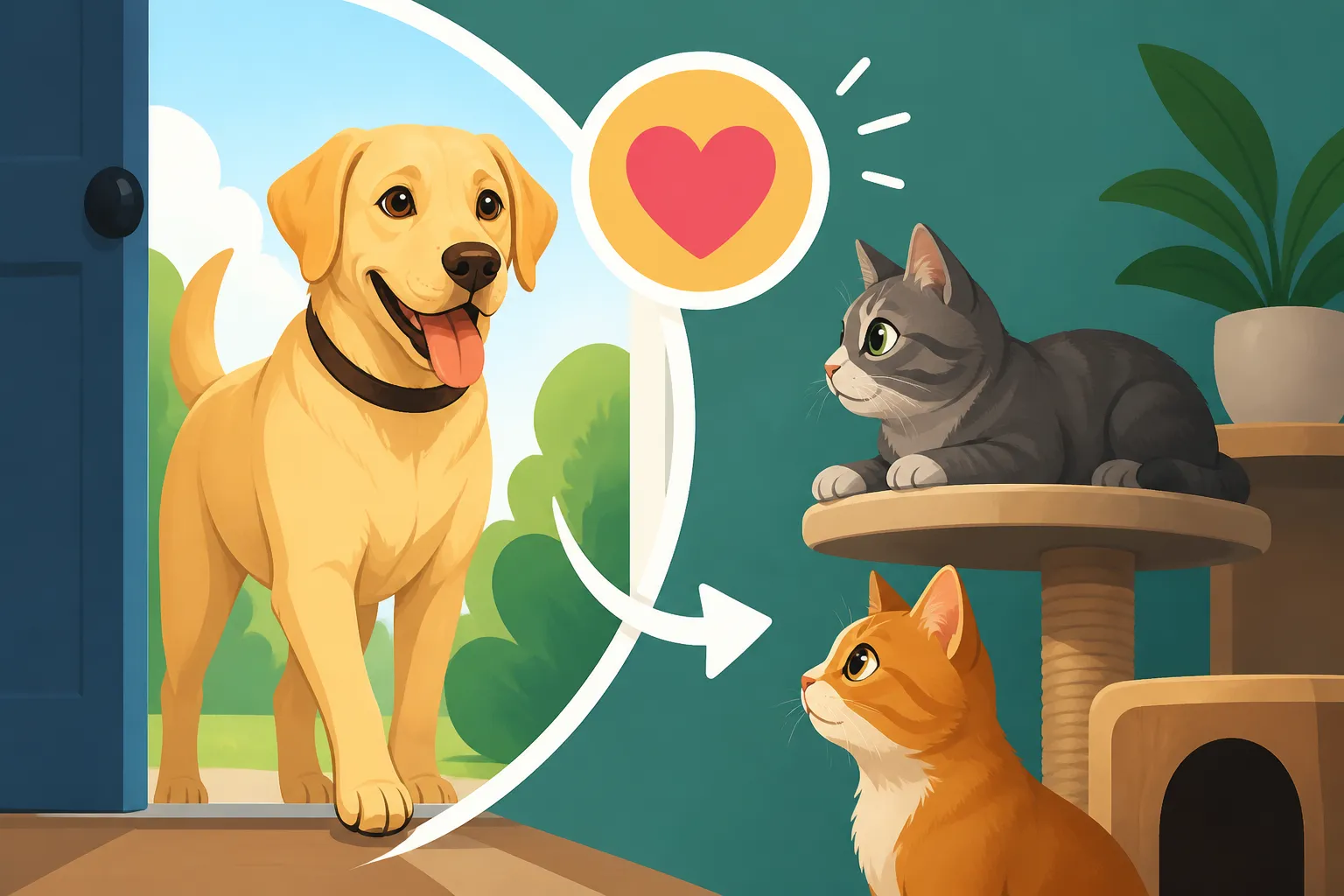
Bringing a Labrador Into a Cat Home
Bringing a high-energy, boisterous Labrador Retriever into a home that already has a resident feline can feel like trying to mix oil and water. It's a common worry for many prospective dog owners, fearing endless chases, stressed-out cats, or even outright aggression. This guide aims to alleviate those anxieties by providing a comprehensive, step-by-step approach to introducing your Labrador to your cat, fostering a harmonious multi-pet household.
Understanding the Labrador-Cat Dynamic
Let's be honest, Labradors are known for their exuberance and boundless enthusiasm. While this makes them incredibly loving companions, it can also be quite a shock to a cat accustomed to a quieter, more predictable environment. It's vital to recognize the inherent differences and potential challenges upfront to manage expectations and set everyone up for success.
Labrador's Natural Instincts
Labradors, at their core, are retrievers. This means they have a natural inclination to chase, mouth, and "retrieve" things, and sometimes, in their puppy minds, that can include a fast-moving cat. While they are not typically considered high-prey-drive dogs in the same way some terriers or sighthounds are, their sheer size and playful nature can easily overwhelm a smaller, more delicate cat. A Labrador puppy, especially, can see a fleeing cat as the ultimate playmate, not understanding the terror it might cause. Imagine a furry, 60-pound battering ram wanting to play tag with a creature less than a third its size – it's not aggression, but it can certainly feel that way to the cat.
Their energy levels are another huge factor. A young Labrador, full of beans, needs significant exercise and mental stimulation. If they're under-exercised, they might look for outlets for that energy, and a resident cat could become an unwitting target for a game of chase. It's not malicious, but it's a behavior we need to manage carefully to prevent a negative association from forming right from the start.
The Cat's Perspective
For your cat, your home is their territory. Every nook, every high shelf, every sunbeam is theirs, and they operate on a strict, often unseen, schedule. Introducing a large, noisy, and unpredictable new creature disrupts everything. Cats are creatures of habit and are highly sensitive to changes in their environment. A new dog, particularly one with the size and energy of a Labrador, can trigger immense stress, anxiety, or fear in even the most confident feline.
Signs of stress in cats can range from subtle to overt. You might notice them hiding more, becoming less affectionate, or even showing aggression (hissing, swatting, growling) towards the dog or even you. Changes in litter box habits, over-grooming, or a reduced appetite are also red flags that your cat isn't coping well. It’s crucial to understand these signals and respect your cat's need for space and security. Ensuring they have ample escape routes and safe zones is not just about comfort; it's about their fundamental sense of security in their own home.
Setting Up Your Home for Success
Before your Labrador even sets a paw inside, preparing your home is arguably the most critical step. This isn't just about making space; it's about proactively creating environments where both species can thrive, minimizing potential conflicts and maximizing safety for your cat. Think of it as building bridges and safe havens long before the "meet and greet" even begins.
Creating Cat-Safe Sanctuaries
Your cat needs to feel secure and have guaranteed escape routes from your Labrador at all times. This means vertical space is your best friend. Invest in tall cat trees, wall-mounted shelves, or even just ensure high furniture surfaces are accessible. Cats naturally feel safer when they can observe from above, out of reach of an enthusiastic canine. These elevated spots become their personal perches, their "safe zones" where they can retreat and decompress without canine interference.
Beyond vertical space, consider designating entire rooms as dog-free zones using baby gates or pet gates. A gate like those you can find on Amazon, positioned strategically, can allow your cat to easily slip underneath or jump over, while effectively blocking your Labrador. This could be the laundry room, a spare bedroom, or even a bathroom where your cat's food, water, and litter boxes are kept. This arrangement is non-negotiable, as it prevents your Labrador from "resource guarding" these essential items, and it keeps your cat feeling secure about accessing their basic needs without fear. Ensure your cat's resources are completely separate from where your Labrador eats or rests.
Dog Management and Containment
While your cat needs safe spaces, your Labrador needs structure and controlled environments, especially in the early stages. A crate is an invaluable tool, not just for house training but also for managing interactions with your cat. It provides a secure den for your Labrador and a clear boundary for your cat. When your Labrador is crated, your cat can feel safe enough to explore the same room, observing the dog without direct contact. This allows for desensitization and scent acclimation without stress. For puppies, a playpen can serve a similar purpose, offering a slightly larger, yet still contained, space.
During the initial weeks and even months, leash management will be your best friend indoors. Even if your Labrador isn't actively chasing the cat, their sheer presence and movement can be intimidating. Keeping your Labrador on a leash while they are in the same room as the cat allows you to instantly correct any over-excitement, redirect their attention, and prevent a chase before it starts. This also reinforces your role as the calm leader, demonstrating that you control interactions. Consistent obedience training, focusing on commands like "sit," "stay," and "leave it," is paramount. Resources like BAXTER & Bella's online training program can provide excellent guidance on establishing these foundational behaviors, which are crucial for a calm household with multiple pets.
| Challenge | Labrador Behavior | Cat Behavior | Solutions |
|---|---|---|---|
| Initial Fear/Stress | Overly excited sniffing, whining | Hiding, hissing, flattened ears | Scent swapping, slow introductions behind a barrier, providing cat-only escape routes. |
| Chasing/Prey Drive | Lunging on leash, barking, fixed stare | Fleeing, swatting, aggressive posturing | Strong "Leave It" command, leash management, high-value redirection treats for the Labrador, never leaving them unsupervised. |
| Resource Guarding | Hovering near cat's food/litter | Avoiding food/litter, inappropriate elimination | Place cat food/water/litter in dog-inaccessible areas (e.g., behind baby gates, high shelves). Feed pets separately. |
| Over-Exuberance | Bouncing, tail wagging, wanting to play | Running away, swatting, retreating | Consistent obedience training ("Sit," "Stay"), ensure ample exercise for the Labrador away from the cat, reward calm behavior, separate them if energy levels are too high. |
| Lack of Boundaries | Invading cat's personal space | Growling, swatting, hiding, avoiding | Teach "Place" command for Labrador, reinforce cat's right to space with physical barriers (gates) and verbal cues. Never force interaction. |
The Introduction Process: Slow and Steady Wins the Race
This is not a race. You cannot rush a successful introduction. Patience, consistency, and a keen eye for both your Labrador's and cat's body language will be your most valuable tools. Think in weeks, not days, and be prepared to take steps backward if needed. The goal is positive association, not immediate friendship.
Scent Swapping and Parallel Living
Before your Labrador and cat ever see each other, start with scent swapping. This helps each animal get used to the other's presence without the added stress of a visual encounter. You can do this by rubbing a cloth on your cat and then on your Labrador, or simply by swapping their beds or blankets. Place the scented items in their respective areas and observe their reactions. Curiosity is good; extreme fear or aggression means you need to go slower.
Once they're comfortable with each other's scent, begin parallel living. This involves keeping them in separate areas of the house, perhaps with a closed door between them. Feed them on opposite sides of this closed door. The positive association of food with the other animal's scent and sounds helps build a foundation of positive feelings. They'll know the other animal is there, but feel safe in their own space. Over a few days to a week, or even longer depending on the animals, you might transition to a baby gate, still allowing them to see and hear each other but without direct physical contact. This "gate training" lets them observe each other and learn to be calm in the other's presence. Remember, the key is making sure both animals feel relaxed, not stressed. If you see signs of anxiety, like flattened ears on your cat or excessive whining from your Labrador, dial it back.
Controlled Visual Introductions
When you finally move to visual introductions, your Labrador should always be on a leash, and your cat should be free to approach or retreat as they please. Choose a neutral area where your cat has easy access to their safe zones (high perches, another room). Keep the first sessions very short – just a few minutes – and focus entirely on calm behavior. Have high-value treats ready for both animals. As your Labrador remains calm, offer them a treat. If your cat ventures closer or even just tolerates the dog's presence, shower them with praise and treats. The goal is to create a positive reinforcement loop: "When the other animal is around, good things happen."
Crucially, watch their body language. For your Labrador, look for a loose, relaxed tail, soft eyes, and a non-fixed gaze. Any stiffness, intense staring, or pulling on the leash means the session needs to end or be redirected. For your cat, observe their ears, tail, and posture. Are their ears forward or flattened? Is their tail lashing or relaxed? A puffed-up tail, hissing, or growling means you've gone too far, too fast. Always end the session on a positive note, even if it's just a moment of calm. Never force them to interact or scold either animal for showing fear or discomfort. This journey requires immense patience.
Long-Term Management and Training
The work doesn't stop after the initial introductions. Building a truly harmonious multi-pet household is an ongoing commitment to management, consistent training, and understanding each animal's needs. Your Labrador will mature, and your cat will adapt, but maintaining safety and respect for boundaries will always be important.
Ongoing Training for Your Labrador
A well-trained Labrador is a safer and more manageable Labrador, especially in a cat household. The "Leave It" command is paramount. This command teaches your dog to ignore something tempting, whether it's a dropped treat, a squirrel in the park, or, yes, a darting cat. Practice this relentlessly in various environments, graduating from low-value distractions to high-value ones. Commands like "Sit," "Stay," and "Come" are also critical for controlling your Labrador's movement and impulses around the cat. If your Labrador is prone to Labrador Puppy Mouthing and How to Redirect It, ensure they learn bite inhibition and appropriate play.
Beyond basic obedience, focus on impulse control exercises. Games where your Labrador has to wait for a release command before getting a toy or food can build self-control, which translates directly to how they react to a moving cat. Remember, a tired Labrador is a good Labrador. Ensure your dog gets ample exercise and mental stimulation daily, separate from interactions with the cat. A Labrador who has had a good run or a stimulating training session is less likely to pester the cat out of boredom. Consider resources like BAXTER & Bella's training tools or local trainers to keep your Labrador engaged and well-behaved.
Reinforcing Positive Interactions
Even when your Labrador and cat seem to be getting along, never take it for granted. Always reward calm coexistence. If you see your Labrador lying quietly while the cat walks by, offer a quiet "good boy" and a small treat. If your cat is relaxed in the same room as your dog, offer them a treat. These small, consistent reinforcements build strong, positive associations. Conversely, never leave your Labrador and cat unsupervised until you are absolutely certain of their compatibility, and even then, always err on the side of caution. An excited Labrador can accidentally hurt a cat, even without malicious intent.
Continue to maintain separate feeding areas for your pets. This eliminates any potential for food-related aggression or stress. Your cat needs to know their meal is safe. Your cat-only spaces should remain sacred. Whether it's a room blocked by a baby gate or a high perch, these spots allow your cat to retreat and relax completely without the looming presence of a dog. Understand that some cats and Labradors will become best friends, curling up together, while others will simply tolerate each other in a respectful, distant manner. Both outcomes are successes. The goal is peaceful coexistence, and with patience and consistent effort, you can achieve it. Don't forget that Exercise a Labrador Needs Each Day is crucial for their overall well-being and temperament around other animals.
Disclaimer
This article is for general informational purposes only and does not constitute professional advice. Laws, prices and regulations vary by location and change over time. Consult a qualified professional for guidance on your specific situation.