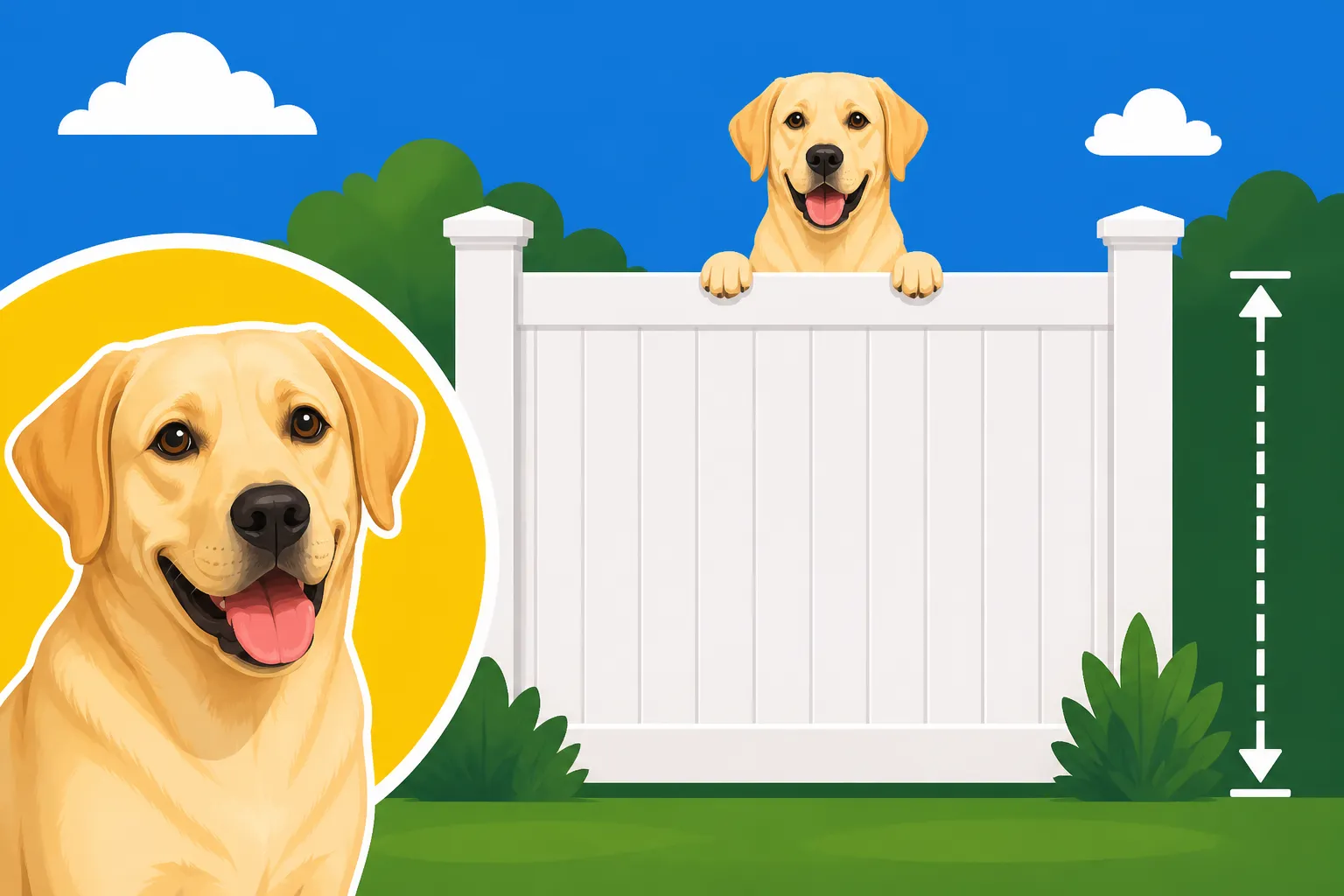
Fence Height That Holds a Labrador
One of the biggest worries for any Labrador owner, especially those with an adventurous or high-energy pup, is keeping them safely contained within their yard. It's truly a headache trying to figure out if your fence is tall enough to prevent a daring escape, especially when you know how driven and curious these dogs can be. This guide will delve deep into the world of Labrador-proof fencing, helping you understand the ideal fence heights and other crucial considerations to keep your beloved companion secure.
Why Labradors Test Fence Boundaries
Labradors are incredible dogs, known for their friendly nature and boundless enthusiasm. But that same enthusiasm, coupled with a keen intelligence and an almost unstoppable drive, can sometimes translate into a strong desire to explore beyond the confines of your yard. It’s not about being disobedient; it’s often just part of their inherent makeup.
Their Energetic Nature and Curiosity
Let's be real, Labradors are athletic powerhouses. They were bred to work tirelessly, retrieve game, and spend hours active alongside their human companions. This means they naturally possess a lot of energy that needs a proper outlet. A Labrador who isn't getting enough physical activity might start looking for ways to burn off that excess energy, and sometimes, that means eyeing the fence as a mere suggestion rather than a solid barrier. Their curiosity is equally strong; every new scent, every rustle in the bushes, every squirrel that dares to cross their path becomes an irresistible mystery to investigate. This intense prey drive, a hallmark of the breed, can easily make them forget boundaries when something exciting catches their attention. This is why understanding their exercise a Labrador needs each day is paramount.
The Allure of the Outside World
For a Labrador, the world beyond the fence is a symphony of enticing smells and sights. The neighbor's barbecue, a dog walking down the street, or even just the change in air currents can be incredibly stimulating. Their powerful noses pick up a myriad of scents that we can't even imagine, drawing them towards potential adventures. Imagine living in a constant state of FOMO (Fear Of Missing Out) every time a new scent drifts by – that's often a Labrador's reality. This overwhelming sensory input can make them incredibly determined to breach any perceived barrier, be it by jumping, digging, or even pushing through weak spots. They aren't trying to be bad; they're simply following their instincts.
Behavioral Roots of Escaping
Sometimes, fence testing isn't just about high spirits; it can stem from underlying behavioral issues. A common culprit is boredom. A Labrador left alone for long periods without sufficient mental and physical stimulation might resort to escape attempts as a way to alleviate their boredom. Think of it as their way of saying, "I need something to do!" Similarly, separation anxiety in Labrador Retrievers can manifest as destructive behavior, including attempts to escape the yard to find their absent owners. They might whine, bark excessively, and then start looking for weaknesses in the fence as a desperate measure to reunite with their family. Another less common but equally powerful motivator can be the urge to find a mate if they are intact and catch the scent of a dog in heat nearby. Addressing these root causes through proper training a Labrador From Puppy to Adult and enrichment is often as important as the physical fence itself.
Recommended Fence Heights for Labradors
So, you're ready to put up a fence or upgrade your existing one. The first question on everyone's mind is, "How tall does it need to be?" Unfortunately, there isn't a one-size-fits-all answer, as Labradors vary in size and athleticism, but we can certainly give you solid guidelines.
The Absolute Minimum
Many standard residential fences are around 4 feet (approximately 1.2 meters) tall. For some very calm, low-drive, or older Labradors, a 4-foot fence might suffice if they've never shown any inclination to jump. However, as a general rule, most experienced Labrador owners and trainers will tell you that 4 feet is often not enough. A determined Labrador, especially a younger, athletic one, can clear a 4-foot fence with surprising ease if motivated. It's often seen as more of a deterrent than a true barrier for a dog with a strong desire to get out. If your Labrador is a puppy, a 4-foot fence might work for a while, but they grow quickly, and their jumping abilities will increase with their size and strength. You need to plan for the adult they will become, not just the tiny pup they are today.
Ideal Heights for Jumpers and Climbers
To truly secure a Labrador, especially one with a known propensity for jumping or a high drive, you're looking at a fence height of at least 5 feet (approximately 1.5 meters), with 6 feet (approximately 1.8 meters) being the gold standard for peace of mind. A 6-foot fence is significantly harder for even the most athletic Labrador to clear. This height also reduces the visual stimuli from outside, which can help lessen their desire to chase after everything they see. For Labs that might try to climb, especially chain-link fences, the added height makes it much more difficult. Some owners with exceptionally agile or determined Labradors even opt for fence extensions or "coyote rollers" along the top to prevent them from getting purchase and vaulting over.
Considering Your Labrador's Personality and Size
Every Labrador is an individual. A field-line Labrador, often leaner and more athletic, might be a more accomplished jumper than a blockier, show-line Labrador. Likewise, a young, exuberant male Labrador might test boundaries more often than a calm, older female. Observe your dog's behavior closely. Does your Labrador constantly scan the horizon, twitching at every bird or squirrel? Do they have a history of trying to escape previous enclosures? Are they known for their Labrador energy level by age, particularly during their boisterous adolescence? These factors should heavily influence your fence height decision. If you have a true escape artist on your hands, err on the side of caution and go for the highest practical option. You're better off over-fencing than under-fencing when it comes to the safety of your beloved companion.
Beyond Height: Other Fence Considerations
While height is crucial, it's far from the only factor in creating a truly escape-proof yard for your Labrador. A determined dog can find weaknesses in even the tallest fence if other aspects aren't addressed.
Material and Construction Matters
The material and how the fence is constructed are just as vital as its height.
- Wooden Fences: These are popular for privacy and aesthetics. A solid wooden fence can be excellent because it blocks your Labrador's view of external triggers, reducing the urge to chase. However, ensure the panels are securely fastened, with no gaps or loose boards that can be pushed through. Over time, wood can rot or warp, creating weaknesses, so regular maintenance is key.
- Vinyl Fences: Similar to wood in terms of blocking sightlines and providing privacy, vinyl is generally more durable and requires less maintenance. Like wood, ensure panels are securely installed and there are no weak points.
- Chain Link Fences: While affordable and durable, chain link can be a double-edged sword for Labradors. The open weave allows them full visibility of the outside world, potentially increasing their desire to escape. More importantly, the mesh provides excellent footholds for nimble Labradors to climb. If you opt for chain link, ensure it's at least 6 feet tall and consider adding a top bar to make climbing harder. Regularly check for bent or damaged sections that could create escape routes.
- Wrought Iron or Aluminum Fences: These offer excellent visibility but can be very secure if designed correctly. Look for vertical bars that are spaced too closely for your Labrador to squeeze through, and without horizontal bars that could aid in climbing. Height recommendations still apply here.
- Invisible Fences: These are often debated among Labrador owners. While they can be useful for minor boundary reinforcement, they are rarely sufficient as a primary containment system for a breed with such a high prey drive. They prevent a dog from leaving but don't stop other animals or people from entering, and a highly motivated Labrador can easily push through the momentary discomfort to chase a deer or another dog. They don't offer the physical barrier needed to truly secure a dog prone to escaping or Labrador counter surfing and food theft habits when visitors are around.
Preventing Digging Under the Fence
Labradors, while not primarily known as prolific diggers like some terrier breeds, can certainly dig, especially if they are bored or desperately trying to get out. That fascinating scent on the other side of the fence can be a powerful motivator. To prevent digging behavior in Labrador Retrievers under the fence, you'll need to reinforce the base.
- Burying the Fence: Dig a trench and bury the bottom 1-2 feet of the fence panel or mesh.
- L-Footers: Attach a section of wire mesh (like chicken wire or hardware cloth) to the bottom of your fence, extending it horizontally into the yard, then burying it. When your Labrador digs near the fence, they'll hit the mesh, which discourages them.
- Concrete Footer: A more permanent and costly solution, pouring a concrete footer under the entire fence line provides an impenetrable barrier.
- Large Rocks or Pavers: Lining the inside perimeter of the fence with large, heavy rocks or paving stones can also discourage digging.
Always check the fence line regularly for new digging attempts or wear and tear.
Gates, Latches, and Maintenance
The gate is often the weakest link in any fence system. Ensure your gate is as tall and robust as the rest of your fence. More importantly, invest in high-quality, secure latches. Labradors are smart, and some can learn to manipulate simple latches. A double-latching system or a lockable latch is always a good idea. Consider using a spring-loaded gate closer so the gate always snaps shut behind you. Gaps around the gate, or between the gate and the ground, are also prime escape points. Use weather stripping or a bottom sweep to minimize these gaps. Regular maintenance is non-negotiable. Check your fence line frequently for loose boards, broken wires, or signs of digging. Address any issues immediately before they become an escape route. Remember, a fence is only as strong as its weakest point. A quick check of fencing a yard for a Labrador resources can offer more specific construction tips.
Training and Management to Complement Fencing
Even the most robust, 6-foot, buried-footer fence isn't a magical solution. Fencing is a physical barrier, but it should always be complemented by good training, consistent management, and environmental enrichment.
Training for Boundary Awareness
While your fence provides the physical boundary, teaching your Labrador to respect those boundaries can add an extra layer of security. Start with basic recall training inside the fenced area. Practice calling your Labrador to you, especially when they are distracted near the fence line. Reinforce positive behavior with high-value treats and praise. Teaching a solid "stay" or "wait" command can also be useful, allowing you to secure the gate before your dog rushes out. You can even walk the perimeter with your Labrador, rewarding them for staying away from the fence, creating a mental boundary alongside the physical one. This also helps with their innate desire to Labradors love carrying shoes or anything they find, so they learn to bring it to you instead of carrying it over the fence.
Enriching the Environment
A bored Labrador is a problematic Labrador. Providing ample physical and mental stimulation within the yard can significantly reduce their desire to escape.
- Physical Exercise: Regular walks, runs, or games of fetch will tire them out. A tired Labrador is less likely to look for trouble. Consider a flirt pole for quick bursts of energy expenditure.
- Mental Enrichment: Puzzle toys, KONGs stuffed with treats (like peanut butter or frozen wet food), and scent work games can keep their minds engaged. Hide treats around the yard for them to find, tapping into their natural retrieving instincts. Brands like Chewy offer a fantastic selection of durable puzzle toys that can stand up to a determined Labrador. This fulfills their natural drive for mental work for a bored Labrador.
- Chew Toys: Labradors love to chew, especially during puppyhood and adolescence. Provide plenty of appropriate chew toys that survive a Labrador to redirect this natural behavior away from the fence posts or landscaping.
Supervision and Routine
Even with the best fence and plenty of enrichment, direct supervision is still paramount, especially for young or new Labradors. Never leave your Labrador unattended in the yard for extended periods, even if you think the fence is impenetrable. Things can happen quickly – a gate might accidentally be left ajar, or they might discover a new weakness in the fence you hadn't noticed. Establishing a consistent routine for potty breaks, play sessions, and training also helps. Dogs thrive on routine, and knowing when their needs will be met can reduce anxiety and the urge to escape. If you're struggling with consistent outdoor access, consider looking into crate training a Labrador puppy as a safe, temporary solution indoors.
| Fence Type | Minimum Height (ft) | Recommended Height (ft) | Key Advantages | Key Disadvantages | Labrador Suitability |
|---|---|---|---|---|---|
| Wood/Vinyl Panel | 5 | 6 | Blocks vision, privacy, aesthetic, low maintenance (vinyl) | Can be expensive, wood needs maintenance, less durable than metal | High |
| Chain Link | 5 | 6+ (with top bar) | Durable, affordable, easy to install | Provides footholds for climbing, doesn't block vision, less aesthetic | Medium (with caveats) |
| Wrought Iron/Aluminum | 5 | 6 | Strong, durable, aesthetic, good visibility | Expensive, doesn't block vision, gaps might need addressing | High (if gaps are small) |
| Invisible/Electronic | N/A | N/A | No physical barrier, aesthetic | No physical barrier, doesn't stop external threats, unreliable for high-drive Labs | Low |
Final Thoughts on Securing Your Labrador's Space
Ultimately, securing your Labrador in the yard is a multi-faceted endeavor that combines physical barriers with smart management and consistent training. It's about understanding your Labrador's unique personality and drives, and then building an environment that caters to their needs while keeping them safe. Whether you're upgrading an existing fence or installing a new one, investing in the right height and materials, combined with diligent maintenance, will give you the peace of mind that your adventurous companion is safe and sound at home. For any serious accidents or escapes, knowing about resources like Healthy Paws for pet insurance or emergency vet bills can make a huge difference.
Disclaimer
The information provided in this guide is for general informational purposes only and does not constitute professional veterinary advice. Always consult with a qualified veterinarian or professional dog trainer for personalized advice regarding your Labrador's health, training, and specific needs.