Testing a Labrador for Exercise-Induced Collapse
There's nothing quite as terrifying as watching your beloved Labrador suddenly collapse during what should be a joyful moment of play or exercise. The fear, the confusion, the immediate scramble to understand what just happened – it's a deeply unsettling experience for any dog owner. This comprehensive guide is here to walk you through everything you need to know about testing your Labrador for Exercise-Induced Collapse (EIC), helping you understand the condition, why testing is vital, and how to interpret the results so you can ensure your furry friend lives their happiest, healthiest life.
Understanding Exercise-Induced Collapse in Labradors
Exercise-Induced Collapse (EIC) is a genetic neuromuscular disorder that primarily affects Labrador Retrievers and a few other breeds, manifesting as a sudden, temporary loss of muscle control or weakness after intense physical activity. It’s not just about a dog being tired; it’s a specific, alarming reaction that can appear out of nowhere, often during moments of high excitement or strenuous play. Owners often mistake these episodes for heatstroke or general fatigue, but EIC has a distinct genetic root that sets it apart.
What an EIC Episode Looks Like
When an EIC episode strikes, it usually begins with a noticeable wobbliness or awkward gait in the hind limbs, which quickly progresses to complete collapse. Your dog might seem weak and unable to move, often dragging their hind legs, or in more severe cases, all four limbs. It’s truly unnerving to witness. The dog usually remains conscious and alert throughout the episode, even trying to respond to you, but their body simply won't cooperate. This distinction is crucial because if your Labrador experiences something like this, understanding what an EIC episode looks like in a Labrador is the first step toward getting them the right diagnosis and care.
The duration of these episodes can vary, typically lasting anywhere from 5 to 25 minutes. During this time, your Labrador's muscles will be weak and rubbery, and they might even appear disoriented, although they usually retain full mental awareness. After the episode passes, most dogs recover quickly, often returning to normal within 30 minutes, though some might seem a bit stiff for a while. The good news is that these episodes are generally not painful for the dog, but they are certainly distressing for owners.
Common Triggers for Collapse
EIC episodes aren't random; they're usually provoked by specific types of high-intensity, sustained exercise, especially when coupled with excitement or high temperatures. Think about activities like retrieving multiple bumpers during training, a vigorous game of fetch, or even an overly enthusiastic run with other dogs at the park. These are the moments when a Labrador’s drive kicks in, pushing them beyond their physical limits in a way that can trigger EIC.
Heat and excitement are significant amplifiers. A dog that might tolerate a specific level of exercise on a cool, calm day could easily collapse doing the same activity in warmer weather or if they are particularly hyped up. For example, a Labrador working in an upland field trial, particularly on a warm day, is at a much higher risk than one on a casual walk. This is why knowing how heat and excitement act as EIC triggers is essential for managing an affected dog and understanding when to seek testing.
Why Testing for EIC is Crucial
For any Labrador owner, breeder, or prospective puppy parent, understanding a dog’s EIC status is profoundly important. It’s not just about addressing symptoms; it’s about responsible pet ownership, informed breeding decisions, and ultimately, safeguarding the well-being of these magnificent dogs. Ignoring the possibility of EIC can lead to unnecessary distress for your dog and potentially costly investigations into other conditions.
Preventing Undiagnosed Episodes and Misdiagnosis
One of the biggest frustrations for owners of EIC-affected Labradors is the confusion that often surrounds an initial collapse episode. Many rush their dog to the emergency vet, fearing heatstroke, heart conditions, or neurological issues. While these are all valid concerns and should be ruled out, a genetic test for EIC can provide a definitive answer, saving emotional distress and thousands of dollars in diagnostic tests that might ultimately be unnecessary. For instance, telling EIC from heatstroke in a Labrador is incredibly important because the management for each condition is vastly different, and delaying appropriate care can have severe consequences, especially with heatstroke.
Knowing your dog's EIC status means you can take proactive steps to prevent episodes. If you know your dog is affected, you can modify their exercise routine, avoid high-stress situations, and be vigilant about environmental factors like heat. This knowledge empowers you to manage their health effectively, rather than reacting in a panic each time a collapse occurs. It truly offers peace of mind, knowing you understand the underlying cause.
Responsible Breeding and Genetic Health
For breeders, EIC testing is non-negotiable. EIC is an autosomal recessive genetic condition, meaning a dog must inherit two copies of the mutated gene (one from each parent) to be affected. Dogs with one copy are carriers and will not show symptoms themselves but can pass the gene on to their offspring. This is where the importance of testing shines. By screening all breeding dogs, responsible breeders can make informed decisions to avoid producing affected puppies.
Understanding what an EIC carrier result means for breeding is paramount. If a carrier is bred to another carrier, there's a 25% chance that each puppy in the litter will be affected, a 50% chance they will be carriers, and a 25% chance they will be clear. By only breeding carriers to clear dogs, breeders can ensure that no affected puppies are produced, even though some might still be carriers. This systematic approach is vital for eradicating EIC from future generations of Labradors and maintaining the breed's overall health. Organizations like Healthy Paws, which provide pet insurance, strongly advocate for responsible breeding practices, knowing that preventing genetic conditions reduces the burden of health issues on pets and owners alike.
The Genetic Test for EIC
The journey to understanding your Labrador's EIC status begins with a simple, yet highly accurate, genetic test. This test specifically targets the DNM1 gene mutation, which scientists have identified as the cause of Exercise-Induced Collapse in Labradors. It’s a remarkable piece of canine genetic science that has transformed how we manage and prevent this condition.
How the Test Works
The EIC genetic test is typically performed using a DNA sample collected from your dog. The most common and easiest method is a buccal swab, where a small brush or cotton swab is rubbed against the inside of your dog’s cheek to collect saliva and cells. This process is entirely non-invasive, stress-free, and can often be done at home or during a routine vet visit. Some labs might also accept blood samples, which would need to be drawn by a veterinarian.
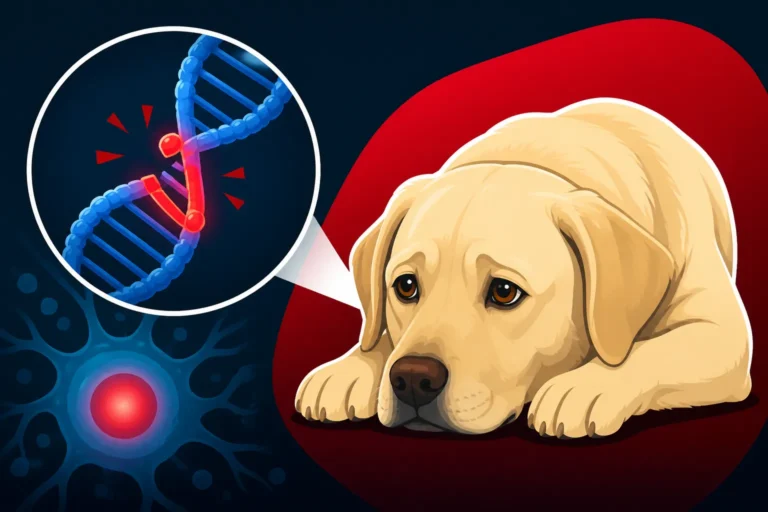
Once the sample is collected, it's sent to a specialized veterinary genetics laboratory. There, technicians isolate the DNA and analyze it for the specific mutation on the DNM1 gene. This particular mutation is what causes the brain to send faulty signals to the muscles during periods of intense exercise, leading to collapse. The test looks for the presence of one or two copies of this mutated gene. The accuracy of these tests is very high, providing a definitive answer about your Labrador's genetic predisposition to EIC.
What the Test Screens For: The DNM1 Mutation
The test is specifically designed to detect the DNM1 mutation. This gene plays a critical role in nerve cell communication, particularly in how signals are sent from the brain to the muscles. In Labradors with the mutation, this communication can be disrupted during intense exertion, leading to the temporary paralysis and weakness characteristic of EIC. Understanding the DNM1 mutation behind Labrador collapse gives owners and breeders clear insight into the biological mechanism at play.
It's important to remember that this test is specific to EIC caused by the DNM1 gene. There might be other conditions that cause similar collapse symptoms, but they would not be detected by this particular genetic test. Therefore, while a positive EIC test provides a clear diagnosis, a negative test (clear result) simply means your dog does not have EIC due to the DNM1 mutation. If they still experience collapse episodes, further veterinary investigation would be necessary to explore other potential causes. Many comprehensive genetic panels, often recommended as part of a Labrador puppy health in the first year screening, will include EIC testing alongside other common conditions.
Interpreting EIC Test Results
Once your Labrador’s DNA sample has been processed, you’ll receive a report detailing their EIC status. These results are typically presented in one of three categories: Clear, Carrier, or Affected. Each designation carries significant implications for your dog's health, exercise management, and any potential breeding plans. Understanding these results is key to providing the best possible care for your Labrador.
Clear (N/N)
A "Clear" or "N/N" result means your Labrador does not possess the DNM1 gene mutation associated with EIC. This is the ideal outcome, indicating that your dog is genetically free of EIC and cannot develop the condition or pass it on to any offspring. If your dog is Clear, you can rest assured that any collapse episodes they might experience are not due to EIC, and you should investigate other potential causes with your veterinarian.
For breeders, a Clear result means the dog can be bred to any other Labrador without the risk of producing affected puppies. They are a valuable asset to a responsible breeding program, helping to maintain genetic diversity while actively working to reduce the prevalence of EIC in the breed. This knowledge allows for broader choices in selecting a mate, focusing on other desirable traits and health clearances.
Carrier (N/EIC)
A "Carrier" or "N/EIC" result means your Labrador has inherited one copy of the DNM1 gene mutation but also has one normal copy. Because EIC is a recessive condition, dogs that are carriers will not typically develop EIC symptoms themselves. They are clinically normal and will usually lead full, active lives without any signs of the disorder. This is a common point of confusion for many owners; a carrier dog is not "sick" or "affected" in the symptomatic sense.
However, a Carrier Labrador can pass the mutated gene on to their offspring. This is especially important for breeders, as breeding two carriers together carries a 25% risk of producing affected puppies. Therefore, if you have a carrier, it’s crucial to understand what an EIC carrier result means for breeding. They should only be bred to dogs that are "Clear" to ensure no affected puppies are born. While some puppies from such a pairing might still be carriers, none will be affected, and with careful planning, the lineage can eventually be cleared of the EIC gene entirely. This strategic breeding helps protect the health of future generations.
Affected (EIC/EIC)
An "Affected" or "EIC/EIC" result means your Labrador has inherited two copies of the DNM1 gene mutation, one from each parent. Dogs with this result are genetically predisposed to developing EIC and are likely to experience collapse episodes if they engage in high-intensity exercise, especially when factors like excitement and heat are present. It's important to note that even affected dogs don't collapse every time they exercise, and the severity and frequency of episodes can vary.
If your Labrador receives an Affected diagnosis, it doesn't mean the end of their active life, but it does require careful management. You will need to learn to recognize the early signs of an impending episode and adjust their exercise routine to prevent them. This might involve shorter, less intense play sessions, avoiding high-stress environments, and being extra cautious in warm weather. For more detailed guidance, reading about living with an EIC-affected Labrador can provide invaluable tips and strategies for managing their condition and ensuring their quality of life.
Here's a quick summary table to help you understand the results:
| EIC Result | Genetic Makeup | Symptoms | Breeding Implications | Exercise Management |
|---|---|---|---|---|
| Clear | N/N | No EIC symptoms | Can be bred to any dog; offspring will not be affected. | No EIC-specific restrictions. |
| Carrier | N/EIC | No EIC symptoms | Should only be bred to Clear dogs to avoid affected puppies. | No EIC-specific restrictions. |
| Affected | EIC/EIC | Prone to EIC episodes with intense exercise/excitement. | Should not be used for breeding as all offspring will be carriers. | Must carefully manage exercise intensity, excitement, and heat to prevent episodes. |
When and How to Get Your Labrador Tested
Deciding when and how to test your Labrador for EIC is a straightforward process, but timing can be particularly important, especially for puppies or breeding dogs. The good news is that the test is available to all Labradors, regardless of age or health status.
Optimal Timing for Testing
For puppies, testing can be done as early as 6-8 weeks of age, or even earlier if desired, as soon as a reliable DNA sample can be collected. Early testing is highly recommended for puppies from litters where parents' EIC status is unknown, or where one or both parents are known carriers. Knowing a puppy's EIC status early on allows new owners to be fully informed from the start, enabling them to make appropriate exercise plans and medical decisions. This is also crucial for breeders who need to provide health clearances for their pups.
For adult Labradors, testing can be done at any time. If you've acquired an adult Labrador whose EIC status is unknown, or if you've witnessed a collapse episode and want to rule out EIC, getting them tested promptly is the best course of action. It provides definitive answers, allowing you to manage their health proactively. Even if your adult dog has never shown symptoms, testing can be valuable, especially if you plan to breed them or simply want to have all their health information on hand.
The Testing Procedure and Costs Involved
Getting your Labrador tested is usually a simple process. Many veterinary clinics offer to collect the buccal swab sample for you during a routine check-up, then send it off to a specialized lab. Alternatively, you can often order a DNA kit directly from a reputable veterinary genetics lab (such as Embark Veterinary or OptiGen) and collect the sample yourself at home following their detailed instructions. The kit usually includes the swabs, collection tubes, and return packaging.
The cost of an EIC genetic test can vary depending on the laboratory and whether it's part of a larger genetic panel. Typically, a standalone EIC test might range from $60 to $100. If you opt for a comprehensive genetic panel that screens for dozens of common Labrador conditions, including EIC, Progressive Retinal Atrophy in Labradors, Centronuclear Myopathy in Labradors, and various joint issues like Labrador hip and elbow dysplasia, the cost could be anywhere from $150 to $300 or more. While the initial outlay might seem like an expense, consider it an investment in your dog's long-term health and your peace of mind. Many owners find that the detailed information from these genetic panels is incredibly valuable. While pet insurance companies like Healthy Paws may not cover the cost of a genetic test directly (as it's often considered preventative or pre-existing if symptoms are already present), they can certainly help with the costs of subsequent veterinary visits, diagnostics, or treatments if your dog is indeed affected by a health condition, including EIC management.
Living With an EIC-Affected or Carrier Labrador
Receiving an EIC diagnosis, whether your Labrador is a carrier or affected, doesn't mean their quality of life will be diminished. It simply means you have valuable information that allows you to make informed decisions about their care, exercise, and future. Many Labradors live long, happy lives with this condition, provided their owners understand how to manage it.
Managing an Affected Labrador's Exercise and Lifestyle
If your Labrador is diagnosed as "Affected," the primary goal is to prevent collapse episodes by carefully managing their exercise and lifestyle. This doesn't mean confining them to a sedentary life; Labradors are energetic dogs who thrive on activity. Instead, it means being smart and mindful about the intensity and duration of their physical exertion, especially when accompanied by high excitement or warm temperatures.
Focus on moderate, controlled exercise. This could include leash walks, swimming (which is lower impact), or short, calm games of fetch. Avoid long, strenuous retrieving sessions, competitive sports, or prolonged, high-arousal play with other dogs. Always be observant for early signs of wobbliness or weakness. If you notice these, stop the activity immediately and allow your dog to rest quietly in a cool, calm environment. It's also critical to avoid situations where your dog gets overly excited, as this can be as much of a trigger as physical exertion. For practical strategies and detailed advice on how to tailor activities for your dog, you can explore resources on living with an EIC-affected Labrador, which offers numerous tips for happy, active lives within their limits.
Breeding Decisions for Carrier Labradors
For owners of "Carrier" Labradors, the main consideration revolves around breeding. As carriers themselves do not show symptoms, their daily life is generally unaffected by their EIC status. However, if you plan to breed your carrier Labrador, it is paramount to choose a mate that has been tested and is "Clear" of the DNM1 mutation. This ensures that while some of the puppies might inherit the carrier status, none will be genetically "Affected."
Responsible breeding practices dictate that carriers should never be bred to other carriers. By consistently breeding carriers only to clear dogs, you contribute positively to the overall health of the Labrador Retriever breed by gradually reducing the prevalence of the EIC gene within the population. If you're a breeder, always share your dog's EIC test results with potential puppy buyers, providing full transparency and helping them understand the genetic background of their future pet. This commitment to transparency and health is what builds trust and ensures the long-term vitality of the breed, a principle supported by veterinary professionals and organizations like Healthy Paws.
Disclaimer
The information provided in this guide is for general educational purposes only and should not be considered a substitute for professional veterinary advice. Always consult with a qualified veterinarian for any health concerns or before making any decisions about your Labrador Retriever's medical care, diet, or exercise regimen.