What Centronuclear Myopathy Does to a Labrador
It’s a heartbreaking sight for any Labrador owner: watching your typically boisterous, energetic puppy suddenly struggle with everyday movements, stumbling, tiring easily, or just not moving with the joyful enthusiasm you expect. When these subtle signs start to emerge, it’s natural to worry, and for some Labradors, these struggles point to a serious inherited condition known as Centronuclear Myopathy (CNM). This guide will delve deep into what CNM means for a Labrador, how to spot its challenging symptoms, and what steps you can take to manage it.
What Exactly is Centronuclear Myopathy in Labradors?
Centronuclear Myopathy, often shortened to CNM, is a hereditary muscle disease that specifically affects Labrador Retrievers. It's a condition that might not be immediately obvious in a newborn puppy, but its effects become undeniably clear as the dog grows and develops. It's not something a Labrador "catches" or that develops from poor diet or injury; it's written into their genetic code, a silent inheritance that can profoundly impact their quality of life.
The Genetic Basis of CNM
At its core, CNM is an autosomal recessive genetic disorder. What does "autosomal recessive" mean in plain English? It means that for a Labrador to actually have CNM and display symptoms, they must inherit two copies of the faulty gene – one from each parent. If a dog inherits only one copy, they are considered a "carrier." Carriers don't show any symptoms of the disease themselves, but they can pass that problematic gene on to their offspring. This is why understanding the lineage and genetic history of a Labrador is so incredibly important, particularly for breeders. Without proper screening, two seemingly healthy carriers could produce a litter where 25% of the puppies might be affected by CNM, 50% would be carriers, and 25% would be clear. It’s a genetic lottery with devastating consequences for the unlucky pups.
The specific gene responsible for CNM in Labradors is called PTPLA. A mutation in this gene disrupts the normal development of muscle fibers. It's a cruel irony that a breed known for its robust strength and athletic prowess can be undermined by such an invisible flaw. Conditions like Labrador Hip and Elbow Dysplasia are well-known joint issues, but CNM strikes at the very foundation of muscle function, making even basic movement a struggle.
How CNM Affects Muscle Development and Function
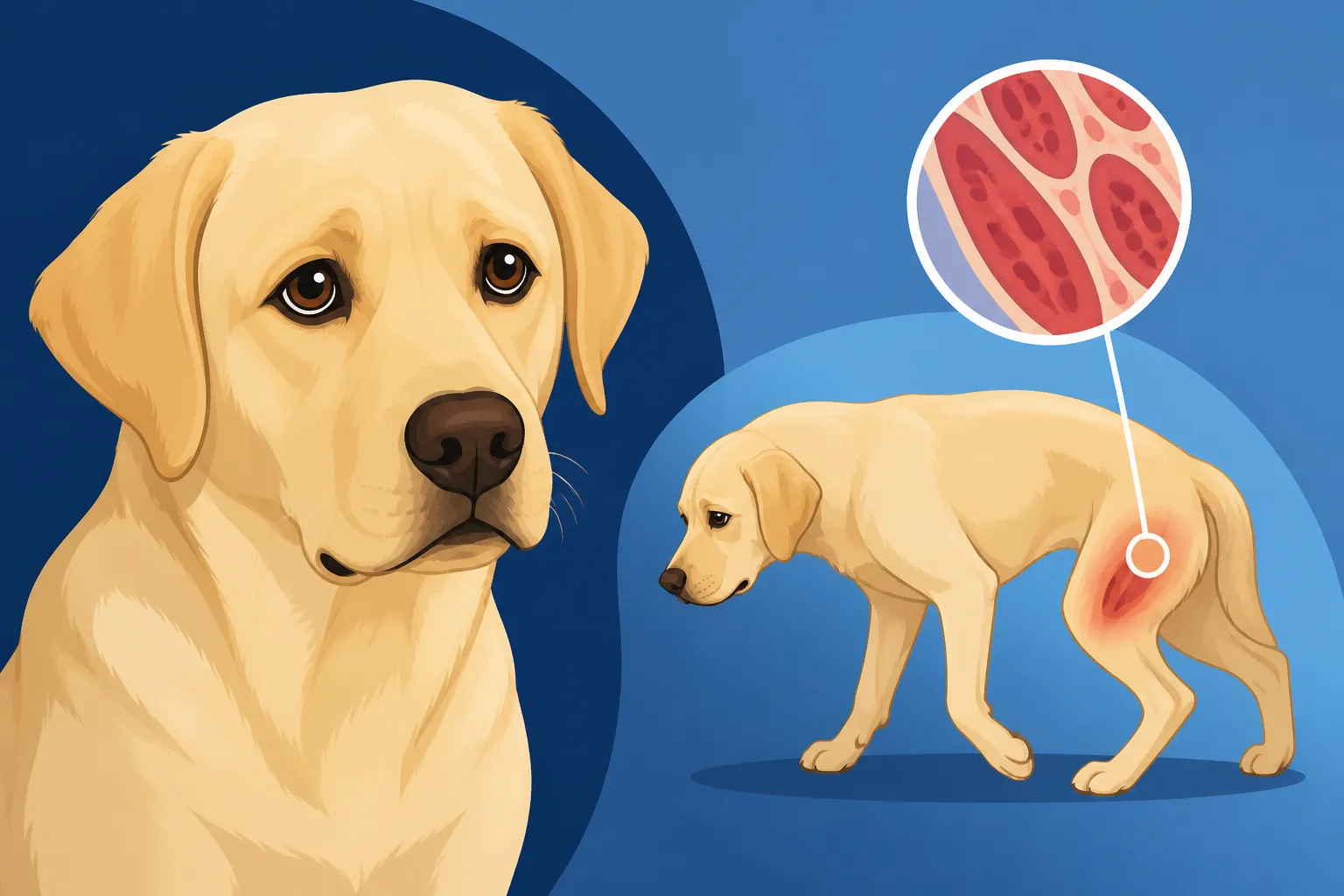
The term "centronuclear" gives us a big clue about what's happening at a microscopic level. In healthy muscle cells, the nuclei (which control the cell's functions) are typically located at the periphery, or edges, of the muscle fibers. In Labradors affected by CNM, these nuclei are abnormally located in the center of the muscle fibers. This misplacement isn't just a cosmetic detail; it profoundly interferes with how muscle cells develop and function.
This cellular abnormality leads to a cascade of problems. The muscles in a CNM-affected Labrador don't develop correctly; they remain underdeveloped and progressively weaken. This condition essentially results in generalized muscle weakness and atrophy, meaning the muscles waste away. Imagine trying to perform physical tasks when your muscles are constantly struggling, unable to generate the necessary power or sustain effort. This directly impacts a Labrador's ability to walk, run, jump, and even hold their head up. Their natural zest for life is gradually muted by their body’s inability to keep up, making even moderate Exercise a Labrador Needs Each Day an impossible feat. The once sturdy, eager Retriever starts to show a fragility that belies the breed's reputation.
Recognizing the Signs and Symptoms of CNM
One of the most frustrating aspects of CNM for owners is how its symptoms can start subtly, often mimicking normal puppy clumsiness or fatigue. However, as the disease progresses, the signs become more pronounced and truly alarming. It's a journey from concerning observations to undeniable disability.
Early Onset Symptoms in Puppies
CNM typically makes its appearance when Labradors are still quite young, usually between 3 to 5 months of age, though sometimes symptoms can be seen slightly earlier or later. This is often the prime time for puppy mischief and boundless energy, which makes the contrast even more stark. Owners might first notice their puppy seems a bit less coordinated than their littermates. They might stumble more often, struggle to keep up during play, or have difficulty going up and down stairs.
Some of the tell-tale early signs include:
- General weakness: A puppy might appear less robust, tires easily, and wants to rest more than other puppies their age.
- Abnormal gait: This is a classic indicator. Affected puppies often develop a peculiar "bunny hopping" gait, especially when running, using both hind legs simultaneously to propel themselves forward. Their stride might be shorter, and they might appear stiff.
- Clumsiness and poor balance: They might trip over their own feet or struggle to maintain balance on uneven surfaces.
- Reduced exercise tolerance: While a healthy Labrador puppy is usually a whirlwind of energy, a CNM-affected pup will quickly become fatigued after even short bursts of activity.
- Muscle wasting (subtle at first): Initially, this might be hard to spot, but their muscles, especially in the head, neck, and limbs, may not develop the typical bulk of a healthy Labrador.
It’s easy to dismiss these early signs as part of being a goofy puppy, especially during the whirlwind of a Labrador Puppy Health in the First Year. However, if these symptoms persist or worsen, it's crucial to consult your veterinarian. Don't simply assume they'll grow out of it.
Progressive Challenges as Labradors Mature
As a Labrador with CNM grows, the symptoms inevitably become more severe and debilitating. The muscle wasting becomes much more noticeable, impacting their entire physique. You might see a noticeable loss of muscle mass, particularly across their shoulders, neck, and hindquarters, giving them a much leaner, less powerful appearance than typical for the breed. Their head might appear disproportionately large compared to their atrophied neck and body muscles.
Further challenges include:
- Worsening gait: The bunny hop may become more pronounced, or they may develop a wide-based, splayed stance as they try to compensate for their instability. They may struggle significantly to rise from a lying position.
- Difficulty swallowing (dysphagia): The muscles involved in swallowing can also be affected, leading to drooling, gagging, or coughing, particularly during or after eating and drinking. This can be a serious concern, as it increases the risk of aspiration pneumonia.
- Increased exercise intolerance and collapse: Any sustained physical activity will lead to rapid fatigue, tremors, and potentially even collapse. This isn't the same as Exercise-Induced Collapse in Labrador Retrievers, which is a separate genetic condition, though both involve a breakdown during activity. With CNM, it’s a direct result of profound muscle weakness rather than a metabolic trigger.
- Respiratory issues: In advanced stages, the muscles involved in breathing can weaken, leading to labored breathing, especially during exertion or stress.
- Abnormal posture: They might stand with their head held low or display other unusual postures as they struggle against gravity and muscle weakness.
It’s vital for owners to be astute observers, as Labradors are often stoic creatures. Learning to interpret Reading Pain in a Stoic Labrador can help you catch subtle shifts in their comfort and ability, even if they're not openly vocalizing discomfort. The progressive nature of CNM means that managing their care requires constant vigilance and adaptation.
Diagnosing and Managing CNM in Your Labrador
Receiving a diagnosis of Centronuclear Myopathy for your beloved Labrador is incredibly tough news. There’s no easy fix, but understanding the condition and committing to a management plan can significantly impact their comfort and quality of life.
The Diagnostic Process
If you suspect CNM, the first step is an urgent visit to your veterinarian. They will conduct a thorough physical examination, observing your Labrador's gait, muscle mass, and overall demeanor. They’ll ask detailed questions about the onset and progression of symptoms, as well as your dog's lineage if known.
The definitive diagnosis of CNM relies heavily on two primary methods:
- Genetic Testing: This is the gold standard. A simple DNA test, usually performed using a cheek swab or blood sample, can identify the specific PTPLA gene mutation responsible for CNM. This test can confirm if a dog is affected (has two copies of the gene), a carrier (one copy), or clear (no copies). Reputable breeders will always conduct Testing Labrador Puppies for CNM or their breeding stock, making this a crucial tool for both diagnosis and prevention. Many labs, such as OptiGen and Paw Print Genetics, offer comprehensive panels that include CNM.
- Muscle Biopsy: While genetic testing is usually sufficient, a muscle biopsy can also be performed in some cases. This involves taking a small sample of muscle tissue under anesthesia and examining it under a microscope. The characteristic centronuclear placement of nuclei within the muscle fibers confirms the diagnosis. However, with the availability and accuracy of genetic testing, biopsies are less frequently used for primary diagnosis now.
Early and accurate diagnosis is essential not just for the individual dog, but for informing responsible breeding practices, which we’ll discuss shortly.
Living With a CNM Affected Labrador
There's no cure for Centronuclear Myopathy. This can be a difficult truth to accept, but it means that management focuses entirely on supportive care, maximizing comfort, and maintaining the best possible quality of life for your Labrador. This often requires a dedicated, empathetic approach from owners.
Here are key aspects of living with a CNM-affected Labrador:
- Controlled Exercise and Physical Therapy: While strenuous exercise is out, gentle, controlled movement is beneficial to maintain muscle tone and flexibility. Physical therapy, including hydrotherapy (swimming in a warm pool), can be incredibly helpful. The buoyancy of water reduces strain on weak muscles while allowing for movement. Your vet or a certified canine rehabilitation therapist can help develop a tailored exercise plan.
- Weight Management: Keeping your Labrador at a lean, healthy weight is paramount. Extra pounds place even greater stress on already weakened muscles and joints. This might mean meticulous portion control and choosing a food formulated for weight management. Remember, Why Labradors Gain Weight So Easily is a common challenge for the breed, making this even more critical for CNM dogs.
- Nutritional Support: Ensure they are receiving a high-quality diet appropriate for their needs. If swallowing difficulties arise, your vet might recommend softer foods, elevated feeding bowls, or smaller, more frequent meals.
- Mobility Aids: As the disease progresses, your Labrador might benefit from slings, harnesses, or even a custom-fitted cart to assist with mobility and independence. Ramps can also help them navigate stairs or get into and out of vehicles.
- Comfort and Environment: Provide a soft, supportive bed to prevent pressure sores. Ensure their living environment is easy to navigate, with non-slip surfaces. Keeping them warm and protected from extreme temperatures can also help manage muscle stiffness.
- Regular Veterinary Check-ups: Ongoing monitoring by your vet is crucial to address any secondary complications, manage pain, and adjust care plans as needed. This can be an expensive journey, and many owners find that a good pet insurance policy, like those offered by Healthy Paws, can be an invaluable resource to cover the ongoing costs of veterinary care, physical therapy, and potential mobility aids. When you're facing a chronic condition, having that financial safety net from a provider like Healthy Paws can truly make a difference in your ability to provide the best care without undue financial stress.
- Quality of Life Assessment: This is perhaps the hardest part. As CNM is progressive, there will come a point where quality of life must be carefully assessed. Your vet can guide you through this difficult process, helping you recognize the signs when your beloved companion is no longer enjoying a comfortable existence. It’s a similar thought process to End-of-Life Care for a Labrador, though often at a much younger age.
Remember, living with a CNM-affected Labrador is a marathon, not a sprint. It demands patience, dedication, and a deep well of love.
The Importance of Genetic Testing and Responsible Breeding
While CNM is a devastating diagnosis for an individual dog, it's a preventable disease through responsible breeding practices. The knowledge we have about its genetic basis gives us the power to protect future generations of Labradors.
Preventing CNM in Future Generations
The single most effective way to prevent CNM is through widespread genetic testing of all breeding Labradors. Before any dog is bred, both prospective parents should be tested for the PTPLA gene mutation. This simple step can eliminate the possibility of producing affected puppies.
Here's how genetic testing empowers breeders:
- Clear to Clear: If both parents test as "clear" (meaning they don't carry the gene), all their puppies will also be clear and cannot develop CNM. This is the ideal scenario.
- Clear to Carrier: If one parent is "clear" and the other is a "carrier," none of the puppies will be affected by CNM. However, approximately 50% of the puppies will be carriers themselves. These carrier puppies can then be tested, and if they are kept for breeding, they must only be bred to clear mates.
- Carrier to Carrier: This is the breeding combination to be avoided at all costs. If two carriers are bred together, statistically, 25% of their puppies will be affected with CNM, 50% will be carriers, and 25% will be clear. Producing affected puppies is an irresponsible practice when genetic testing can prevent it.
Many breeders go beyond CNM and test for a range of inherited conditions. For a comprehensive overview, you might find "Genetic Panels Worth Running on a Labrador" incredibly useful. By adhering to these practices, breeders ensure that they are not perpetuating suffering but rather contributing to the health and longevity of the breed.
Understanding Carrier Status
The term "carrier" can sometimes be misunderstood, leading to unnecessary fear. A Labrador who is a carrier for CNM is a completely healthy dog. They do not display any symptoms of the disease because they have one functional copy of the PTPLA gene that produces enough healthy protein for normal muscle function. Their life expectancy is unaffected, and they can lead full, active lives just like any other Labrador.
However, their carrier status is critically important if they are considered for breeding. An ethical breeder with a carrier dog will ensure that this dog is only bred to a mate who has tested "clear" for CNM. This strategy allows for the responsible use of valuable genetics within a breeding program without ever producing an affected puppy.
The ultimate goal of genetic testing is to reduce the prevalence of CNM in the Labrador Retriever population. By carefully managing breeding pairs based on their genetic status, we can hope to eventually eradicate this painful disease from the breed, allowing all Labradors to live out their days with the strength and joy they are so famous for. Pet insurance, such as Healthy Paws, often encourages responsible breeding practices indirectly by providing a safety net for unexpected health issues, helping new owners cope if, unfortunately, an issue like CNM does arise despite precautions.
| Aspect | Healthy Labrador Puppy (3-5 months) | CNM Affected Labrador Puppy (3-5 months) | CNM Affected Adult Labrador |
|---|---|---|---|
| Energy Level | High, boundless, plays vigorously | Easily fatigued, tires quickly during play | Very low, significant exercise intolerance, often reluctant to move |
| Gait/Movement | Coordinated, fluid, runs easily | Clumsy, stumbling, "bunny hopping," stiff, wide stance | Severe muscle weakness, pronounced "bunny hop," difficulty rising/walking, splayed limbs |
| Muscle Development | Robust, building noticeable muscle mass | Muscles appear underdeveloped, subtle wasting | Pronounced muscle atrophy (especially neck, shoulders, hindquarters), very lean appearance |
| Eating/Drinking | Eager, no difficulty swallowing | May show early signs of difficulty swallowing, drooling | Significant dysphagia (difficulty swallowing), coughing/gagging, increased aspiration risk |
| Overall Demeanor | Enthusiastic, active, playful | Quieter, less engaged in vigorous play, more resting | Subdued, limited mobility, potential respiratory distress in severe cases |
| Diagnosis | Normal physical exam, no genetic markers | Genetic test for PTPLA mutation (affected), muscle biopsy | Genetic test for PTPLA mutation (affected), clinical signs |
Disclaimer
The information provided in this article is for educational and informational purposes only and does not constitute veterinary advice. Always consult with a qualified veterinarian for any health concerns or before making any decisions about your pet's health or treatment.