Why Field Labradors Have Narrower Heads
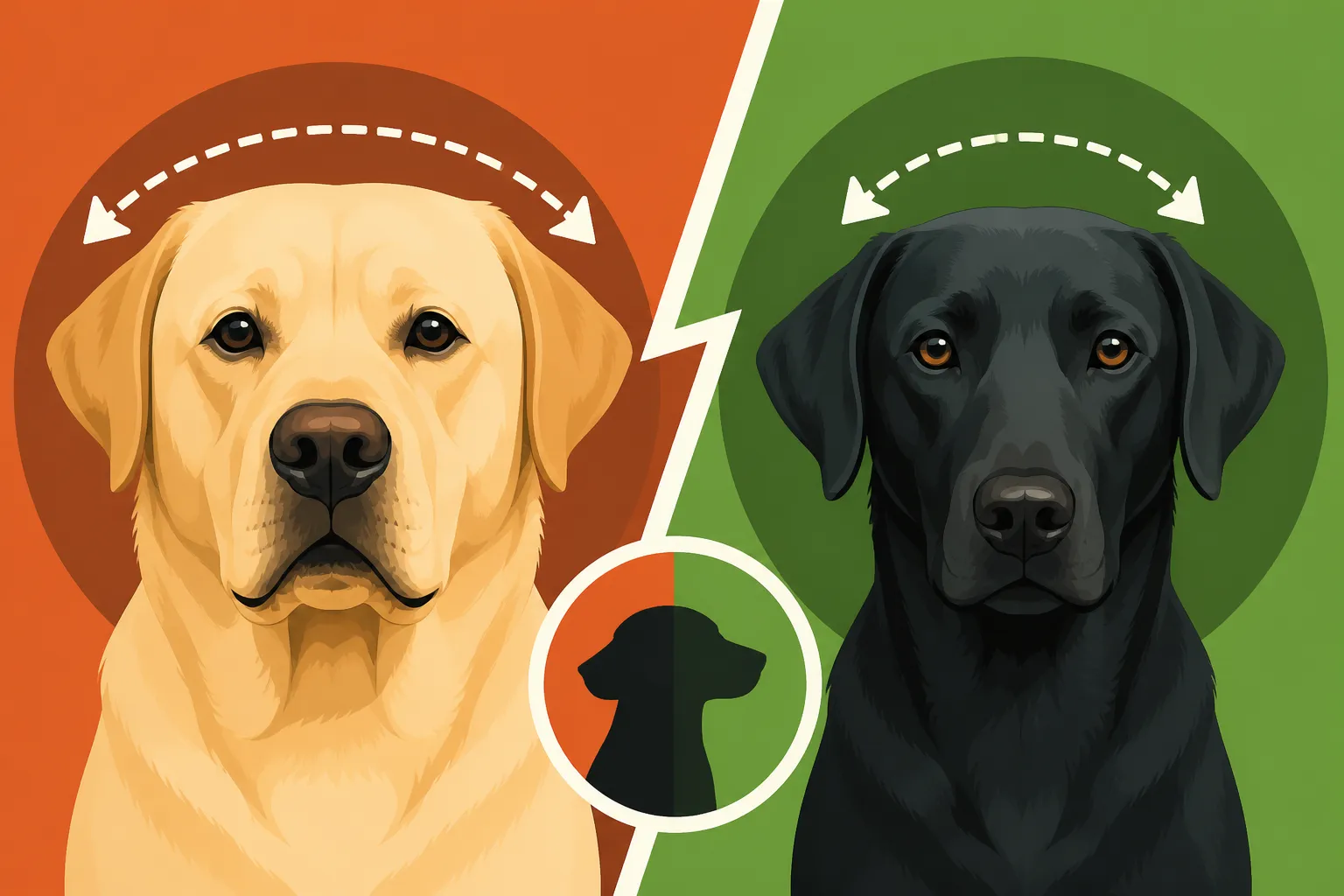
It can be incredibly perplexing when you start looking into Labradors and realize there isn't just one cookie-cutter image of the breed. You might see a picture of a sleek, almost rangy Labrador winning a field trial, and then later, a broad-headed, heavily-boned Labrador taking Best in Show. It’s enough to make you scratch your head and wonder if you’re even looking at the same breed! One of the most noticeable differences, and a frequent point of confusion, is the head shape – specifically, why Field Labradors tend to have noticeably narrower heads than their show-bred counterparts. This guide will help demystify these differences, explaining the historical, functional, and breeding reasons behind the distinct head shapes you see in our beloved Labradors.
The Tale of Two Labradors: Understanding Field and Show Lines
Before we dive into the specifics of head shape, it's really important to understand that while all Labradors are indeed the same breed, decades of selective breeding have led to a noticeable divergence in appearance and working style. Think of it like different branches of the same family tree, each focusing on slightly different ideals. This isn't unique to Labradors; many working breeds have seen similar splits over time.
Historical Divergence in Breeding Goals
Originally, Labradors were bred for one primary purpose: retrieving. They were the ultimate canine partners for fishermen and hunters in Newfoundland, developed to withstand icy waters and tirelessly retrieve game. Their earliest ancestors, the St. John's Water Dogs, were rugged, intelligent, and driven. When these dogs made their way to England in the 19th century, British noblemen recognized their immense potential and began to refine the breed. Some breeders focused on maintaining and enhancing those incredible working instincts and physical capabilities needed for hunting, while others began to select for traits that conformed to an emerging ideal "look" for the show ring.
Over time, these two paths became more distinct. While both types of breeders aimed for healthy, good-tempered dogs, their ultimate priorities diverged. One group emphasized raw athletic ability and keen retrieving prowess, while the other prioritized conformation to a written breed standard, which included specific aesthetics like head shape and bone structure.
General Characteristics of Field Line Labradors
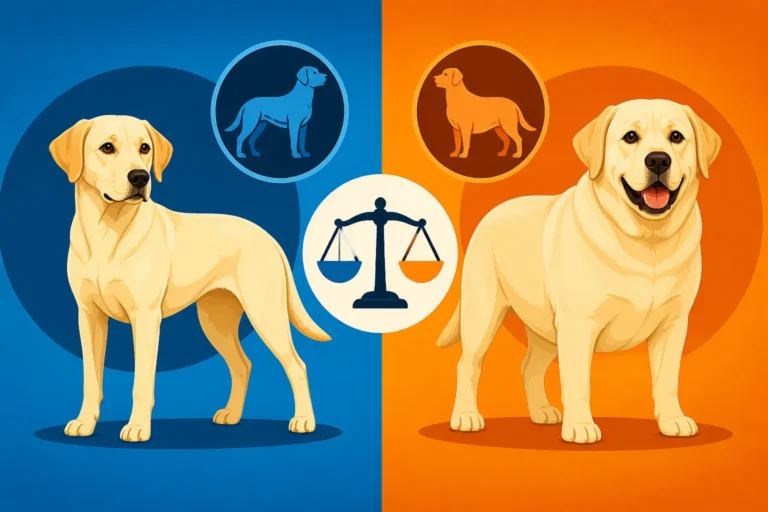
Field Line Labradors, often referred to as American Labs (though excellent field lines exist globally), are bred primarily for performance in hunting tests and field trials. Their entire physique is geared towards athleticism, speed, and endurance. They tend to be leaner, with less bone density, a more athletic build, and often a higher energy level. When you look at a Field Labrador, you'll typically notice a more streamlined appearance overall. They are bred to work tirelessly, possess incredible drive, and have an unwavering focus on the task at hand, whether it's retrieving a dummy or live game. Their temperament is usually incredibly keen, eager to please, and highly intelligent, though they often need more mental and physical stimulation than their show-bred cousins to prevent boredom or destructive behaviors. You'll often hear discussions about Field Line Labrador Traits focusing on their "engine" and drive.
General Characteristics of Show Line Labradors
Show Line Labradors, often called English Labs (again, a generalization as they are found everywhere), are bred to conform closely to the official breed standard set by organizations like the American Kennel Club (AKC) or The Kennel Club (UK). This standard outlines everything from coat texture and tail set to, crucially, head shape and overall proportions. These dogs are typically stockier, with a heavier bone structure, a broader chest, and a more "blocky" or "cobby" appearance. They are often described as having a calmer, more laid-back demeanor, which makes them excellent family companions and therapy dogs. While they still possess the strong retrieving instinct inherent in the breed, their physical build is less about explosive speed and more about power and presence in the show ring. The broader head is a hallmark trait for many successful show Labradors, adhering to the standard's preference for a powerful, but not coarse, head. If you're comparing Show Line Labrador Traits, the emphasis is often on a robust and classic appearance.
Form Follows Function: Why a Narrower Head Benefits a Field Labrador
When we consider the narrower head of a Field Labrador, it's not just a random aesthetic difference; it's a reflection of the functional demands placed on these working dogs. Every physical trait, when carefully selected for performance, tends to optimize the dog for its specific job. In the field, efficiency and endurance are paramount.
Aerodynamics and Endurance for Work
Imagine a Labrador bursting through dense cover, swimming against currents, or leaping over obstacles during a long retrieve. A narrower, less heavy head can offer subtle but significant advantages in these scenarios. A more streamlined head might reduce air and water resistance, allowing for more efficient movement, especially during powerful swimming or high-speed runs. While it might sound like a minor detail, over a long day of hunting or during competitive field trials that demand peak physical output, these small efficiencies add up, contributing to the dog's overall endurance and reducing fatigue.
This isn't to say a broader head makes a dog clumsy, but rather that a narrower head is a natural outcome of selecting for maximum agility and speed. Every ounce of unnecessary weight or resistance can slightly diminish performance, and field breeders are constantly, albeit often subconsciously, selecting for dogs whose entire physiology contributes to peak working capability. It's about optimizing the dog as a finely tuned athletic machine, capable of repeated, strenuous work without tiring easily. You can find gear for active dogs, like harnesses that don't impede movement, on sites like Chewy.
Vision and Field of View
While a definitive scientific study directly linking Labrador head shape to precise field of view might be scarce, we can infer some benefits. In the field, a retriever needs to "mark" the fall of game, often at a distance and sometimes in challenging terrain or light. This requires excellent forward and peripheral vision. A narrower head, often accompanied by a more proportionate muzzle and skull, can allow for an unobstructed field of vision. This subtle difference might mean quicker target acquisition or better peripheral awareness when navigating obstacles, ensuring the dog can spot and track game efficiently.
A broad, heavy skull could, in certain extreme cases, slightly impede the most peripheral aspects of vision, especially if it leads to eyes being set too far apart or too deeply recessed. For a dog that needs to instantly lock onto a moving target, every tiny advantage in sensory input is beneficial. It's all about providing the dog with the best possible tools for its job.
Reduced Weight and Strain on the Neck
A less heavy, narrower head also means less overall weight for the dog's neck and shoulders to support, especially during dynamic movements. Consider a Labrador shaking its head vigorously to dislodge water after a swim, or holding its head high while tracking a scent, or even just carrying a retrieve for an extended period. A lighter head reduces the leverage that can strain neck muscles and spinal structures over time. This can contribute to better long-term joint health and reduced risk of injury, particularly in a breed already prone to issues like Labrador Hip and Elbow Dysplasia.
For a dog that spends hours working, potentially carrying game in its mouth, minimizing strain on the neck and spine is a significant functional benefit. It allows the dog to maintain proper posture and reduce the likelihood of muscular fatigue or strain, ensuring they can perform at their best throughout the day without discomfort.
Breeding Priorities and the Kennel Club Standard
The fundamental reason for the divergence in head shape lies squarely in the different breeding priorities of field enthusiasts and conformation show breeders. Both groups are dedicated to the Labrador Retriever, but they interpret the breed's ideal form and function in distinct ways.
The AKC and Kennel Club Influence on Appearance
Organizations like the American Kennel Club (AKC) and The Kennel Club (UK) establish detailed breed standards that describe the ideal physical attributes of a Labrador Retriever. These standards are the bible for conformation show breeders, who strive to produce dogs that embody every aspect of that written description. When it comes to the head, The AKC Labrador Retriever Breed Standard, for example, calls for a "clean-cut, powerful, without heaviness; broad across the back of the skull gradually tapering to a powerful, but not sharp or snipey, muzzle." It emphasizes a "moderate stop" and "well-defined jaws."
Show breeders interpret "broad across the back of the skull" and "powerful" as leaning towards a blockier, more substantial head. This look projects an image of strength and classic Labrador beauty in the show ring, where judges meticulously evaluate every physical trait against the standard. The breeders who consistently produce dogs that win in these competitions are naturally selecting for the physical characteristics that align with this interpretation, including a broader, more robust head.
Field Breeders Prioritizing Performance Over Conformation
Field breeders, on the other hand, prioritize performance above all else. Their breeding stock is chosen based on proven working ability – how well they retrieve, their intelligence, their drive, their stamina, and their trainability. While they still want healthy, sound Labradors, the exact shape of the head takes a backseat to functional excellence. If a dog with a slightly narrower head demonstrates superior scenting ability, incredible marking skills, and boundless energy in the field, that's the dog a field breeder will choose for their breeding program.
The narrower head, in this context, isn't directly selected for, but rather emerges as a correlated trait within a lineage consistently bred for athleticism and efficiency. It’s part of a package of traits that includes a lighter bone structure, a leaner body, and an energetic temperament. For these breeders, a dog's ability to Train a Labrador for Gundog Work and excel in high-stakes retrieving scenarios is far more important than how closely its skull width matches a specific measurement in a breed standard.
Genetic Selection and Observable Differences
The visible differences we observe in Labradors today are a direct result of consistent genetic selection over many generations. When field breeders repeatedly choose the most agile, driven, and athletically built dogs for breeding, the genes for traits associated with that build – including a narrower skull, lighter bone, and leaner body – become more concentrated in their lines. Conversely, when show breeders select for dogs that best fit the aesthetic description of the breed standard, with its emphasis on a broad skull and substantial bone, those genes become more prevalent in show lines.
It's not about one type being "more purebred" than the other, but rather about different interpretations and applications of the breed's potential. Both lines are Labradors, but their genetic blueprints have been gently nudged in different directions, leading to the distinct physical manifestations we see. For example, while a standard Labrador food from Chewy will suffice for most, an active field dog might benefit from a higher-calorie performance formula, reflecting their different metabolic needs stemming from these genetic tendencies.
Beyond the Head: Other Distinguishing Features
While the head shape is a prominent differentiator, it's just one piece of a larger puzzle. Field and Show Labradors often differ in several other significant ways, all stemming from their specialized breeding goals. Understanding these broader differences provides even more context for why a Field Labrador's head takes on its characteristic appearance.
Overall Body Build and Bone Structure
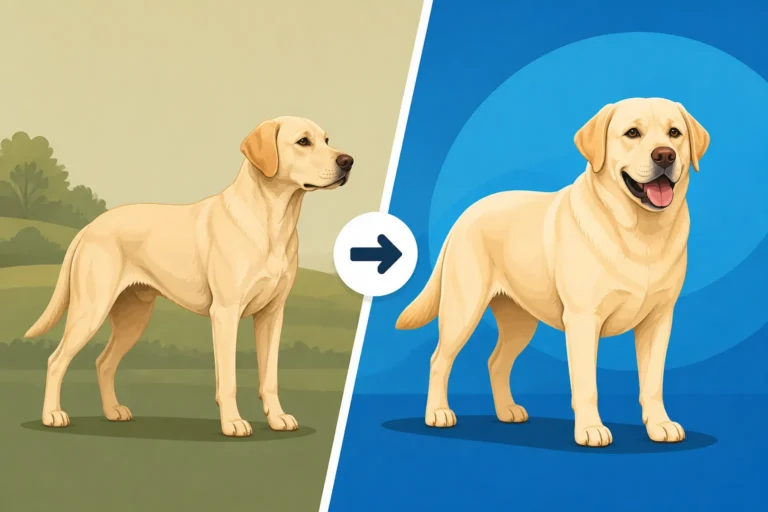
Beyond the head, the most striking difference is the overall body build. Field Labradors tend to be more lightly built, with finer bone structure and a more athletic, somewhat rangy physique. They are often described as "leggy" or "houndier" in appearance. Their chest might be slightly narrower, and their body lines more angular, all contributing to an agile, high-performance frame designed for speed and explosive movement. Think of them as endurance athletes.
Show Labradors, conversely, are typically heavier-boned, more compact, and possess a blockier, more powerful build. They have a broader chest, a deeper body, and a generally more "solid" appearance. Their structure is intended to convey power and substance, conforming to the traditional image of the Labrador as a robust and sturdy retriever. This is one of the key differences often discussed when people ask How English and American Labradors Differ.
Temperament and Energy Levels
The differences extend beyond physical appearance to temperament and energy. Field Labradors are renowned for their intense drive, boundless energy, and unwavering focus. They thrive on having a job to do and require significant amounts of physical exercise and mental stimulation to be content. If you're considering a field line dog, be prepared for long walks, engaging training sessions, and plenty of activity. Their Labrador Temperament and Personality often leans towards being highly "on" and always ready for action.
Show Labradors, while still active and playful, generally possess a calmer, more laid-back demeanor. They are often chosen for their stable, gentle nature, making them excellent family pets who enjoy a good walk and some playtime, but might be more content to curl up on the couch afterward. While they still need regular Exercise a Labrador Needs Each Day, their daily requirements might be less intense than those of a field-bred dog.
Coat Type and Thickness
Although both types of Labradors share the breed's hallmark double coat, there can be subtle variations in its presentation due to breeding priorities. The Labrador Coat Type in the Standard describes a "short, dense, rather hard to the touch, and, of course, a good undercoat to give protection from water, cold, and all types of cover." Show Labradors typically showcase this ideal with a very dense, often thicker outer coat and a plush undercoat, which gives them a substantial, well-groomed appearance.
Field Labradors will still have the essential water-resistant double coat, but it might sometimes appear slightly less dense or "heavy" than that of a show line dog. This can be a functional adaptation, as a slightly less bulky coat might allow for greater freedom of movement in dense cover or quick drying after water retrieves. The key for both, however, is the protective, weather-resistant quality that defines the breed.
To summarize these key distinctions:
| Feature | Field Line Labrador | Show Line Labrador |
|---|---|---|
| Head Shape | Narrower, more refined, streamlined | Broader, blockier, more substantial |
| Overall Build | Leaner, more athletic, "leggy," lighter bone | Stockier, heavier bone, more compact, "cobby" |
| Chest | Often narrower, deeper | Broader, deeper |
| Energy Level | High drive, intense, requires significant exercise | Moderate energy, calmer, good family companion |
| Primary Focus | Performance, working ability, athleticism | Conformation, breed standard adherence, temperament |
| Coat Density | Sufficiently dense for protection, can be slightly less voluminous | Very dense, plush undercoat, robust appearance |
Ultimately, the choice between a Field or Show Labrador depends entirely on your lifestyle, expectations, and what you are looking for in a canine companion. Both are wonderful dogs, but understanding their distinct characteristics, including Why Field Labradors Have Narrower Heads, will help you find the perfect fit for your home.
Disclaimer
This article is for general informational purposes only and does not constitute professional advice. Laws, prices and regulations vary by location and change over time. Consult a qualified professional for guidance on your specific situation.