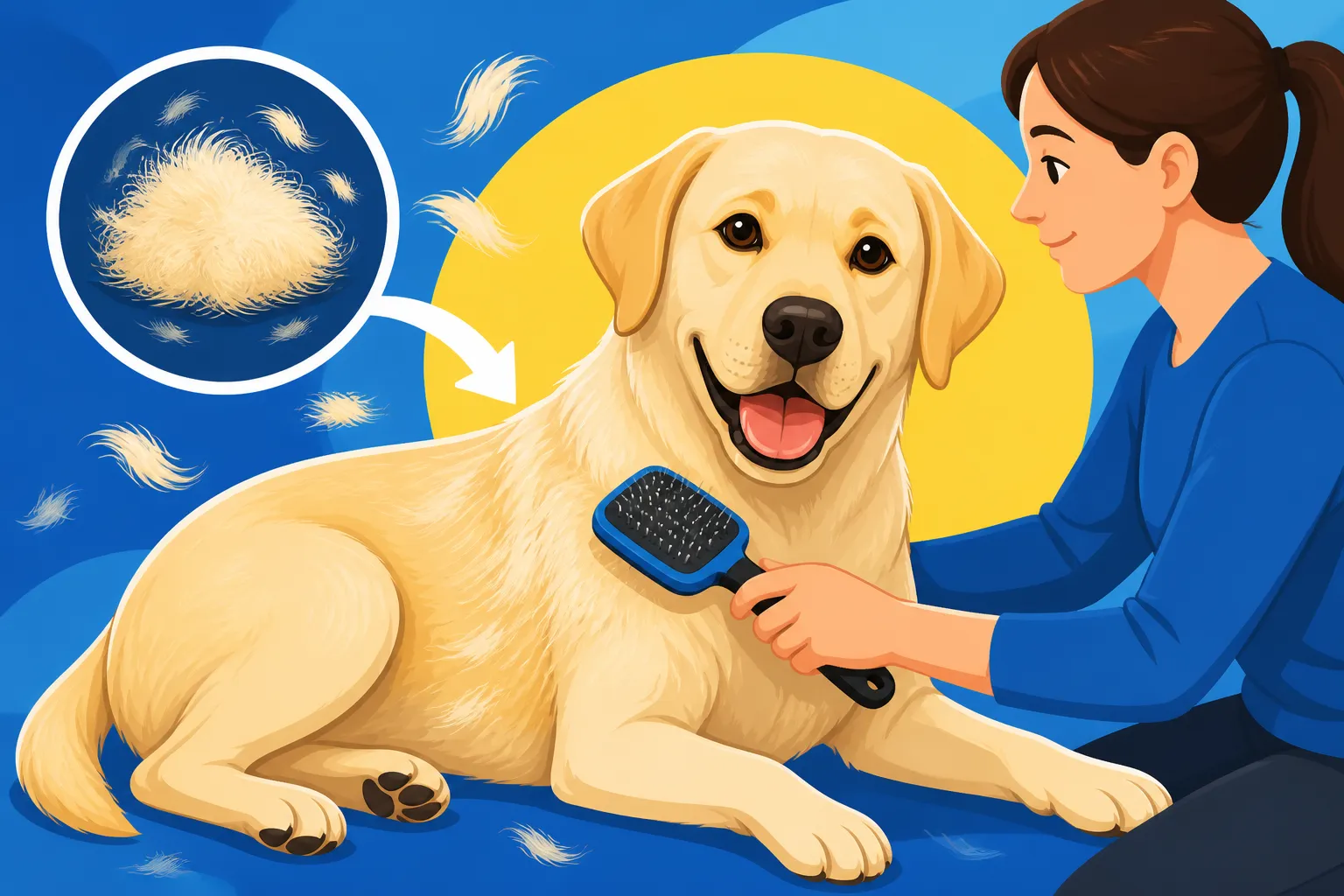
Brushing a Labrador During Coat Blow
Oh, the infamous Labrador coat blow! If you've ever owned a Lab, you know exactly what I'm talking about. It's that magical time of year when your beautiful, loving companion transforms into a shedding machine, leaving a fine (or not-so-fine) layer of fur on everything you own. It can feel like an uphill battle, but don't despair! This guide is here to walk you through exactly how to brush your Labrador effectively during these intense shedding periods, helping you reclaim your home (and your sanity).
Understanding the Labrador "Coat Blow" Phenomenon
Let's start by demystifying this hairy situation. Labrador Retrievers have a magnificent double coat, perfectly designed to protect them from the elements – think icy water, thorny bushes, and everything in between. This coat consists of two distinct layers: a coarse, water-resistant outer coat (the guard hairs) and a soft, dense, insulating undercoat. It's this undercoat that causes all the drama during a "coat blow."
What is Coat Blow?
Coat blow, sometimes referred to as "blowing coat" or "seasonal shedding," is a natural and necessary process where your Labrador sheds a significant portion of their undercoat in preparation for changing temperatures. It's not just regular shedding, which happens year-round; this is an accelerated, high-volume event. Imagine your Lab wearing a thick winter sweater and then deciding it's time for a lighter spring jacket – they have to get rid of the old one first! Their bodies respond to changes in daylight hours and temperature, signaling it's time to either thicken up for winter or lighten up for summer.
The undercoat hairs are much softer and finer than the guard hairs, and they come out in great clumps and tufts. If you've ever found what looks like a small, fluffy cloud of fur drifting across your living room floor, you've experienced the coat blow firsthand. It's an important process for their skin and coat health, allowing new, healthy hair to grow in and regulate their body temperature more effectively.
The Sheer Volume of Hair
Let's be real, the amount of hair a Labrador can shed during a coat blow is truly astounding. It defies belief sometimes! You might brush your dog for an hour, fill a grocery bag with fur, and then turn around to find another tumbleweed of hair rolling by. It's not uncommon for people to joke that they could knit a whole new dog with the amount of fur they collect. This isn't an exaggeration – it truly can feel like a never-ending blizzard of Labrador hair. It gets on your clothes, sticks to your furniture, magically appears in your coffee, and somehow even manages to get into sealed containers.
This heavy shedding can be incredibly frustrating, leading many owners to feel overwhelmed and perhaps a little defeated. The constant cleaning, the battle against fur accumulation, and the feeling that you just can't get ahead can be tiresome. But understanding why it happens and arming yourself with the right tools and techniques can make a huge difference in managing this intense period. We talk more about general shedding management in Labrador Shedding and How to Manage It, but this article focuses on the peak times.
When Does It Happen?
For most Labradors, coat blow typically occurs twice a year: in the spring and in the fall.
- Spring Coat Blow: As the days get longer and temperatures begin to rise, your Labrador will start to shed their thick winter undercoat. This usually happens around March or April, preparing them for the warmer months ahead. This tends to be the most dramatic shedding event, as they're ditching the heaviest insulation.
- Fall Coat Blow: In anticipation of winter, your Lab will shed their lighter summer coat to make way for a denser, warmer undercoat. This generally kicks in around September or October. While still significant, the fall coat blow is often less intense than the spring one, as they're not shedding as much bulk.
However, these are just general guidelines. Individual Labs can vary, and environmental factors play a role. If your Labrador spends a lot of time indoors with consistent artificial light and temperature, their body's cues might be slightly altered, making their shedding less strictly seasonal and sometimes more spread out, though you'll still notice peaks. The instinct to prepare for seasonal changes is deeply ingrained, though, so even indoor dogs will experience these heavier periods.
Essential Tools for Tackling the Coat Blow
You wouldn't go into battle without the right armor, and you shouldn't face a Labrador coat blow without the right grooming tools! Having the proper equipment can transform a frustrating, ineffective brushing session into a productive one.
Deshedding Tools: Your Best Friends
When it comes to coat blow, deshedding tools are absolutely indispensable. These aren't just your everyday brushes; they're specifically designed to reach deep into your Labrador's dense undercoat and gently pull out loose, dead hair without damaging the healthy topcoat.
- The De-shedding Rake/Blade: Many brands offer variations of this tool, often with fine, short teeth that are spaced to comb through the undercoat. These can be incredibly effective at lifting large amounts of loose fur. The key is to use them with a light hand and short strokes.
- Rubber Curry Brush (like the Zoom Groom): While not as aggressive as a de-shedding rake, a rubber curry brush is excellent for loosening dead hair, stimulating the skin, and bringing surface shedding to the forefront. It's also fantastic for use during baths to help work shampoo through the coat and dislodge stubborn fur. This is a very gentle option and a great starting point for Labs new to heavy grooming. We discuss using this tool in more detail in Using a Rubber Curry on a Labrador.
- Slicker Brushes: For the top layer of shedding and general smoothing, a slicker brush can be helpful. It has fine wire bristles that are slightly bent. While not primarily an undercoat remover, it can catch some loose guard hairs and give the coat a nice finish.
When choosing these tools, you'll find many options available from popular online retailers like Chewy and Amazon. Always read reviews and consider your Labrador's coat type – some Labs have a slightly softer or coarser undercoat than others. Remember, the goal is to remove dead hair, not to cut or pull live hair, so choose tools appropriate for their dense double coat. For more information on brush types, check out Which Brush Works on a Labrador Coat.
Rakes and Combs
Beyond the dedicated deshedding tools, a good quality undercoat rake and a wide-toothed comb can also be useful, especially for getting into the thicker areas.
- Undercoat Rakes: These often have longer, widely spaced teeth than de-shedding blades, designed to penetrate very dense undercoats. They're great for areas where the fur is particularly thick, such as around the neck, hindquarters, and tail. While Labradors aren't prone to matting like some longer-haired breeds, a rake can help ensure all the loose undercoat is thoroughly addressed.
- Wide-toothed Combs: A sturdy metal comb with wide teeth can be helpful after using a deshedding tool to check for any remaining snags or loose tufts. It's a good finishing tool to ensure the coat is free of major tangles (again, rare for Labs, but good practice).
These tools generally complement your primary deshedding efforts. They allow you to be more precise and thorough in certain areas, ensuring you're not leaving any thick pockets of shedding fur behind.
The Humble Vacuum and Lint Roller
Let's not forget the cleanup crew! While not grooming tools for your dog directly, a powerful vacuum cleaner and a stash of lint rollers are absolutely essential for maintaining some semblance of order during coat blow. You'll be surprised how much hair settles around your dog even during a dedicated brushing session.
- Vacuum Cleaner: Look for models designed for pet hair, as they often have stronger suction and specialized attachments. You'll be using it daily, if not twice a day, during peak shedding.
- Lint Rollers: Keep them everywhere – by the door, in your car, in your purse. They're your quick-fix solution for getting fur off your clothes, furniture, and car seats. You can often find multi-packs on Amazon or at your local pet supply store.
| Tool Type | Best Use During Coat Blow | How it Works | Frequency |
|---|---|---|---|
| Deshedding Tool (e.g., Furminator-style rake/blade) | Removing bulk loose undercoat | Fine, spaced teeth pull out dead undercoat | 2-3 times per week (peak) |
| Rubber Curry Brush (e.g., Zoom Groom) | Loosening surface hair, stimulating skin | Rubber nubs massage skin, gather loose hair | Daily (peak), during baths |
| Undercoat Rake | Penetrating thickest undercoat areas | Longer, blunt teeth separate and pull out dead undercoat | 1-2 times per week (peak) |
| Slicker Brush | Surface shedding, smoothing topcoat | Fine wire bristles catch loose guard hairs | As needed for topcoat, daily for general tidiness |
| Wide-Toothed Comb | Finishing, checking for missed areas | Sturdy metal teeth ensure thoroughness | After deshedding, as a check |
Brushing Techniques for Maximum Effectiveness
Now that you've got your arsenal of tools, let's talk technique. The goal isn't just to brush your dog, but to brush them effectively and comfortably to maximize loose hair removal and minimize stress for both of you.
Setting Up for Success
Before you even touch a brush to your Lab, a little preparation goes a long way.
- Choose the Right Location: If possible, brush your Labrador outdoors, especially during peak coat blow. The wind will help carry away loose hair, saving your indoor floors. If you must brush inside, choose an area that's easy to clean, like a tiled floor, and consider laying down an old sheet or blanket to catch the worst of the fur.
- Timing is Key: Pick a time when your Labrador is calm and relaxed. A tired Lab after a good walk or play session is often more cooperative. Avoid rushing the process; if you're stressed, they'll pick up on it.
- Positive Reinforcement: Make brushing a positive experience! Have plenty of high-value treats on hand. Start with short sessions, especially if your dog isn't used to intensive grooming. Praise them constantly, and reward their cooperation. You want them to associate brushing with good things, not discomfort or boredom. This builds trust and makes future sessions much easier.
Step-by-Step Brushing Method
Once you're set up, follow these steps for an effective coat blow brushing session:
- Start with a Gentle Sweep (Rubber Curry or Slicker): Begin by using a rubber curry brush or a slicker brush to give the entire coat a general once-over. This helps to loosen the very top layer of dead hair and gets your Labrador accustomed to the feeling. Brush in the direction of hair growth, using long, steady strokes. This initial pass also helps you assess where the densest areas of shedding are.
- Introduce the Deshedding Tool (with Care): Now, bring out your primary deshedding tool. This is where you need to be mindful.
- Always brush in the direction of hair growth. Never go against the grain, as this can be uncomfortable and potentially irritate the skin.
- Use short, light strokes. Do not press down hard. The tool's design allows it to catch loose undercoat with minimal pressure. Applying too much force can cause brush burn, irritation, or even damage their skin.
- Focus on sections. Work methodically, starting from the neck and moving down their back, sides, and hindquarters. Pay extra attention to areas with dense fur, like the "feathering" on their thighs or the thicker fur around their rump and neck.
- Remove accumulated fur frequently. Your deshedding tool will quickly fill up with hair. Stop often to pull the collected fur off the tool – this keeps it working efficiently and shows you just how much you're removing!
- Limit your time with aggressive tools. While effective, continuous use of deshedding blades can sometimes irritate the skin. Aim for 10-15 minute sessions with these tools during peak shedding. If you're getting a lot of hair, you can do this daily or every other day, but don't overdo it in one sitting.
- Finish with a Comb or Gentle Brush: Once you feel you've removed a significant amount of undercoat, finish up with a wide-toothed comb or a soft bristle brush. This helps to smooth the topcoat, remove any remaining loose hairs on the surface, and check your work.
Hypothetical Scenario: Imagine it's early spring, and your Lab, Buster, is shedding like crazy. You take him outside to the patio. You start with a gentle rubber curry brush, massaging his back. He leans into it, enjoying the attention. Then you switch to your deshedding rake. You make short, gentle strokes down his back, and poof, a cloud of undercoat appears. You pause, empty the tool, and give Buster a treat and a "good boy!" You move to his sides, working slowly, then gently down his hips. Within 15 minutes, you've collected a decent pile of fur, and Buster is still happy, perhaps even sleepy. You finish with a soft brush, a final treat, and then you're ready for cleanup.
Bathing and Drying Strategies
A bath can be a surprisingly effective part of managing a coat blow, as water and shampoo can help loosen a tremendous amount of dead hair, especially when followed by thorough drying.
- The Loosening Bath: Use a good quality deshedding shampoo. Many brands offer formulas specifically designed to help release undercoat. Lather your Labrador thoroughly, ensuring the shampoo penetrates down to the skin. Allow the shampoo to sit for a few minutes as directed to do its work. While the shampoo is on, use your rubber curry brush to gently scrub and massage the coat, helping to dislodge more loose hair.
- Rinse, Rinse, Rinse: Rinse your Labrador thoroughly, making sure to remove all traces of shampoo. Any residue can irritate their skin and contribute to flaking.
- The Power of Drying: This is where the magic happens. After towel-drying your Lab as much as possible, if you have access to a high-velocity dog dryer (a forced-air dryer, not a human hairdryer!), this is its moment to shine. The powerful stream of air will literally blow out huge amounts of loose undercoat that the brush might have missed. Work in sections, holding the skin taut, and watch the fur fly (preferably outside or in an easy-to-clean bathroom). If you don't have a high-velocity dryer, multiple towel-drying sessions and allowing them to air dry while doing some light brushing can still help. For more bathing tips, refer to Bathing a Labrador Retriever.
Remember, a Labrador's coat is naturally water-resistant due to the oils in their fur and the density of their undercoat. Ensure they are completely dry after a bath to prevent skin issues.
Beyond the Brush: Managing Shedding Year-Round
While coat blow is an intense event, Labradors are year-round shedders. Incorporating good habits into your regular routine can make those peak shedding times much more manageable and keep your Lab's coat healthy.
Regular Brushing (Even When Not Blowing Coat)
Don't put your brushes away just because coat blow has subsided! Regular, shorter brushing sessions throughout the year are crucial. Even outside of seasonal changes, Labradors shed a fair amount. Daily or every-other-day brushing for 5-10 minutes can:
- Remove loose hair: This prevents it from ending up on your furniture and floors.
- Distribute natural oils: Brushing helps spread the natural oils produced by their skin, keeping their coat healthy and shiny.
- Stimulate blood circulation: A good brush acts like a massage, which is great for skin health.
- Strengthen your bond: Many Labs enjoy being brushed, and it can be a wonderful bonding activity.
Think of it as maintenance. Consistent small efforts prevent massive clean-up emergencies. You can find more details on how much a Labrador typically sheds in How Much a Labrador Sheds Year Round.
Nutrition and Coat Health
What goes into your Labrador affects what comes out (literally, in this case!). A healthy, well-nourished coat sheds less excessively and looks better overall.
- High-Quality Dog Food: Feed your Labrador a high-quality dog food that lists real meat as the first ingredient and has a balanced nutritional profile. Cheap, filler-heavy foods often lead to a duller coat and increased shedding.
- Omega Fatty Acids: Look for foods rich in Omega-3 and Omega-6 fatty acids, or consider adding a supplement. These fatty acids are vital for skin and coat health, promoting a shiny coat and reducing dryness, which can contribute to shedding. Many premium dog food brands, available at retailers like Chewy or Ollie, focus on these beneficial ingredients.
- Hydration: Ensure your Labrador always has access to fresh, clean water. Good hydration is essential for overall health, including skin and coat condition.
A healthy diet provides the building blocks for strong hair follicles, meaning less breakage and healthier shedding patterns. For guidance on selecting the right food, check out Choosing Dog Food for a Labrador Retriever.
Environmental Management
Let's face it, some of the shedding battle is about managing the aftermath.
- Frequent Vacuuming: During coat blow, you might need to vacuum daily or even twice a day. Invest in a good pet hair vacuum.
- Furniture Covers: Consider washable covers for your couches, chairs, and beds. This makes cleanup much easier and protects your upholstery. You can easily find these on Amazon.
- Dedicated Dog Bedding: Provide comfortable, easily washable dog beds. This gives them a designated "shedding zone" and keeps fur off your own bedding.
- Car Maintenance: If your Lab rides in the car, invest in a good car seat cover or hammock. This protects your vehicle's interior and contains the hair.
These simple strategies help contain the fur and prevent it from completely taking over your living space. More tips on keeping your home fur-free are available in Keeping Labrador Hair Off the Furniture.
When to Worry
While heavy shedding is normal for Labradors, there are times when it could signal an underlying health issue. If you notice any of the following, it's a good idea to consult your veterinarian:
- Excessive shedding outside of typical coat blow periods: If your Lab is suddenly shedding heavily in an unusual season, or for a prolonged, unexplained duration.
- Bald spots or thinning hair: This is not typical for healthy shedding and could indicate skin infections, parasites, allergies, or hormonal imbalances.
- Redness, irritation, or sores on the skin: Excessive scratching, licking, or chewing, coupled with shedding, could point to allergies or skin conditions.
- Dull, brittle, or greasy coat: A healthy Labrador coat should be somewhat shiny and resilient. A dramatic change could indicate a nutritional deficiency or health problem.
- Flaking skin or dandruff: While a little is normal, excessive flaking can be a sign of dry skin, allergies, or other dermatological issues.
Conditions like Labrador Ear and Skin Disease or Hot Spots and Allergies in Labradors can sometimes manifest with changes in coat and shedding. Trust your gut – if something feels off with your Labrador's coat or skin, a vet visit is always the best course of action. They can rule out medical problems and offer tailored advice.
Disclaimer
This article is for general informational purposes only and does not constitute professional advice. Laws, prices and regulations vary by location and change over time. Consult a qualified professional for guidance on your specific situation.