The St. John’s Water Dog Behind the Labrador
It’s easy to get lost in the sheer joy and boundless energy of our modern Labradors, but have you ever stopped to wonder where all that wonderful retrieving drive and water-loving nature actually came from? The story of the Labrador Retriever isn't just about a dog; it's a fascinating tale of survival, partnership, and a unique working breed shaped by the harsh realities of the North Atlantic. This guide will take you back in time to meet the remarkable ancestor of our beloved Labs: the St. John's Water Dog, revealing its history, purpose, and eventual fade from existence.
The St. John's Water Dog: An Ancestor Defined by Work
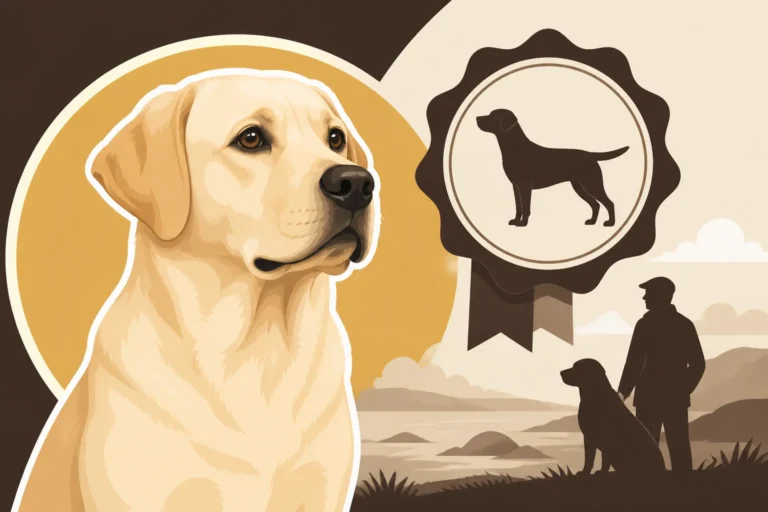
Before the Labrador Retriever became the well-known breed we adore today, there was another dog that roamed the coasts of Newfoundland, Canada. This was the St. John's Water Dog, a true working companion for fishermen, not a pampered pet. It's often forgotten that many of our modern breeds have such humble, yet incredibly vital, origins. These dogs weren't bred for show or fancy pedigrees initially; they were bred for function, resilience, and a partnership with humans that meant survival in a challenging environment. Understanding this past helps us truly appreciate the inherent traits of our Labradors.
Physical Characteristics and Temperament
The St. John's Water Dog wasn't quite the Labrador you might picture today, though the resemblance would be clear. They were medium-sized, sturdy dogs, possessing a powerful build designed for endurance rather than speed. Imagine a dog that could brave icy waters and pull heavy nets. They had a dense, oily double coat that was supremely water-resistant, shedding off moisture like a duck's feathers. Their tails were thick at the base and tapered, often described as an "otter tail," acting like a rudder in the water – a feature still cherished in The Labrador Otter Tail Explained. Their temperament was equally suited to their demanding role: they were intelligent, loyal, incredibly eager to please, and possessed an almost insatiable desire to retrieve. This strong retrieving drive wasn't just a game; it was an essential part of their job.
They were known for being incredibly hardy, uncomplaining, and fiercely devoted to their human companions. These dogs worked tirelessly alongside their owners, retrieving fish that had slipped from nets, lines, or hooks, and even fetching ropes or bringing in small boats. They lived rough lives, often sleeping outdoors or in simple shelters, and their diets would have been whatever scraps the fishermen could spare, predominantly fish. This upbringing forged a dog that was resilient, adaptable, and incredibly focused on its task, traits that are still deeply embedded in the Labrador psyche today.
Distinctive Traits for Working Conditions
Several distinctive traits allowed the St. John's Water Dog to excel in its specific working environment. Beyond their famous otter tail and water-resistant coat, they had webbed feet, much like our modern Labs, which made them incredibly efficient swimmers. This webbing gave them a propulsion advantage in the water, allowing them to navigate the cold, choppy waters off Newfoundland with relative ease. It wasn't just about swimming; it was about swimming effectively in challenging conditions.
Their jaws, while strong, were known for a "soft mouth" – a crucial characteristic for a retriever whose job was to bring back fish or fowl without damaging it. A dog that crushed the catch was useless. This soft mouth meant they could gently carry delicate items, a trait that makes our Labs excellent at carrying anything from a squeaky toy to a freshly laid egg without breaking it. This combination of physical adaptations and innate temperament made them indispensable tools for the fishermen, far more than just pets. Their ability to work independently yet remain responsive to commands was paramount in a profession where quick thinking and reliable partnership were critical.
Life in Newfoundland: The Dog's Original Purpose
The rugged, often unforgiving landscape of Newfoundland was where the St. John's Water Dog truly earned its stripes. These dogs were integral to the fishing communities, not just as companions but as essential members of the workforce. Their daily lives were dictated by the sea, the weather, and the needs of their human partners. It was a symbiotic relationship built on mutual reliance and respect, a testament to the powerful bond between humans and working dogs.
Working Alongside Fishermen
Imagine a small fishing boat pitching and rolling in the icy North Atlantic. A fish slips from the net, or a line breaks, threatening to be lost to the depths. This is where the St. John's Water Dog shone. They would leap into the frigid water without hesitation, retrieving anything that fell overboard. Their stamina was legendary; they could work for hours in conditions that would quickly incapacitate other breeds. They were also used to carry messages between boats or from boat to shore, proving their intelligence and trainability beyond simple retrieving tasks.
These dogs were essentially living tools, indispensable for the economic survival of their human families. Their efforts directly contributed to the daily catch, making them invaluable assets. They weren't just fetching; they were saving valuable resources, whether it was a fish destined for market or a piece of equipment vital for continuing the day's work. The sheer resourcefulness and willingness to work ingrained in these dogs formed the foundation for the Labrador Temperament and Personality we know today.
Adaptations to a Harsh Climate
Newfoundland is known for its harsh winters and cold waters, making it a challenging environment for any creature. The St. John's Water Dog's physical traits were direct adaptations to these extreme conditions. Their thick, oily double coat provided insulation against the cold and repelled water, preventing hypothermia. The outer coat was coarse and shed water, while the dense, soft undercoat trapped warm air against their skin. This natural waterproofing meant they could spend significant time in the water without becoming waterlogged or chilled.
Their sturdy build and strong musculature allowed them to withstand the physical demands of swimming through strong currents and hauling items, even through ice-choked waters. Unlike many breeds that might shiver at the thought of a winter dip, these dogs were literally built for it. They embodied a tough, resilient spirit that was a direct reflection of their environment and the people they served. This incredible hardiness is a legacy that continues to make Labradors such robust and adaptable dogs even now.
The Journey Across the Atlantic: How They Reached England
While the St. John's Water Dog was a fixture in Newfoundland, its journey to becoming the foundation of the Labrador Retriever breed began with its arrival in England. British noblemen and sportsmen, always keen on acquiring superior working dogs, were captivated by the tales and eventually the sight of these incredible retrievers. This marked a pivotal moment, shifting the dog from a purely utilitarian role in a remote fishing village to the genesis of a celebrated sporting breed.
Early European Interest and Imports
In the early 19th century, British ships frequently visited Newfoundland for fishing and trade. It was during these voyages that British noblemen and sportsmen first encountered the St. John's Water Dog. They were immediately struck by the dogs' intelligence, loyalty, and unparalleled retrieving abilities, especially in water. These were qualities highly prized for waterfowl hunting in Britain, where similar retrieving dogs were already popular but perhaps lacked the specific robust nature of the Newfoundland dogs.
The dogs were initially brought to Britain as companions for these noblemen and were referred to by various names, often simply "Newfoundland dogs" or "Lesser Newfoundlands" to distinguish them from the larger, fluffier Newfoundland dog breed. They were not yet known as Labradors. These early imports laid the groundwork for the breed's development, attracting the attention of influential figures who would become instrumental in shaping what was to come. These individuals recognized the incredible potential in these resilient working dogs.
The Role of Aristocracy in Preservation
Perhaps the most significant figures in the early development of the Labrador were the Earls of Malmesbury and the Dukes of Buccleuch. The 2nd Earl of Malmesbury, for example, imported St. John's Water Dogs to his estate in Dorset around the 1830s and began breeding them specifically for use as gundogs. He referred to them as his "Labrador Dogs," a name thought to derive from the Labrador region of Newfoundland, even though the dogs originated from the island of Newfoundland itself – a common point of confusion that makes us wonder Why the Labrador Is Named After the Wrong Place.
The 3rd Earl of Malmesbury later sent some of these dogs to the 6th Duke of Buccleuch, who, along with his cousin the 5th Duke of Buccleuch, maintained a highly regarded kennel of St. John's Water Dogs. These aristocratic breeders were meticulous, keeping detailed records and focusing on preserving the working qualities of the dogs. Without their dedicated efforts and foresight, it's highly likely that the St. John's Water Dog might have disappeared entirely without leaving such a profound legacy. Their influence was paramount in establishing the breed in Britain.
Evolution into the Modern Labrador: Breeding and Recognition
The transition from the rugged St. John's Water Dog to the recognized Labrador Retriever was a deliberate process, driven by the desires of British sportsmen to hone a perfect gundog. It involved selective breeding, careful record-keeping, and eventually, formal recognition by kennel clubs. This period marked the true birth of the Labrador Retriever as a distinct breed.
Selective Breeding and Desired Traits
The British breeders, primarily the aristocracy, focused on intensifying the desirable traits of the St. John's Water Dog. They sought to enhance their retrieving abilities, intelligence, biddability, and their strong affinity for water. While some outcrossing to other retriever types likely occurred, the core essence of the St. John's Water Dog remained central. The goal was to create a dog perfectly suited for retrieving game, particularly waterfowl, from land and water without damaging it.
This selective breeding concentrated on developing the specific physical characteristics we associate with Labradors today: the powerful build, the dense double coat, the otter tail, and the gentle mouth. Traits like enthusiasm, a calm demeanor indoors, and an eagerness to please were also heavily favored, as these made for a more manageable and effective gundog. The consistency in breeding led to a more uniform type, distinct enough to be considered a new, recognized breed. This meticulous approach highlights the passion early breeders had for The Labrador Retriever Breed Explained.
Formalizing the Labrador Retriever
The dedicated work of these early breeders eventually led to the formal recognition of the Labrador Retriever as a distinct breed. The Kennel Club in England officially recognized the Labrador Retriever in 1903. This was a monumental step, marking the breed's establishment and setting it apart from its Newfoundland ancestors and other retriever types. With recognition came a breed standard, which outlined the ideal physical and temperamental characteristics, guiding future breeding efforts.
This formalization solidified the breed's identity and helped ensure its continued development and popularity. Soon after, the breed made its way to North America, where it also gained rapid popularity, eventually becoming one of the most beloved and widely recognized dog breeds in the world. The shift from a fishing dog to a recognized gundog breed was complete, yet the working heart of its St. John's Water Dog ancestors beat strongly within it. Modern Labradors, whether show or field line, still carry these foundational traits. You can see the echoes of their past in how they eagerly carry things in their mouths or dive into any body of water, whether it's a lake or just a puddle from the hose.
| Trait | St. John's Water Dog (Early 19th Century) | Modern Labrador Retriever (21st Century) |
|---|---|---|
| Primary Purpose | Fisherman's assistant (retrieving gear, fish) | Gundog (retrieving fowl), Family Pet, Service Dog |
| Habitat | Newfoundland fishing villages, rugged coastlines | Global, diverse environments (homes, fields, cities) |
| Appearance (General) | Medium-sized, sturdy, black coat common | Medium to large, robust, black, yellow, chocolate coats |
| Coat Type | Dense, oily double coat, extremely water-resistant | Dense, short double coat, water-resistant |
| Tail | "Otter tail" (thick at base, tapering, rudder-like) | "Otter tail" (as per standard) |
| Webbed Feet | Prominent, for efficient swimming | Present, for efficient swimming |
| Temperament | Hardworking, resilient, intelligent, keen retriever | Intelligent, eager to please, friendly, energetic, strong retriever |
| Diet (Typical) | Fish scraps, whatever was available | Commercial dog food (e.g., from Chewy), balanced diet |
| Health Care | Minimal, natural selection for hardiness | Regular veterinary care, vaccinations, genetic testing |
Why We Don't See Them Anymore: The Decline of the Breed
It's a bittersweet truth that while the St. John's Water Dog gave rise to one of the world's most popular breeds, it itself eventually faded into extinction. Its disappearance wasn't a sudden event, but a gradual decline brought about by a confluence of economic, social, and political factors that made its survival in its native land increasingly difficult. It's a somber reminder of how quickly even the most resilient working breeds can be lost.
Impact of Taxation and Regulations
One of the primary factors contributing to the demise of the St. John's Water Dog was a series of legislative changes in Newfoundland. In the late 19th and early 20th centuries, a heavy dog tax was introduced, particularly targeting dogs that were not considered essential livestock. For the struggling fishing communities, paying a tax on multiple working dogs became an unsustainable burden. This led many fishermen to either drastically reduce the number of dogs they kept or to simply abandon them.
Compounding this was a "one-dog policy" also enacted in Newfoundland, which further restricted dog ownership. This was partly aimed at controlling rabies and partly due to resource scarcity. For a breed that traditionally worked in numbers or was kept by multiple families in a community, these regulations struck a fatal blow. The sheer cost and logistical difficulty of keeping these working dogs meant that their numbers in Newfoundland plummeted, severely impacting the breed's viability in its homeland.
Genetic Bottleneck and Extinction
As the St. John's Water Dog population dwindled in Newfoundland due to taxes and regulations, the genetic pool became increasingly shallow. Fewer dogs meant fewer opportunities for healthy breeding and greater susceptibility to inbreeding depression. Simultaneously, in Britain, the imported St. John's Water Dogs were being selectively bred into the distinct Labrador Retriever breed. While this preserved their genetics in a new form, it meant the pure original stock back in Newfoundland was not being replenished or sustained.
By the mid-20th century, the St. John's Water Dog was on the brink. The last known purebred St. John's Water Dogs were reportedly seen in the 1980s. A pair of these dogs, a male named "Buddy" and a female named "Nellie," were photographed in the 1970s and were believed to be among the last survivors. With no concerted efforts for preservation in their native land, and with the genetic material essentially absorbed into the new Labrador Retriever breed elsewhere, the original St. John's Water Dog quietly slipped into extinction. It's a poignant end to a breed that gave so much, but its legacy lives on vibrantly in every Labrador Retriever we cherish today. From a simple clicker to a comfy bed, many modern essentials for our Labs, readily available from places like Chewy, are a far cry from the sparse existence of their ancestors.
The St. John's Water Dog's story is an integral part of understanding Where the Labrador Retriever Came From. It highlights the journey of a tenacious working dog that was essential for survival in harsh conditions, ultimately laying the foundation for one of the most popular and versatile dog breeds in the world. Their enduring spirit, remarkable intelligence, and love for retrieving are legacies that continue to define the Labrador Retriever. When you look at your Labrador today, remember the sturdy, devoted St. John's Water Dog that braved the icy waters of Newfoundland, whose traits were carefully nurtured by breeders like those in The Duke of Buccleuch's Labrador Kennel, and whose story became the very beginning of your dog's lineage. Whether you're looking for Treats That Motivate a Food-Driven Labrador or a new Orthopedic Bed Prices for a Labrador for your companion, consider the rich history behind their breed. This deep past also sheds light on discussions around topics like Whether Coat Color Really Changes Labrador Health or even Labrador Life Expectancy by Line, connecting directly to how breeds were historically managed and selected. Even thinking about Labrador Puppy Health in the First Year or Labrador Dental Disease and Tartar for your modern pup means considering a lineage of hardy, working animals. For example, ensuring your Labrador has appropriate chew toys and dental care, perhaps from a selection like those at Chewy, keeps their teeth healthy, something the St. John's Water Dog would have had to manage through sheer resilience. Our modern dogs benefit from scientific advancements and convenient resources, like a varied selection of foods and accessories found at Chewy, that their ancestors could only dream of.
Disclaimer
This article is for general informational purposes only and does not constitute professional advice. Laws, prices and regulations vary by location and change over time. Consult a qualified professional for guidance on your specific situation.