The Labrador Otter Tail Explained
Many Labrador Retriever owners cherish their dog's wagging tail, but few truly understand the unique "otter tail" and its profound history and function. It's not just a cute appendage; it's a finely tuned piece of canine engineering, a direct link to their ancestors' working lives in icy waters. This guide will dive deep into the specific characteristics, functional importance, and proper care of your Labrador's distinctive tail, explaining why it looks and acts the way it does, and what it means for their health and well-being.
What Makes a Labrador's Tail So Unique?
When you look at a Labrador's tail, especially compared to other breeds, you immediately notice something different. It's not wispy, nor is it a tightly curled knot. Instead, it’s a robust, powerful extension that hints at the breed's origins as a working dog in the frigid waters of Newfoundland. This distinctive structure is key to understanding its function and why it’s such an important breed characteristic.
The Distinctive Shape and Taper
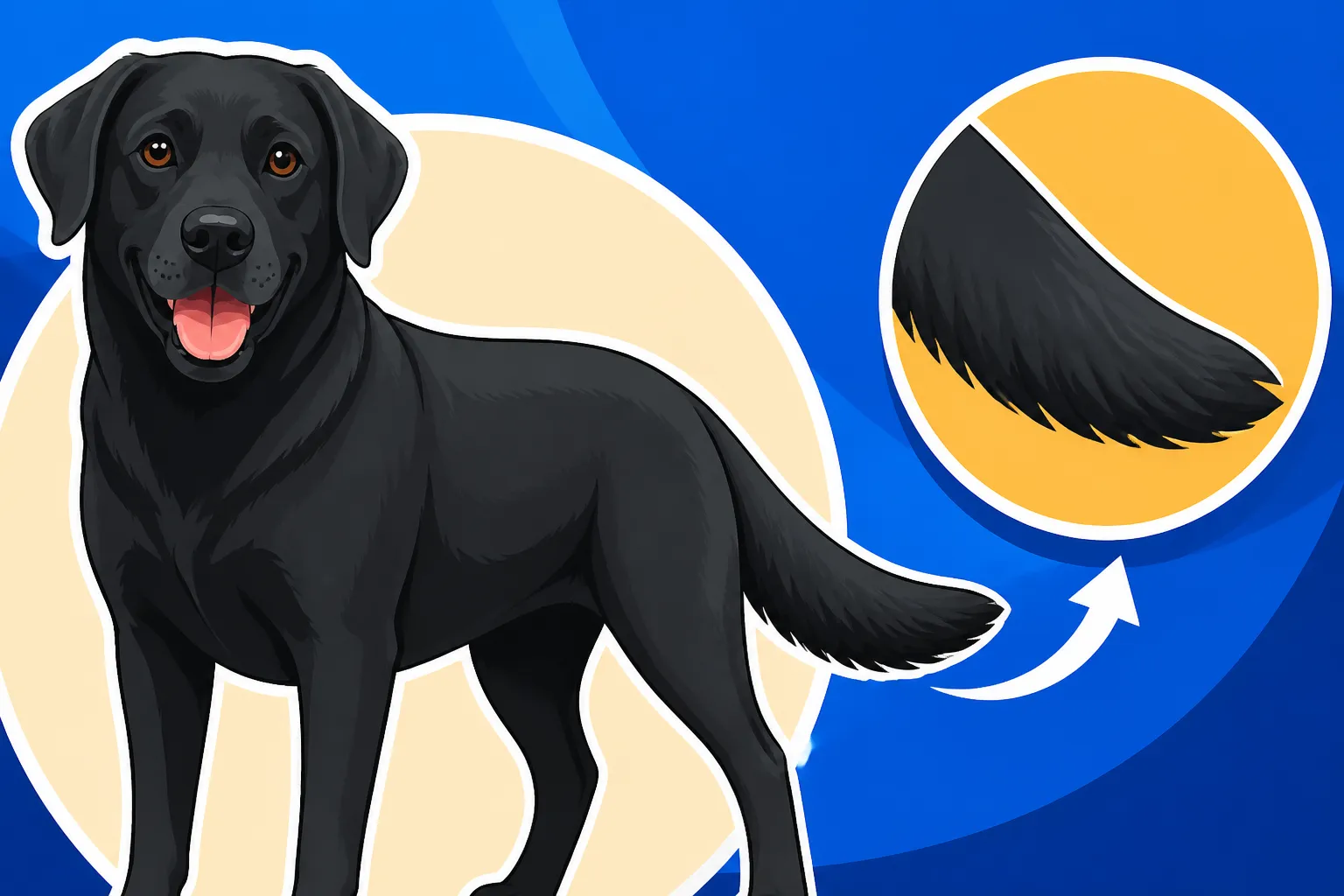
The hallmark of the Labrador's "otter tail" is its unique shape: thick at the base, gradually tapering to a point, and completely covered in short, dense fur. Imagine the tail of an otter, which is exactly where the name comes from. This isn't a fluffy plume, nor is it a whip-like appendage. Instead, it's round in circumference, strong, and entirely in proportion to the rest of the dog’s body. When a Labrador is alert or excited, this tail might be carried gaily, but it should never, ever curl over the back. A truly correct otter tail is a sight to behold, a testament to generations of selective breeding for functionality rather than mere aesthetics. It's solid, almost rigid, and moves with purpose, whether propelling them through water or balancing them on uneven terrain.
The Role of Dense Fur and Oily Coat
The dense, double coat of a Labrador extends right down to the tip of their tail, ensuring it remains fully insulated and protected. This isn't just any fur; it's short, thick, and hard to the touch, and it lies flat against the skin, providing maximum water resistance. Coupled with the natural oils produced by their skin, this coat helps to make the tail virtually waterproof, much like a wetsuit for a human. When a Labrador dives into a cold lake or ocean, that tail doesn't absorb water and become heavy, dragging them down. Instead, the water beads off, allowing the tail to maintain its buoyancy and effectiveness as a rudder. This unique combination of shape and fur is what allows the Labrador to excel in retrieving tasks, particularly from water, without being hindered by a soaked or cumbersome tail. It’s an evolutionary marvel that highlights the breed’s incredible adaptation to its original purpose. You can learn more about this incredible feature in What Makes a Labrador's Coat Repel Water.
More Than Just Looks: The Functional Purpose of the Otter Tail
The Labrador's otter tail isn't just a pretty feature; it's a vital tool, intricately designed by nature and refined by breeders to aid in the dog's traditional work. Every aspect of its structure, from its width to its fur, serves a practical purpose, deeply rooted in the breed's history of working alongside fishermen.
A Powerful Rudder for Swimming
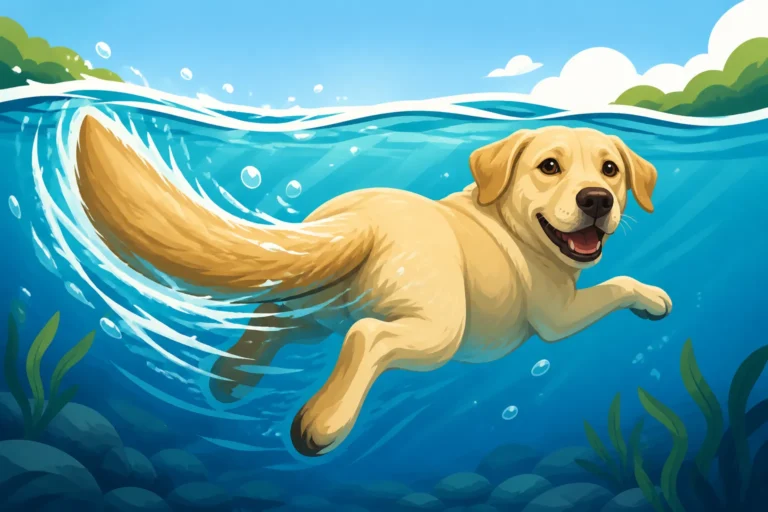
Perhaps the most critical function of the otter tail is its role as a powerful rudder when swimming. Picture a Labrador launching itself into the water, driven by an instinct to retrieve. As its strong, webbed paws churn the water, that thick, tapering tail acts like a ship's rudder, allowing for precise steering and propulsion. Unlike a flimsy tail that would merely swish, the otter tail's muscular base and dense structure enable it to exert real force against the water. This allows the dog to make quick turns, navigate currents, and adjust its direction with minimal effort, whether chasing a downed duck or retrieving a fish net. Without this robust and agile rudder, a Labrador would struggle to maintain the efficiency and speed in water for which it is renowned. This is why their ancestors, the St. John's Water Dogs, were so prized by Newfoundland fishermen; their tails were integral to their work. How Fishermen Used Labrador Ancestors tells you more about this history.
Balance and Stability on Land
While its aquatic function often gets the most attention, the otter tail is equally important for balance and stability on land. Think of a tightrope walker using a pole to maintain equilibrium; a dog's tail serves a similar purpose. When a Labrador runs at top speed, makes sharp turns, or scrambles over uneven terrain, its tail counterbalances its body, helping it to stay upright and avoid falls. This is especially crucial for a breed known for its enthusiastic and often powerful movements. A Labrador retrieving a dummy at full tilt, or navigating a rocky shore, relies heavily on its tail to shift its center of gravity. This stability also plays a role in their famed agility and athleticism, allowing them to perform complex maneuvers, like leaping over obstacles or maintaining steady footing while carrying something in their mouth. Without this natural counterweight, their movements would be far less graceful and efficient, potentially leading to injuries.
Caring for Your Labrador's Tail
Your Labrador's tail is a marvel of form and function, but like any part of their body, it requires appropriate care to remain healthy and effective. Given its constant use and exposure, especially for active Labs, paying attention to tail health is paramount for their overall well-being.
Grooming for a Healthy Tail
Even though the Labrador’s coat is short, their tails, with their dense fur, still benefit from regular grooming. Brushing the tail helps remove loose hair, prevents matting (though less common in Labs than long-haired breeds, it can still happen), and stimulates blood circulation to the skin. A good quality deshedding brush or rubber curry comb, readily available on sites like Chewy, can work wonders in managing the natural shedding, particularly during the biannual "coat blow" seasons. When brushing, pay attention to the base of the tail, where hair can sometimes become thicker, and gently work your way to the tip. This routine not only keeps the tail looking tidy but also allows you to regularly inspect it for any signs of injury, skin irritation, or parasites that might otherwise go unnoticed. Regular baths are also important, especially if your Labrador is a frequent swimmer, to remove any debris, dirt, or even algae that might cling to the fur. After a swim, always make sure to thoroughly dry the tail, just as you would the rest of their double coat, to prevent skin issues. Drying a Labrador After a Swim offers great tips on this.
Protecting the Tail from Injury
A Labrador's tail, while robust, is not invincible and can be susceptible to various injuries, particularly due to its vigorous wagging and constant motion. One of the most common issues is "happy tail" syndrome, where repeated forceful wagging against hard surfaces (like walls, furniture, or crates) causes the tip of the tail to become bruised, cut, or even bleed. These injuries can be surprisingly difficult to heal because the tail is constantly moving, reopening the wound. To protect your Labrador's tail, try to identify common "wagging zones" in your home and consider padding sharp corners or providing softer surfaces. When they're in a crate, ensure it's adequately sized so they have room to wag without hitting the bars repeatedly. Outdoor adventures can also pose risks; be mindful of thorny bushes or sharp objects that could cause cuts or abrasions. If an injury does occur, keep it clean and consult your vet for advice on proper bandaging and care to promote healing. Sometimes, a "tail sock" or protective wrapping might be recommended to immobilize it slightly and allow it to mend. Remember, a healthy tail is a happy tail, and a little preventative care can save a lot of discomfort for your beloved companion.
Common Tail-Related Concerns in Labradors
While the otter tail is a symbol of health and breed purity, Labradors can experience specific tail-related issues that owners should be aware of. These problems, though not always common, can cause significant discomfort and require prompt attention.
Limber Tail Syndrome Cold Water Tail
One of the most distinctive and sometimes alarming conditions specific to the Labrador's tail is Limber Tail Syndrome, also known by many names such as "cold water tail," "swimmer's tail," or "dead tail." This condition manifests as a sudden, acute pain at the base of the tail, causing the tail to hang limp, often for the first few inches, before sticking straight out or drooping entirely. It looks as if the tail is broken, which is incredibly worrying for owners. However, it's typically a muscular sprain or strain, often brought on by overuse, exposure to cold water, or intense exertion (like too much enthusiastic swimming or hunting at the beginning of the season).
The exact cause is believed to be damage to the coccygeal muscles at the base of the tail, leading to inflammation and pain. A Labrador might refuse to wag their tail, seem uncomfortable sitting, or even yelp if the tail is touched. The good news is that Limber Tail is usually temporary and resolves with rest, warm compresses, and sometimes anti-inflammatory medication prescribed by your vet. Recovery typically takes a few days to a week. To help prevent it, avoid letting your Labrador overexert themselves, especially in cold water, and ensure they are gradually conditioned for strenuous activities. After swimming, make sure they are thoroughly dried and kept warm.
Happy Tail Syndrome and Injuries
Beyond Limber Tail, the sheer enthusiasm with which Labradors use their tails can lead to another common issue: Happy Tail Syndrome. This isn't a medical syndrome in the clinical sense, but rather a descriptive term for repetitive trauma to the tail. A Labrador's tail is thick, powerful, and wags with incredible force, often hitting hard objects like walls, crate bars, table legs, or furniture corners. The skin and fur at the tip, though dense, can be surprisingly delicate when subjected to constant impact.
Over time, these repeated impacts can cause the skin to break, leading to raw, bleeding sores that are notoriously difficult to heal. Every wag reopens the wound, and the tail can become a source of blood spots on walls, furniture, and even you! Owners often find themselves in a frustrating cycle of bandaging, only for the bandage to be wagged off or the wound to reopen. Treating Happy Tail involves protecting the injury, often with soft bandages or specialized tail wraps, and ensuring the dog has a safe, padded environment. It's crucial to minimize opportunities for the tail to hit hard surfaces during the healing process. In some severe, chronic cases that simply won't heal, a vet might even suggest a partial tail amputation to prevent further pain and infection, though this is a last resort. Prevention, by creating a safer wagging environment, is always the best approach.
The Otter Tail in the Breed Standard
For anyone serious about the Labrador Retriever breed, understanding the breed standard is paramount. This document outlines the ideal characteristics of the Labrador, and the tail holds a surprisingly significant place within it, emphasizing its historical function.
What the AKC and KC Look For
Both the American Kennel Club (AKC) and the UK Kennel Club (KC) breed standards are very specific about the Labrador's tail, often using almost identical language to describe it. They both emphasize the "otter tail" description, highlighting its unique qualities. The tail should be:
- Thick at the base: Indicating strength and power.
- Gradually tapering to the tip: Giving it the distinctive otter-like appearance.
- Medium length: Not so long as to impede movement, nor so short as to be ineffective as a rudder. It should extend approximately to the hock.
- Covered thickly with the Labrador’s dense, short, harsh coat: This ensures its waterproof qualities and insulation.
- Carried gaily, but never curled over the back: A crucial point that defines the correct carriage.
The emphasis in both standards is on a tail that complements the Labrador’s powerful, athletic build and serves its original purpose as a retrieving tool, particularly in water. It's not just about looks; it's about the integral role the tail plays in the dog's overall functionality and balance. A judge evaluating a Labrador in the show ring will pay close attention to the tail's shape, coat, and carriage, as it speaks volumes about the dog's adherence to the breed's working heritage. You can explore more about these specific features in Labrador Coat Type in the Standard.
Why a Curled Tail is a Fault
One of the most consistent and definitive statements across all reputable Labrador Retriever breed standards is that a tail curled over the back is a serious fault, or even a disqualification in some contexts. This isn't just an arbitrary aesthetic preference; it's rooted deeply in the functional design of the otter tail. A tail that curls over the back, often referred to as a "gay tail," indicates an incorrect structure, musculature, or carriage that would hinder the dog's ability to use its tail effectively as a rudder in water.
Imagine trying to steer a boat with a rudder that's twisted or curled; it simply wouldn't work efficiently. Similarly, a curled tail would create drag in the water, impede powerful swimming, and detract from the dog's ability to balance. Moreover, a curled tail can sometimes be indicative of a different lineage, suggesting a mix with other breeds that naturally carry their tails in such a fashion. For a breed so defined by its working heritage, any feature that compromises that work is considered a significant deviation from the ideal. Therefore, breeders strive to produce Labradors with the correct, straight-tapering otter tail, ensuring that the breed's iconic tool remains perfectly suited for its original purpose. Why a Labrador's Tail Should Never Curl delves deeper into this specific fault.
| Feature | Labrador Otter Tail | Typical Dog Tail |
|---|---|---|
| Shape | Thick at base, tapers to a point; round in circumference, "otter-like" | Varies widely: thin, feathered, curled, sickle, saber, screw, etc. |
| Fur/Coat | Dense, short, hard, flat-lying; provides water resistance | Varies: long, feathered, sparse, silky; may absorb water |
| Carriage | Carried gaily or level, never curled over the back | Varies: high, low, tucked, curled; often defines breed type |
| Primary Function | Rudder for swimming, balance for agility | Communication, balance (less critical for water breeds), species-specific movement |
| Feel | Almost rigid, muscular, powerful | Flexible, sometimes delicate, varies with breed |
| Protection | Thick coat provides insulation and some impact resistance | Protection varies; vulnerable to environmental factors |
This article is for general informational purposes only and does not constitute professional advice. Laws, prices and regulations vary by location and change over time. Consult a qualified professional for guidance on your specific situation.