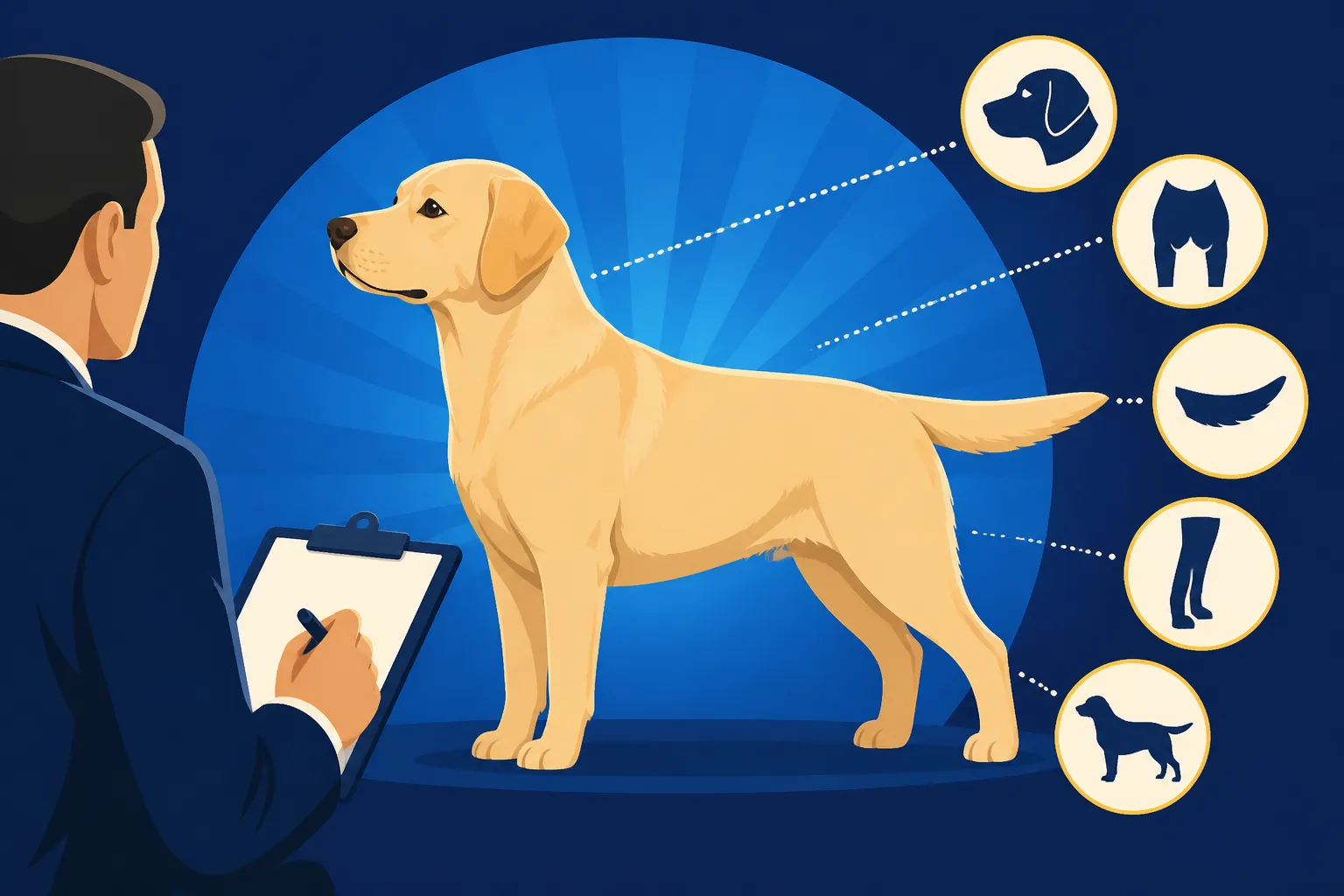
What Judges Look For in a Labrador
Many of us look at those beautiful Labradors in magazines or at dog shows and wonder what exactly makes them stand out. It's not just about a pretty face or a wagging tail; there's a very specific blueprint that judges follow to determine how closely a Labrador matches the ideal of its breed. If you've ever felt overwhelmed trying to understand the nuances of conformation or what makes a "well-bred" Labrador truly excel, this guide is for you. We're going to break down the key characteristics judges are scrutinizing, offering insight into the thoughtful design behind this beloved breed.
The Cornerstone: Understanding the Labrador Breed Standard
When you hear about a "breed standard," it might sound a bit like jargon, but it's really the detailed description of what a perfect Labrador Retriever should look and act like. Think of it as the ultimate guide for breeders striving for excellence and the rubric judges use in the conformation ring. It's not just about aesthetics; every point in the standard is there to ensure the Labrador remains fit for its original purpose: a strong, agile, water-loving retriever with a gentle mouth and an even temperament. Without this standard, the breed could diverge wildly, losing the characteristics that make a Labrador a Labrador. Understanding this foundation is truly key to appreciating the breed. You can dive deeper into this with The AKC Labrador Retriever Breed Standard.
Why a Standard Matters for Health and Function
It's easy to dismiss breed standards as purely superficial, focusing only on looks. However, the original intent behind these standards was deeply rooted in function and health. For Labradors, the standard describes a dog built for endurance, athleticism, and the specific tasks of retrieving game from land and icy water. A deep, wide chest isn't just for looks; it provides ample lung capacity. Strong, straight legs aren't just for a graceful gait; they ensure soundness over years of active work. Deviation from the standard, especially in crucial areas like structure, can sometimes indicate potential health or functional issues. For example, poor angulation in the hindquarters might predispose a dog to joint problems down the line, even if it's not immediately obvious to the untrained eye.
Furthermore, a well-defined standard helps to maintain the integrity of the breed. It acts as a set of guardrails, guiding responsible breeders to produce dogs that consistently embody the Labrador's hallmark traits. This consistency is vital not just for show dogs, but for every Labrador owner who expects their furry companion to possess the breed's characteristic good nature, intelligence, and retrieving drive. It's a commitment to preserving the essence of the Labrador for generations to come, ensuring that the dogs we love today continue to thrive.
What the Judge's Role Entails
A judge in a conformation show isn't just picking their favorite dog. They are meticulously comparing each Labrador against the written breed standard, looking for the dog that most closely embodies that ideal. They assess everything from the tip of the nose to the end of the "otter" tail, evaluating movement, proportion, coat quality, and even temperament. It's a detailed and often quick process, demanding a deep understanding of canine anatomy, breed history, and the standard itself. They are looking for balance, symmetry, and the overall impression of a powerful, athletic animal.
This isn't an easy job, and judges often spend years studying and gaining experience before they ever step into a ring with a clipboard. They have to make split-second decisions based on their expert eye. Sometimes, what might seem like a minor detail to us – like the set of an ear or the texture of a coat – can be a significant point in the judge's evaluation. They are looking for the sum of all parts, a harmonious whole that represents the very best of the Labrador Retriever.
Physical Traits That Catch a Judge's Eye
When a Labrador steps into the ring, judges immediately begin a systematic evaluation of their physical characteristics. Every part of the dog is assessed against the breed standard, looking for specific attributes that define the Labrador's working capabilities and overall appearance. It's a complex dance of proportion, structure, and type.
The Head and Expression: More Than Just a Pretty Face
The Labrador's head is often described as one of its most distinctive features, radiating intelligence and good nature. Judges pay close attention to the skull, which should be broad, not coarse, with a moderate stop. The muzzle should be powerful and of medium length, never snipey or heavy. When you look at a Labrador's head, you should see strength and purpose, not delicacy or excess. The eyes are particularly important; they should be kindly, expressive, and brown, giving that characteristic "melting" look. Anything too light, too dark, or with an unkind expression can be a fault. The ears should be set rather far back and hang close to the head, framing the face without being overly large or thick. Labrador Head, Muzzle and Expression goes into more detail on this critical aspect.
Furthermore, the teeth and bite are examined for proper alignment – a scissor bite is preferred, where the upper teeth just overlap the lower ones. This isn't just about looks; a strong, correct bite is essential for a retrieving dog to carry game without dropping it. The nose should be black on black and yellow Labs, and brown on chocolate Labs, with wide nostrils to aid in scenting. Any major deviation from these head characteristics can significantly impact a judge's assessment, as they speak to the dog's overall breed type and working capacity.
Body, Proportion, and Substance: Built for Work
A Labrador is a dog of substance, meaning they have a well-muscled and compact body without being heavy or bulky. Judges look for a strong, level topline that extends from the withers to a slightly sloping croup. The chest is a critical component, needing to be deep and wide, extending to the elbows, to accommodate powerful lungs and heart. This robust chest ensures the endurance needed for long days of work. Ribs should be well-sprung, not slab-sided, allowing for flexibility and protecting internal organs.
The overall proportion is also vital. The Labrador should be slightly longer than it is tall, giving it a balanced, rectangular outline. A dog that is too long or too short can appear unbalanced and less efficient in movement. Legs should be strong and straight, with good bone, supporting a powerful stride. Judges are looking for an athlete, not a couch potato, and every aspect of the body should reflect this active heritage. For example, Ideal Height for a Male Labrador Retriever and Labrador Weight Ranges in the Standard detail the specific size expectations within the standard.
| Physical Trait | Desired Characteristic in Show Ring | Why it Matters (Function/Health) |
|---|---|---|
| Head & Expression | Broad skull, moderate stop, kind brown eyes, powerful muzzle | Reflects intelligence, good nature, proper bite for retrieving |
| Coat | Short, dense, hard, waterproof double coat | Protection from elements, warmth in water, quick drying |
| Tail | "Otter" tail: thick at base, tapering, no feathering, carried level | Acts as a rudder in water, aids balance on land |
| Body Proportion | Slightly longer than tall, deep & wide chest, well-sprung ribs | Endurance, ample lung capacity, athletic build for work |
| Movement | Free, effortless, powerful, good reach & drive, level topline | Efficiency and endurance for retrieving over varied terrain |
| Forequarters | Straight legs, moderate angulation, good bone | Soundness, shock absorption, proper reach |
| Hindquarters | Strong, broad, powerful, moderate angulation, well-developed thighs | Drive and propulsion, endurance, jumping ability |
Coat and Tail: Defining Features
The Labrador's coat is one of its most defining characteristics and a testament to its water-retrieving heritage. Judges expect a short, dense, straight coat that feels hard to the touch, with a soft, weather-resistant undercoat. This dual-layer coat provides insulation and waterproofing, allowing the dog to work comfortably in cold, wet conditions. Any wave, curl, or excessive length is considered a fault. The coat should also have a natural luster and cleanliness, not appear dull or greasy. Labrador Coat Type in the Standard describes this in detail. Brands like Chewy often carry grooming tools specifically designed for dense, double coats to help maintain this quality.
Equally iconic is the "otter" tail. This tail should be thick at the base, gradually tapering to the tip, and be of medium length. It should be covered densely with the same short, hard coat as the body, giving it a rounded appearance. The tail should ideally be carried level with the topline or with a slight upward curve, never curled over the back or carried between the legs. The otter tail serves a crucial functional purpose, acting as a rudder for steering in the water and aiding balance on land. The Labrador Otter Tail Explained elaborates on this unique feature.
Movement: Grace and Efficiency
A Labrador's movement in the ring is a critical aspect of judging. Judges want to see a dog that moves with purpose, power, and efficiency. The gait should be free, ground-covering, and effortless, showing good reach in the front and strong drive from the rear. The topline should remain level as the dog moves, indicating a strong back and well-connected structure. Any choppiness, crabbing (moving sideways), or lumbering motion is considered a fault. A Labrador should move as if it could work all day without tiring, covering ground swiftly and smoothly.
When viewing from the front and rear, the legs should move straight and true, neither paddling out nor weaving in. The pads of the feet should show when viewed from behind, demonstrating proper angulation and foot placement. Judges are assessing the underlying structure through the dog's movement, looking for a symphony of coordinated parts working together seamlessly. This powerful and efficient gait is a direct reflection of the breed's working heritage and its ability to cover varied terrain with ease.
Temperament and Demeanor in the Ring
Beyond their physical attributes, a Labrador's temperament is absolutely non-negotiable in the show ring. Judges aren't just looking for beauty; they're looking for the complete package, and that includes the inherent character of the breed. A Labrador should exude intelligence, eagerness, and an almost insatiable desire to please. This isn't just a nicety; it's a fundamental part of what makes a Labrador a Labrador. Labrador Temperament and Personality delves into these traits.
The Hallmark: Kindly and Outgoing Nature
The breed standard explicitly calls for a Labrador to have a "kindly, outgoing, tractable nature; eager to please and non-aggressive to man or animal." This means a judge expects a dog that is confident, friendly, and approachable. A Labrador should not be shy, fearful, or aggressive. They should stand calmly for examination, allowing the judge to touch them all over, open their mouths, and thoroughly inspect their teeth and structure. Any signs of fear, growling, snapping, or excessive shyness would be considered a serious fault, potentially leading to disqualification.
It's a testament to the breed's enduring popularity that this temperament is so deeply ingrained. Imagine a retrieving dog that balks at being handled or is aggressive towards strangers; it would be useless in the field. This gentle and accommodating nature is what makes them such beloved family pets and excellent working dogs in various roles. A true Labrador possesses an innate joy and enthusiasm that is infectious, and this should be evident in the show ring.
Confidence and Poise Under Pressure
While a Labrador should be friendly, it also needs to display a certain level of poise and confidence in the bustling, often chaotic environment of a dog show. Loud noises, unfamiliar surroundings, and many other dogs and people are all part of the experience. A judge wants to see a dog that handles this without becoming overwhelmed or exhibiting nervous behaviors. They should move confidently around the ring, maintaining focus on their handler, and present themselves with an air of self-assurance.
This confidence isn't about being aloof; it's about being well-adjusted and secure in their environment. A Labrador might glance at the crowd or another dog, but they shouldn't be distracted to the point of losing their stack or breaking their gait. This ability to maintain composure reflects a stable personality, which is crucial for a breed that often takes on roles as service dogs, therapy dogs, and trusted family companions. It shows a strong nervous system and a solid foundation of early socialization.
Beyond the Show Ring: What the Standard Means for Pet Owners
While most Labradors will never set a paw in a conformation ring, the breed standard still holds immense value for every owner. It's the blueprint that guides responsible breeders in their efforts to produce healthy, sound, and true-to-type Labradors, whether they're destined for show, field, or simply to be cherished family members. Understanding the standard helps you appreciate why certain traits are so desirable and how they contribute to the overall health and character of the Labrador you bring into your home.
The Impact on Everyday Health and Behavior
When breeders adhere closely to the standard, they are indirectly (and directly!) promoting good health and sound temperament in pet Labradors. A deep chest, for example, means strong lungs and good stamina for those long walks and games of fetch at the park. Correct angulation in the legs means less strain on joints, contributing to a longer, more comfortable life, potentially delaying the onset of issues like Labrador Arthritis in Middle Age. A robust double coat isn't just for looking good in the ring; it means your Labrador is better protected from the elements during outdoor adventures.
Similarly, the emphasis on a kind and outgoing temperament in the standard directly translates to the wonderful, friendly nature we expect from our Labradors. This is why well-bred Labs are generally so good with children, other pets, and strangers. It's not an accident; it's the result of generations of selective breeding guided by that comprehensive standard. If you're considering getting a Labrador, looking for a breeder who actively aims for the breed standard is a strong indicator of their commitment to producing healthy, well-adjusted puppies.
Choosing a Reputable Breeder and Understanding Differences
For those looking for a puppy, understanding what judges look for can empower you to ask better questions of breeders. You'll know why health clearances for hips, elbows, and eyes are so important, as these directly relate to the soundness emphasized in the standard. You might also gain insight into the differences between English and American Labrador Types, or why certain coat colors, like black, yellow, and chocolate, are recognized within the standard while others, like silver, are not.
Ultimately, the breed standard is about preserving the Labrador Retriever as we know and love it. It ensures that the breed continues to embody the characteristics that make it one of the most versatile, intelligent, and beloved dog breeds in the world. So, whether your Labrador is a champion in the ring or a champion of your heart, its qualities are, in many ways, a reflection of this carefully crafted guide. When you're looking for quality food or supplies for your Labrador, whether it's for their coat health or joint support, online retailers like Chewy provide a vast selection, making it easy to care for your dog according to their specific needs.
Disclaimer
This article is for general informational purposes only and does not constitute professional advice. Laws, prices and regulations vary by location and change over time. Consult a qualified professional for guidance on your specific situation.