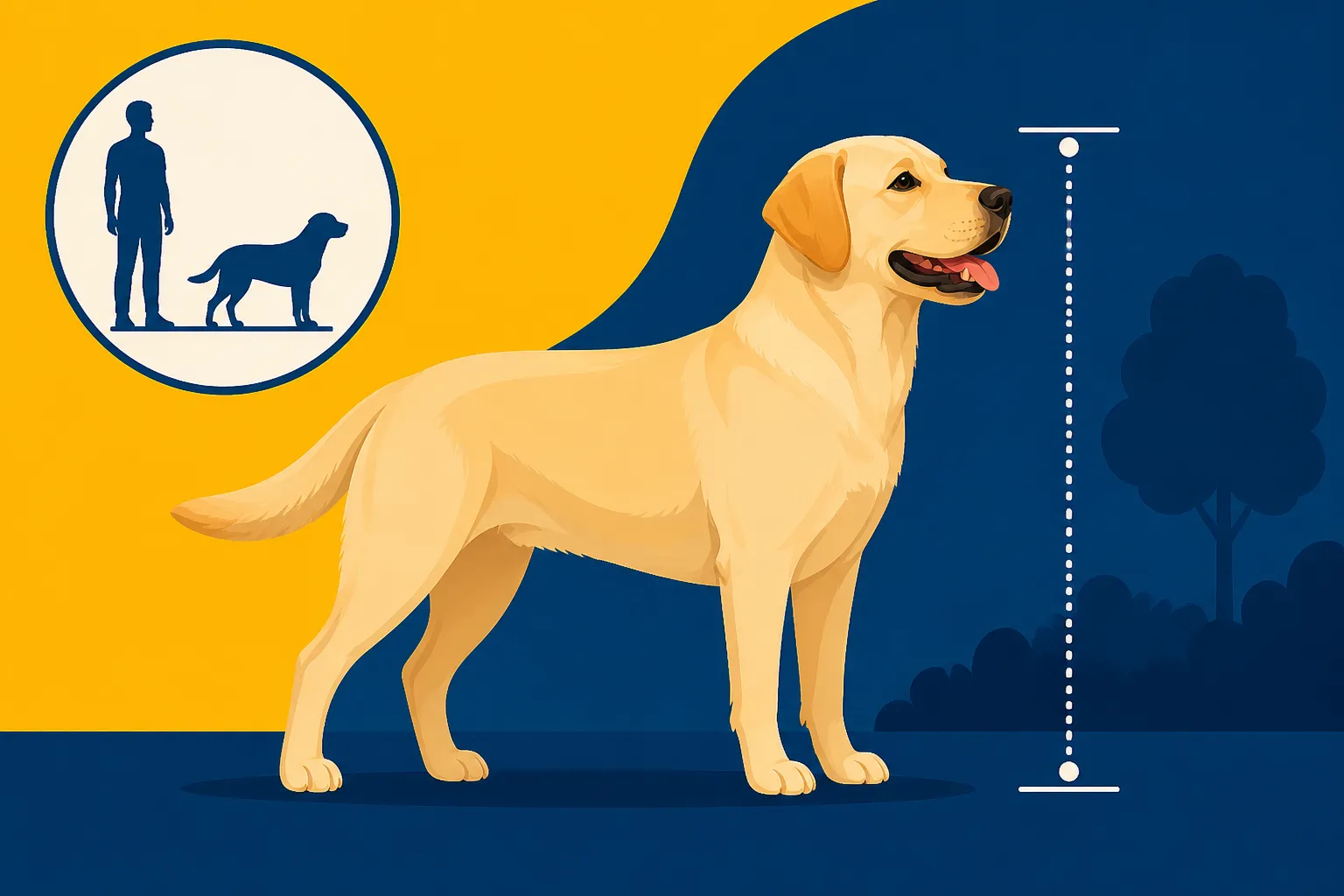
Ideal Height for a Male Labrador Retriever
It's a common scene: you're at the dog park, chatting with another Labrador owner, and the topic of size inevitably comes up. "My boy is HUGE!" someone exclaims, or "Is yours a purebred? He seems a bit small." It can be incredibly confusing trying to figure out if your beloved male Labrador Retriever falls within the "normal" range when there's so much variation out there, and sometimes, a little judgment from others. This guide is here to cut through the noise and give you a clear, empathetic understanding of the ideal height for a male Labrador Retriever, what influences it, and why it truly matters for their long-term health and well-being.
Understanding the Labrador Breed Standard for Height
When we talk about "ideal" height, we're really referring to the breed standard set by major kennel clubs. These standards aren't just arbitrary rules; they're carefully crafted guidelines that aim to preserve the breed's historical function, health, and characteristic appearance. For Labradors, a breed renowned for its working capabilities and sturdy build, height is an important indicator of whether a dog can perform its tasks effectively and remain healthy throughout its life.
Why the Standard Matters Beyond the Show Ring
Many people assume breed standards are solely for show dogs, and if you're not planning on entering Westminster, they don't apply to you. But that's not entirely true. The standard describes the physical attributes that define a Labrador, including their height, weight, and overall proportions. These traits are intrinsically linked to the dog's ability to retrieve game all day, swim tirelessly, and possess the endurance for long working sessions. A dog that is too tall or too short for the standard might struggle with tasks that a well-proportioned Labrador excels at, or worse, be more prone to certain health issues. It's about maintaining the essence of what makes a Labrador a Labrador. For example, a Labrador with disproportionately long legs might lack the powerful, compact build needed for navigating dense cover or jumping into and out of boats with ease.
The AKC and Other Kennel Club Guidelines
The American Kennel Club (AKC) sets a widely recognized standard for Labrador Retrievers in the United States. For male Labradors, the ideal height is measured at the top of the shoulder blades (the withers). The AKC standard specifies a range, not a single number, recognizing natural variation within healthy individuals. Most major kennel clubs around the world, including the Kennel Club in the UK, have very similar guidelines.
For a male Labrador Retriever, the AKC standard states an ideal height of 22.5 to 24.5 inches at the withers. This range aims for a dog that is neither leggy nor too close to the ground, but rather balanced and strong. Deviations from this range aren't necessarily disqualifying for a pet, but for a show dog, they could mean they don't place. More importantly for pet owners, significant deviations might point to lineage that prioritizes size over structure or overall health. You can delve deeper into the specific descriptors by reading about The AKC Labrador Retriever Breed Standard.
Factors Influencing a Male Labrador's Height
It's one thing to know the ideal range, but quite another to understand why your Labrador might fall within it, or perhaps a little outside it. There are several key factors that contribute to a male Labrador's eventual adult height, and it's a fascinating interplay of genetics and environment.
Genetics and Lineage: Show vs. Field
Perhaps the most significant factor determining a Labrador's height is its genetic background, specifically whether it comes from "show lines" (often called English Labs) or "field lines" (often called American Labs). These two types, while both purebred Labradors, have been selectively bred for different purposes over generations, leading to distinct physical differences.
- Show Line Labradors (English Type): These dogs are bred to conform closely to the breed standard, with an emphasis on a blockier head, a thicker coat, and a more compact, heavier-boned build. They tend to be on the lower to middle end of the height standard for males, often appearing stockier and more substantial. If you have an English Lab, he might be closer to the 22.5-inch mark but will have impressive bone and substance.
- Field Line Labradors (American Type): Bred for athletic performance in hunting tests and field trials, these Labs are typically lighter-boned, more agile, and often appear taller and leaner. A male field line Labrador might be at the upper end of the 24.5-inch height range, or sometimes even slightly above it, while still being considered within type due to their overall athletic conformation. They have a more refined head and a less dense coat. Understanding these differences can help you appreciate why your dog's build might differ from another Lab you encounter. We've explored these distinctions further in English and American Labrador Types.
Nutrition and Early Growth
While genetics lay the blueprint, nutrition during puppyhood acts as the builder. The quality and quantity of food your Labrador puppy receives in his first year can profoundly impact his growth plates and overall skeletal development. Overfeeding a puppy, especially with foods that are too high in calories or have an improper calcium-to-phosphorus ratio, can lead to excessively rapid growth. This isn't a good thing; it can put immense stress on developing joints and lead to serious orthopedic problems like hip and elbow dysplasia, even if the genetics for these conditions aren't overtly present.
Conversely, underfeeding or providing inadequate nutrition can stunt growth, preventing a genetically destined larger dog from reaching its full potential height and body mass. It's a delicate balance. Reputable brands, often available on sites like Chewy, formulate large breed puppy foods specifically to support controlled, steady growth, rather than rapid gains, which helps ensure healthy bone and joint development. It's truly a critical time; you can learn more about this sensitive period in How Fast Growth Damages a Labrador's Joints.
Individual Variation and "Oversized" Labs
Even within the same litter, there can be slight variations in height. Just like in human families, not every sibling grows to the exact same stature. Some male Labradors might mature slightly outside the 22.5-24.5 inch range, whether a bit taller or shorter, and still be perfectly healthy, wonderful companions.
However, you might occasionally encounter Labradors that are significantly larger than the standard – sometimes well over 25 inches at the shoulder and proportionally heavier. These "oversized" Labs can be the result of breeding choices that prioritize extreme size or simply a genetic fluke. While impressive in stature, it's worth noting that exceeding the standard significantly can sometimes place extra strain on their joints and cardiovascular system, potentially shortening their healthy lifespan. It's a reminder that bigger isn't always better when it comes to canine health.
Measuring Your Male Labrador's Height Accurately
So, you're curious about your own male Labrador's height? It's not as simple as holding a tape measure against his side. To get an accurate measurement that aligns with breed standards, you'll need to measure at the withers.
Tools and Techniques for Home Measurement
To measure your Labrador's height, you'll need a few things:
- A flat, level surface: This is crucial. Your dog needs to stand naturally, not hunched or stretched.
- A measuring tape or yardstick: A sturdy one works best.
- A carpenter's level or a straight, stiff ruler: This will help you get an accurate horizontal line from the top of the withers.
- A helper (optional but recommended): To keep your Lab still and properly positioned.
Here's how to do it:
- Position Your Dog: Have your Labrador stand squarely on all four paws on the flat surface. His weight should be evenly distributed. Try to get him to stand naturally, without stretching his neck up or dipping his head. This might take a few tries, especially if he's excitable!
- Locate the Withers: The withers are the highest point of his shoulder blades, located at the base of his neck, just above where his front legs meet his body. Feel for the bony prominence there.
- Place the Level/Ruler: Rest your carpenter's level or stiff ruler across the very top of his withers. Ensure it's perfectly horizontal and extending out past his side.
- Measure Down: With the level/ruler in place, use your measuring tape to measure the distance from the underside of the level/ruler straight down to the floor. Make sure the tape is perpendicular to the floor for an accurate reading.
Repeat this a few times to ensure consistency. Don't be surprised if your first few attempts vary; it takes practice to get your dog to stand just right and to get a consistent measurement.
When a Labrador Reaches Full Height
One of the most common questions new puppy owners have is, "When will my Labrador stop growing?" It feels like they're sprouting inches overnight! Generally, male Labradors reach their full height fairly early in their development, but they continue to fill out and gain muscle mass for a longer period.
Most male Labradors will reach their adult height by 12 to 14 months of age. Some might hit it a little earlier, around 10 months, while others from slower-maturing lines might have a final growth spurt closer to 16 months. However, while their height might stabilize, their skeletal structure isn't fully mature. Their growth plates, the soft areas at the ends of long bones responsible for growth, usually don't close until around 18 to 24 months of age. This is why it's so important to avoid excessive forced exercise, like long runs or intense agility, before this age to prevent injury to those still-developing joints. You can read more about this in When a Labrador's Growth Plates Close.
After reaching their full height, Labradors will continue to mature, adding muscle and filling out their chest and body over the next year or two. A two-year-old Labrador often looks much more substantial and "finished" than a year-old dog, even if they are the same height. This filling out is a natural part of their development, leading to that sturdy, powerful build we all adore.
More Than Just Height: Overall Proportions and Health
While knowing the ideal height for a male Labrador Retriever is certainly useful, it's really just one piece of a larger puzzle. A truly healthy and functional Labrador is about far more than a single measurement.
The Importance of Balance and Substance
The breed standard emphasizes overall balance and substance. This means a Labrador should be well-proportioned from nose to tail, with a strong, athletic build that speaks to its retrieving heritage. A male Labrador that is 24 inches tall but is extremely thin and leggy might be within the height standard but lacks the necessary substance to be a truly representative or healthy specimen of the breed. Conversely, a 23-inch male who is wonderfully muscular and broad-chested demonstrates excellent balance.
The weight, bone structure, and muscle mass all work together with height to create the iconic Labrador silhouette. When assessing your dog, step back and look at him as a whole. Does he look powerful yet agile? Does he have a deep chest and well-sprung ribs? Does his tail, often described as an "otter tail," complement his body structure? These visual cues, often more than a precise height measurement, tell you a lot about his overall health and conformity to the breed's purpose. For more on what a well-proportioned Labrador looks like, check out Labrador Size and Adult Proportions.
Health Implications of Deviating from the Standard
As mentioned earlier, significant deviations from the ideal height range, particularly being excessively tall, can sometimes lead to health concerns. Taller dogs, especially those that are also heavier, can place increased stress on their joints, potentially exacerbating conditions like Labrador Hip and Elbow Dysplasia. While these conditions are often genetic, environmental factors like rapid growth and excessive weight can certainly contribute to their severity and early onset.
Consider the common issues faced by giant breeds, for example. They often have shorter lifespans and higher rates of orthopedic problems partly due to their immense size and the strain it puts on their bodies. While Labradors are not giant breeds, an individual significantly exceeding the standard might experience similar challenges, albeit to a lesser degree. Maintaining a healthy weight and ensuring proper nutrition, regardless of your Lab's exact height, remains paramount for their long-term well-being. Regular vet check-ups and discussions about your dog's growth and weight are always a good idea. Many owners opt for large breed specific dog food, like options found on Chewy, which are often formulated to support bone and joint health.
Here’s a quick overview of typical height expectations for different Labrador types:
| Labrador Type | Sex | Ideal Height Range (at Withers) | General Build | Common Lineage |
|---|---|---|---|---|
| Show (English) | Male | 22.5 – 23.5 inches | More compact, blockier head, heavier bone | Often calmer |
| Show (English) | Female | 21.5 – 22.5 inches | More compact, blockier head, heavier bone | Often calmer |
| Field (American) | Male | 23.5 – 24.5 inches | Taller, leaner, more athletic, finer bone | High energy |
| Field (American) | Female | 22.0 – 23.5 inches | Taller, leaner, more athletic, finer bone | High energy |
Ultimately, your male Labrador Retriever's height is just one characteristic. What truly matters is that he is healthy, happy, and well-cared for. If he falls slightly outside the exact standard but is otherwise sound and thriving, you have a wonderful companion. The standard serves as a guide for breeders and judges, but for the average pet owner, it's a tool for understanding the breed's ideal form and how that connects to their functionality and health. Love your Lab for who he is, and enjoy every inch of him!
Disclaimer
This article is for general informational purposes only and does not constitute professional advice. Laws, prices and regulations vary by location and change over time. Consult a qualified professional for guidance on your specific situation.