How to Check a Labrador’s Dilute Status
It can be incredibly confusing and even frustrating when you're trying to understand your Labrador's genetic makeup, especially when terms like "dilute status" pop up. Many owners are curious about their dog's heritage or might be looking into breeding, only to find themselves swimming in a sea of genetic jargon and breed controversies. This guide is here to cut through that complexity, offering a clear, step-by-step breakdown of what dilute status means for your Labrador and how you can reliably check it.
What is Dilute Status and Why Does it Matter?
Let's start with the basics, because understanding what the dilute gene is will make the why it matters much clearer. In Labradors, "dilute" refers to a specific genetic mutation that can affect the intensity of a dog's coat color. Imagine taking a beautifully pigmented black, yellow, or chocolate Labrador and, with a flick of a genetic switch, slightly 'watering down' their color. That's essentially what the dilute gene (represented by the 'd' allele at the D locus) does.
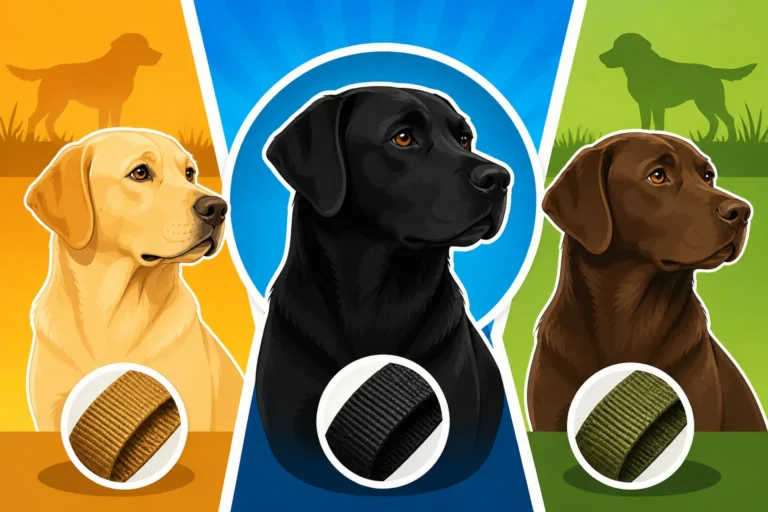
For black Labradors, this dilution results in a charcoal or slate gray color. For chocolate Labradors, it often creates a grayish-brown, sometimes called 'lilac' or 'Isabella'. And for yellow Labradors, the yellow can become a lighter, creamier shade, almost white, though this is sometimes harder to distinguish visually from a very light yellow. The most commonly discussed and controversial manifestation of the dilute gene in Labradors is the 'silver' Labrador, which is genetically a chocolate Labrador with two copies of the dilute gene.
The D Locus and Coat Color
Every dog inherits two copies of each gene, one from each parent. For the dilute gene, we're talking about the D locus. There are two primary alleles (versions of the gene) at this locus: D and d.
- D (dominant): This allele produces full pigmentation. A dog with at least one 'D' will not express the dilute trait.
- d (recessive): This allele causes pigment dilution. A dog must inherit two copies of 'd' (one from each parent) to express the dilute trait.
So, a Labrador's dilute status is determined by whether they have DD (non-dilute, does not carry dilute), Dd (non-dilute, carries dilute), or dd (dilute). This might seem like a small detail, but it's a huge topic of discussion within the Labrador community, especially concerning breed standards and the historical integrity of the breed.
The Controversy Around "Silver" Labradors
Ah, the "silver" Labrador. This is where the dilute gene really stirs up a hornet's nest. While standard Labrador colors are black, yellow, and chocolate, some breeders market "silver" Labradors. Genetically, these dogs are chocolate Labradors that also carry two copies of the dilute gene (dd). Because the dilute gene is not recognized in the official breed standard for Labrador Retrievers by major kennel clubs like the American Kennel Club (AKC), dogs exhibiting dilute colors cannot be shown in conformation events.
This leads to a lot of debate. Proponents argue they are simply a rare color variation, while critics often contend that the dilute gene was introduced to the Labrador gene pool through outcrossing with other breeds, such as Weimaraners, at some point in the breed's history. Regardless of where you stand on the debate, understanding the genetic basis is crucial. If you see a breeder offering a "silver" Labrador, they are talking about a chocolate Labrador with the 'dd' genotype. For more on this, you might find What a Silver Labrador Actually Is and Why the Labrador Club Rejects Silver particularly illuminating.
Understanding the Genetics: How Dilute Genes Work
To truly grasp how to check your Labrador's dilute status, you need a slightly deeper dive into the mechanics of inheritance. Don't worry, we're not going full biology class here, but a little foundational knowledge goes a long way.
Recessive Inheritance and the D Locus
The dilute gene, as we mentioned, is recessive. This is a critical point. It means a Labrador must inherit a copy of the 'd' allele from both parents to display a dilute coat color. If they only get one 'd' and one 'D', they won't look dilute, but they will carry the gene and can pass it on to their offspring. This is often referred to as being a "carrier."
Let's look at the possible genetic combinations and what they mean:
- DD (Homozygous Dominant): This Labrador has two dominant 'D' alleles. They will have a full, undiluted coat color (black, yellow, or chocolate) and they do not carry the dilute gene. They cannot pass the dilute gene to their puppies.
- Dd (Heterozygous): This Labrador has one dominant 'D' allele and one recessive 'd' allele. They will also have a full, undiluted coat color because the dominant 'D' masks the 'd'. However, this dog is a carrier of the dilute gene. If bred with another carrier (Dd) or a dilute dog (dd), they can produce dilute puppies.
- dd (Homozygous Recessive): This Labrador has two recessive 'd' alleles. This is the genetic makeup that results in a dilute coat color (e.g., charcoal, lilac, or silver if chocolate-based). All of their puppies will inherit at least one 'd' allele from them.
What Carrier Status Means for Breeding
If you're considering breeding your Labrador, their dilute status becomes incredibly important. Breeding two Dd (carrier) dogs together means that, statistically, 25% of their puppies will be DD (non-carrier), 50% will be Dd (carriers), and 25% will be dd (dilute). These are probabilities for each puppy, of course, but it highlights the risk of producing dilute-colored puppies if both parents are carriers.
Breeders who adhere strictly to the traditional Labrador standard often test their breeding stock to ensure they are DD. This guarantees that they will never produce dilute-colored puppies, regardless of the mate. If you're a responsible breeder, understanding this genetic aspect is paramount to maintaining the integrity of your lines.
Here's a quick summary table:
| Genotype | Phenotype (Appearance) | Dilute Status | Can Pass 'd' to Offspring? |
|---|---|---|---|
| DD | Full pigment (Black, Yellow, Chocolate) | Non-dilute, non-carrier | No |
| Dd | Full pigment (Black, Yellow, Chocolate) | Non-dilute, carrier | Yes (50% chance per puppy) |
| dd | Diluted pigment (Charcoal, Lilac, Silver) | Dilute | Yes (100% chance per puppy) |
Methods for Checking a Labrador's Dilute Status
Okay, so now you understand what the dilute gene is and why it's a hot topic. The next logical step is figuring out how to actually check your own Labrador's status. Thankfully, modern science has made this quite straightforward.
DNA Testing: The Most Reliable Method
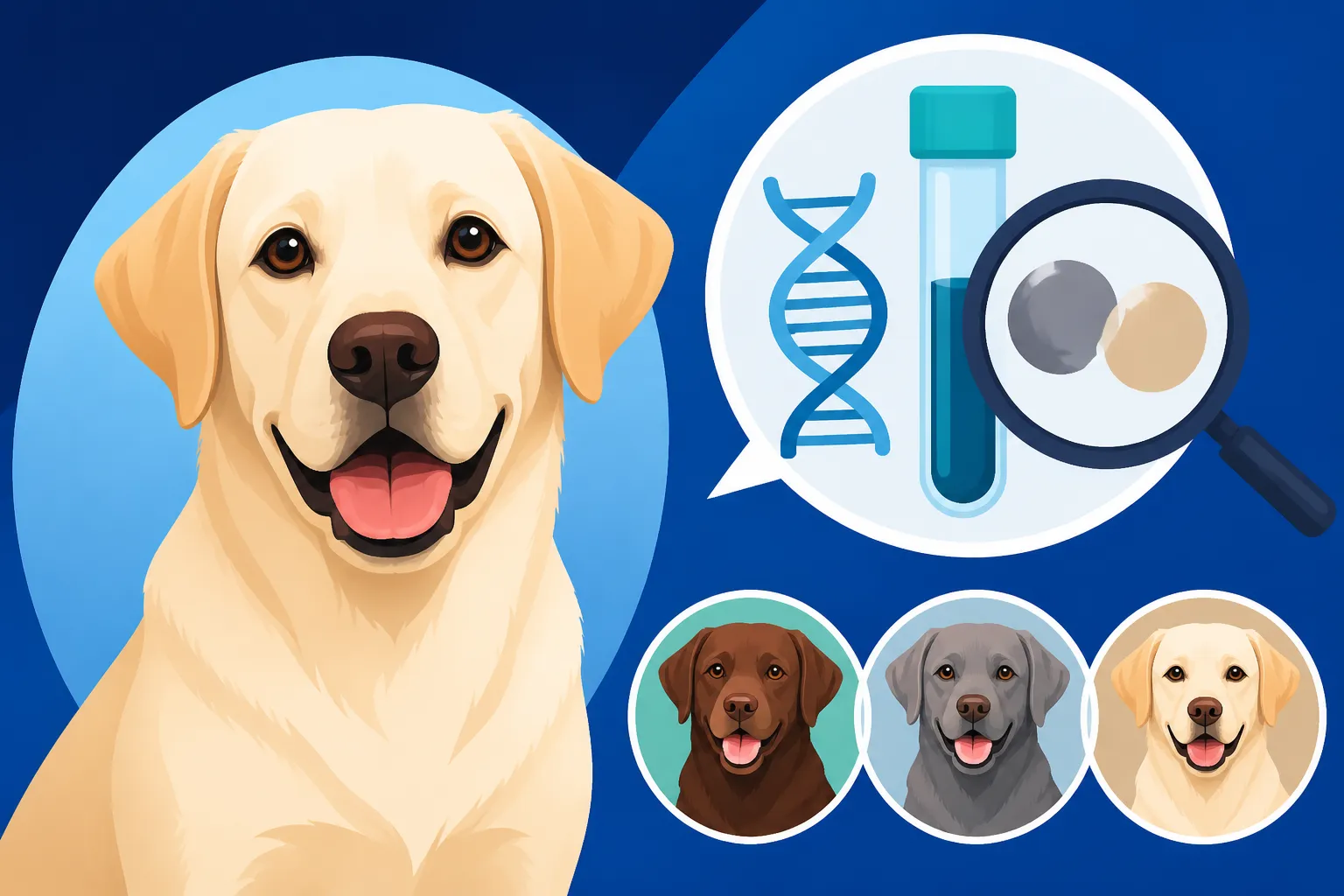
Hands down, the most definitive way to determine your Labrador's dilute status is through a DNA test. These tests are widely available and are relatively simple to administer, usually requiring just a cheek swab. You collect a sample at home and mail it to a specialized veterinary genetics lab.
Several reputable companies offer genetic panels that include testing for the D locus. When looking for a test, make sure it specifically includes the 'dilute' or 'D locus' gene. Many tests also check for other common Labrador genetic conditions like Exercise-Induced Collapse in Labrador Retrievers, Centronuclear Myopathy in Labradors, and Progressive Retinal Atrophy in Labradors, offering a comprehensive overview of your dog's genetic health.
You can often find these DNA testing kits online from pet supply retailers like Chewy, or directly from the genetics companies themselves. The instructions are typically very clear, making the collection process easy for any pet owner. Once the lab processes your sample, they'll send you a detailed report outlining your Labrador's genotype (DD, Dd, or dd) for the dilute gene. This report is irrefutable proof of their status.
Pedigree Analysis (with Caveats)
While not a direct method for your Labrador, reviewing a dog's pedigree can sometimes offer clues about dilute status, especially if you have an older dog or limited access to previous testing. If you know that a dog's parents or grandparents were confirmed dilute (dd) or known carriers (Dd), you can infer probabilities for your dog.
For example, if both parents were known carriers (Dd), then your dog has a 25% chance of being DD, a 50% chance of being Dd, and a 25% chance of being dd. If one parent was dilute (dd) and the other was a non-carrier (DD), all puppies must be carriers (Dd).
However, pedigree analysis is never as accurate as a direct DNA test. It relies on the accuracy of past records and doesn't account for unforeseen mutations or misidentified parentage. It's a useful historical tool but should always be backed up by DNA testing for certainty, especially if breeding is a consideration. You should also check Health Clearances a Labrador Breeder Must Show to understand what reputable breeders usually provide.
Breeder Verification
If you purchased your Labrador from a reputable breeder, they should be able to provide you with the DNA test results for both parent dogs, and potentially for your puppy too, depending on their testing practices. A responsible breeder will be transparent about their breeding stock's genetic health, including dilute status, especially if they are committed to upholding breed standards.
When speaking with a breeder, don't be shy about asking to see the actual test results, not just a verbal confirmation. They should be able to show you documentation from the testing laboratory. This is part of doing your due diligence when choosing a puppy and ensures you're getting a Labrador with the genetic background you expect. Trustworthy breeders understand these concerns and will gladly share information on Genetic Panels Worth Running on a Labrador and their results.
Interpreting Your Labrador's Dilute Test Results
Once you've sent off your cheek swab and received your report, you'll see one of three results for the D locus. Understanding what each means for your dog and, potentially, for future breeding decisions, is the final piece of the puzzle.
DD: Non-Dilute, Non-Carrier
This result means your Labrador has two copies of the dominant 'D' allele.
- What it means for your dog: Your Labrador will have a full, undiluted coat color according to their other color genes (B/b for black/chocolate, E/e for yellow). You don't have to worry about them expressing any dilute traits.
- What it means for breeding: If you decide to breed your Labrador, they will never pass on the dilute gene to their offspring. This makes them a desirable mate for breeders aiming to avoid dilute colors in their lines, as they can "clear" a carrier dog's potential offspring of the dilute gene.
This is the preferred status for many breeders who are dedicated to the traditional Labrador breed standard. It offers peace of mind that their lines are free of the dilute allele.
Dd: Non-Dilute, Carrier
This result indicates your Labrador has one dominant 'D' allele and one recessive 'd' allele.
- What it means for your dog: Your Labrador will still display a full, undiluted coat color. They won't look "silver" or "charcoal" themselves because the dominant 'D' allele overrides the recessive 'd'.
- What it means for breeding: This is where it gets important. Your Labrador is a carrier of the dilute gene. If you breed them with another Dd carrier or a dd dilute dog, there's a statistical chance that some of their puppies will be dd (dilute). If bred with a DD dog, none of the puppies will be dilute, but 50% will still be carriers (Dd). Responsible breeders who discover their dog is a carrier will use this information to make careful breeding choices, often opting to mate with a DD-tested dog to prevent producing dilute offspring and to slowly breed out the carrier status in subsequent generations.
It's crucial not to be alarmed if your pet Labrador is a carrier. It doesn't affect their health or their wonderful Labrador temperament in any way. It's only truly a consideration if you're involved in showing or breeding, where adherence to breed standards and genetic transparency is key.
dd: Dilute
This result means your Labrador has two copies of the recessive 'd' allele.
- What it means for your dog: Your Labrador will express a dilute coat color. This is what you'd see as "silver" (if genetically chocolate), "charcoal" (if genetically black), or a very pale cream/white (if genetically yellow).
- What it means for breeding: All offspring from a dd Labrador will inherit at least one 'd' allele. If bred with a DD dog, all puppies will be Dd (carriers). If bred with a Dd dog, there's a 50% chance of dd puppies and 50% chance of Dd puppies. If bred with another dd dog, all puppies will be dd.
Again, for a beloved pet, a dd status doesn't inherently impact their health or quality of life, but it certainly clarifies why they might look a different shade than typical Labradors. For breeders, this status means they are producing dilute-colored Labradors, which, as mentioned, are not recognized by major kennel clubs and cannot compete in conformation events. This is why it's so important for breeders to be transparent and provide genetic testing. If you have concerns about a breeder's practices, you might want to look into Spotting a Labrador Puppy Mill for red flags.
Understanding your Labrador's dilute status gives you a clearer picture of their genetic heritage. Whether you're a curious owner, a prospective breeder, or just want to confirm details about your furry friend, DNA testing provides definitive answers. Knowing this information can also guide you in conversations with your vet or when making decisions about your dog's long-term care and any potential future breeding plans. And remember, regardless of their dilute status, every Labrador deserves all the love, good food (maybe from Chewy!), and plenty of play.
Disclaimer
This article is for general informational purposes only and does not constitute professional advice. Laws, prices and regulations vary by location and change over time. Consult a qualified professional for guidance on your specific situation.