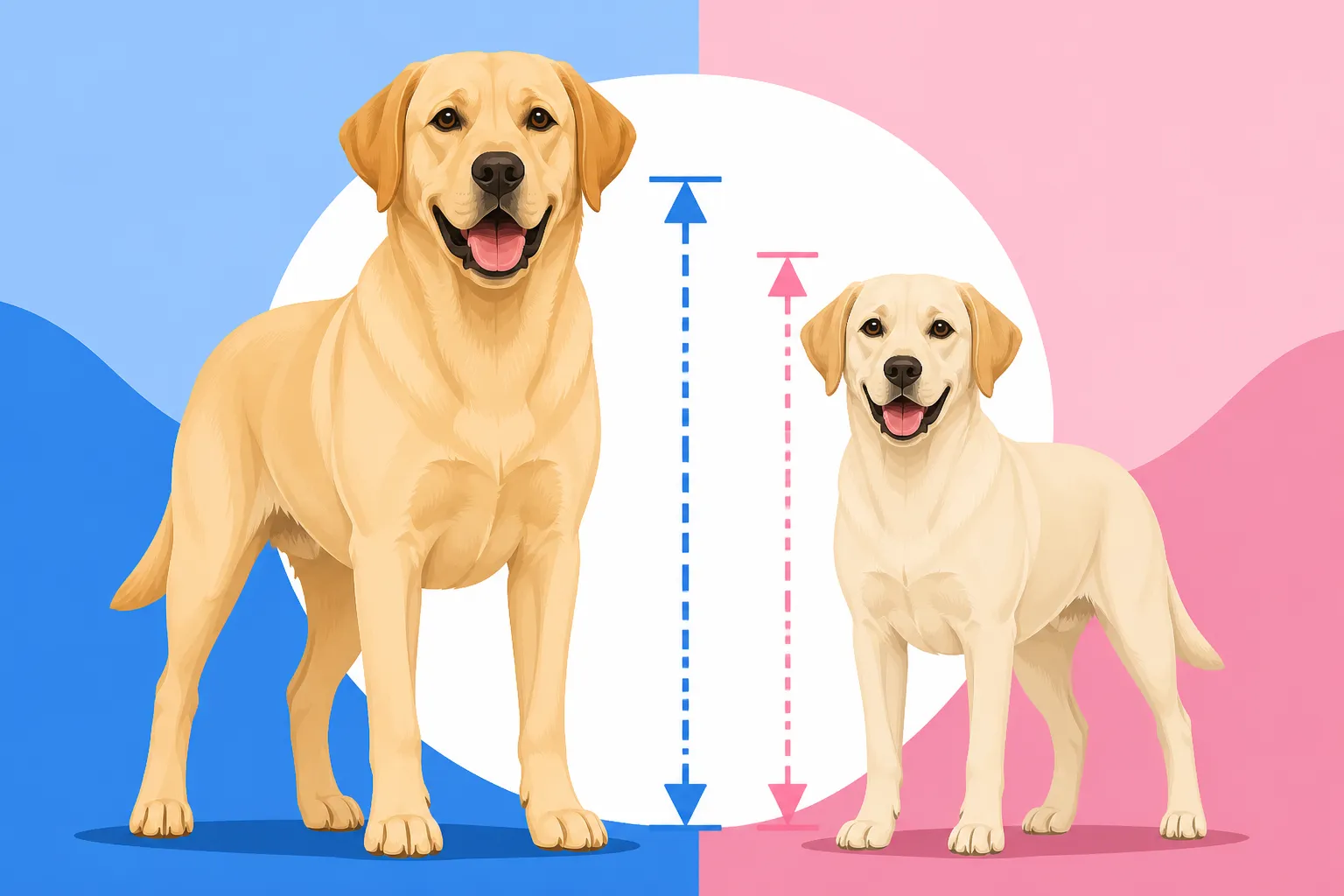
Size Difference Between Male and Female Labradors
One of the most common questions I get from excited puppy parents, or even folks considering bringing a Labrador into their lives, is about their ultimate size. You see those adorable bundles of fluff and just can't quite picture them as the big, powerful, and sometimes surprisingly hefty dogs they're destined to become. And it's true, there can be a noticeable range in size, especially when comparing male and female Labradors. Understanding these differences isn't just about satisfying curiosity; it's absolutely vital for preparing your home, selecting the right gear, and even anticipating their long-term health and exercise needs.
Understanding the Labrador Breed Standard for Size
When we talk about a dog's "size," we're generally referring to both their height and their weight. For Labradors, there are established breed standards that give us a good benchmark, but it's important to remember these are ideals, not rigid rules. Individual dogs, even from the same parents, can vary. The breed standard helps breeders strive for consistency and ensures the dog's physical structure supports its intended function as a retrieving gun dog, meaning they need to be powerful enough to navigate tough terrain and retrieve game, but agile enough not to be cumbersome.
Male Labrador Size Expectations
Generally, male Labradors are the larger of the sexes. When fully grown, you can expect a male Labrador to stand anywhere from 22.5 to 24.5 inches tall at the shoulder. This measurement, taken from the highest point of the shoulder blade to the ground, gives you an idea of their vertical presence. In terms of weight, a healthy adult male Labrador typically falls into the 65 to 80-pound range. However, it's not just about the numbers on the scale or tape measure; a male Labrador often has a noticeably broader chest, heavier bone structure, and a more substantial head than his female counterparts. This gives them an overall impression of "heft" or "substance" that is part of their classic, powerful look.
It's easy to see how a male Labrador can quickly fill a doorway or take up a good portion of the sofa. Their build is designed for strength and endurance. If you're looking at a puppy, trying to predict exactly where he'll land in that range can be tricky, but observing the parents can give you some clues. Responsible breeders can usually give you a good estimate based on their lines and past litters. Remember, healthy weight is key; an overweight Labrador, regardless of sex, can face serious health issues, as we discuss in Why Labradors Gain Weight So Easily.
Female Labrador Size Expectations
Female Labradors, while still robust and athletic, tend to be a bit smaller and more refined than males. On average, an adult female Labrador will stand between 21.5 and 23.5 inches at the shoulder, making them about an inch shorter than males. Their weight typically ranges from 55 to 70 pounds. You might notice that a female often appears more "leggy" or less stocky, with a more graceful neck and a slightly narrower head. This isn't to say they aren't powerful; they absolutely are, just with a different physical expression of that power.
Many people appreciate the slightly more manageable size of a female Labrador, especially if they live in a smaller home or are concerned about being pulled on a leash by a very strong dog. That said, even a 55-pound female Labrador is a substantial animal and needs proper training and exercise. Their leaner build often means they mature physically a bit faster than males, often reaching their full height and filling out by 1.5 to 2 years old, whereas males might take a full 2 to 3 years to truly finish growing and muscle up.
Beyond the Numbers: What "Build" Really Means
Beyond just height and weight, the overall "build" of a Labrador retriever plays a huge role in how large they feel or appear. You can have two Labradors who both weigh 70 pounds, but one might be tall and lanky, while the other is more compact and heavily muscled. This is often where the English and American Labrador Types distinction comes into play. English-style Labradors (often referred to as 'show line' or 'bench type') tend to be stockier, with broader heads, deeper chests, and shorter legs, giving them a more substantial appearance. An English male might be at the lower end of the height standard but max out the weight due to his dense build.
On the other hand, American-style Labradors (often called 'field line' or 'working type') are typically more athletic, with a lither build, longer legs, and often a more tapered muzzle. They might be at the higher end of the height range but weigh less due to their leaner musculature. Neither is inherently "better" or "worse," but understanding these nuances in build can help you appreciate why two Labs of the same sex and similar weight can look quite different. It also helps you set realistic expectations for your own dog's physique, ensuring you're not mistakenly thinking your lean field line Lab is "underweight" if they're simply built for agility rather than bulk.
Factors Influencing a Labrador's Final Size
While genetics provide the blueprint, several environmental and care-related factors can influence how big your Labrador ultimately grows, sometimes pushing them beyond or keeping them below the typical ranges. It's a delicate balance of nature and nurture, and as responsible owners, we have a significant role in helping them reach their healthy potential.
Genetics and Lineage: Show vs. Field Labradors
As briefly touched upon, the lineage of your Labrador—whether they come from predominantly show lines or field lines—is perhaps the most significant genetic determinant of their adult size and build. How English and American Labradors Differ is a fascinating topic, and these differences are clearly visible in their physical structure.
Show Line Labradors: These dogs are bred to conform closely to the breed standard, which emphasizes a compact, powerful, and substantial dog. They often have broader heads, thicker necks, deep chests, and a generally stockier build. Even if their height is within the standard, their sheer density of bone and muscle can make them feel and appear much larger. A male from strong show lines might easily hit the 80-pound mark, or even slightly exceed it, while still being considered perfectly in proportion for his type. These dogs might reach their maximum height earlier but take longer to truly "fill out" and develop their characteristic bulk.
Field Line Labradors: Bred for performance and agility in hunting and field trials, these Labradors tend to be lighter, leaner, and more athletic in appearance. Their body structure is designed for speed, endurance, and quick turns. They often have narrower heads, longer muzzles, and a less substantial bone structure. A male field line Labrador might be at the taller end of the standard but weigh less than a show line male, perhaps closer to 65-70 pounds, because of his leaner build. The emphasis in these lines is on functionality and stamina rather than heavy bone. Understanding these genetic predispositions is crucial when selecting a puppy, as it helps you anticipate your future dog's physical traits and energy levels.
Nutrition and Growth Rate
Proper nutrition during puppyhood and adolescence plays a critical role in your Labrador's healthy development and ultimate size. It's not just about what they eat, but how much and how fast they grow. Overfeeding a Labrador puppy, especially with foods that are too high in calories or calcium, can lead to rapid growth, which is detrimental to their developing joints. How Fast Growth Damages a Labrador's Joints is a serious concern for large breeds. Rapid growth can put undue stress on soft cartilage and growth plates, increasing the risk of orthopedic problems like hip and elbow dysplasia later in life.
That's why feeding a high-quality, large-breed puppy formula is often recommended. These formulas are specifically designed to support a slower, more controlled growth rate, providing the right balance of nutrients without encouraging excessive weight gain or accelerated bone development. Your vet can provide guidance on Labrador Puppy Feeding Amounts and Schedule based on your specific puppy's needs. Brands like Chewy offer a wide selection of large-breed puppy foods that are formulated for this very purpose. Consistency in feeding measured portions, rather than free-feeding, is also essential for managing their growth and maintaining a healthy weight throughout their lives.
Spay/Neuter Impact on Growth Plates
The timing of spaying or neutering your Labrador can also have an impact on their skeletal development and, consequently, their final size. Sex hormones play a crucial role in the closure of growth plates, which are areas of cartilage at the ends of long bones that eventually turn into bone as the dog matures. When a dog is spayed or neutered too early, before these growth plates have naturally closed, the removal of those hormones can delay the closure.
This delayed closure can result in bones growing for a longer period, potentially leading to a taller, and sometimes lankier, dog than they might have been if left intact longer. While a slightly taller stature might not seem like a big deal, it can subtly alter joint angles and put different stresses on the musculoskeletal system, potentially increasing the risk of certain orthopedic issues like cruciate ligament tears or even hip and elbow problems. The current thinking among many veterinarians and breeders suggests waiting until a Labrador is more skeletally mature (often between 12-18 months, sometimes even later for males) before spaying or neutering. This allows their bones and joints to develop more fully. This complex decision, often discussed in When to Spay or Neuter a Labrador, should be made in consultation with your veterinarian, weighing the health benefits and risks for your individual dog.
Practical Considerations for Owning a Large Labrador
Bringing a Labrador into your home means preparing for a substantial, active companion. Their size influences everything from the space they need to the strength of their leash, and anticipating these needs will make life with your Lab much smoother and more enjoyable.
Accommodating Size in Your Home and Car
A fully grown Labrador, whether male or female, takes up a considerable amount of space. This might seem obvious when you're looking at them, but it really sinks in when you realize how much room they need in your home, especially for their sleeping arrangements and general movement. If you plan on crate training, which is an excellent idea for many reasons, you'll need a large-sized crate – typically a 42-inch or even a 48-inch model for bigger males. This ensures they have enough room to stand, turn around, and lie down comfortably without feeling cramped. You can find many options for durable, appropriately-sized crates on Chewy.
Their bed should also be generously sized and, as they age, perhaps an orthopedic design to support their joints. Think about your living spaces: can a large dog easily navigate hallways, stairs, and around furniture without constantly bumping into things? In the car, a large Labrador will need dedicated space, whether it's a roomy back seat with a seat cover or a designated area in the cargo section of an SUV. Car barriers are often a smart investment to keep them safely in the back and prevent them from becoming a distraction while you're driving.
Gear and Supplies for a Full-Grown Labrador
Everything for a Labrador tends to be on the larger, more robust side. Their collars and leashes need to be strong and durable to handle their power, especially if they're prone to pulling. A good quality, comfortable harness can be invaluable for controlling a strong Labrador on walks, making Loose Leash Walking With a Labrador a more pleasant experience for both of you. You'll want to invest in sturdy food and water bowls that won't tip over easily, as a hungry Labrador can be quite enthusiastic at meal times.
Chew toys are another essential item. Labradors are known for their powerful jaws and their love of chewing, which extends well beyond puppyhood. Opt for tough, durable chew toys designed for large breeds to keep them entertained and prevent them from gnawing on your furniture. If you’re sourcing supplies, websites like Chewy are excellent for finding heavy-duty items that can stand up to a large, energetic Lab. Don't forget that grooming tools for a short, dense double coat, such as a sturdy brush and a deshedding tool, should also be on your list.
Managing an Energetic, Large Dog
Regardless of their specific height or weight, all Labradors are active dogs. A large, high-energy dog requires a significant commitment to exercise and training. Without adequate physical and mental stimulation, a large Labrador can become bored, destructive, or develop behavioral issues. Daily vigorous exercise, such as long walks, running, swimming, or games of fetch, is non-negotiable. Remember, Labradors thrive on having a job to do.
Training is also paramount. A well-behaved, well-trained large dog is a joy, but an untrained one can be a handful. Early socialization and consistent positive reinforcement training, especially for commands like "sit," "stay," and "come," are crucial. Teaching them good manners, like not jumping on guests or counter-surfing for food, becomes even more important with a dog of their size and strength. Investing in quality training, whether through classes or private sessions, is an investment in a happy and harmonious life with your large and loving Labrador.
Comparing Male and Female Labrador Sizes
To give you a quick overview, here's a table summarizing the typical size differences between male and female Labradors. Keep in mind these are general ranges, and individual dogs will always have their unique characteristics!
| Trait | Male Labrador (Typical Range) | Female Labrador (Typical Range) |
|---|---|---|
| Height | 22.5 to 24.5 inches (at shoulder) | 21.5 to 23.5 inches (at shoulder) |
| Weight | 65 to 80 pounds | 55 to 70 pounds |
| Build | Broader chest, heavier bone, more substantial head | More refined, slightly lighter frame, often longer in body |
| Maturity | Full physical maturity around 2-3 years | Full physical maturity around 1.5-2 years |
It’s worth noting that while these ranges are helpful, there can be overlap. A very large female might weigh more than a smaller male, or a tall field-line female might stand taller than a compact show-line male. The key is to aim for a healthy weight and condition for your individual dog, rather than fixating on hitting a specific number. You can learn more about assessing your dog's physical condition in Checking a Labrador's Body Condition Score.
The enduring popularity of the Labrador Retriever isn't just about their friendly personalities; it's also about their impressive, athletic build. Whether you're welcoming a strapping male or a graceful female, understanding the potential size differences helps you to be a more prepared, thoughtful, and ultimately, a better dog parent. Your Labrador's size is a part of their unique charm, and with the right care and attention, they'll thrive at whatever healthy dimensions they reach!
Disclaimer
This article is for general informational purposes only and does not constitute professional advice. Laws, prices and regulations vary by location and change over time. Consult a qualified professional for guidance on your specific situation.