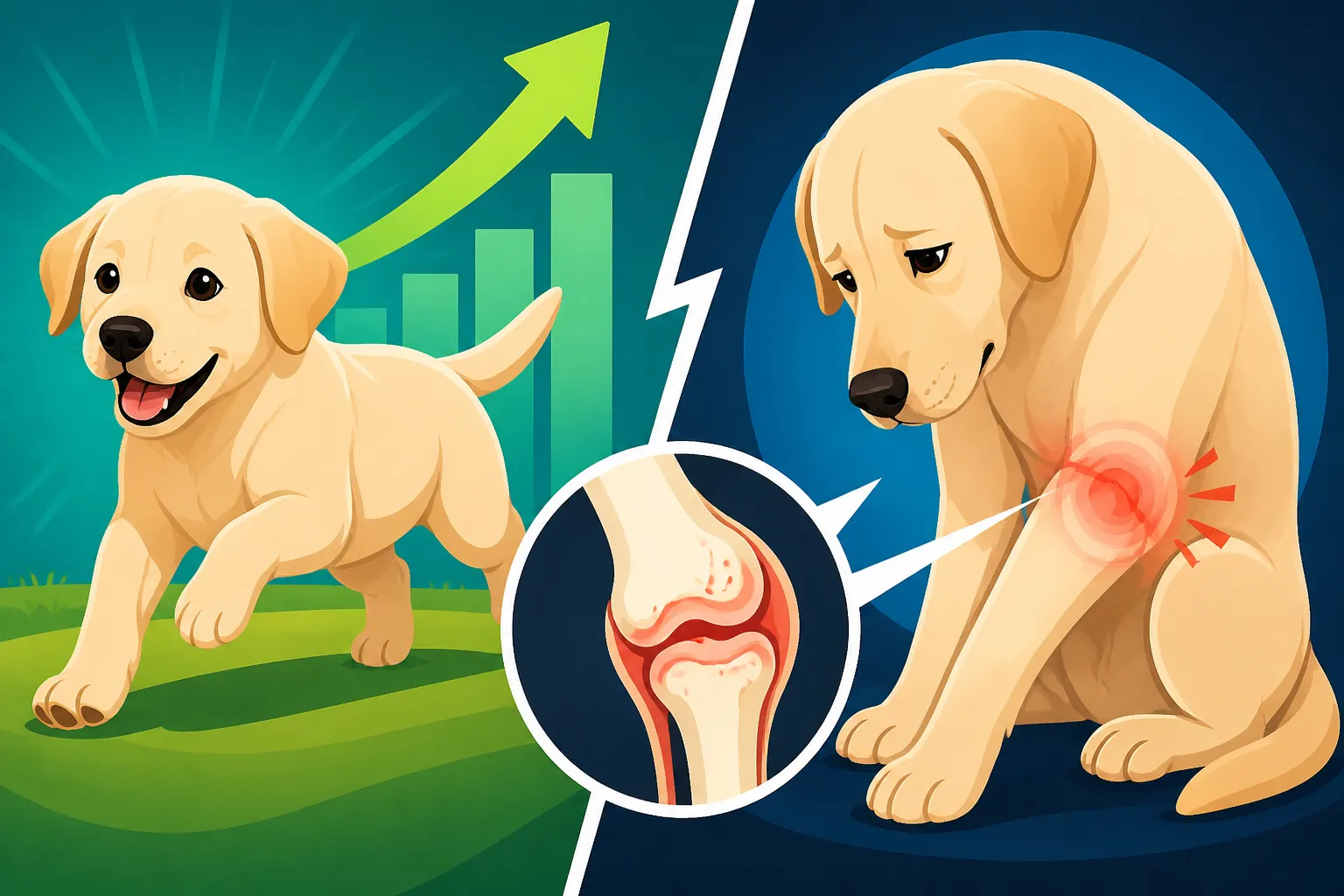
How Fast Growth Damages a Labrador’s Joints
It's incredibly natural to want your Labrador puppy to grow into a big, strong, and impressive dog. We all picture those magnificent adult Labs, full of life and vigor. But sometimes, in our enthusiasm, we can inadvertently push our puppies to grow too quickly, and this rapid growth can actually have some serious, long-term consequences for their developing joints. This guide will walk you through why fast growth is detrimental to a Labrador's joint health and what you can do to ensure your furry friend develops at a healthy, steady pace, protecting them from preventable issues down the road.
The Invisible Threat: Why Fast Growth Matters for Labrador Joints
When you see a Labrador puppy, it’s hard not to be charmed by their boundless energy and rapidly increasing size. We often think "bigger is better," especially with a large breed like a Lab. However, for a young Labrador, growing too fast isn't a sign of superior health; it's often a precursor to orthopedic problems. Their bones and joints are still incredibly malleable and vulnerable, and they aren't ready for the stresses that come with rapid weight gain and increased mass.
Think of it like building a house. You wouldn't pour the foundation and then immediately stack all the heavy upper floors on before the concrete has fully cured, right? That's essentially what happens when a puppy grows too fast. Their skeletal system, particularly the crucial areas like hips and elbows, needs time to mature and solidify properly. Rushing this process places immense strain on immature structures, increasing the risk of painful and debilitating conditions that can affect them for life. It's a silent threat because the damage often isn't immediately visible, but it builds over weeks and months of inappropriate growth.
Understanding Your Labrador's Natural Growth Curve
Labradors, like all large breed dogs, have a distinct growth curve. They grow very quickly in their first few months, then their growth rate gradually slows until they reach their adult size, typically between 12 and 18 months, though they can continue to fill out and add muscle mass for another year or so. This natural curve is what their bodies are designed for. Any significant deviation, particularly an accelerated one, signals that something is out of balance.
A healthy growth curve means steady, gradual progress. You'll see them getting taller, longer, and putting on appropriate muscle, but it shouldn't be a sudden explosion of size. It's not about them being the biggest puppy in their litter or at the dog park; it's about them being the healthiest throughout their development. Understanding and respecting this natural timetable is key to preventing long-term orthopedic issues. Breeders often track weights closely, and your vet will do the same at each visit, helping you gauge if your pup is on the right track.
What Exactly Are Growth Plates and Why Are They So Fragile?
At the ends of your Labrador puppy’s long bones—like those in their legs—are areas of soft, developing cartilage called growth plates, or epiphyseal plates. These are essentially "bone factories" where new bone tissue is produced, allowing the bones to lengthen as your puppy grows. Unlike mature bone, which is quite strong, these growth plates are incredibly fragile and vulnerable to injury. They're weaker than the surrounding ligaments, tendons, and even the bone itself.
These growth plates remain open and actively producing bone until your Labrador reaches skeletal maturity, which can be anywhere from 12 to 18 months of age, sometimes even a bit later for very large males. Until they "close" and harden into solid bone, they are susceptible to damage. Trauma, excessive exercise, or, most relevant to our discussion, too much weight and rapid growth can damage these delicate areas. Once a growth plate is injured, it can lead to abnormal bone growth, limb deformities, or painful conditions down the line. It's why we're so careful about activity levels and nutrition during those critical puppy months. When a Labrador's Growth Plates Close is a really important read if you want to understand the exact timeline.
How Rapid Weight Gain Stresses Developing Joints
The connection between rapid growth and joint damage isn't just theoretical; it's a well-documented concern in large breed dogs like Labradors. When a puppy grows too fast, it usually means they are also gaining weight too quickly. This excess weight puts immediate and continuous stress on their immature joints and fragile growth plates. Imagine carrying an extra 10-20 pounds yourself during your own growing years – it would certainly impact your developing skeleton! For a puppy, this increased load on their soft bones and cartilage can have devastating effects.
The problem isn't just the overall size, but the density and structure of the bone and cartilage itself. Rapid growth often leads to bones developing too quickly without adequate mineralization or support, making them weaker and more prone to deformation under strain. The cartilage in the joints, which should be smooth and resilient, can become damaged, leading to inflammation and breakdown. This mechanical stress, combined with the biochemical imbalances that can accompany accelerated growth (especially from overfeeding or inappropriate diets), creates a perfect storm for serious orthopedic diseases.
The Domino Effect: Weight, Stress, and Dysplasia
The most commonly associated issues with rapid growth and excess weight in Labradors are hip dysplasia and elbow dysplasia. These conditions are heartbreakingly common in our beloved Labs, and while genetics play a significant role, environmental factors like diet and exercise during puppyhood are huge contributors. When a puppy carries too much weight, too early, the developing hip and elbow joints simply cannot cope.
In hip dysplasia, the ball and socket joint of the hip doesn't develop correctly. The socket can be too shallow, or the head of the femur (thigh bone) can be flattened or malformed. With rapid weight gain, the immature joint capsule and ligaments stretch and loosen, causing the femoral head to move abnormally within the socket. This leads to friction, inflammation, and eventual degeneration of the cartilage. It's like a car wheel that's constantly out of alignment – the tire wears down unevenly and quickly. Similarly, elbow dysplasia involves abnormal development of the elbow joint, often leading to painful bone fragments, cartilage damage, or improper alignment. The extra weight exasperates these genetic predispositions, turning a mild vulnerability into a severe problem. You can learn more about Labrador Hip and Elbow Dysplasia to understand the conditions in depth.
Beyond Dysplasia: Other Joint Issues Triggered by Fast Growth
While hip and elbow dysplasia are the poster children for rapid growth related issues, they are far from the only concerns. Other conditions can also be exacerbated or directly caused by a puppy growing too fast and being too heavy. Osteochondritis dissecans (OCD) is another painful condition where cartilage within a joint thickens and can detach, forming a flap or loose body that causes pain and lameness. This often occurs in the shoulder, elbow, knee, or ankle. The rapid deposition of cartilage in fast-growing puppies, coupled with mechanical stress, makes them more susceptible.
Furthermore, general arthritis, even in middle age, can be traced back to early joint damage from rapid growth. While our Labs are incredibly stoic, early-onset arthritis can significantly impact their quality of life. The micro-traumas and inflammation caused by stressing immature joints create a foundation for chronic pain and stiffness later on. This also impacts conditions like Cruciate Ligament Tears in Labradors, where excessive early strain might weaken structures over time, making them more prone to injury with a sudden twist or jump. It’s a compelling argument for vigilance during puppyhood – what you do in those first months can truly define their comfort for years to come.
The Role of Nutrition in Managing Healthy Growth
Nutrition is arguably the most powerful tool you have in preventing rapid growth and protecting your Labrador's developing joints. It's not just about what you feed, but how much and when. The goal is steady, moderate growth, not maximum size in minimum time. This means being incredibly disciplined with portions and selecting a diet specifically formulated for the unique needs of large breed puppies.
It can be hard to resist those pleading Labrador eyes, especially when they always seem hungry – after all, a quarter of Labradors are predisposed to overeating by genetics! But giving in to every request for more food or extra treats is a direct path to an overweight, fast-growing puppy. Instead, focus on providing a complete and balanced diet in carefully measured amounts, ensuring they receive all the necessary nutrients without excess calories that contribute to accelerated growth. This strategy is a cornerstone of responsible large breed puppy ownership.
Choosing the Right Large Breed Puppy Food
Not all puppy foods are created equal, especially when it comes to large breeds. Standard puppy foods, designed for smaller dogs, often contain higher levels of calories, fat, and calcium/phosphorus than a large breed puppy needs. While these levels are fine for a Chihuahua, they can be detrimental to a growing Labrador. Excessive calcium, in particular, can interfere with normal bone development, ironically contributing to conditions like OCD and dysplasia.
Look for a high-quality "large breed puppy formula" specifically. These diets are formulated with controlled levels of calories, fat, and calcium to promote slower, more controlled growth. They provide all the essential nutrients for development but prevent the excessive intake that pushes growth beyond a healthy pace. Brands like Ollie offer fresh food options, but even with those, ensuring they are appropriate for large breed puppies and portioned correctly is vital. Always check the labels and discuss options with your veterinarian. A good rule of thumb is to ensure the calcium content is around 1.0-1.5% on a dry matter basis. You can delve deeper into Large Breed Puppy Food for a Labrador to make an informed choice.
Mastering Portion Control for a Growing Labrador
This is where the rubber meets the road. Even the best large breed puppy food can be harmful if you feed too much of it. Every bag of dog food comes with a feeding guide, but these are just starting points. They often provide a range, and individual puppies have different metabolic rates and activity levels. It's essential to treat these guidelines as maximums and adjust downwards if your puppy is growing too fast or looking chunky.
Here's how to master portion control:
- Use a Measuring Cup or Scale: Don't eyeball it! An actual measuring cup (8 oz/240ml kitchen cup, not a random scoop) or, even better, a kitchen scale for precise weight measurements, is crucial. The density of kibble varies, so weighing is the most accurate. You can find reliable kitchen scales on Amazon or Chewy.
- Divide Daily Rations: Divide your Labrador puppy's total daily food allowance into two or three meals. This helps manage hunger and provides consistent energy. Labrador Puppy Feeding Amounts and Schedule offers a great resource on this.
- Monitor Body Condition: The most important indicator of whether you're feeding the right amount is your puppy's body condition. You should be able to easily feel their ribs without pressing hard, see a discernible waist tuck when viewed from above, and a slight abdominal tuck when viewed from the side. If you can't feel the ribs easily or they look like a little barrel, you're likely feeding too much. This is a far better guide than the number on the scale.
- Account for Treats: Remember that treats count towards daily calorie intake. If you're using treats for training (and with a food-motivated Labrador, you probably are!), reduce their main meal portions accordingly. Opt for low-calorie treats or use a portion of their daily kibble as training rewards.
- Slow Feeder Bowls: For those Labs who inhale their food, a slow feeder bowl can help them eat at a more measured pace, potentially feeling fuller on smaller portions and reducing gulping. Many varieties are available on Chewy.
| Growth Rate Characteristic | Potential Impact on Joint Health | Recommended Approach |
|---|---|---|
| Rapid Growth | Increased risk of hip/elbow dysplasia, OCD, early arthritis; excess weight stresses immature growth plates. | Avoid; leads to long-term pain and mobility issues. |
| Controlled/Moderate Growth | Supports proper joint formation, reduces strain on growth plates, promotes strong bone density. | Aim for this; promotes a healthy, active lifespan. |
| Overfeeding Calories | Leads to rapid weight gain, putting undue stress on skeleton. | Measure food precisely; adjust based on body condition. |
| Balanced Large Breed Puppy Food | Provides optimal calcium/phosphorus and calorie levels for slow, steady development. | Essential for all large breed puppies. |
| Inappropriate Exercise | Can cause direct injury to growth plates and joints due to overexertion. | Limit strenuous activity; focus on short, controlled play. |
| Consistent Vet Checks | Allows for early detection of growth issues or joint discomfort. | Maintain regular appointments for monitoring. |
Practical Steps to Support Healthy Joint Development
Beyond nutrition, there are several other critical areas where you, as a Labrador owner, can actively support healthy joint development and mitigate the risks associated with fast growth. It's an holistic approach that combines diet, appropriate exercise, careful monitoring, and professional guidance. Remember, your goal is to help your Labrador grow strong and sound, not just big.
Every decision you make during puppyhood has a ripple effect on their adult health. From the type of play you encourage to the surfaces they run on, these factors all contribute to the well-being of their developing skeletal system. It’s about building a solid foundation, literally, for a lifetime of happy, active adventures with your beloved companion.
Appropriate Exercise for a Growing Labrador
This is a big one, and often misunderstood. A Labrador puppy has endless energy, and it's tempting to think that more exercise is always better. However, "more" often means too much, too soon, for delicate growth plates and developing joints. Strenuous, repetitive, high-impact activities are a big no-no for puppies. This includes long runs, jumping on and off furniture, repetitive ball fetching for extended periods, or intense agility training before skeletal maturity. Exercise Limits for a Labrador Puppy provides a detailed breakdown of what's appropriate.
Instead, focus on short, frequent, low-impact exercise sessions. Think structured walks on soft surfaces (grass, dirt trails, not pavement), supervised play with other calm, appropriately sized dogs, and gentle swimming (once they are old enough and fully vaccinated). The "five-minute rule" is a good guideline: no more than five minutes of structured exercise per month of age, twice a day. So, a four-month-old puppy would get two 20-minute walks. This isn't a hard and fast rule, but it helps prevent overexertion. Avoid situations where your puppy is forced to keep up with you on long jogs or intense hikes. Letting a puppy "self-regulate" during free play in a safe, fenced yard is generally better than structured, forced exercise.
Regular Monitoring and Vet Check-ups
Consistent veterinary care is your best ally in ensuring your Labrador puppy is growing at a healthy rate. Your vet will monitor your puppy's weight and body condition at each visit, giving you feedback on whether they are on track. Don't be offended if your vet suggests your puppy is a bit overweight – they're looking out for their long-term health, not judging your parenting skills! They might even suggest genetic panels worth running on a Labrador if there's a family history of joint issues.
Beyond the regular check-ups, it's crucial to be observant at home. Watch your puppy for any signs of lameness, limping, stiffness, or reluctance to play or move. These can be subtle at first, as Labradors are known for being stoic. Sometimes, a "lazy" puppy might actually be experiencing joint discomfort. Don't dismiss these signs; always consult your vet. Early detection of any joint issues, even subtle ones like Why a Labrador Puppy Sits With Legs Splayed, can make a huge difference in managing the condition and preserving their mobility. Your vet can recommend imaging (X-rays) if needed, and discuss appropriate interventions, which might include diet adjustments, pain management, or even referral to an orthopedic specialist.
Disclaimer
This article is for general informational purposes only and does not constitute professional advice. Laws, prices and regulations vary by location and change over time. Consult a qualified professional for guidance on your specific situation.