Why Labradors Blow Out Their Knees
It’s a heart-wrenching moment for any Labrador owner: one minute your happy, energetic companion is bounding around, the next they let out a yelp, suddenly limping or holding a back leg completely off the ground. The fear that rushes over you is palpable, often leading to worries about expensive vet bills and a long recovery. This isn't just a random accident; it's a distressingly common issue in our beloved Labradors: a "blown knee," or more accurately, a torn cranial cruciate ligament. This comprehensive guide will walk you through why this injury is so prevalent in Labradors, what factors contribute to it, how to spot the signs, and the various treatment paths available to help your furry friend get back on their paws.
Understanding the Crucial Role of the Cranial Cruciate Ligament
Before we dive into why Labradors are particularly susceptible to knee injuries, it helps to understand what the cranial cruciate ligament (CCL) is and what it does. Think of your Labrador's knee, or "stifle joint," as a hinge connecting the femur (thigh bone) to the tibia (shin bone). Inside this complex joint are two crucial ligaments that cross over each other, forming an 'X' – these are the cranial (anterior) and caudal (posterior) cruciate ligaments. The cranial cruciate ligament is the primary stabilizer of the knee, preventing the tibia from sliding forward excessively relative to the femur and also limiting internal rotation of the tibia.
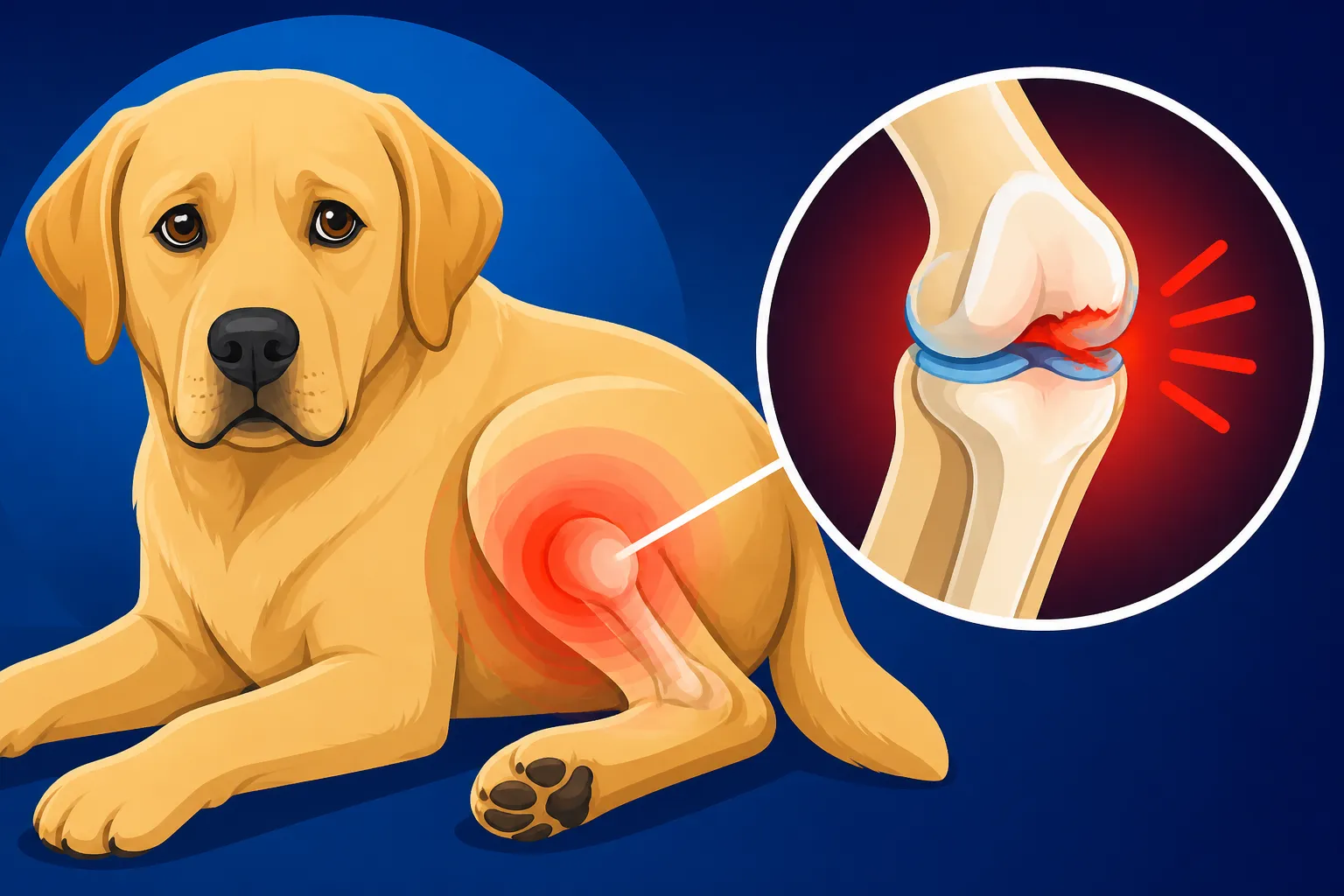
When this ligament tears, it's akin to snapping a strong rubber band. Without its stabilizing influence, the bones of the stifle joint can move abnormally, causing pain, inflammation, and instability. Over time, this instability leads to degenerative joint disease, or arthritis, in the knee. For a breed like the Labrador, known for its boundless energy and love for activity, a compromised knee can severely impact their quality of life, turning even simple movements into painful struggles.
The Anatomy of a Labrador's Stifle
A Labrador's stifle joint is a marvel of engineering, built for power, agility, and endurance, yet it has a specific vulnerability. The way the femur and tibia articulate, particularly the angle of the top surface of the tibia (called the tibial plateau angle), is a subject of much veterinary research. In some dogs, especially larger, active breeds like Labradors, this angle can contribute to chronic stress on the CCL, even during normal weight-bearing. Instead of the forces being distributed evenly, there's a constant forward thrust on the tibia that the CCL must counteract. Over years of activity, even micro-tears can accumulate, weakening the ligament until a seemingly minor movement, or even just walking, can lead to a full rupture.
This unique biomechanical setup means that while a sudden twist or misstep can certainly cause a tear, it's often the culmination of long-term degeneration rather than a single traumatic event. This explains why sometimes a Labrador might simply be walking across the yard when their knee suddenly gives out, leaving owners scratching their heads about what "caused" the injury.
Factors Contributing to Cruciate Ligament Tears in Labradors
It's truly frustrating when your otherwise healthy Labrador suddenly faces a major orthopedic issue. While genetics play a significant role, it's rarely just one thing that leads to a cruciate ligament tear. It's often a perfect storm of predisposing factors, many of which we, as responsible owners, can influence to some degree.
Genetic Predisposition and Conformation
Labrador Retrievers, along with other large and giant breeds like Rottweilers, German Shepherds, and Newfoundlands, are genetically predisposed to cranial cruciate ligament disease. This means that certain genetic traits, passed down through generations, make them more likely to experience these tears. It's not always about a single gene, but rather a complex interplay of genetic factors that influence joint conformation, ligament strength, and even inflammatory responses within the joint. Responsible breeders will often screen their dogs for orthopedic issues, including those that might indirectly affect knee health. While there isn't a single definitive genetic test for CCL susceptibility, screening for conditions like Labrador Hip and Elbow Dysplasia can give breeders insight into overall joint health and soundness. Unfortunately, even with careful breeding, the prevalence remains relatively high in the breed.
Beyond genetics, the actual physical structure, or conformation, of a Labrador’s hind limbs can play a significant role. As mentioned earlier, the angle of the tibial plateau in some Labradors can put continuous strain on the CCL. If a dog has an unusually steep tibial plateau, the forces within the knee joint during weight-bearing are less favorable for the ligament. This constant biomechanical stress makes the ligament more prone to fraying and weakening over time, making a full rupture almost inevitable, even without a dramatic injury.
Weight Management and Activity Levels
This is perhaps one of the most significant factors that owners can control, and it's a tough pill to swallow for many Labrador parents. Labradors are notorious for their love of food and their tendency to gain weight easily. You might even want to read our article on Why Labradors Gain Weight So Easily. Every extra pound your Labrador carries places additional stress on all their joints, including the knees. Imagine trying to run or jump with a heavy backpack on all the time – that's what an overweight Labrador's joints experience. Studies have consistently shown a strong correlation between obesity and an increased risk of CCL tears. An overweight Labrador not only puts more strain on the ligament itself but also on the surrounding muscles and supportive structures, increasing the likelihood of injury. This is why maintaining a healthy weight is absolutely critical for our Labs. The extra years a lean Labrador lives are often healthier years, too.
| Risk Factor | Impact on Knee Health | Prevention/Mitigation Strategy |
|---|---|---|
| Genetics/Conformation | Certain lines and individual dogs have a genetic predisposition or anatomical features (e.g., tibial plateau angle) that put chronic stress on the CCL, leading to degeneration and rupture. | Choose a reputable breeder who screens breeding stock for orthopedic health (hips, elbows) and has a history of sound, long-lived dogs. Inquire about CCL history in the lineage. |
| Obesity/Excess Weight | Each extra pound increases the load on the knee joints, accelerating wear and tear on the CCL and contributing to inflammation. Makes even minor activities strenuous. Read Labrador Obesity and the Years It Costs. | Strict portion control, appropriate calorie intake based on activity level, regular exercise, and healthy treats. Monitor body condition score regularly and work with your vet to maintain an ideal weight. |
| Inappropriate Exercise | Sudden, high-impact activities (e.g., abrupt stops, pivots, jumping off high surfaces) on an unprepared or older ligament can cause acute tears. Repetitive, strenuous activity without adequate warm-up can also lead to chronic stress. | Ensure a proper warm-up before intense play and a cool-down afterward. Avoid highly repetitive, forceful jumping or twisting motions. Incorporate varied exercise, including swimming, which is low-impact. Gradually increase intensity and duration of new activities. |
| Age and Degeneration | The CCL naturally weakens and becomes less elastic over time, making it more susceptible to tearing, even without a distinct traumatic event. | While age is inevitable, good lifelong joint care (weight management, supplements, appropriate exercise) can slow degenerative changes. Regular vet check-ups can help monitor joint health as your Labrador ages. Read Labrador Arthritis in Middle Age. |
| Inflammatory Conditions | Chronic inflammation within the joint, potentially due to other underlying orthopedic issues or systemic conditions, can weaken the ligament and contribute to its breakdown. | Address any underlying health issues promptly with your veterinarian. A balanced diet and appropriate supplements (e.g., omega-3 fatty acids) can support overall joint health and reduce inflammation. |
Beyond weight, the type and intensity of exercise can also play a role. While Labradors certainly need Exercise a Labrador Needs Each Day, sudden, explosive movements like chasing a ball and abruptly stopping, twisting, or jumping off high surfaces can put immense strain on the knee joint. This is especially true if a dog isn't properly warmed up or conditioned. While we don't want to prevent our Labs from enjoying life, being mindful of overly strenuous or sudden impact activities, particularly as they age or if they're carrying extra weight, can help. The balance is key: active but controlled, and always within their physical limits.
Age and Previous Injuries
It's a sad truth that our dogs age faster than we do, and with age comes natural wear and tear. The cranial cruciate ligament, like other ligaments in the body, can degenerate over time, becoming weaker and less elastic. This age-related weakening makes it more prone to tearing, even during routine activities. This means that an older Labrador, even one that has been lean and active their whole life, can still suffer a CCL tear.
Furthermore, a significant percentage of dogs that tear one CCL will eventually tear the other. This isn't just bad luck; it’s often because the underlying genetic and conformational issues are bilateral, meaning they affect both knees. Once one knee is injured, the dog naturally compensates by putting more weight and strain on the "good" leg, which then becomes more susceptible to injury. This cascading effect is a major concern for owners, as it often means dealing with two complex surgeries and rehabilitation periods, sometimes back-to-back. Having a robust pet insurance plan, such as those offered by Healthy Paws, can certainly alleviate some of the financial stress during these challenging times.
Recognizing the Signs and What to Do
Spotting a cruciate ligament tear in your Labrador can be tricky because the symptoms can range from subtle lameness to dramatic non-weight bearing. As a stoic breed, Labradors are often masters at hiding pain, but there are tell-tale signs if you know what to look for. Recognizing these early can be crucial for prompt veterinary intervention and better long-term outcomes.
Subtle Limping Versus Acute Non-Weight Bearing
A full, acute tear of the CCL often presents dramatically. Your Labrador might suddenly cry out, refuse to put any weight on the affected leg, or hold it up entirely. This usually happens during or immediately after exercise, or even after a seemingly innocuous movement. If you see this, it's an emergency, and your vet should be contacted immediately.
However, many CCL tears begin as partial tears or chronic degeneration, leading to more subtle, intermittent symptoms. You might notice your Labrador:
- Intermittent lameness: They might limp after exercise, but seem fine after resting. The lameness might come and go.
- Difficulty rising or sitting: They may struggle to get up from a lying position, or sit with the affected leg extended out to the side rather than tucked underneath them (often called a "sit test" indicator).
- Stiffness: They might appear stiff, especially after periods of rest, which improves as they "warm up."
- Decreased activity: A previously enthusiastic Labrador might become reluctant to play, jump, or go for walks.
- Muscle atrophy: Over time, if the leg isn't being used properly, the thigh muscles on the affected side will start to shrink.
- Swelling around the knee: You might notice a slight thickening or swelling on the inside of the knee joint.
Any of these signs warrant a call to your veterinarian. It’s always better to be cautious when it comes to potential joint injuries.
The Veterinary Examination and Diagnosis
When you bring your Labrador to the vet with a suspected knee injury, they will perform a thorough orthopedic examination. This typically involves:
- Palpation: The vet will carefully feel the knee joint for swelling, pain, and abnormal movement.
- Cranial Drawer Test: This is the hallmark test for a torn CCL. The vet will attempt to manually slide the tibia forward relative to the femur while stabilizing the femur. If the ligament is torn, there will be abnormal "drawer" motion, similar to pulling open a drawer. This test can sometimes be difficult in very muscular or tense Labradors, or in cases of partial tears.
- Tibial Compression Test: Another diagnostic test where the vet flexes the ankle joint, pushing the tibia forward. If the CCL is torn, the tibia will move forward.
- Radiographs (X-rays): While X-rays don't directly show the ligament, they are crucial for ruling out other orthopedic issues (like fractures or bone tumors) and assessing the degree of arthritis in the joint. They can also show subtle changes in the joint space or bone spurs that indicate long-term instability.
- Sedation: For a complete and accurate examination, especially for larger or painful dogs, sedation is often necessary. This allows the muscles to relax, making the cranial drawer test more reliable.
Once a diagnosis of a torn cranial cruciate ligament is made, your vet will discuss the best course of action, which typically involves surgical intervention given the size and activity level of most Labradors.
Treatment and Recovery Options for a Blown Knee
Getting the news that your Labrador has a torn cruciate ligament can be overwhelming, especially when you hear the costs associated with treatment. However, it's important to remember that there are effective ways to manage this injury and restore your dog's quality of life. The path chosen largely depends on the severity of the tear, your dog's size, age, activity level, and, of course, your financial situation. This is where pet insurance, like policies from Healthy Paws, can be incredibly beneficial, helping to cover a significant portion of these often substantial expenses.
Surgical Interventions: The Most Common Path
For most Labradors, especially those who are active or overweight, surgery is the recommended treatment. This is because conservative management often doesn't provide enough stability for large, powerful breeds, leading to chronic lameness and rapid progression of arthritis. There are several surgical techniques, each aiming to stabilize the knee by altering its biomechanics or replacing the ligament:
-
Tibial Plateau Leveling Osteotomy (TPLO): This is one of the most common and successful surgeries for larger dogs. The surgeon cuts the top of the tibia (the tibial plateau) and rotates it to change the angle, effectively neutralizing the forward thrust that puts stress on the CCL. A bone plate and screws are then used to secure the bone in its new position. This technique creates a mechanically stable joint regardless of the torn ligament, allowing the dog to return to high levels of activity. You might want to learn more about What Happens During a Labrador TPLO Operation.
-
Tibial Tuberosity Advancement (TTA): Similar to TPLO, TTA also aims to change the biomechanics of the knee. In this procedure, the front part of the tibia (tibial tuberosity) is cut and advanced forward, and a cage and plate are used to hold it in place. This alters the pull of the quadriceps muscle, making it prevent the tibia from sliding forward.
-
Lateral Suture (Extracapsular Repair): This is an older, less invasive technique often used for smaller, less active dogs, or sometimes as a more budget-friendly option for larger dogs. It involves placing a strong suture material outside the joint capsule, from the femur to the tibia, to mimic the function of the torn CCL. While it provides immediate stability, the suture can stretch or break, and it doesn't address the underlying biomechanical issues as TPLO or TTA do. For this reason, it often has lower long-term success rates in large, active Labradors compared to TPLO or TTA.
The choice of surgery depends on the individual dog, the surgeon's preference and expertise, and owner considerations. It's vital to discuss all options thoroughly with your veterinary surgeon.
Conservative Management: When Is It an Option?
Conservative management, which involves strict rest, anti-inflammatory medications, pain relief, and possibly physical therapy, is generally not recommended for full CCL tears in active, larger breed dogs like Labradors. The instability in the joint is too great, leading to ongoing pain and rapid, severe arthritis.
However, conservative management might be considered for:
- Partial tears: If the ligament is only partially torn and the instability is minimal, rest and physical therapy might allow for healing and strengthening of the surrounding muscles.
- Very old or medically fragile dogs: If a Labrador has other significant health issues that make anesthesia and surgery too risky, conservative management might be the only humane option, focusing on pain control and comfort.
- Financial constraints: While less ideal, if surgery is simply not an option financially, a long course of strict rest, physical therapy, and medication might be attempted, though owners should be realistic about the likely outcome.
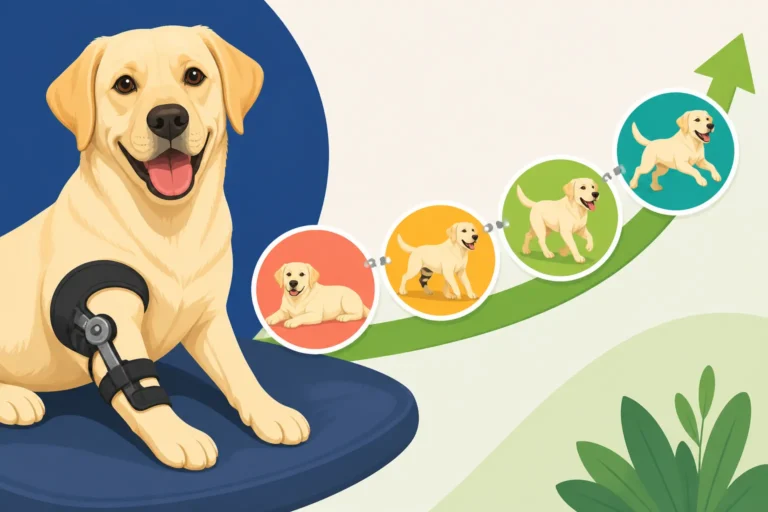
Even when attempting conservative management, a brace may be used to provide external support, but it's important to understand these are rarely a permanent solution for full tears in Labs.
Rehabilitation and Long-Term Care: A Commitment to Healing
Regardless of whether your Labrador undergoes surgery or attempts conservative management, the recovery period is a long and crucial journey. The success of treatment relies heavily on dedicated post-operative care and rehabilitation.
-
Strict Rest and Controlled Exercise: For weeks, often months, your Labrador will need strict confinement and controlled leash walks only. No running, jumping, or rough play. This can be incredibly challenging for a high-energy Labrador, but it's vital for proper healing. The first 8-12 weeks post-surgery are especially critical. Our article on Recovery Time After Labrador Cruciate Surgery delves into this in detail.
-
Physical Therapy (Rehabilitation): This is paramount for regaining strength, flexibility, and proper gait. A certified canine rehabilitation therapist can guide you through exercises like passive range of motion, controlled weight-bearing, strengthening exercises (e.g., balance balls, cavaletti poles), and hydrotherapy (underwater treadmill or swimming). This focused therapy can significantly improve outcomes and reduce the risk of secondary injuries or muscle atrophy.
-
Weight Management: This cannot be stressed enough. Maintaining a lean body weight is essential for preventing re-injury in the operated knee and reducing the risk of a tear in the other knee. Your vet or rehab specialist can help you determine the ideal body condition score for your Labrador and create a feeding plan.
-
Joint Supplements and Medications: Your vet may recommend long-term joint supplements like glucosamine, chondroitin, and omega-3 fatty acids, which can help support cartilage health and reduce inflammation. Non-steroidal anti-inflammatory drugs (NSAIDs) might be prescribed for pain and inflammation, especially in the initial recovery phase or if arthritis develops.
The recovery from a blown knee is a significant commitment, both emotionally and financially. It requires patience, consistency, and a deep understanding of your Labrador’s needs. With proper care, most Labradors can return to a good quality of life, enjoying their favorite activities once again, albeit sometimes with some modifications. Companies like Healthy Paws are increasingly valuable resources for owners facing these kinds of long-term health challenges, offering peace of mind when it comes to covering ongoing veterinary care and rehabilitation costs.
Disclaimer
The information provided in this article is for general educational purposes only and is not intended to be a substitute for professional veterinary advice. Always consult with a qualified veterinarian for any health concerns or before making any decisions related to your Labrador's health or treatment.