Share of Labradors That Are Overweight
It’s a heartbreaking reality for so many Labrador owners: you look at your beloved furry companion, and deep down, you know they’re carrying a bit too much weight. It’s not about judgment; it’s about genuine concern for their health and happiness, and the struggle to keep their insatiable appetite in check is a frustration many of us know all too well. This guide will delve into the alarming prevalence of obesity in Labradors, explore the reasons behind it, and offer practical, empathetic advice on how to help your Lab achieve and maintain a healthy weight.
The Alarming Reality: How Many Labradors Are Overweight?
When you’re out walking your Labrador and see other Labs who look just as round and robust, it’s easy to normalize the sight. You might even start to think that a bit of a potbelly is just part and parcel of the breed. But unfortunately, this widespread perception masks a serious health crisis within the Labrador community. The truth is, a significant and concerning percentage of Labradors are carrying excess weight, which silently chips away at their quality of life and longevity.
Understanding the Statistics Behind Labrador Obesity
Multiple studies and veterinary reports paint a stark picture: Labradors are disproportionately affected by obesity compared to many other dog breeds. In fact, some research suggests that over 50% of pet dogs in Western countries are overweight or obese, and Labradors often lead the pack in these statistics. For instance, a UK study published in the Veterinary Record in 2016, looking at over 34,000 dogs, found that Labradors were among the breeds with the highest prevalence of obesity. Another study, often referenced by the Royal Veterinary College (RVC) in the UK, found similar trends, indicating that a substantial portion of the breed struggles with weight management.
This isn't just about looking a little chunky; it’s about a metabolic state that puts immense strain on their bodies. It’s easy to feel like you’re doing something wrong when you hear these numbers, but it’s crucial to remember that this isn't usually due to neglect. It's often a combination of genetics, an overwhelming drive for food, and well-meaning but ultimately detrimental feeding habits. The sheer number of overweight Labs means that the "normal" many of us perceive is actually far from ideal.
The "Normal" Weight Trap for Labradors
One of the biggest hurdles in recognizing and addressing Labrador obesity is the phenomenon of the "fat dog next door." When half the Labradors you see at the park or on social media are carrying extra pounds, it can subtly shift your perception of what a healthy Labrador should look like. Suddenly, a lean, athletic Labrador might even appear "too thin" to the untrained eye, simply because we've become accustomed to a heavier standard.
This psychological trap makes it incredibly difficult for owners to objectively assess their own dog's body condition. What feels like a loving treat or an extra scoop of kibble can quickly accumulate into excess weight. To combat this, veterinary professionals rely on tools like Body Condition Scoring (BCS), which assesses fat deposits over specific areas of the dog's body. A healthy Labrador should have easily palpable ribs (you should feel them without pressing hard), a visible waist when viewed from above, and an abdominal tuck when viewed from the side. We'll delve deeper into how to apply this later, but for now, understand that if you're struggling to feel those ribs, your Lab is likely in the "overweight" category, regardless of what other Labs look like.
Why Labradors Are So Prone to Weight Gain
It feels unfair, doesn't it? Labradors are known for their boundless energy and love for activity, yet they seem to pack on pounds just by looking at a bag of kibble. This isn't just a coincidence or a lack of self-control; there are compelling biological and behavioral reasons why Labs are particularly susceptible to becoming overweight. Understanding these factors is the first step toward effective management.
The Genetic Component: The POMC Gene Deletion
Here's where science offers a powerful explanation and, for many owners, a huge sense of validation. Research has identified a specific genetic mutation that is remarkably common in Labrador Retrievers: a deletion in the POMC (pro-opiomelanocortin) gene. This gene plays a critical role in regulating appetite and energy expenditure. Dogs with this deletion essentially have a faulty "off switch" for hunger. They don't feel full in the same way other dogs might, and their brains might even interpret a full stomach as only partially satisfied.
It's estimated that roughly a quarter of Labradors carry at least one copy of this gene deletion, and those with two copies (inheriting one from each parent) show an even stronger tendency towards obesity and an increased drive for food. For these Labs, the constant begging, the counter-surfing, and the relentless search for dropped crumbs isn't just "being a Lab"; it's a deep-seated biological imperative. This knowledge can be incredibly empowering, helping owners understand that their dog isn't being "stubborn" or "naughty," but is genuinely struggling with an innate, overpowering hunger drive. You can learn more about how this impacts your dog's eating habits by reading our article on The POMC Gene and Labrador Appetite.
Environmental Factors and Lifestyle Choices
While genetics lay the groundwork, environmental factors are often the tipping point. Even a Labrador with the strongest genetic predisposition to hunger can maintain a healthy weight with careful management, but it requires vigilance.
- Overfeeding is rampant: It’s easy to misjudge portion sizes. Scoops can vary, and many owners simply fill the bowl, especially if their Lab always seems hungry. The recommendation on the bag is often a starting point, not a hard-and-fast rule, and needs adjustment based on activity level. Many Labradors are fed far more calories than their daily energy expenditure demands. For a deep dive into this, check out our guide on How Much Food a Labrador Eats in a Year.
- Treats, table scraps, and hidden calories: Those extra treats add up fast. A small biscuit might seem insignificant, but if given several times a day, those calories can quickly contribute to weight gain. Human foods, even seemingly healthy ones, can be calorie bombs for dogs. Just a few bites of cheese or a piece of toast can be equivalent to a full meal for a smaller human.
- Insufficient exercise: While Labradors have a reputation for high energy, many don't get the consistent, vigorous exercise they truly need. A short walk around the block twice a day isn't enough for many Labs, especially younger ones or those from working lines. Their bodies are built for activity, for retrieving, swimming, and running. Without adequate outlets, they burn fewer calories and can become bored, which sometimes leads to more begging for food. Our article on Exercise a Labrador Needs Each Day explores this in more detail.
- Sedentary lifestyles: As humans, our lives have become more sedentary, and our dogs often follow suit. Long hours spent alone at home, followed by minimal activity, contribute to a calorie surplus that results in weight gain.
The Serious Health Consequences of Extra Weight
It's natural to want to indulge our beloved Labradors; their happy-go-lucky nature and hopeful gaze can be incredibly persuasive. But the uncomfortable truth is that every extra pound a Labrador carries directly impacts their health, increasing their risk for a multitude of painful and life-shortening conditions. This isn't just about aesthetics; it's about safeguarding their well-being.
Joint Strain and Mobility Issues
Labradors are already predisposed to several orthopedic problems, primarily due to their size, growth rate, and genetic heritage. Adding extra weight on top of this significantly amplifies the stress on their joints, exacerbating existing conditions and accelerating the onset of new ones.
- Hip and Elbow Dysplasia: These are common inherited conditions in Labradors, where the joints develop abnormally. Even a genetically "clear" Labrador can develop or worsen symptoms if they're overweight. The extra burden on their hips and elbows causes more friction, inflammation, and pain, leading to earlier and more severe arthritis. Imagine carrying a backpack filled with bricks all day, every day – that's what being overweight feels like to their joints. If you're concerned, our comprehensive guide on Labrador Hip and Elbow Dysplasia offers valuable insights.
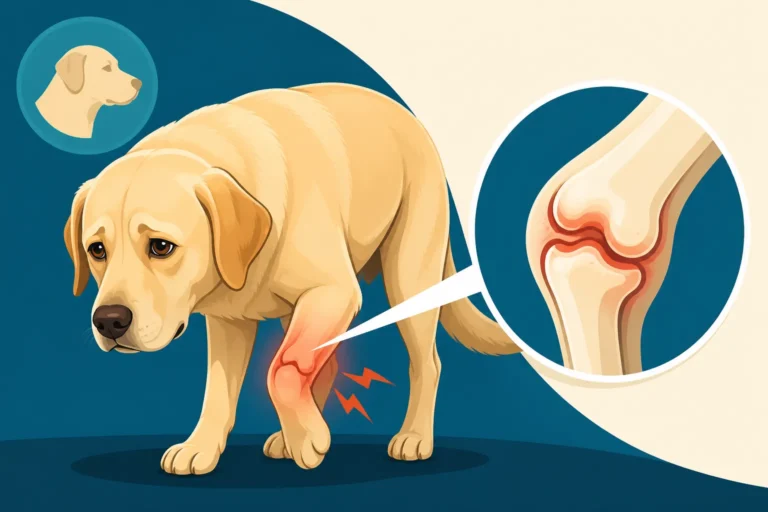
- Arthritis: All dogs are susceptible to arthritis as they age, but obesity dramatically speeds up the degenerative process. The constant inflammation and wear and tear on cartilage lead to chronic pain, stiffness, and reduced mobility. A Labrador in their middle age, who should still be enjoying long walks and playful romps, might be hobbling and struggling to get up due to weight-aggravated arthritis. For older Labs, this becomes even more critical, as explored in Labrador Arthritis in Middle Age.
- Cruciate Ligament Tears: The anterior cruciate ligament (ACL), or cranial cruciate ligament (CCL) in dogs, is a crucial stabilizer in the knee. Overweight Labradors are at a much higher risk of tearing this ligament, often with a sudden injury from a simple misstep or jump. The surgery to repair a torn CCL is expensive and involves a lengthy recovery, which can be particularly challenging with a heavy dog. Our article on Cruciate Ligament Tears in Labradors provides more details on this painful injury.
Increased Risk of Other Diseases
Beyond joint issues, obesity is a systemic problem that affects nearly every organ and system in a Labrador's body, drastically reducing their overall Labrador Lifespan and What Changes It.
- Diabetes: Excess body fat can lead to insulin resistance, making dogs more prone to developing diabetes mellitus. Managing canine diabetes requires daily insulin injections, special diets, and regular veterinary visits, which can be a significant commitment and financial burden.
- Heart Disease: Just like in humans, obesity places extra strain on the heart and circulatory system. It can contribute to high blood pressure and other cardiovascular issues, reducing the heart's efficiency and increasing the risk of heart failure.
- Respiratory Problems: Excess fat around the chest and abdomen can restrict lung function, making it harder for Labradors to breathe, especially during exercise or in warm weather. They may pant more excessively and struggle with heat intolerance.
- Certain Cancers: While the link isn't fully understood, studies have shown a correlation between obesity and an increased risk of certain types of cancers in dogs, including some of those commonly seen in Labradors. Our guide on Cancers Labrador Retrievers Get Most touches on how lifestyle factors can play a role.
- Reduced Quality of Life: Perhaps most importantly, an overweight Labrador simply can't enjoy life to the fullest. They're less energetic, less playful, and less comfortable. They might struggle to jump into the car, play fetch for long periods, or even groom themselves properly. This diminished quality of life is something no loving owner wants for their best friend.
- Financial Burden: Treating these obesity-related conditions can quickly rack up substantial veterinary bills. From ongoing medication for arthritis to surgeries for torn ligaments or management of diabetes, the costs can be overwhelming. This is where having robust pet insurance, like a plan from Healthy Paws, can make a huge difference in allowing you to provide the best care without financial stress.
Practical Steps to Help Your Labrador Maintain a Healthy Weight
It might feel like an uphill battle, especially with a Labrador who lives to eat, but helping your dog achieve and maintain a healthy weight is one of the most loving and impactful things you can do for them. It requires consistency, patience, and a bit of a strategy, but the rewards are immeasurable: a happier, healthier, and more active companion.
Accurate Feeding and Portion Control
This is arguably the most critical aspect of weight management for Labradors. Their powerful food drive means they cannot be trusted with free-feeding; every calorie must be accounted for.
- Measure Everything: Ditch the vague "scoops" and invest in a kitchen scale. Weighing your dog’s kibble ensures precise portion control every single time. Even small variations in volume can lead to significant calorie differences over weeks and months. Follow your veterinarian's recommendation for daily caloric intake, which often translates to a specific weight of food.
- Divide Meals: Instead of one large meal, divide their daily ration into two or three smaller meals. This can help manage hunger pangs and keep their metabolism more active throughout the day.
- Slow Feeder Bowls and Puzzle Toys: For Labs who inhale their food, slow feeder bowls are a game-changer. They force your dog to eat more slowly, which aids digestion and can help them feel more satisfied. Puzzle toys or treat-dispensing toys can also turn mealtime into a mental exercise, making a small amount of food last longer and providing enrichment.
- Rethink Treats: Treats are not off-limits, but they need to be factored into the daily calorie budget. Opt for low-calorie, high-fiber options like plain green beans, baby carrots, or apple slices (without seeds). Many owners find that using a portion of their dog's daily kibble as training treats works wonderfully and adds no extra calories. Be mindful of sneaky calories in dental chews or flavored medications too.
- No Table Scraps: This is a hard rule to enforce, but vital. Human food, even in small amounts, can be very calorie-dense and quickly derail a weight loss plan. It also reinforces begging behavior.
Tailored Exercise Regimes
Labradors thrive on activity. Their history as working retrievers means they are built for endurance and high-intensity bursts. Regular, appropriate exercise is crucial not only for burning calories but also for mental stimulation and joint health.
- Daily Structured Exercise: Aim for at least 60-90 minutes of vigorous exercise daily for an adult Labrador. This isn't just a leisurely stroll; it should include activities that get their heart rate up and muscles working. Think brisk walks, running, swimming, or vigorous games of fetch. Our guide on Daily Walk Length for a Labrador can help you plan your routine.
- Vary Activities: Keep things interesting! Swimming is fantastic as it's low-impact on joints while providing an excellent cardiovascular workout. Hiking, exploring new trails, or even structured dog sports like agility or dock diving can be great ways to burn energy and engage their minds.
- Mindful of Age and Health: Adjust exercise intensity based on your Labrador's age and any pre-existing health conditions. Puppy joints are still developing, so intense, forced exercise should be limited. Our article on Exercise Limits for a Labrador Puppy explains this in detail. For older Labs or those with arthritis, shorter, more frequent walks combined with gentle swimming might be more appropriate than long, strenuous runs. Always consult your vet before starting a new exercise regimen, especially for older or previously sedentary dogs.
Regular Vet Check-ups and Monitoring
Your veterinarian is your most valuable partner in your Labrador's weight management journey. They can provide objective assessments and tailored advice.
- Consistent Body Condition Scoring (BCS): During routine check-ups, your vet will perform a Body Condition Score. This is a standardized system (usually on a 1-5 or 1-9 scale) that assesses your dog's fat levels. A score of 4-5 on a 9-point scale is generally considered ideal. Learning to do a basic Labrador Body Condition Scoring assessment at home can help you monitor progress between visits.
- Professional Guidance: Your vet can help calculate your Labrador's ideal weight and daily caloric needs, taking into account their age, activity level, and any medical conditions. They can also recommend appropriate weight-loss diets or special therapeutic foods that are lower in calories but still provide essential nutrients.
- Rule Out Underlying Conditions: In some cases, unexpected weight gain or difficulty losing weight can be a symptom of an underlying medical condition, such as hypothyroidism. Your vet can run diagnostic tests to rule these out.
- Support and Accountability: Regular weigh-ins at the vet clinic (often free!) can provide accountability and help you track your Labrador's progress. Don't be afraid to ask for support and advice; veterinarians are there to help you succeed. When unexpected vet bills arise from diagnostics or treatment for conditions like diabetes or joint issues, having pet insurance from a reliable provider like Healthy Paws can be a tremendous relief, ensuring you can prioritize your Lab’s health without undue financial stress.
Understanding Ideal Labrador Weights and Body Condition
It’s one thing to hear that your Labrador is overweight, and another entirely to understand what a healthy weight actually looks like on your dog. The truth is, there's a range, and it depends on individual build, sex, and even whether they're from English or American lines. Instead of fixating solely on a number on the scale, it's far more effective to learn how to assess their body condition.
Let's break down typical healthy weight ranges and, more importantly, how to use Body Condition Scoring (BCS) to keep your Lab in prime shape.
| Body Condition Score (BCS) | Description | Appearance | Ribs | Abdomen |
|---|---|---|---|---|
| 1-3 (Underweight) | Too thin, possibly emaciated | Ribs, spine, pelvis, and all bony prominences easily visible; severe waist and abdominal tuck | Very easily visible and palpable, no fat cover | Pronounced abdominal tuck |
| 4-5 (Ideal) | Well-proportioned, healthy weight | Ribs easily palpable with minimal fat covering; waist clearly visible, abdominal tuck present | Easily palpable with a slight fat covering, not visible but felt without pressure | Clearly visible abdominal tuck |
| 6-7 (Overweight) | Mildly overweight, ribs harder to feel | Ribs palpable with some effort, moderate fat cover; waist less discernible, slight abdominal tuck | Palpable with moderate pressure, covered by excess fat | Little or no abdominal tuck, stomach slightly rounded |
| 8-9 (Obese) | Excessively heavy, significant health risks | Ribs, spine, and bony prominences difficult to feel under thick fat; no waist, pendulous abdomen | Difficult or impossible to feel due to thick fat covering | No abdominal tuck, saggy belly |
What the Numbers Mean for Your Labrador
While the BCS is the most important tool, understanding typical healthy weight ranges can give you a general target.
- Male Labradors: Generally, adult male Labradors typically weigh between 65 to 80 pounds (approx. 29.5 to 36 kg). Field-bred Labs might be on the leaner end, while show-bred Labs can be on the heavier side within this range, often due to a stockier build, not necessarily excess fat.
- Female Labradors: Adult female Labradors usually weigh between 55 to 70 pounds (approx. 25 to 32 kg). Similar to males, their specific build will influence where they fall within this range.
These numbers are guidelines, not strict rules. A very tall, lanky male Lab at 80 pounds might be perfectly lean, while a shorter, more compact male at 70 pounds could be carrying too much fat. This is why the BCS is so crucial: it looks at body composition, not just total weight.
By regularly checking your Labrador's BCS and working with your vet, you can ensure they stay within that healthy 4-5 range, giving them the best chance at a long, active, and happy life.
Disclaimer
The information provided in this article is for general informational purposes only and is not intended as a substitute for professional veterinary advice, diagnosis, or treatment. Always seek the advice of your veterinarian or other qualified health provider with any questions you may have regarding a medical condition or the health and welfare of your pet.