Osteosarcoma Signs in a Large Labrador
It’s truly gut-wrenching when you notice something is off with your beloved Labrador, especially when they’re so good at hiding pain. Large breed dogs, our Labs included, are sadly more prone to certain aggressive cancers, and osteosarcoma, a nasty form of bone cancer, is one of the most devastating. Spotting the signs can feel impossible, especially when they’re subtle at first, often masquerading as a minor strain or just "getting older." This guide is here to walk you through what to look for, helping you recognize the often-elusive early and progressing signs of osteosarcoma in your big, brave Labrador so you can seek veterinary help as soon as possible.
Understanding Osteosarcoma in Large Breeds
When you bring a Labrador into your home, you're not just getting a dog; you're getting a shadow, a confidante, a furry family member who often seems indestructible. But the sad truth is that their very size and rapid growth, which makes them such magnificent animals, also puts them at a higher risk for certain health challenges, and osteosarcoma is unfortunately one of them. It's a diagnosis no pet parent wants to hear, and understanding why it happens can help you be more vigilant.
Why Large Labradors Are at Higher Risk
It’s not just a coincidence that breeds like Labradors, Great Danes, Rottweilers, and Irish Wolfhounds are more susceptible to osteosarcoma. Research has consistently shown a strong correlation between a dog’s size, weight, and even how quickly they grow as puppies, and their risk of developing this aggressive bone cancer. Think about it: larger bones undergo more rapid cell division during growth and experience more stress throughout a dog's life. This increased cellular activity and mechanical load can, unfortunately, create more opportunities for abnormal cell growth and mutations to occur, leading to cancer. While the exact mechanisms aren't fully understood, this general principle highlights why our big, beautiful Labs are in the higher risk category. It’s a cruel irony that their impressive stature comes with this added vulnerability.
The Insidious Nature of Bone Cancer in Dogs
One of the most frustrating and heartbreaking aspects of osteosarcoma is its insidious nature. It doesn't typically announce itself with obvious, dramatic symptoms from day one. Instead, it often starts subtly, mimicking less serious conditions like simple arthritis, a pulled muscle, or a minor sprain. Your Labrador might just have a "bad day," a slight limp that comes and goes, or a fleeting reluctance to jump into the car. This gradual onset makes it incredibly difficult for even the most vigilant pet parent to differentiate a serious problem from normal aches and pains, especially as our dogs age.
What makes it even more terrifying is how aggressive osteosarcoma typically is. By the time a noticeable lameness or swelling appears, the cancer cells have usually already established themselves deeply within the bone structure. Furthermore, osteosarcoma has a high metastatic rate, meaning it spreads aggressively to other parts of the body, most commonly the lungs, even when the primary tumor in the limb is still relatively small. This means that early detection isn't just about saving a limb; it's often about trying to buy precious time before the disease takes hold elsewhere. The lack of early, definitive signs, combined with its rapid progression and spread, is what makes this particular cancer so devastating for Labrador owners.
Early Warning Signs of Osteosarcoma in Your Labrador
Catching osteosarcoma early in a large, stoic Labrador can feel like finding a needle in a haystack. They are masters at masking discomfort, often continuing to wag their tails and try to please you even when they are in considerable pain. This inherent bravery, while admirable, can unfortunately delay diagnosis. Being intimately familiar with your Labrador’s normal movements, habits, and even the feel of their limbs can give you an edge in noticing the subtle changes that might otherwise be overlooked.
Subtle Changes in Gait and Activity Level
The very first hint that something serious might be brewing often comes in the form of a subtle change in your Labrador's movement. You might notice a slight, intermittent lameness – a "skip" or a hesitant step – particularly after they've been resting or first waking up. It might not be a constant limp at first; perhaps it’s only noticeable after a strenuous play session or a long walk, and then it seems to resolve after a bit of rest. This is often dismissed as just a minor strain or, heartbreakingly, as a normal part of aging, especially if your Labrador is getting on in years and might have some mild arthritis, a condition that many Labradors experience. It’s easy to confuse these signs with those of Labrador Arthritis in Middle Age.
However, unlike typical muscle soreness that usually improves consistently with rest, the lameness associated with osteosarcoma tends to progress, becoming more frequent and more pronounced over time. Your Lab might become reluctant to jump onto the couch or into the car, or they might seem less enthusiastic about their daily walk or a game of fetch. They might start favoring one limb slightly, shifting their weight more predominantly to the other three. Pay close attention to these seemingly minor shifts in their typical boundless energy and willingness to engage. Even a subtle change in how they move or their overall activity level, if persistent, warrants a closer look.
Unexplained Swelling or Lumps on Limbs
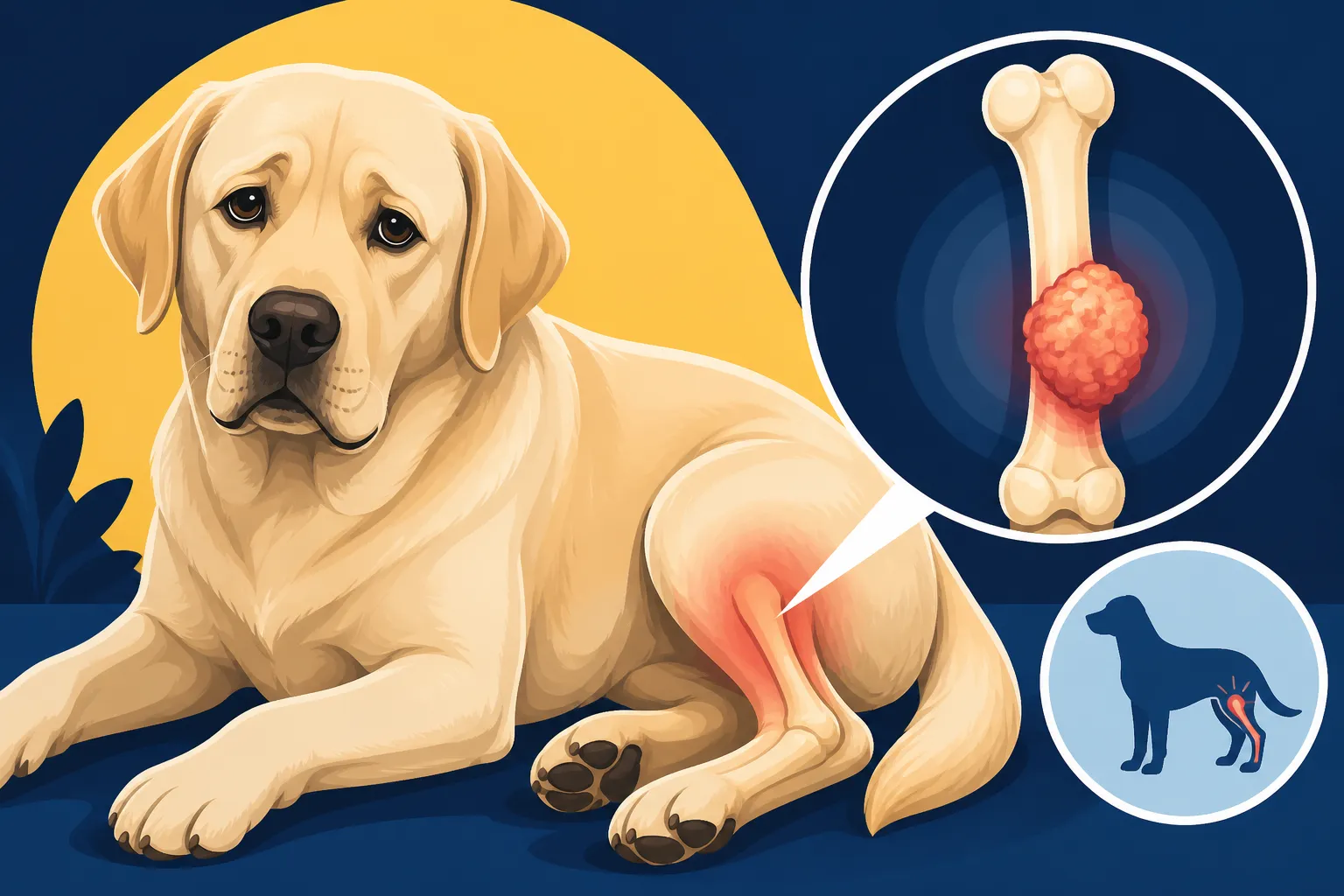
As osteosarcoma progresses, the tumor grows within the bone, causing an inflammatory reaction and often a noticeable change in the physical appearance of the affected limb. This typically manifests as an unexplained swelling or a hard, fixed lump. The most common sites for osteosarcoma in Labradors are the bones of the limbs, particularly near the joints. You might feel a firm, unyielding mass on the lower part of their front leg (wrist or carpus), or perhaps near the shoulder, knee (stifle), or ankle (hock).
What’s important here is to differentiate this from other types of lumps your Labrador might develop. Labs are notoriously prone to developing benign fatty tumors called lipomas, which are typically soft, movable, and generally not painful. However, the swelling associated with osteosarcoma is usually hard, often warm to the touch due to inflammation, and crucially, fixed to the bone. It won't move freely under the skin like a lipoma would. If you feel any new, firm swelling, especially if it’s located directly on a bone rather than in the surrounding soft tissue, and it seems to be causing your dog discomfort, it’s a red flag. Don't assume it's "just a bump" – get it checked out immediately. For more information on differentiating lumps, you might want to read Lipomas and Fatty Lumps on a Labrador.
Pain on Palpation and Reluctance to Be Touched
This sign is often a more overt indication that something is seriously wrong. If your normally affectionate Labrador suddenly becomes defensive or sensitive when you touch a particular area of their leg, it's a critical warning. Bone cancer is incredibly painful. As the tumor grows and invades the bone, it puts immense pressure on nerve endings and causes structural damage. You might notice your Lab flinching, pulling away, or even letting out a low growl or whimper when you gently examine the swollen area or even just stroke their leg.
This change in behavior around touch can be particularly heartbreaking because it goes against their loving nature. A Lab who usually revels in being pet and cuddled might become irritable, restless, or even snap if the pain is severe enough. They might actively avoid putting weight on the limb, holding it up, or shifting positions frequently, trying to find a comfortable spot that doesn't aggravate the pain. It’s important to remember that Labs are remarkably stoic, and if they are showing overt signs of pain, especially a change in their willingness to be touched, it usually means the discomfort is significant. Learning to recognize subtle cues of pain in a breed that hides it so well is crucial; Reading Pain in a Stoic Labrador can offer more insights into this. Don't hesitate to consult your vet if your Labrador reacts negatively to touch in a specific limb.
Progressing Symptoms and When to Seek Urgent Vet Care
As osteosarcoma continues its relentless progression, the signs become less subtle and far more distressing. The insidious nature gives way to undeniable symptoms that scream for immediate attention. Recognizing these progressing signs is crucial, not just for prompt diagnosis but also for managing your beloved Labrador's pain and quality of life.
Persistent Lameness and Weight Bearing Issues
What often starts as an intermittent limp eventually escalates into constant, severe lameness. Your Labrador will consistently hold the affected limb off the ground, or place minimal weight on it, trying desperately to alleviate the excruciating pain. This isn't just a slight favoring anymore; it's a dramatic inability or unwillingness to bear weight. You might observe them hopping on three legs, dragging the affected limb, or refusing to move much at all.
Over time, if the limb isn't used, the muscles around it will start to atrophy, becoming visibly thinner compared to the healthy limb. This muscle wasting is a clear indicator of chronic non-use due to pain. Your dog's entire posture might change as they try to compensate, putting extra strain on other joints and muscles. This constant, unmanaged pain can also take a huge toll on their mental well-being, leading to a noticeable decline in their overall demeanor. If your Labrador's lameness has reached this persistent, severe stage, it's not just a sign; it's an emergency that requires immediate veterinary intervention to assess the underlying cause and provide much-needed pain relief.
Secondary Signs and Systemic Impacts
While osteosarcoma primarily affects the bones, the relentless pain and the body's battle against cancer can lead to a cascade of secondary, systemic symptoms. Your Labrador might start to lose their once-robust appetite, leading to noticeable weight loss despite seemingly normal food intake (if they are eating at all). They may become lethargic, sleeping more than usual and showing little interest in play or interactions that once brought them joy. Their typical bubbly personality might fade, replaced by irritability or a withdrawn demeanor due to chronic discomfort and fatigue.
As the cancer spreads, particularly to the lungs, you might start to notice other alarming signs. A persistent cough, shortness of breath, or increased respiratory effort could indicate metastatic lesions in the lungs. These systemic signs are often a grim indication that the cancer is no longer localized but has begun to impact their overall health and bodily functions. When these non-specific signs accompany severe lameness or a visible lump, the picture becomes much clearer and more urgent, signaling a critical stage of illness.
Pathological Fractures: A Late-Stage Emergency
Perhaps one of the most devastating and undeniable late-stage signs of osteosarcoma is a pathological fracture. This occurs when the bone, weakened and riddled by the cancerous tumor, breaks with minimal trauma—or sometimes, seemingly, with no trauma at all. A simple jump, a misstep, or even just bearing their own weight can be enough to cause the compromised bone to snap.
When a pathological fracture occurs, the pain is excruciating and acute. Your Labrador will suddenly cry out, collapse, and be completely unable to bear any weight on the affected limb. The limb might appear obviously deformed, and swelling will be immediate and severe. This is an absolute emergency. While any fracture is serious, a pathological fracture strongly suggests an underlying disease process, with osteosarcoma being a primary suspect in large breeds. If you witness this happen, secure your Labrador safely and gently, and get them to an emergency veterinary clinic immediately. This is not only agonizing for your dog but also often indicates a very advanced stage of the disease, making decisions about their comfort and future critically important. It's a different kind of emergency than, say, Emergency Steps When a Labrador Bloats, but equally urgent for different reasons.
Diagnosing Osteosarcoma: What to Expect at the Vet
When you bring your Labrador to the vet with concerns about lameness or a suspected lump, your veterinarian will embark on a diagnostic journey to get to the bottom of the problem. It’s important to be prepared for a multi-step process, as confirming osteosarcoma and understanding its extent requires more than just a quick look.
The Initial Examination and X-rays
Your vet will start with a thorough physical examination. They’ll carefully palpate your Labrador’s limbs, feeling for any swelling, warmth, or tenderness, and assessing their range of motion. They’ll also observe your dog’s gait and how they bear weight. Based on their findings and your description of the symptoms, the next crucial step will almost certainly be radiographs, or X-rays, of the affected limb.
X-rays are often the first line of defense in diagnosing bone tumors. What vets look for are tell-tale signs within the bone structure itself. This can include bone lysis, which is the destruction or erosion of bone tissue by the tumor, or a periosteal reaction, which is the bone’s attempt to lay down new bone in response to the irritation, sometimes creating a classic "sunburst" or "spiculated" pattern. Early on, these changes can be subtle, and sometimes repeat X-rays are needed after a few weeks if the initial images are inconclusive but suspicion remains high. The vet might take X-rays of both limbs for comparison, as well as a full body check, especially a chest X-ray, to look for any obvious spread.
Further Diagnostics: Biopsy and Staging
While X-rays can strongly suggest osteosarcoma, a definitive diagnosis almost always requires a biopsy. This procedure involves taking a small sample of the abnormal bone tissue, which is then sent to a veterinary pathologist for microscopic examination. There are different ways to perform a biopsy, from a needle biopsy to an incisional biopsy (a small surgical procedure). Your vet will discuss the best approach for your Labrador, weighing the diagnostic yield against the invasiveness of the procedure. A biopsy is vital because other conditions, such as fungal infections or other bone tumors, can sometimes mimic the appearance of osteosarcoma on X-rays.
Once osteosarcoma is confirmed, the next critical step is called "staging." This involves determining if the cancer has spread from the primary tumor to other parts of the body. Since osteosarcoma is notorious for metastasizing, especially to the lungs, a series of further diagnostics are essential. These typically include three-view chest X-rays (to catch smaller lung metastases), and often an abdominal ultrasound to check for spread to other organs like the liver or lymph nodes. Sometimes, more advanced imaging like a CT scan or MRI may be recommended for a more detailed assessment, particularly if surgery is being considered. Staging is crucial because it helps your veterinary oncologist develop the most appropriate treatment plan and provides a more accurate prognosis for your Labrador.
Coping with an Osteosarcoma Diagnosis
Receiving an osteosarcoma diagnosis for your Labrador is absolutely devastating. It’s a gut-punch that leaves you reeling, facing difficult decisions and navigating a labyrinth of emotions. It's a moment when your world shifts, and you realize the fight for their health has taken a very serious turn.
Emotional Impact on Pet Parents
The emotional toll of an osteosarcoma diagnosis cannot be overstated. You're not just a pet owner; you're a devoted parent, and this news can bring on a wave of shock, grief, anger, and profound sadness. You might feel overwhelmed by the sheer volume of information, the complex medical jargon, and the heavy decisions you’re suddenly faced with. It’s natural to feel guilty, wondering if you missed early signs or if there was something more you could have done.
This is a journey that can feel very isolating, but remember, you are not alone. Many pet parents have walked this path, and the emotions you’re experiencing are valid and deeply human. Allow yourself to feel them. Seek support from friends, family, or even online communities dedicated to helping pet owners through difficult diagnoses. Talking about your feelings can be incredibly cathartic, and remembering the joy and unconditional love your Labrador brings to your life, even in these tough times, is paramount. Your dog feels your emotions, so while it's okay to grieve, try to maintain a sense of calm and routine for them as much as possible, focusing on providing comfort and love.
Financial Considerations and Support Options
Let’s be real: veterinary care for serious illnesses like cancer is expensive, and an osteosarcoma diagnosis often comes with significant financial strain. Treatment options can range from palliative care to complex surgeries like amputation, followed by chemotherapy. The Chemotherapy Costs for a Labrador Retriever alone can be substantial, often running into thousands of dollars. Diagnostics, specialist consultations, pain management, and follow-up care all add up quickly, creating a huge burden on top of the emotional stress.
Here’s where financial planning and support options come into play. If you have pet insurance, this is precisely the kind of unexpected, high-cost illness that a good policy is designed to help with. Companies like Healthy Paws are often mentioned by pet parents for their comprehensive coverage of accidents and illnesses. Having a plan like Pet Insurance for a Labrador Retriever can significantly ease the financial pressure, allowing you to make decisions based on your Labrador’s health needs rather than your wallet.
If pet insurance isn't an option, or if you have pre-existing conditions that aren't covered, don't despair. There are other avenues to explore:
- Veterinary Payment Plans: Many clinics offer payment plans through third-party services like CareCredit.
- Emergency Funds: For those who planned ahead, a dedicated pet emergency fund can be a lifesaver, as discussed in Setting Up an Emergency Fund for a Labrador.
- Crowdfunding: Platforms like GoFundMe can help raise funds from your community.
- Veterinary Charities: Organizations like The Pet Fund, RedRover, and the FETCH a Cure’s Companions in Crisis program sometimes offer financial assistance for cancer treatment.
It’s crucial to have open and honest conversations with your veterinarian about the costs involved, potential treatment outcomes, and what options best fit your budget while prioritizing your Labrador’s comfort and quality of life.
Here’s a rough breakdown of potential costs for a Labrador osteosarcoma diagnosis:
| Service/Procedure | Estimated Cost Range (USD) | Notes |
|---|---|---|
| Initial Vet Exam | $50 – $150 | Includes physical exam, palpation, and discussion of symptoms. |
| X-rays (Affected Limb & Chest) | $200 – $600 | Essential for initial assessment and checking for metastasis. May require multiple views. |
| Bone Biopsy | $400 – $1,500 | Depending on technique (needle vs. surgical) and pathologist fees. Crucial for definitive diagnosis. |
| CT Scan/MRI (Staging) | $1,000 – $3,000+ | More advanced imaging to assess tumor extent and metastasis, often recommended before surgery. |
| Amputation Surgery | $1,500 – $5,000+ | Price varies by region, vet clinic, and complexity. Includes anesthesia, surgery, pain management, and post-op care. |
| Chemotherapy (Palliative) | $200 – $600 per session | Often 4-6 sessions, potentially monthly for several months. Cost per session depends on drug used and Labrador's weight. Can reach $2,000 – $4,000+ for a full course. |
| Pain Management & Medications | $50 – $200 per month | Ongoing cost for NSAIDs, gabapentin, tramadol, etc., crucial for quality of life regardless of treatment choice. |
| Radiation Therapy | $4,000 – $10,000+ | Less common for osteosarcoma in limbs, more for pain management in non-resectable tumors. Requires specialist facility. |
| Rehabilitation/PT | $50 – $150 per session | For Labs recovering from amputation to regain strength and mobility. |
Disclaimer: These are general estimates and actual costs can vary significantly based on location, specific veterinary clinic, specialist fees, and your Labrador's individual needs.
Making Difficult Decisions and Providing Comfort
Once a diagnosis is confirmed and you understand the financial implications, you'll be faced with profoundly difficult choices. For many large breed dogs with osteosarcoma, the prognosis is guarded, even with aggressive treatment. The decision often boils down to: pursue aggressive treatment (like amputation and chemotherapy) with the goal of extending life, or opt for palliative care focused solely on comfort and pain management.
This isn’t a decision to take lightly, and there’s no right or wrong answer. It’s a deeply personal choice that depends on your Labrador's overall health, their temperament, your financial situation, and what you believe is best for their quality of life. Some Labs adapt remarkably well to amputation and can enjoy many more months with good pain control. For others, the stress of treatment might outweigh the benefits.
Palliative care, which focuses on strong pain medication, nutritional support, and making every day as comfortable and enjoyable as possible, is a valid and compassionate choice. It allows you to cherish the time you have left without the rigors of intensive medical interventions. Ultimately, your goal is to minimize suffering and maximize your Labrador's happiness, no matter how long that time may be. For guidance on this incredibly sensitive topic, you might find End-of-Life Care for a Labrador helpful as you navigate these heart-wrenching decisions.
Disclaimer
The information provided in this article is for general informational purposes only and does not constitute veterinary medical advice. Always consult with a qualified veterinarian for any health concerns or before making any decisions about your Labrador's medical care.