Labrador Puppy Socialization Windows
Bringing home a new Labrador puppy is a whirlwind of excitement, love, and let's be honest, a fair bit of anxiety about doing everything "right." One of the biggest pressures new puppy parents face is the concept of socialization – that critical period where your pup's entire worldview is shaped. It can feel overwhelming, especially when you're trying to protect them from illness while also exposing them to the big, wide world. This guide is here to demystify those crucial socialization windows, explain why they're so vital for raising a well-adjusted, confident Labrador, and equip you with practical, safe strategies to navigate them successfully.
Understanding the Critical Socialization Period
The term "socialization window" gets thrown around a lot, and for good reason – it's incredibly important. But what does it actually mean, and why is this specific timeframe so pivotal for your developing Labrador puppy? Let's break down the science and the impact.
What is the Socialization Window?
Think of the socialization window as your Labrador puppy's prime learning time, a period of accelerated neural development where their brains are like sponges, soaking up every experience and forming lasting impressions about the world around them. This window typically opens around 3 weeks of age and begins to close dramatically between 12 and 16 weeks, though there can be some variation depending on the individual puppy and breed. During these few precious weeks, your puppy is most receptive to new sights, sounds, smells, textures, people, and other animals without developing excessive fear. They're naturally curious and generally fearless, making it the ideal time for positive introductions.
It’s not just about meeting other dogs; it's about forming associations with everything from the sound of the vacuum cleaner to the sight of a person wearing a hat, the feel of different surfaces under their paws, or the rumble of a passing bus. Every positive encounter during this phase helps build a foundation of confidence and resilience, shaping them into a dog that can cope calmly with life's unexpected moments rather than reacting with fear or aggression. Missing this window doesn't mean all hope is lost, but it certainly makes the job of training and behavioral modification much harder later on.
Why is This Period So Crucial for Labradors?
Labradors are known for their friendly, outgoing, and adaptable nature, but that doesn't mean they're exempt from the need for intentional socialization. In fact, precisely because Labradors are often bred for their biddability and desire to please, early positive experiences are paramount to harness these traits in a constructive way. A poorly socialized Labrador, despite their inherent good nature, can still develop anxieties or reactive behaviors if they aren't properly introduced to the world during this critical phase. This can manifest as shyness around strangers, fear of novel objects, or even reactivity towards other dogs if they haven't learned appropriate social cues.
Consider a Labrador bred to be a working dog – if they don't experience loud noises, different terrains, or various people early on, they might struggle in their intended role, becoming fearful or distracted. Even for a beloved family pet, a lack of exposure can lead to a dog who is uncomfortable with visitors, anxious during car rides, or prone to excessive barking at unfamiliar sounds. The goal is to raise a well-adjusted companion, one who is confident, calm, and happy in a wide range of situations, which is exactly what proper early socialization aims to achieve for your Labrador. Labrador Temperament and What to Expect speaks volumes about how their natural disposition benefits from this early guidance.
The "Fear Periods" Within Socialization
Just to make things a little more complicated, within this broader socialization window, puppies often experience specific "fear periods." These are distinct developmental stages when a puppy is particularly susceptible to frightening experiences, and a single negative event can have a lasting impact. The first fear period often occurs between 8 and 11 weeks of age, right in the middle of your active socialization efforts. During this time, pups can suddenly become more wary or fearful of things they previously ignored or approached with curiosity. A loud noise, a startling encounter with a stranger, or an unexpected fall could leave a deeper impression than it would a week or two earlier.
Recognizing these periods is key. It doesn't mean you stop socialization; it means you become extra vigilant about ensuring every experience is positive, safe, and controlled. Avoid situations that might be genuinely frightening, and always pair new introductions with high-value treats and praise. If your puppy shows fear, don't force them into a situation. Instead, allow them to observe from a safe distance, making the experience positive with treats, and gradually, gently encourage them to explore at their own pace. Understanding these nuanced stages helps you tailor your approach, making sure your Labrador builds positive associations rather than fear-based ones.
Safe Socialization Before Full Vaccination
One of the biggest dilemmas new Labrador puppy owners face is how to socialize their puppy effectively while also protecting them from potential diseases before their vaccination series is complete. It’s a completely valid concern, and thankfully, there are plenty of safe ways to introduce your puppy to the world without putting their health at undue risk.
Balancing Risk: Exposure vs. Health Protection
The thought of exposing an unvaccinated puppy to unknown environments can be truly terrifying. We're often told to keep puppies home until they've had all their shots, and for good reason – diseases like canine parvovirus and distemper are serious and can be deadly. However, the critical socialization window doesn't wait for your puppy's final vaccine. If you wait until 16 weeks, you've already missed a significant portion of this crucial developmental period, potentially leading to behavioral issues that are far more challenging to address than the initial health risk if managed correctly.
The key is balance and smart choices. It's not about exposing your puppy to every dog at the park or letting them drink from communal water bowls. Instead, it's about curated, controlled exposure. Think of low-risk environments where you can control who your puppy interacts with and what surfaces they encounter. This often means avoiding dog parks, pet stores (unless they have strict unvaccinated puppy policies), and public grassy areas where many unknown dogs frequent. Instead, focus on places like friends' clean yards, quiet residential streets, or even carrying your puppy in a sling or carrier in busier, pet-friendly areas. For more details on protecting your pup, check out Labrador Puppy Health in the First Year.
Controlled Environments for Early Learning
Since wide-open public spaces are often off-limits, creating controlled environments becomes your superhero tool for early socialization. Your own home, friends' homes, and private, fenced yards are your safest bets. Invite friends and family over (ensuring they are healthy and respectful of your puppy's boundaries, of course), one or two at a time, so your puppy can meet new people in a calm, familiar setting. Make sure these visitors are gentle, offer treats, and interact positively.
Think about the specific sounds and sights you want your puppy to get used to. Play recordings of city noises, vacuum cleaners, thunderstorms, or fireworks at a low volume while your puppy is eating or playing, gradually increasing the volume over time. Place different textured mats (carpet, tile, wood, grass patch, bubble wrap) in your home for them to walk on. Carry your puppy around your neighborhood or local shopping areas in a secure sling or carrier, allowing them to observe the world from a safe vantage point without touching the ground or interacting with other dogs. This passive exposure is incredibly valuable.
The Importance of Human Interaction
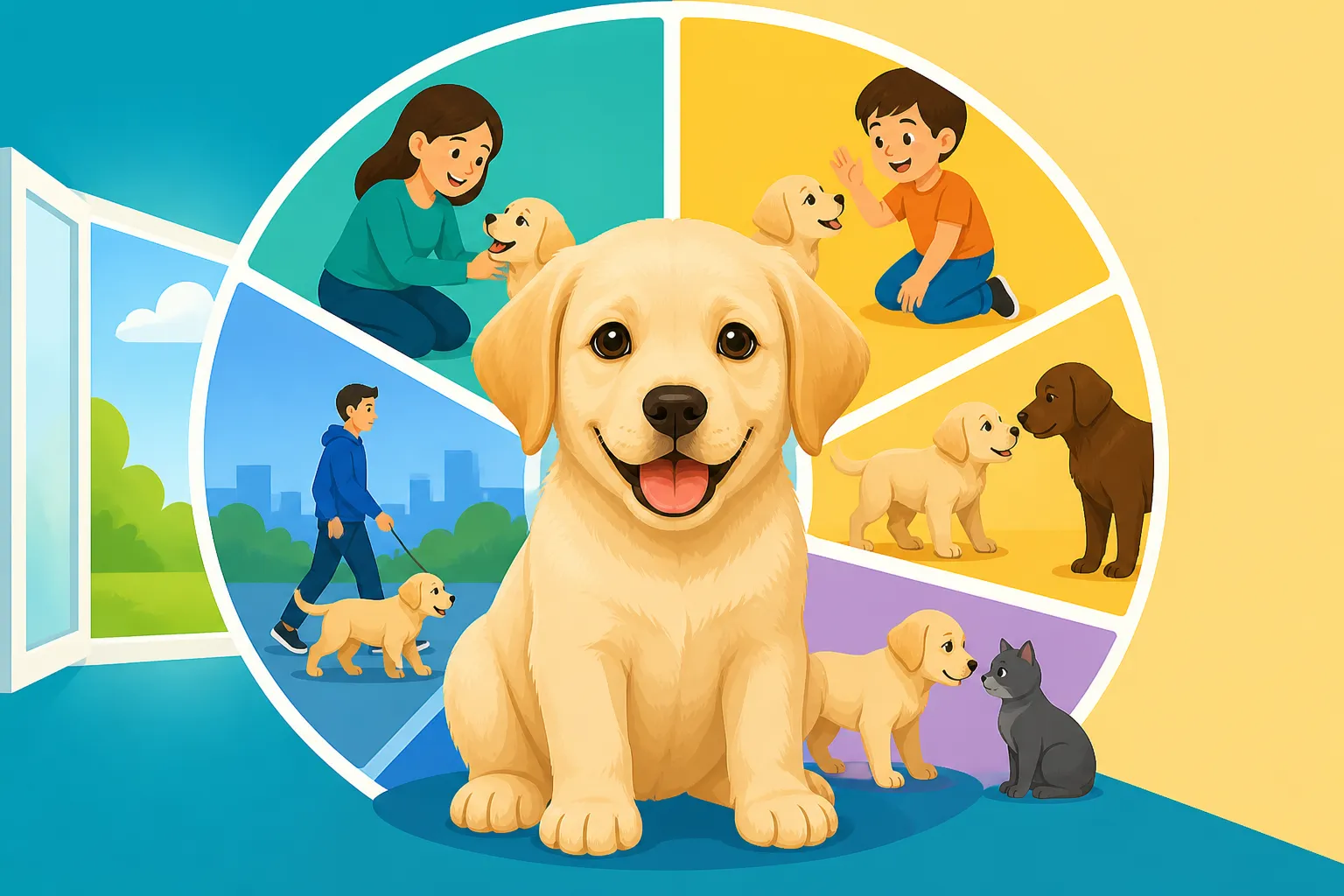
While meeting other dogs is important, don't underestimate the profound impact of positive human interaction during the socialization window. Your Labrador puppy needs to learn that humans come in all shapes, sizes, ages, and appearances, and that most are safe and friendly. This goes beyond just your immediate family. Introduce your puppy to people wearing hats, sunglasses, people with beards, children of varying ages, and individuals who might move differently, like those using wheelchairs or crutches.
Always make these interactions positive. Ask people to offer a treat, speak softly, and approach gently. If your puppy seems hesitant, don't force the interaction; let them approach on their own terms. It’s better for your puppy to have a few truly positive, calm interactions than many overwhelming or negative ones. A confident, well-socialized Labrador is a joy to be around, and that confidence starts with feeling secure and loved by the people in their life. Building up their positive interactions with various people now will prevent shyness or fearfulness later on.
Key Experiences During the Socialization Window
Once you've got the safety protocols down, it's time to dive into the kinds of experiences that truly broaden your Labrador puppy's horizons. Remember, the goal is a wide variety of positive, low-stress introductions to build a resilient and confident adult dog.
Sounds, Sights, and Textures Galore
A well-socialized Labrador isn't just comfortable with people and other dogs; they're unfazed by the everyday cacophony and visual stimulation of human life. This means actively introducing them to a diverse range of sensory inputs. Think about the sounds: the clatter of pots and pans, the doorbell, children playing, sirens, different musical genres, even the sound of someone dropping keys. Play them softly at first, perhaps during meal times or while you're engaging in a favorite game, so your puppy associates these sounds with positive experiences. For tips on managing fear of loud noises, consider Introducing a Labrador Puppy to Loud Noises.
Visually, show them different objects – umbrellas opening, bicycles, people wearing costumes or large hats, other animals (from a safe distance, like a cat through a window, or a squirrel in the yard). Let them see cars, trucks, and buses pass by. In terms of textures, introduce them to walking on carpet, hardwood, tile, linoleum, concrete, grass, gravel, and even a wet towel or shallow puddle. Gently touch their paws while they're exploring different surfaces. The more diverse their early sensory experiences are, the less likely they are to be startled or fearful by novel stimuli later in life.
Meeting New People and Dogs Safely
This is often the first thing people think of when it comes to socialization, and it's certainly crucial. Your Labrador puppy should meet a wide array of people: men, women, children, people of different ethnicities, those with hats, glasses, beards, and various gaits. Each interaction should be positive and low-pressure. Ask people to crouch down, offer a treat, and let the puppy approach them. Avoid letting people swarm or overwhelm your puppy, especially shy individuals. If your puppy is eager, great! If not, a gentle approach is always best.
When it comes to other dogs, quality trumps quantity. Your puppy needs to learn appropriate dog-dog social cues, but only with healthy, vaccinated, well-mannered adult dogs or other puppies with known vaccination status. Avoid dog parks or unknown dogs until your puppy is fully vaccinated and has learned some basic manners. Instead, arrange controlled "playdates" with trusted friends' dogs who are gentle and tolerant. Look for balanced play, where both dogs take turns chasing and being chased, and no dog is constantly picked on or overwhelmed. Observing an appropriate older dog can teach your puppy valuable lessons. Introducing a Labrador Puppy to an Older Dog offers great advice on this front.
Introducing Novel Objects and Environments
Beyond people, sounds, and other dogs, your Labrador puppy needs to explore new objects and environments. This might include anything from a crinkly tunnel to a wobble board, a plastic wading pool, or a child’s toy. The key is to make these introductions fun and engaging. Lure them with treats, play games, and let them explore at their own pace. If they seem hesitant, that's okay! Don't force them. Just being in the presence of something new while receiving treats can create a positive association.
Think about different environments too: the car (even just sitting in a parked one with treats), going to a quiet park (carrying them if unvaccinated), visiting a friend's house, or even just exploring different rooms in your own home with new objects introduced. The more places and things your puppy experiences in a positive, calm way, the more adaptable and confident they will become. Even simple things like seeing people on bicycles, skateboards, or pushing strollers from a distance can contribute to a well-rounded outlook. Getting your Labrador comfortable in the car is also vital for future vet visits and adventures.
Beyond the Core Window: Ongoing Socialization and Desensitization
Many new owners breathe a sigh of relief once their puppy hits the 16-week mark, thinking the "socialization work" is done. While the critical window may close, effective socialization is truly an ongoing process that extends well into adolescence and even adulthood. Your Labrador will continue to learn and adapt, and maintaining positive exposure is key to reinforcing those early lessons.
Socialization Isn't a One-Time Event
It's a common misconception that once the puppy socialization window closes, your dog's personality is permanently set. While those early weeks are profoundly impactful, the world keeps changing, and so does your dog's experience within it. Think of it like learning a language: you establish the basics in childhood, but you continue to learn new vocabulary and nuances throughout your life. For a Labrador, this means continuing to meet new people and dogs, visit new places, and encounter novel situations throughout their lives. This helps solidify their early learning and prevents them from regressing into fear or uncertainty.
Neglecting ongoing socialization can lead to what's sometimes called "socialization regression," where a dog who was once confident and outgoing might become shy, wary, or even reactive if they aren't regularly exposed to the positive stimuli they learned to love as a puppy. This doesn't mean daily trips to the dog park (which aren't suitable for all dogs anyway), but rather intentional efforts to keep their world broad and positive. Consider different hiking trails, rotating your walking routes, or attending occasional community events where dogs are welcome. Even a mature Labrador benefits from new, positive experiences. When a Labrador Actually Calms Down also touches on their development phases.
Counter-Conditioning and Positive Associations
As your Labrador grows, you'll inevitably encounter things that might cause them a moment of hesitation or fear. This is where counter-conditioning and positive associations become powerful tools. Counter-conditioning essentially means changing your dog's emotional response to something they find scary or unpleasant by pairing it with something they absolutely love – usually high-value treats.
For example, if your Labrador is a bit nervous around children, don't force them to interact. Instead, every time a child appears in their line of sight (at a distance where your dog is aware but not stressed), immediately start feeding them their absolute favorite treats. The moment the child disappears, the treats stop. Over time, your dog will begin to associate the presence of children with delicious things, gradually shifting their emotional response from apprehension to anticipation. This technique is also invaluable for things like veterinary visits, grooming, or even traffic noise. Remember, the goal is always to create a positive emotional state.
Preventing Regression and Building Confidence
One of the best ways to prevent regression is to continue providing enriching experiences and opportunities for your Labrador to use their brain. Boredom can lead to problem behaviors, but it can also contribute to a less confident dog if they're not challenged and engaged. Puzzle toys, scent work, trick training, and regular exercise all contribute to a well-rounded and confident dog.
If you notice your Labrador starting to show signs of fear or anxiety towards something they previously tolerated, don't ignore it. Revisit your socialization techniques: expose them to the trigger at a distance where they remain calm, and gradually move closer while continuously offering high-value rewards. Seek professional guidance from a certified positive reinforcement trainer if you're struggling, especially if the fear or reactivity is escalating. Building confidence is an ongoing journey, and consistency is your most valuable asset. Addressing signs of timidity proactively, as explored in Building Confidence in a Timid Labrador, is critical.
Tools and Resources for Effective Socialization
Socializing a Labrador puppy can feel like a big job, but you don't have to go it alone! There are fantastic tools and resources available that can make the process easier, more structured, and more enjoyable for both you and your pup.
The Value of Puppy Classes
Puppy classes are one of the most highly recommended resources for new Labrador owners, and for good reason. They offer a safe, supervised environment for your puppy to interact with other puppies of similar age and size. Crucially, these classes are run by experienced trainers who can guide play, intervene if interactions become too rough or timid, and teach you how to "read" dog body language – both your own puppy's and others. This is invaluable education that a casual playdate simply can't offer.
Beyond dog-dog interaction, puppy classes also expose your Labrador to new people, different handling techniques, and mild distractions, all while building positive associations. They're often held in clean, vaccinated-only environments, minimizing disease risk while maximizing socialization opportunities. Plus, you'll learn basic obedience commands like sit, stay, and come, which are essential for managing a growing Labrador and ensuring they can safely participate in future social outings. Truly, Whether Puppy Class Is Worth It for a Labrador confirms they are an excellent investment.
Online Resources and Structured Programs
In today's digital age, a wealth of online resources can support your socialization efforts, especially if in-person classes are not immediately available or you want supplementary guidance. Many professional trainers offer online courses or programs that provide step-by-step socialization checklists, videos demonstrating proper introductions, and strategies for common puppy behaviors. These can be incredibly helpful for busy owners or those who prefer to work at their own pace.
For instance, programs like BAXTER & Bella offer comprehensive online training options that include socialization components, helping you build a confident companion from the comfort of your home. They often break down complex socialization tasks into manageable steps, providing checklists and video examples for exposing your puppy to various sights, sounds, and experiences. These structured programs can be a lifesaver for ensuring you cover all your bases during that critical window.
Essential Gear for Outings
Before you head out into the world with your Labrador puppy, having the right gear can make all the difference in keeping them safe and making socialization outings positive. A sturdy, comfortable collar or harness and a reliable leash are non-negotiable. For a young puppy, a lightweight harness is often a good choice as it distributes pressure evenly and prevents strain on their neck. As they grow and become stronger, you might consider a front-clip harness for better leash manners, which you can easily find on platforms like Amazon.
A treat pouch is another must-have. Keeping high-value treats readily accessible means you can immediately reward calm behavior or positive interactions, reinforcing those good associations. A carrier or sling is essential for carrying an unvaccinated puppy in public spaces, allowing them to observe without touching potentially contaminated ground. Don't forget poop bags – being a responsible pet owner is part of good canine citizenship! Having a well-stocked A First Aid Kit for a Labrador Retriever is also a good idea for any unexpected scrapes or emergencies during your adventures.
| Socialization Stage | Typical Age Range | Key Developmental Focus | Recommended Activities |
|---|---|---|---|
| Neonatal/Transitional | 0-3 Weeks | Sensory development (touch, smell, taste); maternal bonding | Gentle handling by breeder; exposure to household sounds from a distance. |
| Primary Socialization | 3-12 Weeks | Developing social skills, learning bite inhibition, fear response | Meeting diverse, healthy people/dogs; varied sights, sounds, textures; positive environmental exposure. |
| Fear Period 1 | 8-11 Weeks | Heightened sensitivity to scary experiences | Extra cautious positive exposure; avoid startling events; pair new things with high-value treats. |
| Juvenile/Adolescent | 12 Weeks – 18 Months | Continued learning, confidence building, "testing boundaries" | Ongoing exposure; advanced obedience; structured playdates; counter-conditioning for stressors. |
| Fear Period 2 | 6-14 Months | May resurface fears or introduce new ones | Patience, positive reinforcement, reinforce previous learning; seek pro help if needed. |
Disclaimer
This article is for general informational purposes only and does not constitute professional advice. Laws, prices and regulations vary by location and change over time. Consult a qualified professional for guidance on your specific situation.