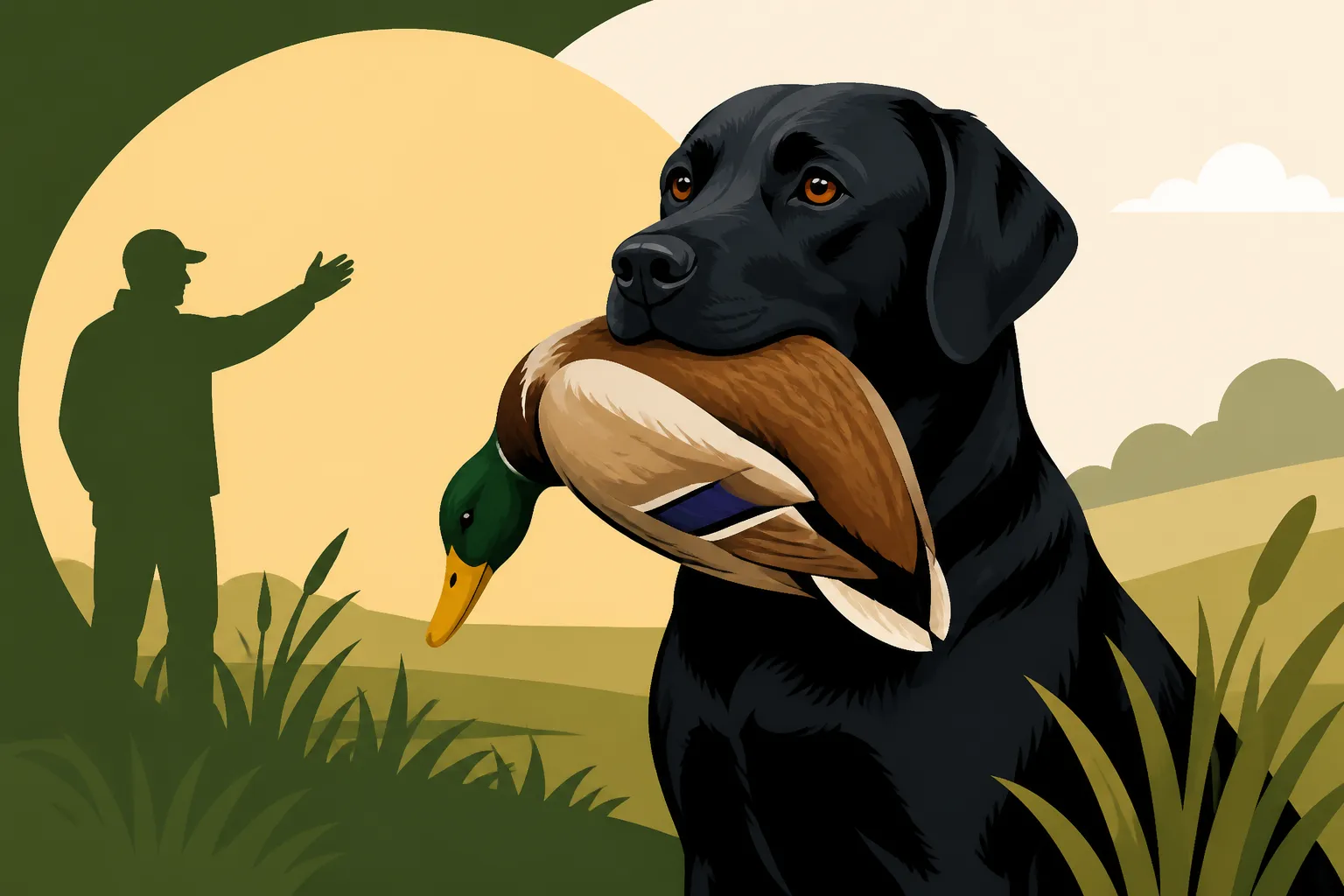
Training a Labrador for Gundog Work
Training a Labrador for gundog work is a journey that often fills new owners with both excitement and a touch of apprehension. You see your energetic pup, full of boundless enthusiasm, and wonder how on earth you're going to harness that incredible drive into the disciplined art of retrieving. This guide aims to demystify the process, breaking down the foundational steps and advanced techniques you'll need to transform your beloved Labrador into a capable and keen gundog, whether for hunting companions or competitive trials.
Understanding the Labrador's Natural Instincts for Gundog Work
Labradors were quite literally born for this job. Their heritage is steeped in working alongside fishermen, retrieving nets and fallen fish in the icy waters of Newfoundland, then later being refined by British estates to retrieve game birds. This isn't just a hobby for them; it's deeply ingrained in their DNA, and understanding this innate drive is your first step to successful gundog training.
The Retrieving Drive and Soft Mouth
One of the most defining characteristics of a Labrador is their intense retrieving drive. They want to bring things back to you. This isn't just about playing fetch; it's about a deep-seated desire to "deliver to hand." When you tap into this, training becomes a partnership rather than a chore. They're not just doing it for a treat; they're doing it because it fulfills a primal urge. It's a joy to watch them work with such purpose.
Coupled with this is the famed "soft mouth." Historically, Labradors were bred to retrieve delicate game birds without damaging them. This means they are naturally inclined to carry objects gently, a trait that is incredibly valuable when you're talking about bringing back a pheasant or a duck. Of course, some puppies need gentle guidance to perfect this, especially during their Labrador Puppy Mouthing and How to Redirect It phase, but the genetic predisposition is undeniably there. It's a testament to centuries of careful breeding.
High Trainability and Eagerness to Please
Labradors are often ranked among the most intelligent and trainable dog breeds, and for good reason. They are highly intelligent, incredibly responsive, and possess an almost insatiable eagerness to please their handlers. This combination makes them excellent students in the gundog field. They thrive on clear direction, consistency, and positive reinforcement.
This doesn't mean it's always easy. Sometimes their enthusiasm can be a little too much, leading to overexcitement or a tendency to anticipate commands. But with patience, you can channel that energy. Their desire to work alongside you, to be a part of your team, is a powerful motivator. This inherent "wanting to be good" is what makes the long hours of training feel genuinely rewarding. You'll find that their happy demeanor and wagging tail are often their biggest rewards.
Building a Solid Foundation: Essential Obedience for the Field
Before you even think about whistles and dummies, your Labrador needs to have a rock-solid foundation in basic obedience. Without it, any advanced gundog work will quickly fall apart, leading to frustration for both you and your dog. Think of it like building a house – you need a strong base before you can add the fancy roof.
Recall and Steadiness
Imagine being in a field with birds flushing, decoys out, and other dogs present. Your Labrador needs to come back to you, every single time, without hesitation. Labrador Recall and Working Off Leash is not just important for safety; it's absolutely critical in gundog work. This means practicing in increasingly distracting environments, ensuring that "come" means "come now," no matter what exciting scent or movement crosses their path. Starting this early, even with a young puppy, lays the groundwork for later success.
Steadiness is another cornerstone. This means your Labrador stays put, patiently waiting for your command, even when a bird is falling or another dog is retrieving. It goes against their natural instinct to burst forth and grab the prize, so it requires immense self-control. This skill is built gradually, starting with short waits and minimal distractions, slowly increasing the challenge. It's often where the real patience of a handler is tested, but a steady dog is a joy to hunt with.
The "Sit," "Stay," and "Fetch" Commands
These might seem like basic commands, but in gundog work, they take on a new level of precision and reliability. "Sit" isn't just for a treat; it's for holding position for an extended period in varied terrain. "Stay" means holding that position until released, regardless of distractions like thrown retrieves or movement. You need your Labrador to be able to "sit" and "stay" confidently for several minutes, from a distance, and with their back to you.
"Fetch" or "Retrieve" is, of course, the heart of it all. You'll start with short, enthusiastic retrieves, building up their drive. But gundog retrieve isn't just about bringing any object; it's about bringing the right object, to your hand, and holding it gently until released. This leads into concepts like force fetch later on, but the initial foundation is pure fun and encouragement. Utilizing diverse objects, from soft training dummies you can find on Amazon to more realistic-feeling items, helps generalize the skill. Remember, it's not just about the fetch; it's about the delivery. Teaching a Labrador to Drop It Reliably is key to a clean retrieve.
Introducing Specific Gundog Skills
Once your Labrador has a solid foundation in obedience, you can start introducing the specialized skills that define gundog work. This is where you really start to see their instincts shine and their purpose come alive.
Dummy Work and Mark Training
Dummy work is essentially glorified fetch with purpose. You'll use canvas or plastic training dummies to simulate retrieving birds. The goal here is "mark training," where your dog watches a dummy fall and remembers its location, then retrieves it on command. Start with single marks in an open field, making it easy for your dog to succeed and build confidence.
As your dog progresses, you'll introduce double and triple marks, where multiple dummies are thrown in different directions, and your dog has to remember each fall and retrieve them in a specific order. This builds their memory and helps them learn to "handle" or take directions to a retrieve they didn't initially mark. It's incredibly impressive to watch a dog systematically clear a field of multiple falls. This is where patience and consistency truly pay off.
Whistle Training and Hand Signals
In the field, your voice might not always be heard over wind, water, or gunshots. This is where whistle commands and hand signals become invaluable. A short "pip-pip" on a whistle often means "sit" or "hup," while a single long blast might mean "come." Hand signals, taught in conjunction with verbal commands, allow you to direct your dog to retrieves that they didn't see fall or that are out of sight.
Introducing the whistle early, alongside verbal commands, helps your dog associate the sound with specific actions. For example, when teaching "sit," say "sit," blow the whistle, and give the hand signal. Over time, you can fade the verbal command, and your dog will respond solely to the whistle and hand signals. This adds a level of precision and control that is essential for effective gundog work. You'll find many specialized gundog whistles and lanyards on Amazon.
Steadiness to Shot and Water Work
Steadiness to shot is a crucial skill for a gundog. It means your dog remains calm and steady, sitting quietly, even when a shotgun is fired. This is introduced very gradually, starting with low-volume blank pistols at a distance, slowly decreasing the distance and increasing the volume as your dog becomes accustomed to the sound. The goal is for the shot to become a signal to pay attention, not to break and run. This requires careful desensitization and plenty of positive reinforcement.
For many Labradors, water work is their absolute favorite. Their webbed feet and otter-like tails make them natural swimmers. Teaching a Labrador to Swim and Retrieve Water is a wonderful way to channel their energy. Introduce them to water gently, making it a positive experience. Start with shallow retrieves and gradually move to deeper water, always ensuring their safety. Water retrieves add another layer of challenge and excitement to gundog training, as scent and visibility change dramatically in water environments.
Advanced Field Work and Competitive Trials
Once your Labrador has mastered the basics, you can delve into more advanced aspects of gundog work, pushing their abilities and refining their skills for real-world hunting scenarios or competitive trials. This is where the artistry of gundog training truly shines.
Blind Retrieves and Lining Drills
A "blind retrieve" is when your dog is sent to retrieve game they did not see fall, relying solely on your hand signals and whistle commands to guide them. This is a much more advanced skill than a marked retrieve. It requires immense trust between dog and handler, and precise communication. You'll start with short blinds, in open terrain, with easily detectable scents, gradually increasing distance, cover, and complexity.
Lining drills are fundamental to teaching blind retrieves. These drills focus on sending your dog in a straight line, away from you, to a designated area. You'll use specific commands and hand signals to keep them on track, veering them left or right, or stopping them mid-stride to take a new direction. This is where precision and responsiveness really come into play. It's a beautiful dance of communication between handler and dog.
Upland and Waterfowl Scenarios
Training for upland game (like pheasants or quail) is different from waterfowl (ducks, geese). Upland work involves more quartering patterns (working back and forth in front of the hunter to find scent), steady pointing (though Labradors are flushers, not pointers, they should remain steady until the flush), and retrieves from denser cover. Scent work becomes paramount, and dogs learn to use their noses effectively to locate birds.
Waterfowl scenarios often involve long waits in blinds, retrieving from cold water, navigating decoys, and dealing with multiple birds falling at once. Your dog needs to be comfortable with loud noises, being confined for periods, and remaining steady amidst exciting chaos. Both types of scenarios require adaptability and a deep understanding of your dog's capabilities. Gundog Training Costs for a Field Labrador can vary greatly depending on whether you opt for professional instruction or DIY.
Field Trials and Hunt Tests
For those who want to test their Labrador's abilities against a standard or other dogs, field trials and hunt tests offer a structured environment. Hunt tests (like those offered by the AKC or UKC) are designed to evaluate a dog's natural abilities and trained skills to a set standard, simulating real hunting conditions. Dogs earn titles based on their performance. They're pass/fail, not competitive against other dogs directly.
Field trials, on the other hand, are highly competitive events where dogs compete head-to-head. They are designed to test the ultimate retrieving abilities of a dog under simulated hunting conditions, often involving extremely challenging retrieves and complex handling. Both can be incredibly rewarding ways to deepen your bond with your Labrador and showcase their natural talent. Many successful competitive dogs often started with early comprehensive puppy training programs, like those offered by BAXTER & Bella, before transitioning to specialized gundog trainers.
Common Challenges and Troubleshooting
Even with the most eager and talented Labrador, gundog training comes with its fair share of challenges. It's important to anticipate these and have strategies for overcoming them. Remember, every dog is an individual, and what works for one might need tweaking for another.
Overexcitement and Breaking
One of the most frequent challenges with an enthusiastic Labrador is overexcitement, which can lead to "breaking" – taking off for a retrieve before being sent. This can be incredibly frustrating and unsafe in a hunting scenario. The key to combating this is steadiness, steadiness, steadiness. Go back to basics. Practice long "sits" and "stays" with increasing distractions, always reinforcing the desired behavior. Never send your dog if they are already breaking.
It's tempting to let them go, especially if they're whining with anticipation, but every time you allow them to break, you reinforce the wrong behavior. Use a long line for control in early training to physically prevent them from breaking. Gradually remove the line as they show more reliability. Remember, a gundog's self-control is paramount.
Hard Mouth or Damaging Game
While Labradors are known for their soft mouths, sometimes a dog can develop a "hard mouth," meaning they grip game too tightly or even chew on it. This can be caused by excitement, poor handling, or simply not understanding the correct way to retrieve. Addressing this early is critical. Go back to holding exercises with soft dummies.
The foundation of force fetch, when introduced correctly and gently, can help teach a dog to hold softly and retrieve reliably to hand. It's about teaching them how to hold the item and when to release it on command, rather than clamping down. Never punish a dog for a hard mouth; this can make them reluctant to retrieve at all. Instead, focus on positive reinforcement for gentle holding and clean delivery.
Refusal to Retrieve or Deliver
Occasionally, a Labrador might refuse to retrieve an item or deliver it to hand. This can be a sign of a few things:
- Lack of confidence: The retrieve might be too challenging, or the environment too intimidating.
- A negative association: Perhaps they were corrected too harshly for something related to retrieving.
- Lack of understanding: They might not fully grasp what you want them to do.
To address this, break down the retrieve into smaller, easier steps. Use high-value rewards and enthusiastic praise. Make retrieving the most fun thing in the world. If they are refusing to deliver to hand, go back to short, easy retrieves right in front of you, praising lavishly when they approach and gently take the dummy. Avoid grabbing the dummy from their mouth; instead, teach a clear "drop" or "give" command. Some Labradors can become reluctant to retrieve if the retrieve itself causes them pain, so be sure to rule out any underlying physical issues with your vet.
Essential Gear for Gundog Training
Having the right equipment can make your gundog training journey smoother and more effective. You don't need to break the bank, but a few key items are invaluable.
| Item | Purpose | Notes |
|---|---|---|
| Training Dummies | Simulates game birds for retrieves. | Canvas, plastic, or soft rubber. Variety in size/weight. |
| Whistle & Lanyard | For distance commands and communication in noisy environments. | Choose a consistent whistle. Carry on a lanyard for easy access. |
| Long Line (30-50 ft) | For recall, steadiness, and preventing breaking. | Allows control at a distance without being leashed. |
| Bumper Launcher | Throws dummies farther, simulates gun sound (with blanks). | Advanced tool, introduces gun acclimation and distance retrieves. |
| Waterfowl Decoys | For simulating hunting scenarios in water. | Helps dog learn to navigate obstacles in water retrieves. |
| Orange Vest/Collar | For visibility and safety in the field. | Crucial for hunting season or training in public areas. |
| First Aid Kit | For minor injuries in the field. | Essential for safety, especially in remote training locations. |
| Crate | For travel, rest, and safety in the field/car. | A secure, comfortable space for your dog. Crate Training a Labrador Puppy is fundamental. |
| Treats/High-Value Rewards | For positive reinforcement during training. | Especially important for building focus and confidence. |
When purchasing gear, especially training dummies, you can often find a wide variety of options on Amazon. Always prioritize safety and quality, especially for items like long lines and vests that directly impact your dog's well-being. A First Aid Kit for a Labrador Retriever is an absolute must-have for any outdoor adventures.
The Rewarding Journey of Training a Gundog
Training a Labrador for gundog work is more than just teaching commands; it's a deep dive into their natural abilities, a strengthening of your bond, and a truly fulfilling experience. You'll witness your dog transform from an enthusiastic puppy into a focused, disciplined, and invaluable partner in the field. The commitment is real, the challenges are inevitable, but the rewards are immeasurable.
From those first clumsy puppy retrieves to watching your seasoned Labrador confidently execute a blind retrieve across a challenging marsh, every step is a testament to your patience and their incredible drive. It's a journey filled with mud, wet paws, and triumphant moments that reinforce why Labradors are, and always have been, the ultimate retrieving companions. So grab your whistle, your dummies, and embark on this incredible adventure with your best friend.
Disclaimer
This article is for general informational purposes only and does not constitute professional advice. Laws, prices and regulations vary by location and change over time. Consult a qualified professional for guidance on your specific situation.