Overnight Potty Breaks for a Labrador Puppy
Ah, the joys of a new Labrador puppy! It’s all wagging tails, puppy breath, and endless snuggles… until 2 AM rolls around and you're jolted awake by a whimpering bundle of fur, realizing yet again that tiny bladders don't adhere to human sleep schedules. The exhaustion is real, and the worry about accidents can make you dread bedtime. This guide is here to walk you through the ins and outs of managing overnight potty breaks for your Labrador puppy, helping you establish a routine that leads to dry nights and more sleep for everyone.
The Reality of Puppy Bladders: Why Overnight Breaks Are Non-Negotiable
Let's be honest, those adorable little Labrador puppies come with bladders about the size of a thimble, especially when they're very young. It's not their fault, and it's certainly not a sign they aren't smart enough to be house-trained. Their bodies just haven't developed the capacity to hold it for long stretches yet. This fundamental biological truth is why you simply have to commit to those middle-of-the-night excursions in the early weeks and months. Ignoring their needs will only lead to accidents, frustration, and a breakdown in their understanding of where they're supposed to go.
Think of it this way: your puppy is trying its absolute best to tell you it needs to relieve itself, and every successful trip outside reinforces the correct behavior. Every accident, on the other hand, can set back your progress. It's a marathon, not a sprint, and understanding their physical limitations is the first step in patience and success.
Understanding Age-Based Bladder Capacity
A common rule of thumb you'll hear is that a puppy can hold its bladder for approximately one hour for every month of age, plus one. So, a two-month-old puppy might manage three hours, while a three-month-old could go for four. However, this is a guideline, not a strict biological law, and it often applies more to daytime hours when they are active and distracted. Overnight, when they're sleeping or crated, they might be able to hold it a bit longer, but it's crucial not to push them past their limits. A young Labrador puppy, say 8 to 10 weeks old, really shouldn't be expected to go more than 3-4 hours without a potty break, even overnight. Pushing them longer can lead to them soiling their sleeping area, which is something we definitely want to avoid for successful house training.
Factors like diet, water intake before bed, and even excitement levels can influence how long your puppy can comfortably hold it. A puppy who had a big drink right before bed, or a particularly exciting evening playtime, might need to go out sooner. It's about being observant and responsive to your puppy's individual needs. If they've had a particularly long play session, they'll likely drink more and thus need to go out more frequently. How Long a Labrador Puppy Can Hold It goes into more detail about how these factors interplay.
The Impact of Consistency
Consistency isn't just a buzzword in puppy training; it's the bedrock. Your Labrador puppy thrives on routine and predictability. If you take them out at roughly the same times every night, they learn to anticipate it and their body adjusts. Inconsistent potty breaks, where some nights you push them longer and others you take them out frequently, can confuse them and make the process much harder. Imagine trying to learn a new language when the rules keep changing! For a puppy, consistent timing, consistent location, and consistent rewards for successful elimination create a clear picture in their minds. This is especially true for those bleary-eyed overnight trips – they need to know exactly what's expected of them.
Crafting Your Labrador Puppy's Bedtime Routine for Success
The groundwork for a dry night begins long before your head hits the pillow. A thoughtful and consistent evening routine is your secret weapon against unexpected middle-of-the-night cleanups and excessive puppy crying. It’s all about helping your puppy empty out thoroughly and settle down calmly for a good night's rest.
The Importance of a Consistent Evening Schedule
First things first, let's talk about the wind-down. For a Labrador puppy, having a predictable evening means their body can also learn a rhythm. Aim to feed your puppy its last meal a few hours before bedtime. For an 8-10 week old puppy, this might mean dinner at 5 or 6 PM if you're planning to go to bed around 9 or 10 PM. This gives them ample time to digest their food and have several opportunities to relieve themselves before settling down for the night.
Water management is equally crucial. While you never want to restrict water access during the day, consider taking up your puppy's water bowl about an hour or two before their final potty break. This isn't about dehydrating them, but simply reducing the volume of liquid in their system right before they're expected to sleep for an extended period. Of course, always use your best judgment – if it's a hot day or they've been particularly active, a small drink might be necessary.
About 15-30 minutes before you plan to put your puppy in its crate for the night, take them out for their "last call" potty break. Make this a dedicated trip – no play, just business. Use your chosen potty command ("Go potty," "Get busy") and reward them enthusiastically (but quietly) for success. Once they've emptied everything out, it's time for bed.
Crate Training for Overnight Success
A properly utilized crate is perhaps the most powerful tool in your overnight potty training arsenal. Labradors, like most dogs, have a natural instinct not to soil their sleeping area. This "denning" instinct is what we tap into with crate training. When your puppy is in a crate that's just the right size, they're much less likely to relieve themselves because they don't want to lie in their own mess.
The key here is "just the right size." A common mistake is giving a puppy too much space. If the crate is too large, your clever Labrador puppy might designate one corner as its sleeping area and another as its potty area. You want a crate that allows them to stand up, turn around, and lie down comfortably, but not much more. Many crates come with dividers that allow you to adjust the size as your puppy grows. Crate Size for Potty Training a Labrador can help you determine the perfect fit for your growing pup. Placing the crate in your bedroom or very close to you is also a game-changer. Your puppy will feel more secure, and you'll be able to hear their subtle cues when they need to go out, such as soft whimpers or scratching.
Recognizing the Signs Your Puppy Needs to Go
One of the biggest hurdles for new puppy owners is learning to interpret their Labrador's signals. Overnight, these signals might be more subtle than the frantic pacing or sniffing you see during the day. Your puppy might start with a low, soft whimper. This isn't usually the full-blown "I want out to play!" cry; it's a more urgent, almost plaintive sound. They might shift around restlessly, try to scratch at the crate door, or even begin to whine a little louder.
The trick is to respond immediately to these early signs. Don't wait for the whining to escalate into a full-blown bark-fest, and definitely don't wait until they're soaked through. The faster you respond, the more your puppy learns that communicating its need results in relief, and the less likely they are to have an accident. Sometimes, the sounds are so faint you might wonder if you just imagined them, but trust your gut. If your puppy is making noise in the middle of the night, especially if it's not typical fussing, it's always best to assume they need to go out. Settling a Labrador Puppy Who Cries in the Crate offers more strategies for discerning different types of puppy cries.
Mastering the Midnight Potty Mission: Quick Tips for Effective Breaks
You’ve heard the whimper, you've dragged yourself out of bed – now what? The goal of a middle-of-the-night potty break is efficiency. You're not aiming for a fun play session or an extended cuddle. You're on a mission: get the puppy to relieve itself, then get both of you back to bed as quickly and quietly as possible.
Making the Break Efficient and Business-Like
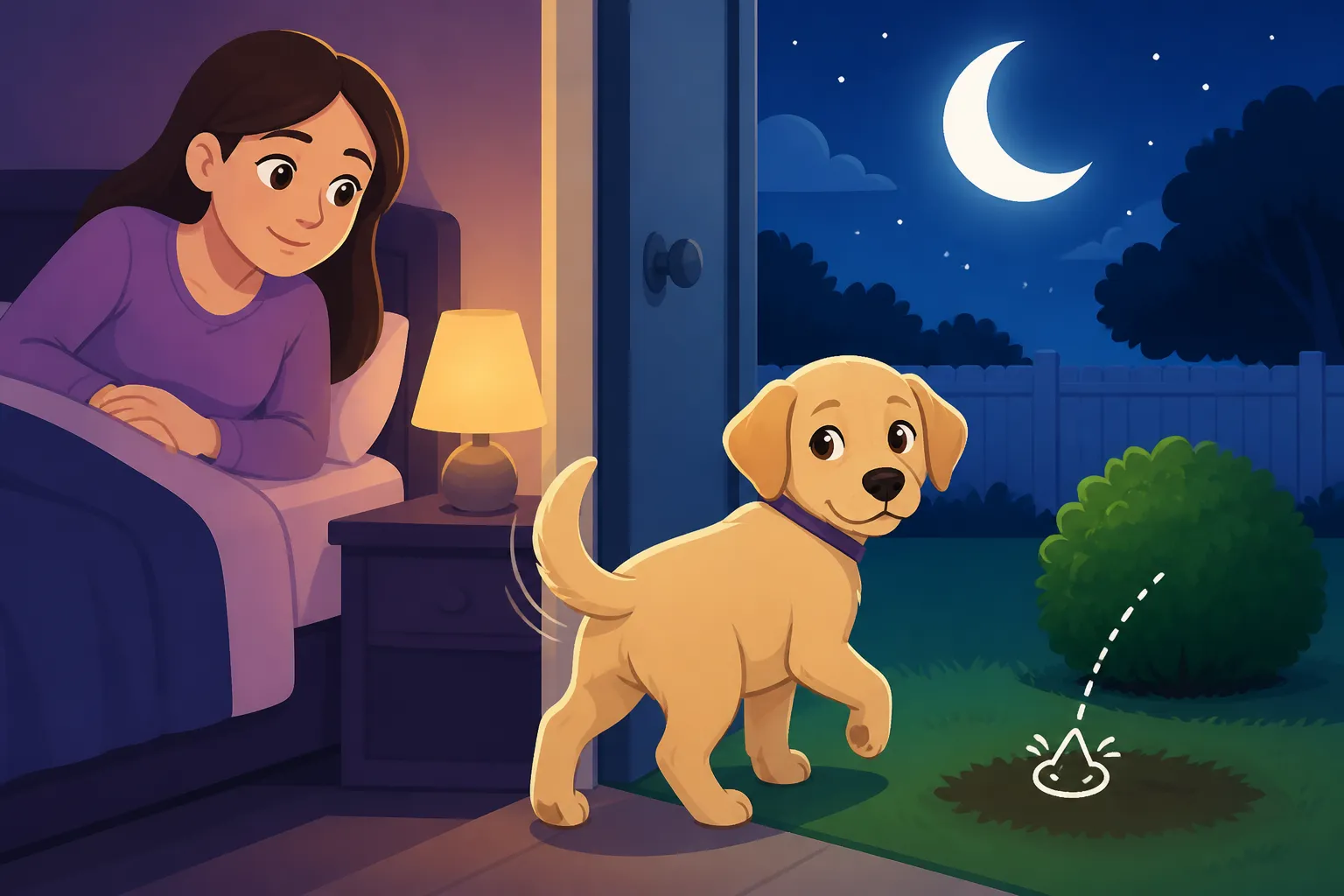
When your puppy signals its need, move swiftly but calmly. Avoid turning on all the house lights or making a big fuss. Keep interactions minimal. If possible, scoop your puppy up (if it's small enough and you're not risking an accident en route) and carry it directly outside to its designated potty spot. If your puppy is too big to carry, put it on a leash before opening the crate door. This prevents it from wandering off or getting distracted.
Once outside, keep things quiet. No playful talk, no chasing squirrels, no exploration. Use your consistent potty command ("Go potty," "Hurry up") and stand still, allowing your puppy to focus on the task at hand. The moment they finish, offer quiet, calm praise ("Good potty!"), maybe a tiny, low-value treat (like a single piece of kibble from their daily allowance), and then immediately head back inside. Don't linger. The message should be crystal clear: "We're out here for one reason, and one reason only." This prevents your puppy from thinking that crying in the crate leads to exciting outdoor adventures.
Back inside, immediately put your puppy back in its crate. Resist the urge to let them wander around for a bit or give them extra attention. The entire process, from waking up to returning to the crate, should ideally take no more than 5-10 minutes.
When to Expect Fewer Breaks
This is the golden question, isn't it? When will you finally sleep through the night again? The good news is that as your Labrador puppy grows, so does their bladder capacity. You'll gradually notice that the frequency of overnight breaks decreases.
- 8-10 weeks: Expect 2-3 breaks per night (every 3-4 hours).
- 11-14 weeks: You might be down to 1-2 breaks (every 4-5 hours).
- 15-20 weeks: Many puppies are only needing one break, if any, often in the very early morning.
- 5-6 months and older: With consistent training, many Labrador puppies can sleep through the night (6-8 hours) without needing a break.
This progression isn't always linear, and some puppies develop faster or slower than others. Don't get discouraged if you have an occasional regression, especially during adolescence when their brain development can make them seem to "forget" things. The key is to keep the routine consistent and celebrate every small victory. If you find your progress stalling, or your puppy suddenly needs more breaks than expected, consider if there have been any changes to their routine, diet, or if a quick vet check-up might be in order to rule out any medical reasons. Getting a Labrador Puppy to Sleep Until Morning delves deeper into establishing a solid nighttime routine.
Troubleshooting Common Overnight Potty Training Hurdles
Even with the best intentions and a solid routine, puppy training inevitably throws a few curveballs your way. It’s important to understand why these issues arise so you can address them effectively, rather than getting frustrated.
Accidents in the Crate (and what they mean)
An accident in the crate can feel like a major setback, especially if you've been doing everything "right." However, it's usually a signal that something needs adjustment.
The most common reason for crate accidents is that the crate is too big. As we discussed earlier, if your Labrador puppy has enough space to sleep in one area and relieve itself in another, it will. Double-check that your crate divider is set correctly, allowing just enough room for your pup to stand, turn around, and lie down comfortably.
Another frequent culprit is not taking them out often enough. Even if you're adhering to the "hour per month" rule, remember it's a guideline. Your puppy might have a smaller bladder than average, or a higher liquid intake. If accidents are happening consistently, try shortening the time between overnight potty breaks by 30 minutes to an hour. It's better to over-correct and have dry nights than to push too long and cause accidents.
Sometimes, a crate accident can point to a medical issue. Urinary tract infections (UTIs) are not uncommon in puppies and can cause them to lose control or feel an urgent need to urinate more frequently. If your puppy suddenly starts having accidents after a period of being reliably dry, or if you notice any changes in their urine (cloudy, strong odor, straining), a visit to the vet is definitely in order. They can rule out underlying health concerns.
Puppy Waking Up Too Early
It's 4:30 AM, the birds haven't even started chirping, and your Labrador puppy is wide awake and demanding attention. Is it an actual potty need, or just an early bird who wants to play? Differentiating these can be tricky when you're half asleep.
First, always err on the side of caution and take them out. If they immediately go potty, then it was a legitimate need, and you might need to adjust your last potty break time or add another quick break earlier in the morning. If they go out and do nothing, or only pee a tiny amount, then it's more likely they're just ready to start their day.
If it's not a potty need, then you're dealing with a puppy who wants to play or is bored. In this scenario, you want to avoid rewarding the early wake-up call with attention or playtime. Keep the lights low, take them out for a very quick, boring potty break (if you take them out at all), and then immediately return them to their crate. Don't engage. Don't talk to them. The goal is to teach them that early morning crying does not lead to fun. It might take a few mornings of tough love, but they will eventually learn that morning starts when you decide it starts.
Dealing with Puppy Crying for Attention, Not Potty
This is arguably one of the most draining challenges for new puppy owners. You're exhausted, and your puppy is crying. How do you know if it's a true bladder emergency or just a bid for attention?
Again, when in doubt, take them out for a quick potty break. If they go, great! If they don't, or if they only dribble a tiny bit, then they're likely just lonely or bored. This is where your resolve comes in. If you're confident your puppy has recently been out, has a correctly sized crate, and isn't showing signs of distress (like incessant barking, destructive behavior, or signs of illness), then a period of ignoring the attention-seeking cries is often necessary.
This can feel heartbreaking, especially when your Labrador puppy is so naturally affectionate. But giving in to attention-seeking cries can inadvertently teach your puppy that crying is an effective way to get what they want – which includes getting out of the crate and potentially playing with you. It's important that they learn the crate is a safe, quiet place for rest, not a prison from which they can escape by making noise.
Sometimes, having a familiar comfort item in the crate (like a blanket that smells like you) or a safe chew toy can help. Some owners find that white noise machines or quiet classical music can help settle a puppy. For more extensive guidance on managing puppy crying, especially if it feels like separation anxiety is developing, resources from reputable trainers or programs like BAXTER & Bella offer comprehensive support and strategies, ensuring you’re addressing the root cause of the crying effectively.
Essential Gear and Smart Strategies for Stress-Free Nights
Having the right tools at your disposal can make a world of difference in navigating the often-sleep-deprived world of puppy potty training. It's not just about the puppy's gear, but also about preparing yourself for those midnight excursions.
Crate Essentials
We've already talked about the importance of a correctly sized crate, and it really can't be overstated. Look for a wire crate with a divider, as this allows you to adjust the space as your Labrador puppy grows. This also saves you from buying multiple crates!
For bedding, especially in the early stages, simplicity is best. A soft, washable mat or a few old towels are ideal. Avoid plush, expensive dog beds until your puppy is reliably house-trained, as accidents are inevitable, and cleaning fancy beds is a nightmare. Plus, some puppies will chew anything in their crate, and you don't want them ingesting stuffing. A good quality, durable mat that fits snugly in the crate is easy to clean and provides enough comfort without encouraging inappropriate elimination. You can find a vast selection of crates, mats, and dividers on Amazon, making it easy to compare options and read reviews.
Clean-up Supplies
Accidents happen. It's not a matter of if, but when. Be prepared with the right cleaning supplies. Enzymatic cleaners are your best friend here. Unlike regular household cleaners that might mask odors for humans, enzymatic cleaners break down the urine at a molecular level, eliminating the scent that might attract your puppy back to the same spot for future accidents. Keep a bottle readily accessible, along with plenty of paper towels or old rags.
When an accident occurs, blot up as much of the urine as possible, then douse the area with the enzymatic cleaner, allowing it to sit for the recommended time before blotting it dry. Don't rub, as this can push the urine deeper into carpets or fabrics. Being able to quickly and effectively clean up accidents minimizes their impact on your puppy's training and your sanity. How Many Labradors the RVC Study Followed is a fascinating read on canine health studies, but not directly related to cleaning supplies!
Other Helpful Tools
Beyond the basics, a few other items can streamline your overnight routine:
- Potty Bells: Some owners swear by potty bells hung on the door. Your puppy learns to nudge them when they need to go out. While this is more of a daytime training tool, it can carry over to the early morning hours, providing a clear, audible signal.
- Leash and Collar: Always have your puppy's leash and collar within easy reach. As mentioned, even for a quick trip outside, putting them on a leash helps maintain control and keeps the outing focused. You don't want a half-asleep puppy darting off into the dark because they aren't on a lead.
- Comforting Scent Item: A small blanket or toy that smells like their mother or littermates can provide comfort in the crate, especially during the first few nights. Just ensure it's safe and won't be ingested.
- Nightlight: A dim nightlight in the room or hallway can help you navigate quickly without having to flip on bright lights, which can fully wake both you and your puppy.
By setting yourself up for success with these tools and strategies, you can minimize stress and maximize the effectiveness of your Labrador puppy's overnight potty training, leading to happier, drier mornings for everyone.
| Puppy Age | Approximate Overnight Hold Time | Expected Potty Breaks (overnight) |
|---|---|---|
| 8-10 Weeks Old | 3-4 Hours | 2-3 |
| 11-14 Weeks Old | 4-5 Hours | 1-2 |
| 15-20 Weeks Old | 5-6 Hours | 0-1 (often early morning) |
| 5-6 Months Old | 6-8 Hours | 0 |
Remember, these are general guidelines. Every Labrador puppy is an individual, and their development might vary slightly. The most important thing is to be attentive to your puppy's cues and consistently reinforce good habits. Your patience and dedication now will pay off with a well-adjusted, house-trained adult Labrador down the line.
Disclaimer
This article is for general informational purposes only and does not constitute professional advice. Laws, prices and regulations vary by location and change over time. Consult a qualified professional for guidance on your specific situation.