Why a Labrador Digs Under the Fence
It’s incredibly frustrating, isn't it? You spend time and effort making your yard a safe haven for your beloved Labrador, only to discover them proudly presenting a muddy nose from under the fence, or worse, completely missing from the yard. Digging under the fence is a common, exasperating behavior for many Lab owners, often leaving us scratching our heads and frantically reinforcing our boundaries. This comprehensive guide will delve deep into the many reasons why your clever Labrador might be tunneling out and, more importantly, equip you with a toolbox of practical, empathetic solutions to keep your furry friend safely and happily within your yard.
The Root Causes: Why Your Labrador Becomes a Master Digger
Labradors are intelligent, active, and curious dogs, and sometimes, their natural instincts, coupled with their environment, can lead to some rather unwelcome behaviors, like excavating under your fence. It's rarely out of malice; it's almost always driven by a deeper need or desire. Understanding these underlying motivations is the first step to finding a lasting solution.
Instinct and Breed History
Long before they were cherished family pets, Labradors were working dogs, bred to retrieve game from both land and water. This history imbued them with a strong prey drive and a keen sense of smell. While they might not be hunting ducks in your backyard, those ancestral traits don't just disappear. Digging can be a manifestation of this ingrained instinct. They might be "hunting" unseen voles or moles, or simply following an intriguing scent that leads them right to the fence line and beyond.
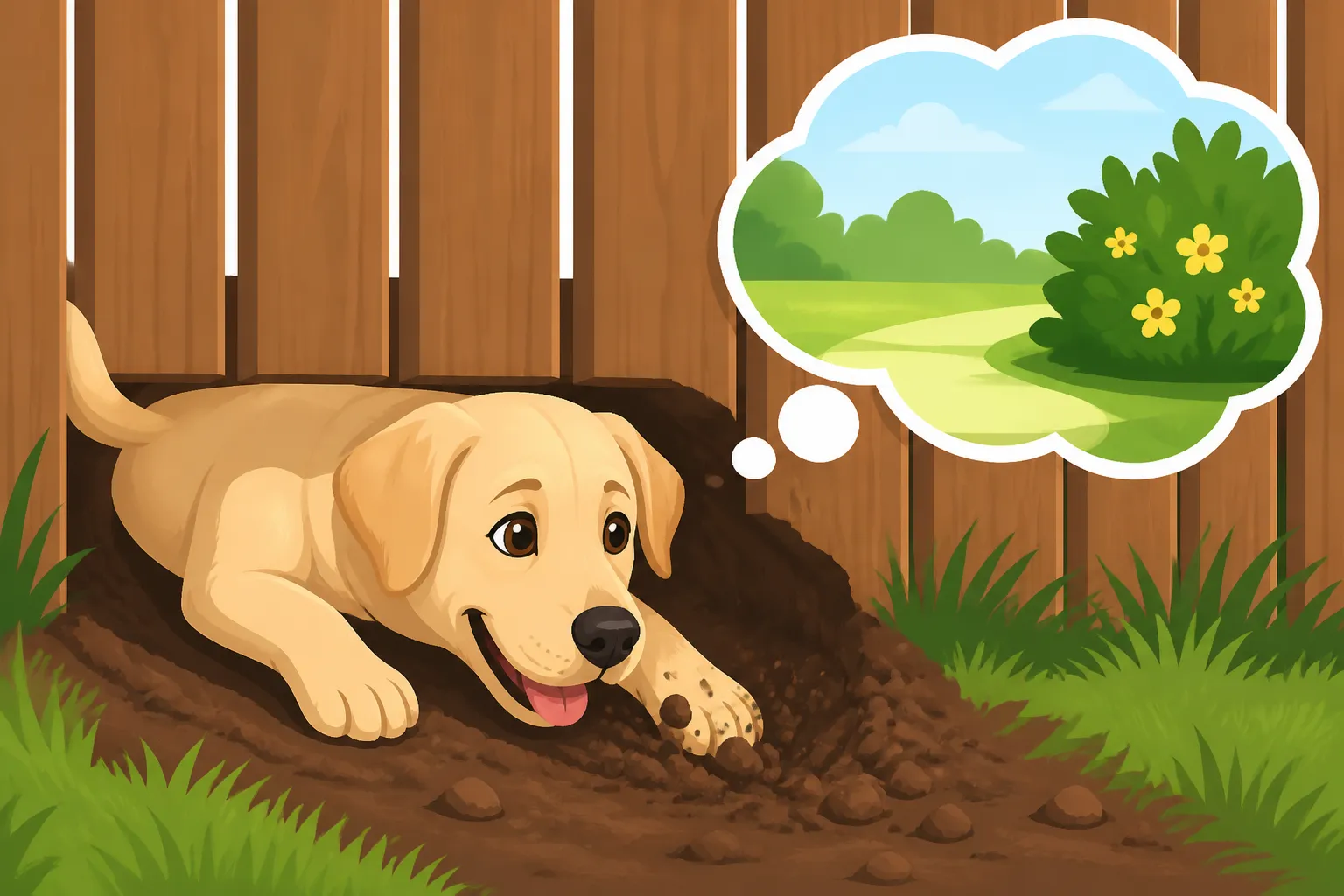
Imagine your Labrador's nose, which is hundreds of times more sensitive than your own. To them, your backyard fence isn't just a physical barrier; it's a doorway to a world of tantalizing smells. A rabbit might have scurried under the fence hours ago, leaving behind a scent trail that's like a neon sign to your dog. They might start digging, not to escape, but to investigate this fascinating scent, inadvertently creating an exit route. It’s part of their Labrador Temperament and Personality to explore and work with their nose.
Boredom and Lack of Mental Stimulation
A bored Labrador is a destructive Labrador, and digging is a classic symptom of under-stimulation. Labradors are highly energetic and intelligent; they need a good amount of physical exercise and mental engagement to truly thrive. If they're left alone in the yard for extended periods with nothing to do, that boundless energy and sharp mind will find an outlet, and often, that outlet involves digging.
Think about it from their perspective: the day is long, the sun is warm, and there's not much happening. They’ve sniffed every blade of grass, chased their tail a few times, and napped. What’s left? Perhaps that interesting patch of dirt by the fence where the cool earth promises a satisfying excavation project. This isn't just about physical activity, though regular Exercise a Labrador Needs Each Day is crucial. It’s also about mental exercise. A dog that is mentally fatigued from training or puzzle games is less likely to feel the urge to create their own entertainment through digging. If your Labrador isn't getting enough retrieving games or Mental Work for a Bored Labrador, they might turn to less desirable activities.
Seeking Comfort and Escape
Sometimes, digging under a fence isn't about escaping to something, but escaping from something. This could be a variety of factors related to their comfort or stress levels. Weather extremes are a big one: if it's scorching hot outside, a Labrador might dig a cool den to lie in. Similarly, if it's cold and windy, a sheltered spot under the fence could offer respite. Unfamiliar noises, construction next door, or even separation anxiety can also drive a dog to try and get away from perceived threats or discomfort.
Consider a hot summer day. While your Labrador loves the outdoors, direct sun can be relentless. The earth, just a few inches down, is significantly cooler. Digging a shallow pit against the fence might seem like the perfect way to create a personal, underground air-conditioned lounge. This instinct to create a den is strong in many dogs. Furthermore, if your Labrador suffers from Separation Anxiety in Labrador Retrievers, the fence might become a barrier they desperately try to overcome to rejoin their human family. The perceived safety or comfort of being on the other side, or simply the frantic desire to be with you, can be a powerful motivator.
Specific Triggers for Fence-Line Escapes
While the general reasons for digging are important, understanding the specific environmental triggers that lead a Labrador to target the fence line is crucial for effective prevention. It's often not just random digging; there's usually a "why" tied to the immediate surroundings.
The Lure of the Unknown
There's an old saying: "the grass is always greener on the other side." For a curious Labrador, this is literally true. The world beyond the fence is a constant source of fascination. Whether it's the neighbor's dog, children playing, squirrels scampering, or just the tantalizing smell of another yard, the desire to explore the unknown can be incredibly strong.
Imagine your Labrador watching the world go by from their yard. A small dog walks by with its owner, perhaps a child drops a treat just outside the fence, or a group of deer ambles through a nearby field. These sights, sounds, and smells can create an irresistible urge to investigate. The fence, which is supposed to be a deterrent, instead becomes a challenge. They'll start pushing their nose under, then a paw, and before you know it, they've begun to excavate their way to perceived freedom and adventure. This drive is particularly strong in young, exuberant Labs who haven't fully settled into adulthood, or in those who haven't had enough appropriate socialization to feel comfortable just observing.
Prey Drive and Scent Trails
As we touched upon earlier, a Labrador's strong prey drive is a significant factor. If your yard borders a wooded area, a park, or even just a neighbor's overgrown flowerbed, it's a prime hunting ground for small critters like rabbits, voles, mice, or even neighborhood cats. Your Labrador's powerful nose will pick up these scent trails, leading them directly to the source, which often means right up against your fence.
The act of digging becomes a focused mission. They're not just idly pawing at the dirt; they're convinced there's something fascinating just inches beneath the surface or on the other side. A fresh mole tunnel, a squirrel's buried nut cache, or the lingering scent of a rabbit who hopped through hours ago can turn your calm Labrador into a determined excavating machine. They'll dig with a single-minded intensity, often ignoring calls or distractions, until they either unearth their "prize" or create a large enough hole to slip through. Engaging your Labrador in Scent Work for a Labrador Indoors can sometimes help channel this drive into an acceptable outlet.
Social Butterflies Looking for Friends
Labradors are famously friendly and social dogs. They thrive on companionship, whether it's with their human family or other dogs. If your Labrador sees or hears another dog on the other side of the fence, especially if it’s a dog they know or want to play with, the urge to "say hello" can override any training or barriers. They might dig not to escape for good, but to get to their potential playmate.
This is particularly common if you have a neighbor with dogs your Labrador has interacted with before, or if their walk schedule aligns with your dog’s yard time. The happy barks, playful growls, and general excitement from the other side of the fence can be an irresistible invitation. Your Labrador might whine, jump, and then resort to digging as a means to join the fun. It’s their way of trying to break through the barrier to reach their social circle. For a breed that loves to be part of the action, being separated from potential friends by a mere fence can feel like a genuine injustice.
Practical Solutions to Fortify Your Fence and Deter Digging
Now that we've explored the reasons behind your Labrador's fence-line digging, let's talk about how to actually stop it. A multi-pronged approach that combines physical barriers, environmental enrichment, and consistent training is usually the most successful. There's no single magic bullet, but a combination of strategies can turn your yard back into a secure zone.
Physical Barriers and Reinforcements
The most immediate and often necessary step is to make it physically impossible or very difficult for your Labrador to dig under the fence. This involves reinforcing the barrier itself. There are several ways to do this, ranging from simple DIY solutions to more robust installations.
One popular method is to bury a section of chicken wire or hardware cloth along the base of the fence, creating an "L-footer." This means you bury the wire vertically for a foot or so, then bend it at a 90-degree angle and extend it horizontally away from the fence, buried just under the surface. When your Labrador tries to dig, they'll hit the wire and be deterred. Another option is to embed large rocks, concrete pavers, or even a line of sturdy landscaping timbers along the fence base, particularly in known digging spots. For a quick fix, you can use heavy stones or logs to cover existing holes or areas of interest, making them less inviting for digging. Remember, Labradors are persistent, so whatever you choose, it needs to be robust. You can find various fence reinforcement products on Amazon, making it easier to gather supplies for these projects. You might also want to review Fencing a Yard for a Labrador for more ideas on secure enclosures.
Environmental Enrichment and Training
Physical barriers are great, but they only address the symptom, not the underlying cause. To truly solve the digging problem, you need to address your Labrador's needs for exercise, mental stimulation, and appropriate outlets. This is where environmental enrichment and consistent training come into play.
Ensure your Labrador is getting adequate physical exercise every day. For a Lab, this usually means more than just a quick stroll around the block. Think brisk walks, fetch sessions, swimming, or even trips to a secure dog park. A tired dog is a good dog! Beyond physical activity, provide plenty of mental stimulation. This can include puzzle toys that dispense treats, snuffle mats for sniffing out kibble, or even a dedicated "digging pit" where they are allowed to dig. Giving a Labrador a Legal Place to Dig can redirect their natural instincts. For example, fill a designated sandpit with sand and bury some favorite toys or treats in it. When you see them digging at the fence, gently redirect them to their digging pit and praise them for using it. Programs like those offered by BAXTER & Bella can be incredibly helpful for structured training that teaches impulse control and provides mental engagement, making them less likely to invent their own fun.
Addressing the Underlying Motivations
Sometimes, the digging is a symptom of a deeper issue that needs direct attention. If your Labrador is digging due to fear, anxiety, or seeking comfort from weather extremes, those specific needs must be met.
If your Labrador is seeking shade or shelter on a hot day, ensure they have access to a comfortable, shaded area with plenty of fresh water. A kiddie pool can also be a wonderful relief. If cold is the issue, provide a well-insulated dog house or access to the indoors. For anxiety or fear-driven digging, identifying the trigger is key. Is it the neighbor's dog barking? Construction noise? These might require supervision during trigger times, or even professional behavioral consultation. Consider if your Labrador is spending too much time alone, which can exacerbate boredom and anxiety. If your schedule is packed, exploring options like Hiring a Dog Walker for a Labrador or reputable dog daycare can provide much-needed social interaction and exercise. Regular training sessions, even short ones, reinforce your bond and give your Labrador a sense of purpose. Consistent, positive reinforcement training, perhaps with guidance from platforms like BAXTER & Bella, can build confidence and reduce stress-related behaviors. Ultimately, a happy, well-adjusted Labrador with fulfilled needs is far less likely to resort to desperate measures like digging under the fence.
| Digging Motivation | Common Scenarios | Recommended Solutions |
|---|---|---|
| Boredom/Lack of Stim | Left alone in yard, insufficient exercise/play | More walks/playtime, puzzle toys, chew toys, training, a designated digging pit |
| Prey Drive | Scent of rodents/animals under fence | Fence barriers (L-footers), deterrents (citrus), strong recall training, pest control |
| Seeking Comfort | Hot weather (cool spot), cold/wind (shelter) | Provide shade, water, insulated dog house, indoor access during extreme weather |
| Anxiety/Fear | Loud noises, separation anxiety, strange people/dogs | Desensitization training, calming aids, professional behaviorist, increased companionship |
| Escape/Exploration | Neighbor's dog, interesting sights beyond fence | Fence reinforcement, supervised yard time, leashed walks, appropriate socialization |
Disclaimer
This article is for general informational purposes only and does not constitute professional advice. Laws, prices and regulations vary by location and change over time. Consult a qualified professional for guidance on your specific situation.