How a Labrador Is Picked for Scent Detection
It’s truly fascinating to watch a Labrador at work, whether they're sniffing out contraband at an airport, locating a lost person in the wilderness, or detecting medical conditions. Many of us see these incredible dogs and wonder, "How on earth do they choose that specific dog for such a specialized, demanding job?" It can feel like some secret process, but I promise, there’s a thoughtful and deliberate method behind how a Labrador is picked for scent detection work. This guide will pull back the curtain and explain the qualities, assessments, and training that go into selecting these canine heroes.
The Labrador's Natural Aptitude for Scent Work
When you think of a dog with a powerful nose, breeds like Beagles or German Shepherds often come to mind first. But Labradors have an incredible, often underestimated, talent for scent detection that makes them superstars in the field. It’s not just about their nose; it’s a whole package of traits that aligns perfectly with the demands of these critical jobs.
What Makes Labradors Ideal Scent Detectors?
Labradors truly are a marvel when it comes to their natural abilities. Their blend of intelligence, biddability, and sheer love of work makes them stand out. They possess an innate desire to please and a remarkable ability to focus, which are paramount in detection roles where distractions are abundant and the stakes are high. Unlike some other breeds that might be more independently minded or easily bored, a Labrador often sees scent work as the most exciting game ever invented. They have this wonderful combination of being high-energy, yet able to settle and concentrate when needed. This isn't just about raw sniffing power, but about the willingness to keep sniffing, to persist through difficulty, and to communicate their findings clearly. You see, a Labrador's Labrador Temperament and Personality is inherently geared towards partnership and purpose, which translates beautifully into detection work.
The Role of Their Incredible Nose
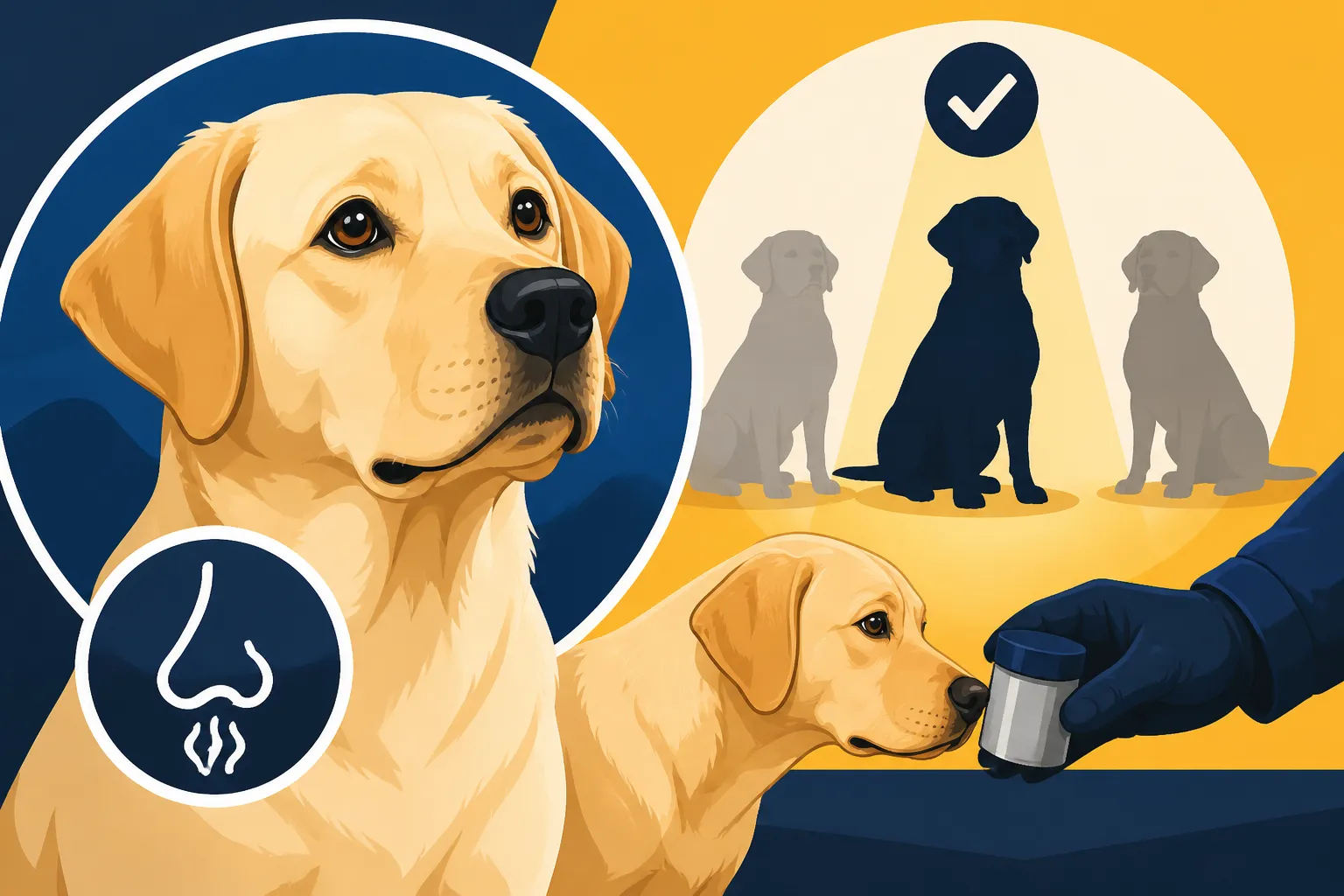
Let's not downplay the nose, though! A Labrador's olfactory system is truly extraordinary. Dogs, including Labs, possess an estimated 300 million olfactory receptors, compared to our mere 6 million. More than that, the part of their brain dedicated to analyzing scents is proportionally 40 times larger than ours. This means they don't just smell things; they dissect them, identifying individual components in a complex odor cocktail. Think about walking into a busy kitchen – we might smell "dinner." A Labrador, however, smells chicken, onions, garlic, thyme, and the lingering scent of last night's coffee. For scent detection, this means they can differentiate a specific target odor, like an explosive compound, even when it's heavily masked by other strong smells. Their nostrils can also move independently, allowing them to pinpoint the direction of a scent, almost like stereo sound for smells.
Beyond the Nose: Drive and Temperament
While a great nose is non-negotiable, it’s the Labrador's drive and temperament that truly elevate them. Scent detection work is demanding, requiring long hours of focus, problem-solving, and repetitive searching. Labradors typically possess immense toy drive and food drive. This isn't just a quirky trait; it's a critical motivational tool for trainers. Imagine asking a dog to search a massive warehouse or a crowded public space for hours. Without an incredibly high motivation to find that "reward" – whether it's a tennis ball, a specific toy, or a tasty treat – the dog simply wouldn't sustain the effort. Their strong retrieving instinct means they love to carry things, and in detection work, that "thing" is often the invisible scent itself, leading them to their reward. Their stable, friendly disposition also allows them to work effectively in a variety of environments, from bustling airports to quiet disaster zones, without being overly stressed or aggressive. This balance of intense drive and calm demeanor is a hallmark of an excellent detection Labrador. Channeling a Labrador's Retrieving Drive is something every owner experiences, but for a working dog, it's honed into a superpower.
Early Assessment: Identifying Potential in Puppies and Young Dogs
You can’t just pick any Labrador and expect them to become a top-tier detection dog. The selection process often starts remarkably early, with careful observation and specific tests designed to identify innate talents and suitable temperaments. It's about finding that perfect blend of curiosity, confidence, and sheer love for the "game."
What to Look for in a Scent Detection Puppy
From a very young age, even at 7 or 8 weeks, trainers and breeders can begin to spot traits that indicate potential in a scent detection puppy. It’s not about teaching them to sniff yet, but about assessing their underlying character. Key things to look for include:
- Curiosity: Does the puppy actively explore new environments, smells, and objects without undue fear? A strong, confident puppy will investigate, not shy away.
- Play Drive: How enthusiastic is the puppy about playing with toys? Are they easily engaged? Do they persist in trying to get a toy, even if it's a little challenging? High play drive is a huge indicator of trainability and motivation.
- Motivation (Food/Toy): When offered a small treat or a toy, how eager are they? Do they show strong interest and focus on the reward? This drive is the engine for future training.
- Environmental Stability: How does the puppy react to novel sounds (like a dropped pot), different surfaces (slippery floor, carpet, gravel), or gentle handling? A good candidate will be curious or momentarily surprised but recover quickly, not become overwhelmed or fearful.
- Sociability: While not strictly scent-related, a dog that is overly shy or, conversely, too boisterous and unfocused with people, might struggle in public detection roles. A balanced, friendly, yet focused demeanor is preferred.
A puppy that mouths everything, while annoying for a pet owner, can actually be a good sign of curiosity and interaction with their environment. Labrador Puppy Mouthing and How to Redirect It is a common challenge, but for detection work, it's often a sign of a highly engaged dog.
The Importance of a Strong Retrieve and Focus
Beyond general curiosity, a really strong retrieving drive is often considered the "gold standard" for detection dog prospects. Can the puppy or young dog be engaged with a toy, chase it, pick it up, and bring it back? This demonstrates a crucial behavior: the willingness to work for a reward that they can possess. For many programs, the scent detection process essentially becomes a highly specialized game of "fetch." The dog learns that finding the target odor leads directly to them getting their favorite toy. If a dog doesn't have that innate love for retrieving, the training uphill battle becomes much steeper.
Focus is equally critical. Can the puppy hold attention on you or a toy, even for brief moments, amidst mild distractions? Early training, even simple positive reinforcement for looking at you or interacting with a toy, can help build this foundation. For new puppy owners looking to harness this potential, resources like BAXTER & Bella offer online puppy training programs that help build these foundational skills in a fun, engaging way, which can be invaluable for any dog, working or pet. These programs emphasize positive reinforcement and build that crucial bond and focus from day one.
Avoiding Common Red Flags
Just as there are desirable traits, there are also common red flags that can indicate a Labrador isn't suited for high-level scent detection work. These aren't necessarily "bad" dogs, just dogs whose natural inclinations don't align with the specific demands of the job.
- Excessive Shyness or Fear: A dog that is easily startled, consistently retreats from new stimuli, or shows fear aggression is not a good candidate. They would be overwhelmed in working environments and pose a safety risk.
- Lack of Motivation: If a puppy shows little interest in toys, food, or engaging with people, they will be very difficult to motivate for repetitive search tasks. They might be perfectly happy lounging, but that won't cut it for a working dog.
- Extreme Distractibility: While puppies are naturally distractible, an older puppy or young dog that simply cannot focus for even a short period, and constantly switches attention from one thing to another without direction, might struggle with the intense concentration required.
- Aggression: Any signs of unprovoked aggression, whether towards people or other dogs, are immediate disqualifiers. Detection dogs often work in public and must be bomb-proof in temperament.
- Overly Independent Nature: While Labradors are generally biddable, a dog that consistently prefers to do its own thing, ignores cues, or lacks the desire to engage with a handler won't thrive in a partnership-based detection role.
The Formal Selection Process for Working Dogs
Once potential candidates have been identified, whether they are puppies from specialized breeding programs or young adults donated by enthusiastic owners, they typically undergo a rigorous formal selection process. This isn't a quick once-over; it's a multi-faceted evaluation designed to ensure the dog has the physical health, mental fortitude, and specific drives necessary for a demanding career.
Specialized Temperament and Drive Testing
Formal testing for working dogs goes beyond the casual observations of puppyhood. These tests are often standardized and conducted by experienced evaluators who understand the specific needs of detection work. They'll assess things like:
- Prey Drive: Not in the aggressive sense, but the dog's innate desire to chase and capture a moving object. This translates directly to the drive to "catch" the scent. They might use a rag on a stick or a rolling ball to see the dog's intensity.
- Persistence: If a toy is hidden or slightly out of reach, how long does the dog try to get it? Do they give up easily, or do they problem-solve and keep trying? This demonstrates their ability to stick with a search.
- Environmental Confidence: Dogs are exposed to various sights, sounds, and textures – slippery floors, loud noises, dark tunnels, wobbly surfaces, unfamiliar people. A good candidate shows confidence and resilience, quickly adapting to new situations. They shouldn't be afraid to walk through a doorway with hanging items or loud clatter.
- Hunt Drive/Nose Use: While actual odor training comes later, evaluators will observe how the dog naturally uses its nose. If a toy is hidden, does the dog actively sniff it out, or does it rely solely on sight?
- Social Drive: How does the dog interact with the handler and other people? Are they overly dependent, or too aloof? A balanced, engaged relationship is key.
These tests are designed to mimic real-world scenarios that a detection dog might encounter, ensuring they are not just capable sniffers, but also resilient and reliable partners.
Health Clearances and Physical Suitability
It goes without saying that a working dog must be in peak physical condition. Detection dogs often work long shifts, traverse difficult terrain, and are exposed to varying climates. Therefore, extensive health clearances are absolutely mandatory. Before any serious training begins, a Labrador prospect will undergo thorough veterinary examinations, including:
- Hip and Elbow X-rays: Hip and elbow dysplasia are common in larger breeds like Labradors, and these conditions can severely limit a dog's working life. Dogs with any signs of these issues are typically disqualified. Labrador Hip and Elbow Dysplasia is a major concern for any breeding program or working organization.
- Eye Examinations: Conditions like Progressive Retinal Atrophy (PRA) or cataracts can impair vision, which, while not as critical as scent for detection, is still vital for navigating environments safely.
- Cardiac Screening: To ensure a healthy heart capable of enduring strenuous activity.
- Genetic Testing: Many organizations will run genetic panels to screen for known breed-specific conditions like Exercise-Induced Collapse (EIC), Centronuclear Myopathy (CNM), and others that could impact performance or overall health. Genetic Panels Worth Running on a Labrador can catch potential issues before they become debilitating.
The dog must also be structurally sound – no limping, no signs of chronic pain, and a conformation that supports a long, active career. A dog that is constantly battling health issues is not only at a disadvantage but also a significant financial and emotional investment that won't yield a return for the organization. Organizations often look for breeders who regularly provide Health Clearances a Labrador Breeder Must Show.
Where Detection Dogs Come From
Detection Labradors don't just appear out of thin air! Their journey to becoming a working dog can start from several different places:
- Dedicated Breeding Programs: Many police, military, and specialized detection agencies have their own breeding programs. These programs specifically breed dogs for temperament, health, and working drive, carefully selecting parents with proven working lines and exceptional health. This allows them to control for desirable traits and minimize genetic health issues.
- Donations from Private Breeders: Reputable private breeders, especially those focused on field or working lines, might donate puppies or young adults to detection programs if they identify exceptional talent within a litter. These breeders understand the demanding nature of the work and want to see their dogs thrive.
- Rescue Organizations: While less common for initial selection due to unknown backgrounds, some dogs from rescue organizations do make it into detection work. These are typically adult dogs whose natural drives are so strong they cannot be ignored, even if their past is a mystery. They often come with a known Labrador Temperament and Personality that suggests suitability.
- Owner Donations: Occasionally, an individual owner might realize their Labrador possesses an extraordinary drive and natural talent that goes beyond what they can provide in a pet home. If the dog meets the rigorous health and temperament criteria, they might be donated to a working program.
For programs that buy dogs, the Labrador Puppy Prices and What Moves Them can vary wildly, but the investment is always in a dog with proven potential.
Training Pathways and Ongoing Development
Once a Labrador has successfully navigated the rigorous selection process, their journey as a detection dog truly begins with specialized training. This isn't just about teaching commands; it's about shaping their natural drives into a reliable, consistent, and highly effective working behavior.
Foundation Training: Building Blocks for Scent Detection
Before a Labrador ever sniffs a target odor, they undergo extensive foundation training. This phase is all about building a strong relationship with their handler, developing focus, and honing those innate drives into manageable behaviors.
- Play and Motivation: Trainers capitalize on the Labrador's natural love for toys and food. Play sessions are structured to build intense focus on the reward and to teach the dog that interacting with the handler leads to fun. This often involves highly durable toys, which can be easily found on platforms like Amazon, that can withstand vigorous play and become the dog's ultimate reward.
- Basic Obedience and Control: A detection dog must be impeccably well-behaved. Commands like "sit," "stay," "come," and "down" are taught to a very high standard, ensuring the dog is always under control, even in distracting environments. This isn't just for manners; it's for safety and efficiency during searches. A dog that won't stay put can disrupt a crime scene or put themselves in danger.
- Environmental Socialization: Continued exposure to a wide variety of environments, people, and sounds ensures the dog remains confident and stable. This might involve trips to busy shopping centers, train stations, or even mock disaster sites. Socializing a Labrador Puppy is crucial for future stability.
- Building a Search Pattern: Even without a target odor, dogs are taught to search methodically. This could involve teaching them to sweep an area, clear obstacles, or focus on specific zones. This systematic approach ensures thoroughness.
Introducing Target Odors
This is where the magic really starts to happen! The introduction of target odors is a precise and carefully managed process, designed to create a strong, positive association between the specific smell and the ultimate reward.
- Imprinting: The target odor (e.g., a tiny amount of a specific explosive, a controlled substance, or a human scent article) is introduced in a highly controlled environment, always paired with the dog's most favorite, high-value reward (that special toy or treat). The dog learns: "When I smell this, I get that amazing thing!"
- Proofing: Once the dog consistently identifies the target odor, the training progresses to more complex scenarios. Distractions are gradually introduced – other smells, noise, visual clutter. The dog learns to ignore these and focus solely on the target. The search areas become larger, more varied, and more challenging.
- Indication: Crucially, the dog must be taught to indicate when they've found the target odor. This is often a passive alert, like sitting, lying down, or staring at the source. A passive alert is preferred in many scenarios (e.g., explosives detection) to avoid disturbing the evidence. This takes careful shaping and repetition. For some dogs, interactive puzzle feeders can be used in training to simulate the "work for a reward" aspect, teaching them to manipulate objects to get their food, which can translate into a systematic search.
Continued Training and Specialty Roles
A detection dog's training never truly ends. Once certified in their primary discipline, they undergo continuous maintenance training to keep their skills sharp and their focus keen. This involves regular mock searches, exposure to new environments, and practice with varying concentrations of target odors.
Labradors excel in a vast array of specialized detection roles:
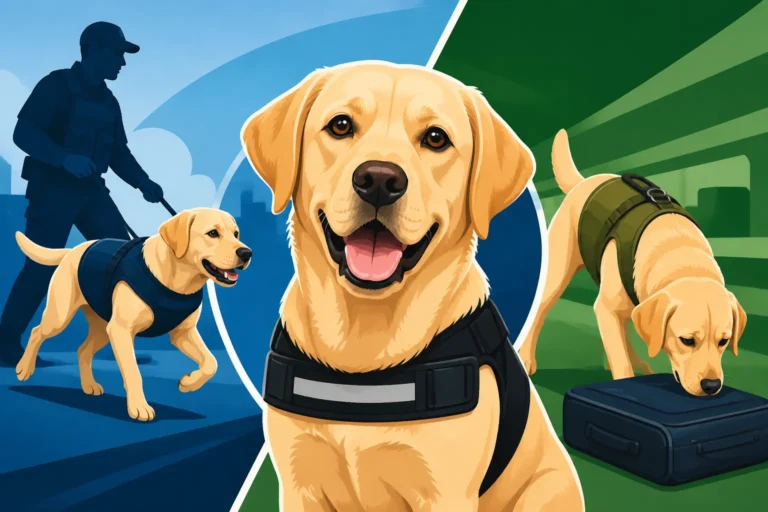
- Narcotics Detection: Sniffing out illegal drugs in luggage, vehicles, or buildings.
- Explosives Detection: Locating bombs or bomb-making materials in public spaces, cargo, or secured facilities.
- Search and Rescue (SAR): Finding lost individuals, often in wilderness areas or disaster zones, by following human scent trails.
- Accelerant Detection: Identifying residues of accelerants at arson crime scenes.
- Conservation Detection: Locating endangered species scat, invasive plants, or poached wildlife products.
- Medical Detection: In emerging fields, some Labradors are trained to detect specific medical conditions through scent, such as certain cancers or changes in blood sugar levels.
The rigorous selection process and continuous, dedicated training transform these naturally gifted Labradors into invaluable partners, safeguarding communities and contributing to critical efforts around the world. Their innate drives, refined through expert guidance, make them true unsung heroes.
Disclaimer
This article is for general informational purposes only and does not constitute professional advice. Laws, prices and regulations vary by location and change over time. Consult a qualified professional for guidance on your specific situation.